Acoustic Gardens: Creating Tranquil Backyards in 2026
Backyards often serve as extensions of the home, yet urban and suburban noise can undermine their appeal. Traffic, equipment, and neighboring activities create persistent disturbances that hinder relaxation and productivity. As a home improvement writer based in Staten Island, the author transformed a chaotic outdoor space into a peaceful retreat through acoustic gardening, proving that practical solutions exist for everyday homeowners.
This approach leverages plants, structures, and design elements to mitigate sound naturally. The result offers a serene environment where natural sounds dominate over urban clamor. Homeowners now replicate these strategies to reclaim their outdoor areas without extensive renovations.
Understanding Backyard Noise Challenges
Discovering Plants as Sound Barriers
Initial efforts often begin with simple plantings along property lines. The author installed evergreens beside a fence, observing immediate subtle improvements in sound quality. Research revealed that foliage absorbs, deflects, and diffuses noise based on leaf density, branch thickness, and soil composition.
Layered vegetation outperforms single barriers by interrupting sound paths multiple times. This method requires no advanced engineering, only thoughtful selection and placement. Homeowners achieve measurable reductions in perceived noise levels through these natural elements.
Constructing an Acoustic Garden: A Step-by-Step Guide
Effective acoustic gardens build progressively, starting from outer edges and moving inward. This layered strategy ensures comprehensive coverage without overwhelming small properties. Experts emphasize starting with assessments of noise sources to prioritize interventions.
Establish Strong Boundaries
Property perimeters form the primary defense. Solid fences alone reflect noise, so integrate them with absorbent plantings. The author upgraded a chain-link fence to composite panels and added shrubs, creating a hybrid barrier that dampens vibrations.
Recommended border plants provide varied benefits:
- Arborvitae: Offers dense, evergreen screening for consistent coverage.
- Bamboo: Grows rapidly in containers to prevent invasiveness.
- Leyland cypress: Achieves height quickly for effective shielding.
- Holly or boxwood: Suits compact areas with thick foliage.
Incorporate Mid-Level Vegetation
Mid-tier plantings between boundaries and activity zones further fragment sound waves. Select species with rustling leaves to generate soothing ambient noise. In the author's yard, hydrangeas and grasses created a dynamic buffer that sways with breezes.
Additional mid-level options include:
- Lilac or viburnum: Provides density and seasonal blooms.
- Forsythia: Delivers early color and structural support.
- Miscanthus or switchgrass: Tall grasses that add movement and absorption.
Optimize Ground Cover
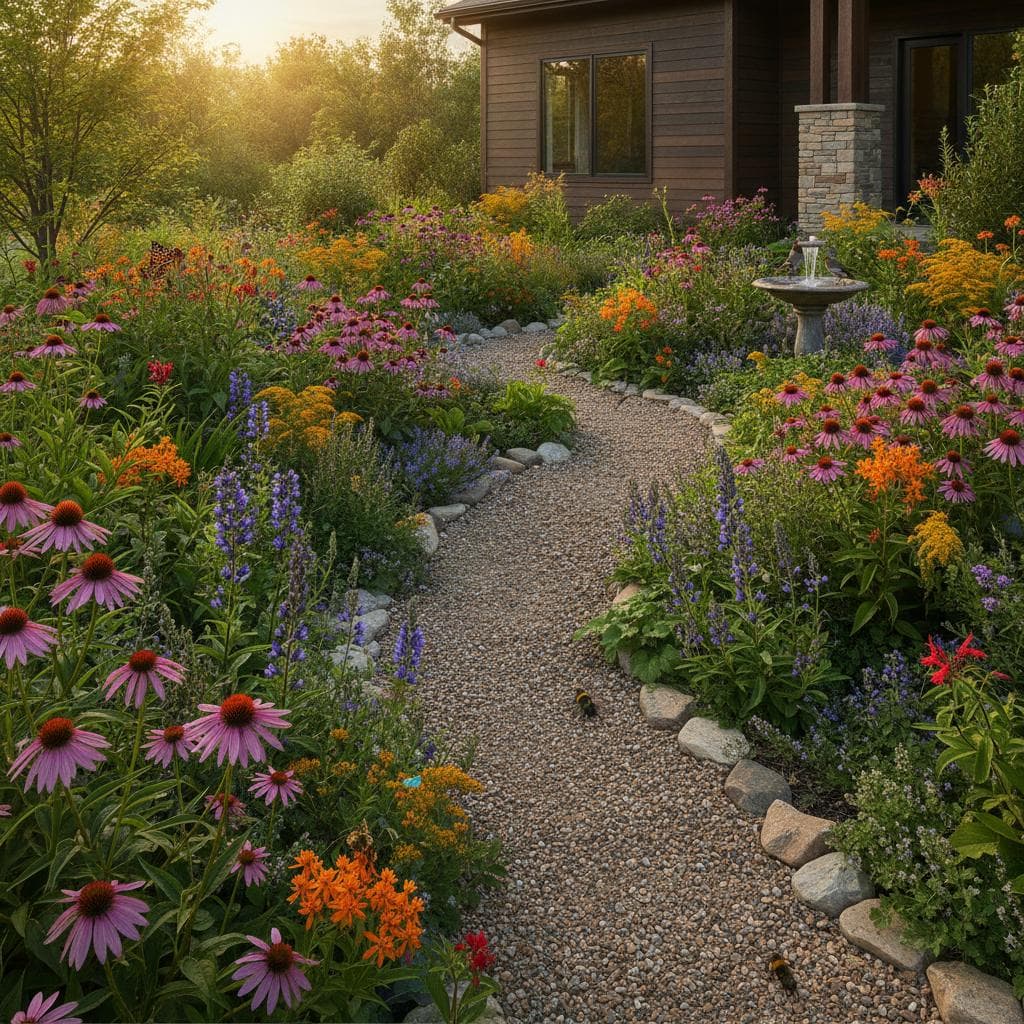
Exposed soil or pavement bounces sound, so apply soft underlayers. Mulch absorbs vibrations, while low-growing plants fill gaps. The author replaced concrete with pavers interspersed with groundcover, reducing echoes significantly.
Effective ground treatments encompass:
- Mulch or bark: Retains moisture and muffles impacts.
- Creeping thyme or sedum: Low-maintenance fillers for sunny spots.
- Moss: Thrives in shade to create a carpet-like absorber.
- Permeable pavers: Allow greenery to integrate between stones.
Integrate Water Elements
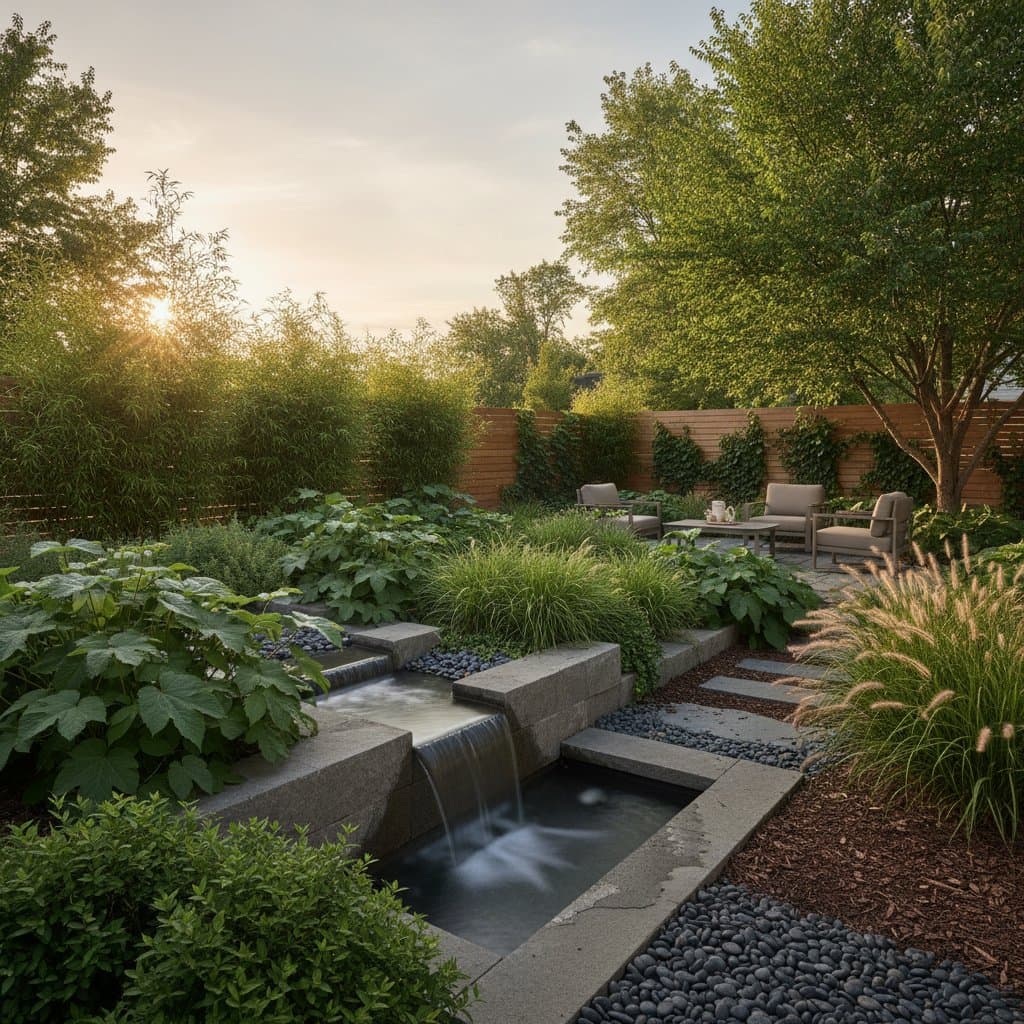
Water features introduce white noise that overlays intrusive sounds. Fountains produce steady flows that draw attention to positive acoustics. A solar-powered unit near seating areas shifted the author's focus from street noise to natural rhythms.
Placement near relaxation zones maximizes benefits. Simple installations require minimal upkeep and enhance visual appeal alongside auditory calm.
Diversify Textures for Enhanced Diffusion
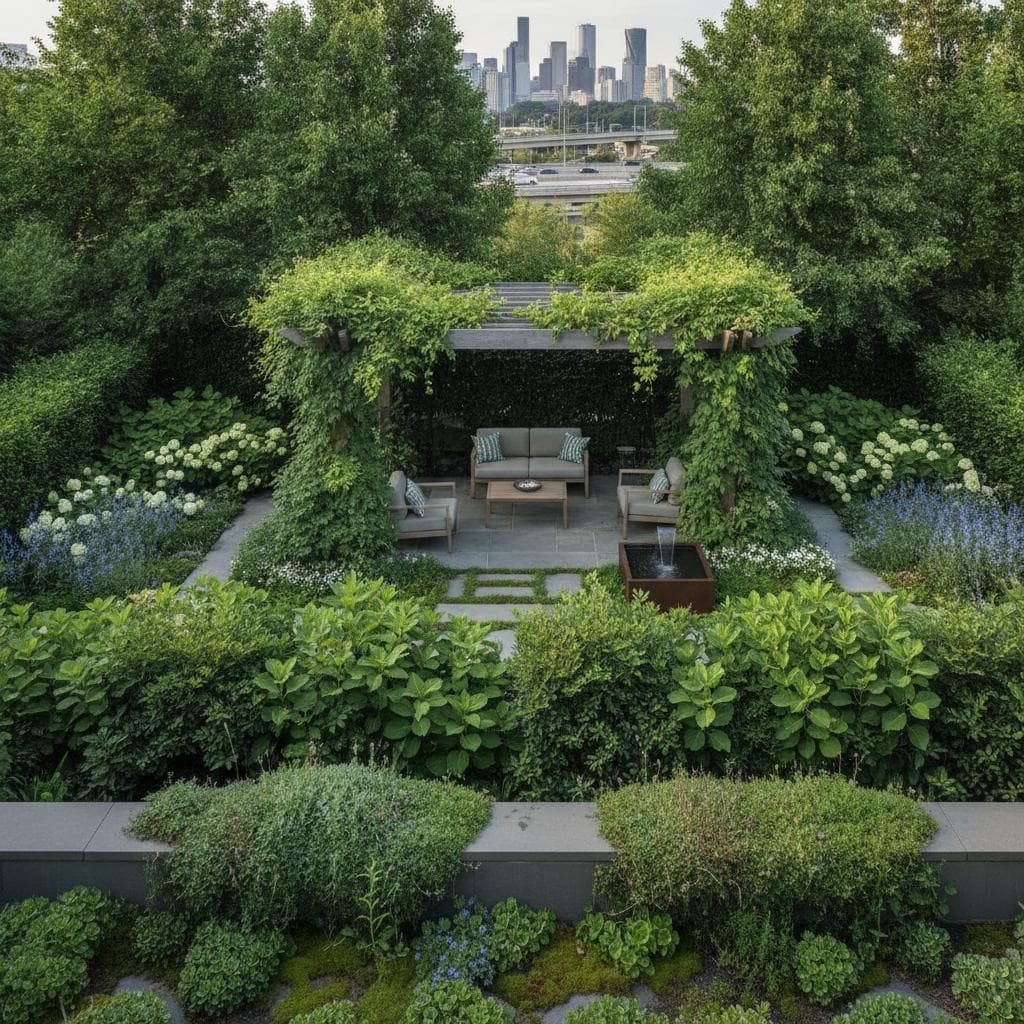
Varied materials prevent uniform reflections. Combine stone, wood, and plants to scatter waves irregularly. The author added a stone wall with cascading vines and a vine-covered trellis, fostering a sense of enclosure.
This diversity not only improves sound control but also elevates aesthetic depth. Focus on uneven surfaces to maximize disruption of direct sound paths.
Scientific Principles of Sound Reduction
Sound waves lose intensity upon encountering porous or irregular obstacles. Foliage acts as an acoustic sponge, converting energy into heat through friction. Textured grounds and layered heights diffuse remaining waves, lowering overall decibel impact.
Even modest reductions, such as 5 to 10 decibels, alter perception dramatically. Comparable to indoor soundproofing with fabrics, these gardens create distance from external disturbances. Studies confirm that natural barriers outperform rigid ones in long-term effectiveness.
Pitfalls to Sidestep in Design
Common errors diminish results. A solitary plant row provides insufficient buffering; multiple layers prove essential. Hardscape without vegetation amplifies rebounds, so balance remains key.
Neglect maintenance, and density wanes, restoring noise penetration. Space elements too widely, and gaps allow sound leakage. Regular pruning and seasonal checks sustain performance.
Setting Achievable Goals
Acoustic gardens temper rather than eliminate noise. High-frequency intrusions like alerts persist, yet the overall ambiance shifts to soothing. The author's routine now includes undisturbed outdoor work sessions, with urban sounds receding into the background.
This transformation fosters deeper connections with nature. Expect gradual enhancements as plants mature, yielding compounding benefits over time.
Adapting for Compact Areas
Limited spaces benefit from vertical and modular solutions. Tall planters host screening plants like bamboo. Wall-mounted fountains add sound masking without floor space.
Layered pots at varying heights mimic full gardens. Fabric screens or rugs absorb reflections on patios. These adaptations deliver tranquility in urban settings, from balconies to courtyards.
Evolving with Seasonal Changes
Acoustic gardens adapt naturally across seasons. Summer foliage provides peak density, while evergreens maintain winter barriers. The author's space features rustling leaves in warm months and structured forms in cooler ones.
This dynamism encourages extended use year-round. Pets and family integrate seamlessly, with reduced stimuli promoting calm behaviors. The design evolves into a living sanctuary.
Implementing Layers for Lasting Peace
Begin by mapping noise patterns in your yard. Identify hotspots and natural quiets to guide placements. Proceed methodically:
-
Secure boundaries with combined fencing and tall plants.
-
Install mid-height shrubs and grasses for added depth.
-
Apply ground covers to eliminate reflective surfaces.
-
Position water features to introduce masking sounds.
-
Maintain all elements through routine care.
These steps cultivate harmony between environment and daily life. The result extends beyond silence to a restorative outdoor haven where clarity and repose prevail.