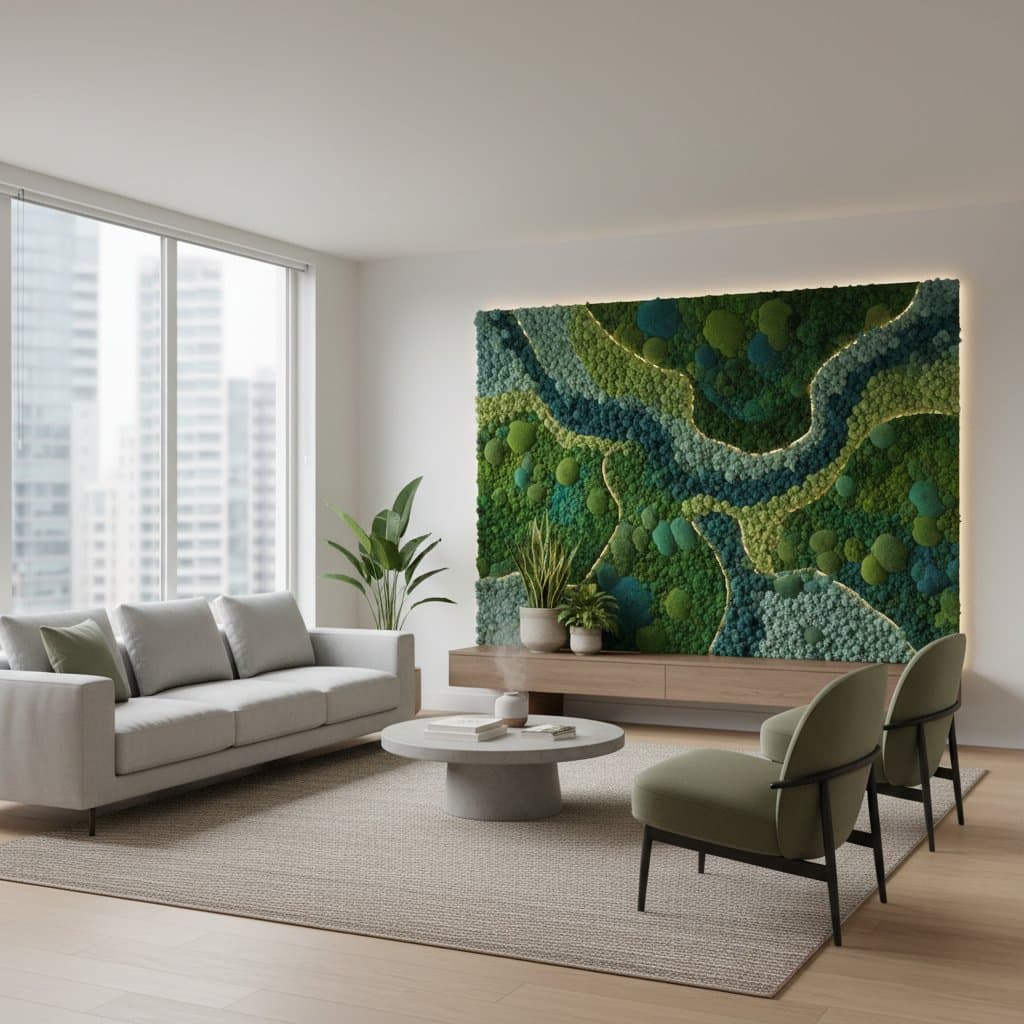
Moss Walls: The Premier Indoor Garden Innovation for 2026
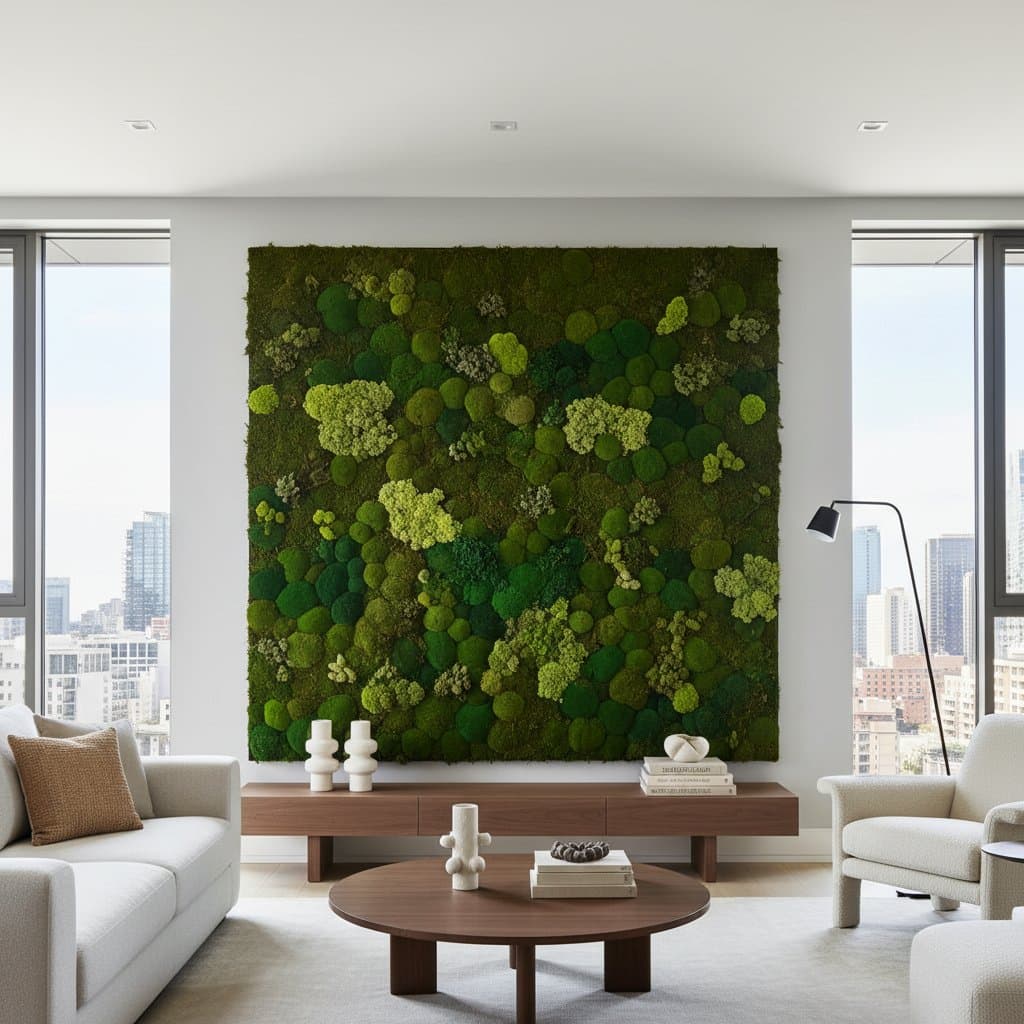
A moss wall first captured attention in a compact Paris café, where it formed a lush, textured backdrop that evoked serenity. In a London flat with scarce sunlight and limited space, this concept proved ideal for integrating nature seamlessly. Moss walls represent a pivotal trend in indoor gardening, valued for their striking appearance and compatibility with contemporary lifestyles. They demand little upkeep, promote sustainability, and adapt effortlessly to urban minimalism or rural charm.
The appeal of moss walls lies in their ability to introduce natural elements indoors without the rigorous care required by live plants. For occupied households, tenants, or individuals seeking resilient greenery, moss walls provide an elegant, functional alternative.
The Rising Popularity of Moss Walls
Selecting Preserved Versus Living Moss Walls
Moss walls typically divide into preserved and living varieties.
Preserved moss walls utilize authentic moss treated with natural agents to retain texture and hue indefinitely. They cease growth, rendering them nearly effortless and perfect for low-light environments.
Living moss walls demand humidity and circulation to sustain vitality. They offer the reward of cultivating an active system, though this involves periodic misting or diffused illumination.
Preserved options suit family settings, such as playrooms, corridors, or variable-humidity bathrooms. Living versions appeal to plant enthusiasts desiring interactive care.
Essential Maintenance for Enduring Appeal
Moss walls tolerate neglect gracefully, yet benefit from basic oversight.
- Position away from direct sunlight to prevent color fading.
- Steer clear of excessively humid zones, like poorly ventilated bathrooms, to preserve form.
- Remove dust with a soft brush or vacuum on gentle mode.
- Refrain from watering or misting preserved types, as this harms treatments.
- Inspect mounts periodically, particularly in active or leased spaces.
Interior stylist Anna Robson observes that a properly secured preserved moss wall endures years with care comparable to framing artwork. This ease attracts time-strapped families.
Worldwide Influences on Moss Wall Aesthetics
Parisian apartments often feature moss walls as sophisticated vertical features in constrained areas. Japanese traditions revere moss for its subtle elegance and endurance, incorporating it into contemplative gardens and serene pavilions. Scandinavian design pairs moss with stark lines to infuse organic softness.
Incorporate these inspirations to customize installations.
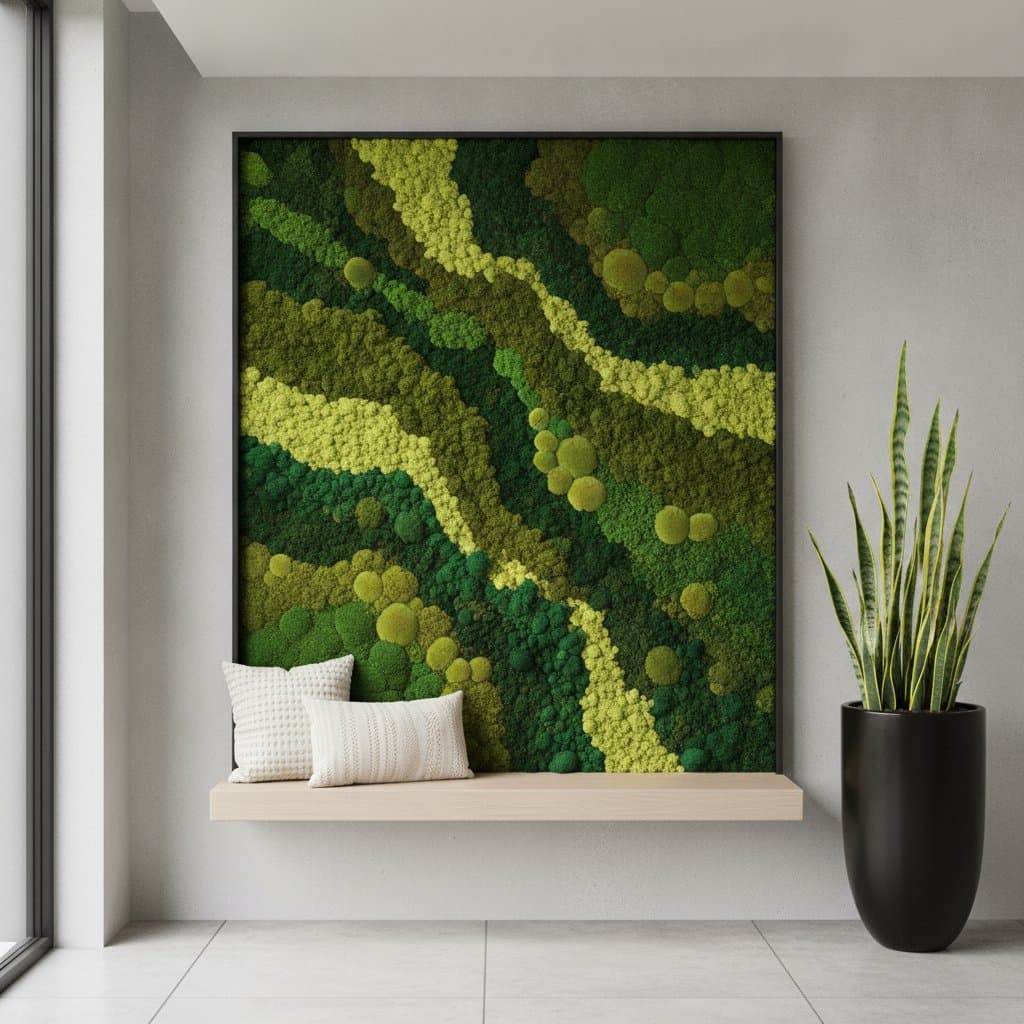
- Contemporary Minimalism: Opt for a slim panel in matte black framing to mimic gallery art.
- Rustic Farmhouse: Frame with salvaged timber or blend with preserved botanicals like lavender.
- Industrial Urban: Pair with raw brick or cement textures for contrast.
- Eclectic Bohemian: Stack varied forms and materials for an untamed, organic vibe.
Moss versatility suits lofts, cottages, or dormitories equally.
Integrating Moss Walls into Daily Life
Installing a moss wall alters room ambiance profoundly. Green tones promote psychological tranquility, while the moss surface encourages sensory engagement. Visitors frequently interact, noting its unexpected suppleness.
In family contexts, moss walls foster subtle bonds. Children may describe it as a woodland element, using it as a creative setting for tasks or play.
Design psychologist Emily Carter states that natural surfaces evoke stability and ease, regardless of vitality. Thus, moss walls extend beyond ornamentation to shape emotions, repose, and interactions in living spaces.
Steps to Install Your Moss Wall
Begin by assessing space and light conditions to choose preserved or living moss. Source materials from reputable suppliers ensuring ethical sourcing and quality preservation. Professional installation guarantees secure adhesion, especially on uneven surfaces.
For DIY approaches, prepare walls with appropriate backing and follow product guidelines for mounting. Test small sections first to verify compatibility. Once in place, monitor initial settling and adjust as needed.
These walls not only beautify but also purify air subtly and dampen noise, enhancing overall well-being. Embrace this trend to infuse enduring, effortless nature into your surroundings.