Rain Gardens: Managing Stormwater and Enhancing Curb Appeal Naturally
Between school drop-offs, work deadlines, and household tasks, few homeowners have time for complex landscaping projects. Yet pooled rainwater along driveways or flooded flowerbeds signals that outdoor spaces could function more effectively. A rain garden offers a straightforward solution that manages stormwater while improving the appearance of any front yard.
Rain gardens suit properties of all sizes. City lots, suburban lawns, and rural settings all benefit from this approach that protects structures, aids ecosystems, and creates visual interest.
Key Benefits
- Rain gardens capture and filter runoff on site instead of directing it into storm drains.
- They limit flooding risks, reduce soil erosion, and provide habitat for pollinators.
Installation succeeds in most yards when soil is prepared correctly and native species are selected.
Established gardens need minimal care and contribute lasting visual appeal.
Definition and Function
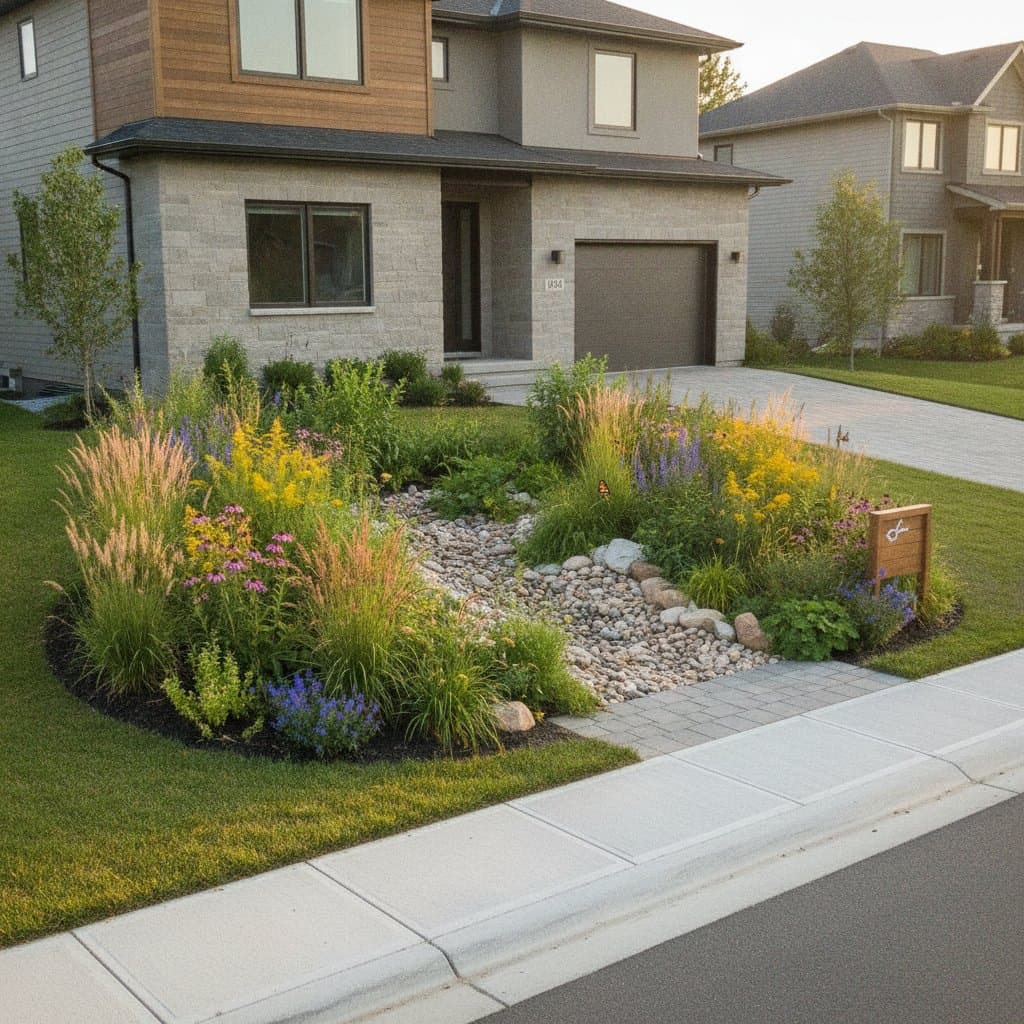
A rain garden consists of a shallow planted basin that collects water from roofs, driveways, and lawns. The design holds runoff briefly so roots and soil can absorb and cleanse it before it returns to the ground. This process mimics natural absorption rather than rapid drainage.
Examples from villages in France demonstrate compact versions placed beneath downspouts. Gravel borders combined with lavender and thyme create both utility and visual order that translate well to other garden styles.
Reasons to Install One
Compacted soils and paved areas in developed neighborhoods prevent water infiltration. Runoff then carries contaminants into nearby streams. A rain garden interrupts this pattern by slowing flow and allowing gradual absorption.
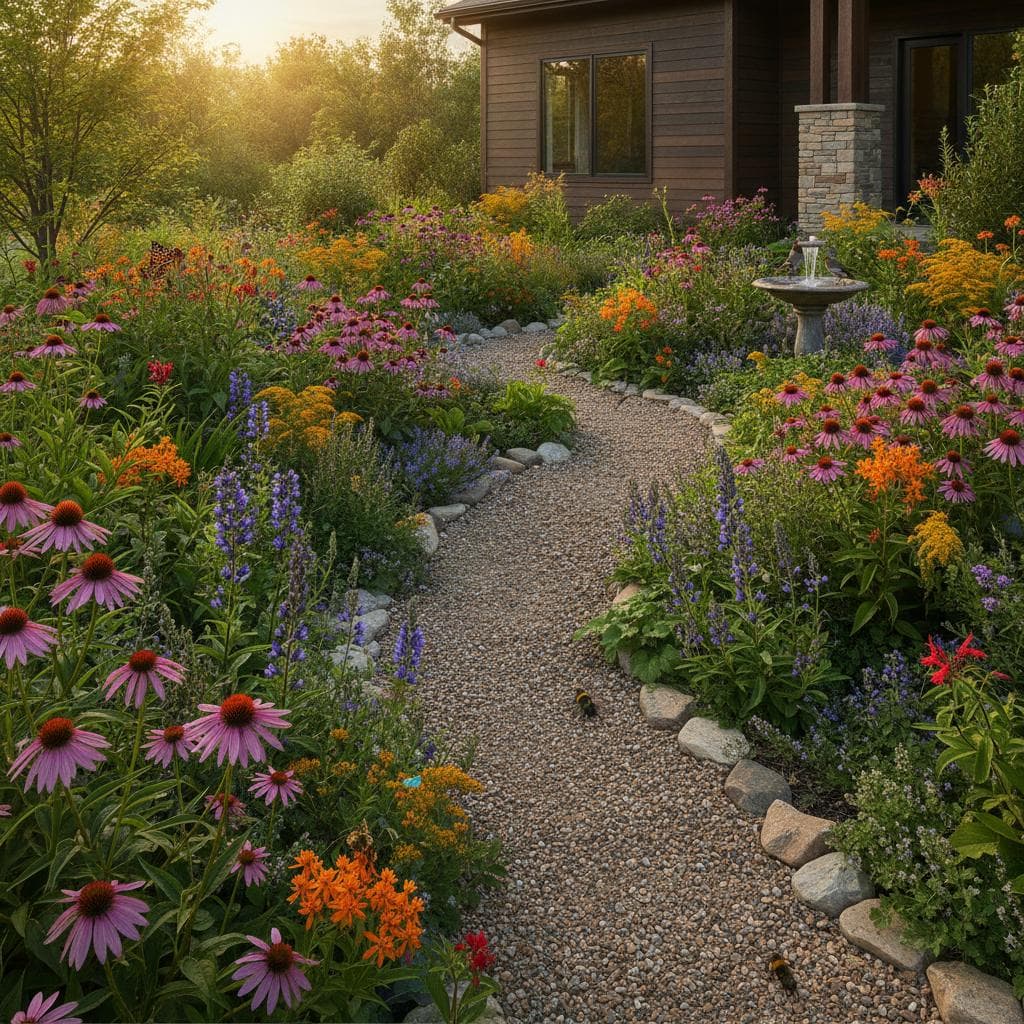
Environmental designer Clara Hughes notes that modest installations function as localized filtration units. They ease demand on municipal systems and improve downstream water conditions. The same gardens add texture through layered foliage and seasonal blooms that support butterflies and bees.
Site Selection and Preparation
Observe water movement after several rain events to identify collection points and natural drainage paths. This information guides placement and depth decisions.
Location Criteria
- Select a depression several feet from building foundations.
- Skip areas that remain saturated for extended periods.
- Route downspout extensions or shallow swales to direct flow into the basin.
Landscape architect Priya Nair advises beginning with modest dimensions. Even limited square footage manages substantial volumes when proportions and soil conditions align.
Dimensions and Soil Mix
A typical front-yard basin measures two to four meters across and twenty to thirty centimeters deep. Sides slope gently while the base remains level for uniform distribution. Blend native topsoil with compost and coarse sand to achieve drainage that still holds adequate moisture. Heavy clay should be amended or avoided because it retains water too long. A test watering confirms absorption within twenty-four hours.
Plant Selection and Arrangement
Plants must withstand alternating wet and dry periods. Group species by moisture tolerance to create stable zones.
Zoned Planting
- Position moisture-tolerant species such as iris or sedge at the lowest point.
- Add mid-level perennials including echinacea or black-eyed Susan.
- Frame outer edges with drought-resistant options like lavender or yarrow.
Thyme planted along borders introduces fragrance while tall rushes occupy the center. Stagger bloom times across spring, summer, and autumn to maintain interest. A few evergreen shrubs supply winter form.
Ongoing Care
New plantings require regular weeding and light mulching during the first season. Thereafter, the garden largely sustains itself through natural rainfall. Inspect drainage after major storms and remove spent growth each spring.
Daily Observation
Families notice immediate changes in wildlife activity and water behavior once the garden matures. Children track seasonal shifts while adults appreciate reduced maintenance demands and improved property appearance. The feature integrates into routines without additional irrigation or chemical inputs.