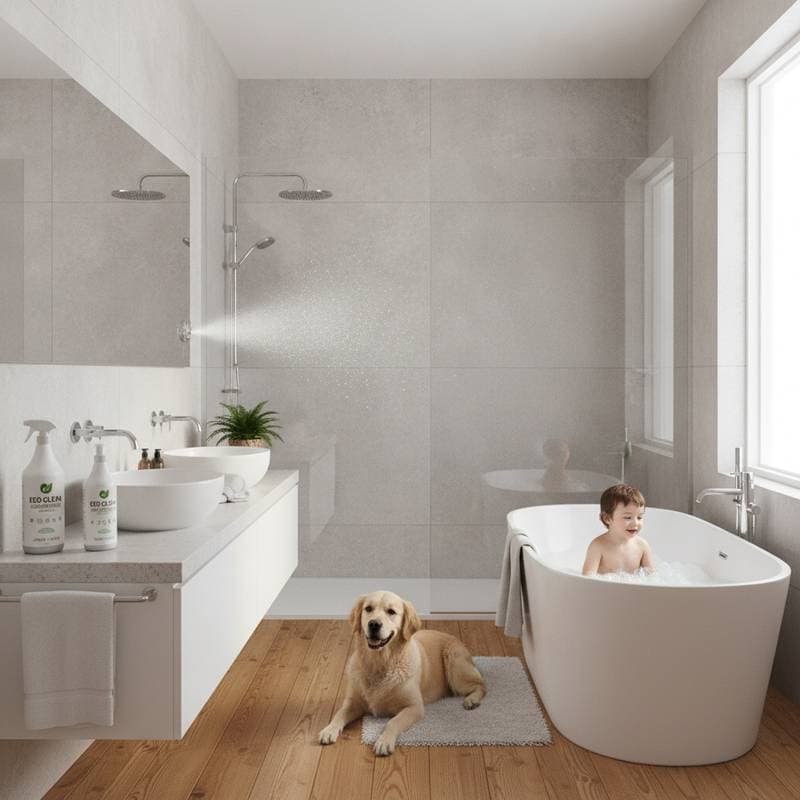
Why Microcement Bathrooms Beat Traditional Tile
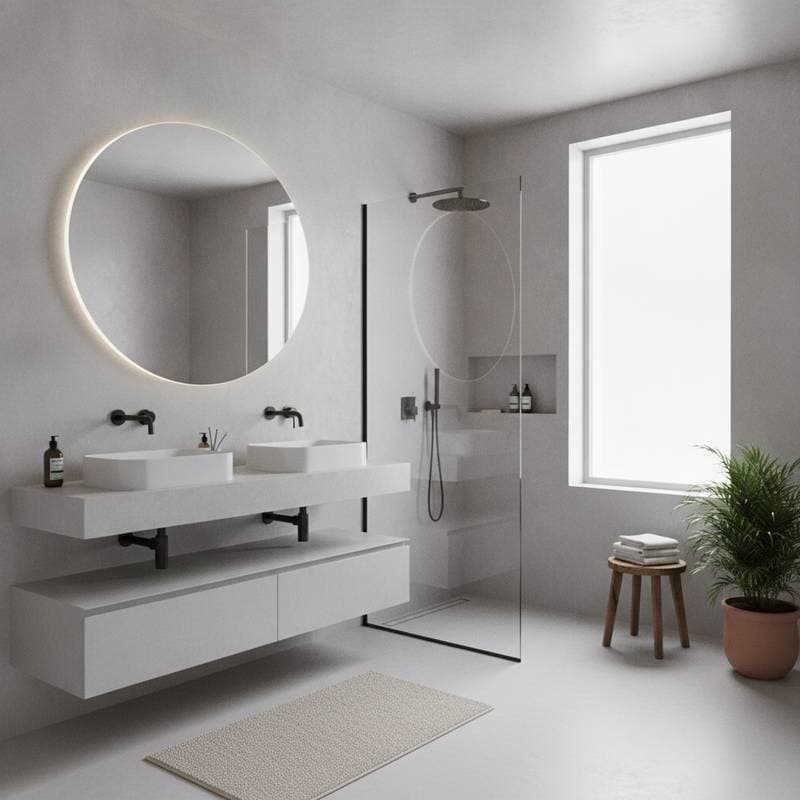
Microcement bathrooms deliver a seamless, grout-free surface that elevates both style and function. This cement-based coating creates continuous planes across walls, floors, and fixtures. The result feels calm and spacious while resisting daily wear in wet environments.
Key Advantages
- Seamless application removes grout lines that collect dirt and mold.
- Thin layers bond directly over existing tile or plaster to limit demolition.
- Proper sealing produces a waterproof finish suitable for showers and floors.
- Pigments mixed into the material allow custom colors and textures.
- Reduced material use supports lower-waste renovation projects.
Continuous Surfaces Improve Daily Use
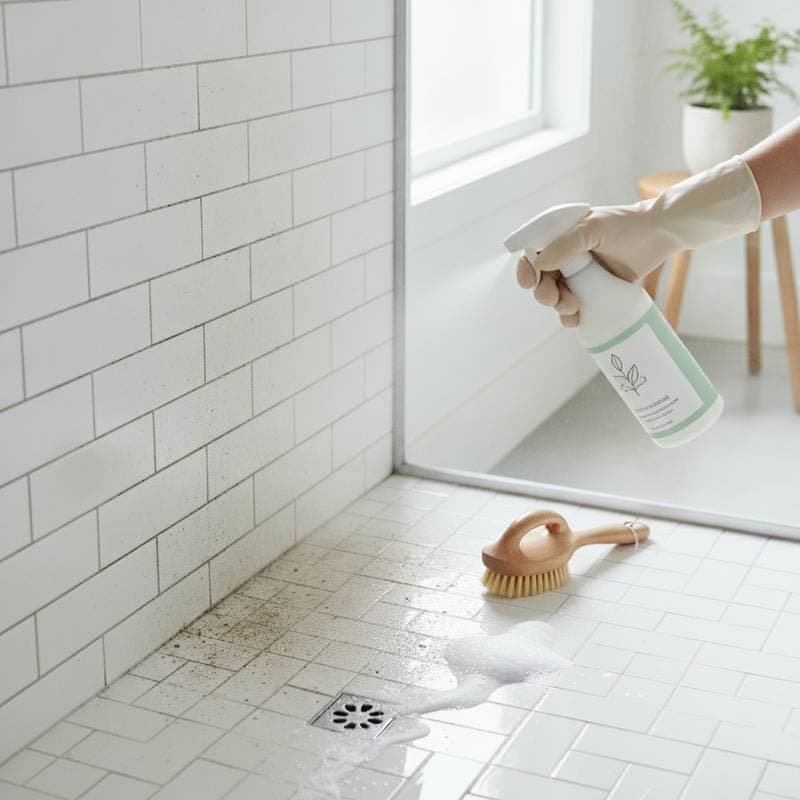
Bathrooms endure constant moisture and cleaning. Grout joints trap residue and require repeated scrubbing. Microcement eliminates those joints, leaving a single plane that wipes clean with mild soap.
Composition and Application
Microcement consists of cement, resins, and mineral pigments applied in successive thin coats. Each coat cures before the next layer receives sanding and sealing. The finished thickness stays under five millimeters, so the coating adds negligible weight or height.
Installers can work over stable tile, plaster, or concrete substrates. Multiple hand-troweled passes produce either a smooth matte surface or a lightly textured finish. Color remains consistent through the depth of the material rather than sitting on top as a coating.
Performance Benefits
- Maintenance reduction. Absence of grout removes the primary site for mildew growth. A weekly wipe-down preserves appearance.
- Design flexibility. Neutral tones pair with brass or matte black fittings. Deeper shades create contrast in contemporary schemes.
- Moisture resistance. Once sealed, the surface withstands humidity and standing water in properly ventilated rooms.
- Material efficiency. Overlay application avoids disposal of existing finishes and uses less raw product than new stone slabs.
- Adaptation to irregular shapes. Hand application follows curves around built-in benches or recessed niches without cutting.
Professional Observations
Contractors note that projects finish faster because demolition stays minimal. Designers value the ability to form integrated sinks and shelves from the same material. The finish aligns with minimalist preferences seen in both European and Asian residential work.
Application Options
Walls and floors receive the coating for a uniform envelope. Shower enclosures gain a wet-room aesthetic without separate waterproofing panels. Vanities and countertops can incorporate integrated basins for fewer joints.
A single feature wall behind a tub introduces texture when a full renovation exceeds budget. Built-in shelves and tub skirts receive the same finish to maintain continuity.
Installation and Upkeep Requirements
Only trained applicators achieve consistent results. Surface preparation, layer timing, and final sealing determine longevity. Homeowners should plan for professional maintenance every two to three years to refresh the protective sealer.
Budget comparisons place microcement between standard porcelain tile and natural stone. Savings appear in reduced demolition and faster completion times.
Long-Term Value
Owners report that daily cleaning time drops noticeably. The finish conceals minor substrate movement common in older buildings. Neutral palettes complement both rustic timber and crisp modern cabinetry across different homes.