The New Reality of the Front Yard
Picture this scene. You step outside after a week of relentless rain. The street glistens with puddles, yet your front yard remains composed. It absorbs the excess water instead of flooding. Months later, during intense heat and cracked soil, the yard stays green and textured without constant watering.
This outcome represents the current standard in front yard design. Resilience, creativity, and climate awareness combine in one space. Homeowners now view lawns as functional ecosystems rather than decorative features alone. Traditional grass demands frequent irrigation, chemical inputs, and mowing that consume time and resources.
The Cultural Shift Toward Resilient Beauty
Front yards have long served as personal statements of pride and community identity. Weather patterns now swing between prolonged dry spells and sudden heavy downpours. The classic image of a perfect green carpet loses appeal under these conditions. Modern homeowners seek landscapes that demonstrate balance and adaptation.
The Science Behind Adaptive Landscaping
Effective yards begin with analysis of water movement across the property. Soil structure, slope, and plant choices determine absorption and retention rates.
Soil composition forms the base layer. Sandy soils drain rapidly yet lose moisture quickly. Clay soils hold water but restrict root growth during saturation. Amendments such as compost and mulch blend these traits to improve both drainage and retention.
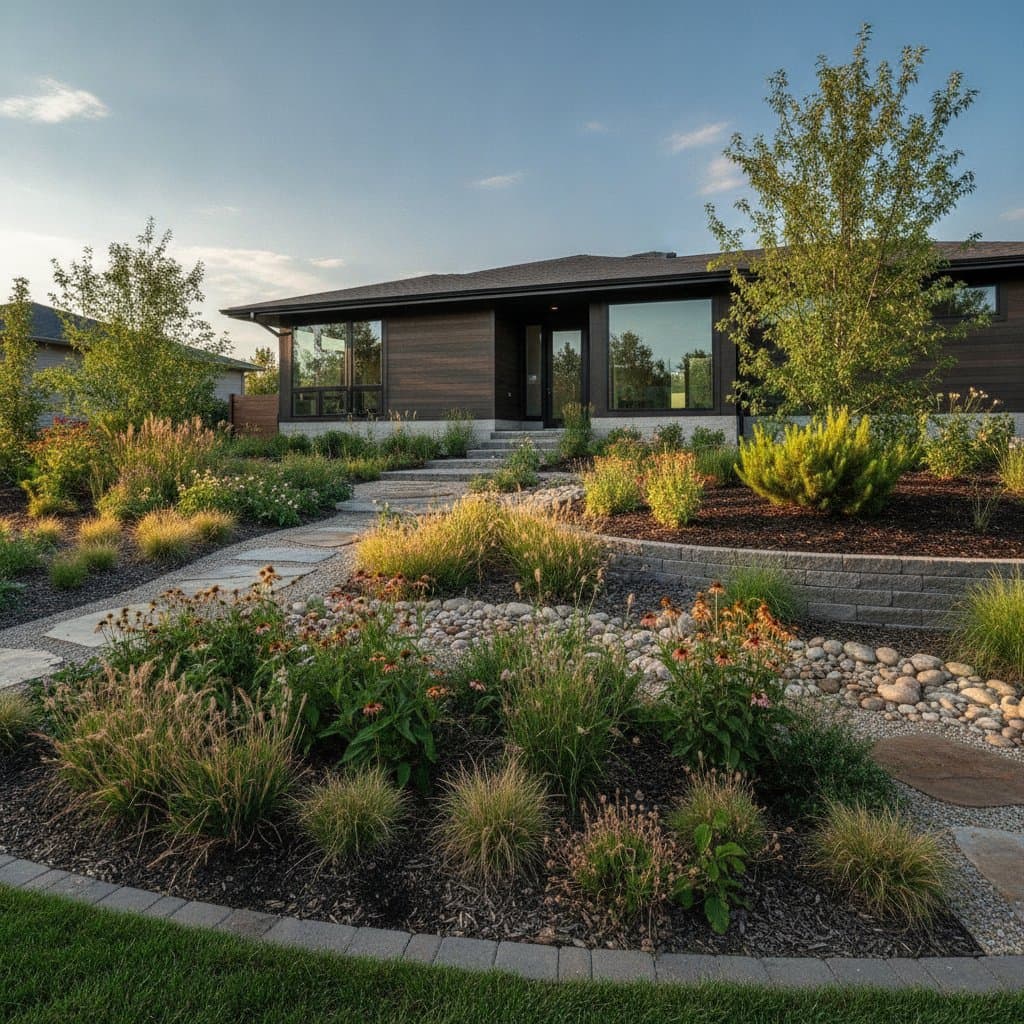
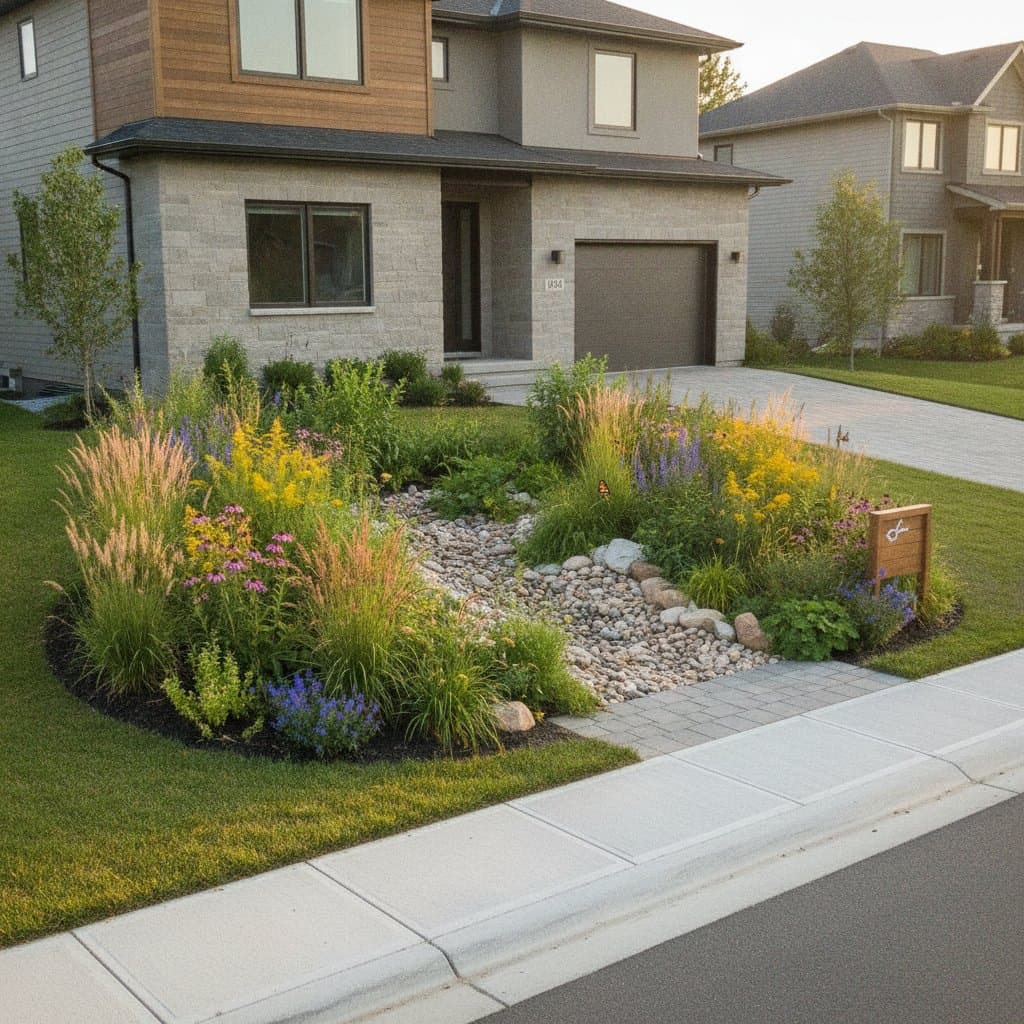
Grading directs runoff with purpose. Gentle slopes channel water toward rain gardens or gravel swales for gradual infiltration. These elements add visual depth to otherwise flat areas.
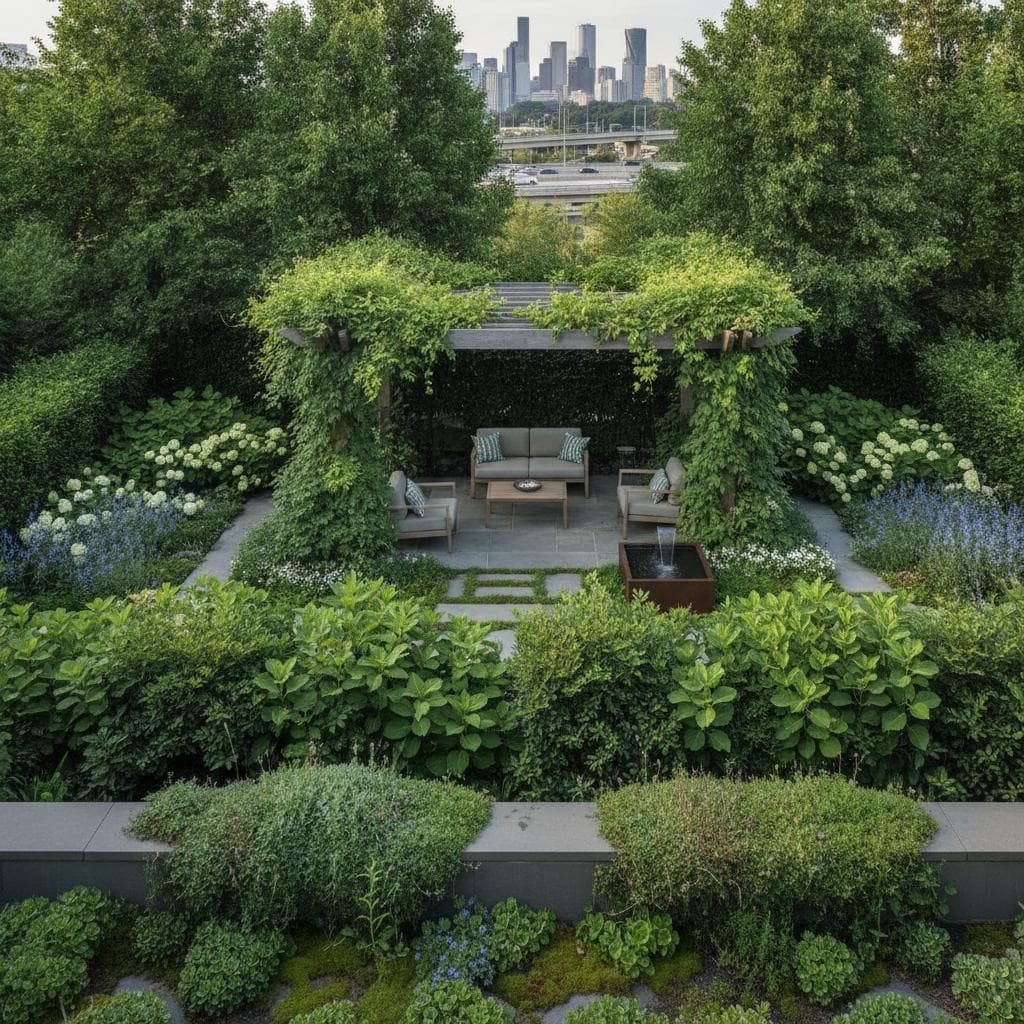
Plant selection completes the system. Native species and drought-tolerant varieties survive local extremes through deep or efficient root structures. Layering shrubs with ground covers stabilizes soil in storms and maintains even moisture during dry periods.
Expert Insights on Climate-Ready Design
Landscape architect Marisol Vega describes these yards as living infrastructure. She notes that each layer from soil to canopy contributes to water and temperature management. Environmental horticulturist Sean Duval emphasizes diversity in plant types and irrigation methods. Multiple species perform distinct roles and allow faster recovery after weather events.
Research supports these observations. Mixed plantings of trees, shrubs, and perennials stabilize soil, provide shade, and cool surrounding air through evapotranspiration.
Design Strategies That Work
Several proven approaches combine durability with visual interest.
- Replace sections of turf with mixed ground covers such as creeping thyme or sedum. Native grasses including blue grama develop deep roots that resist both drought and erosion.
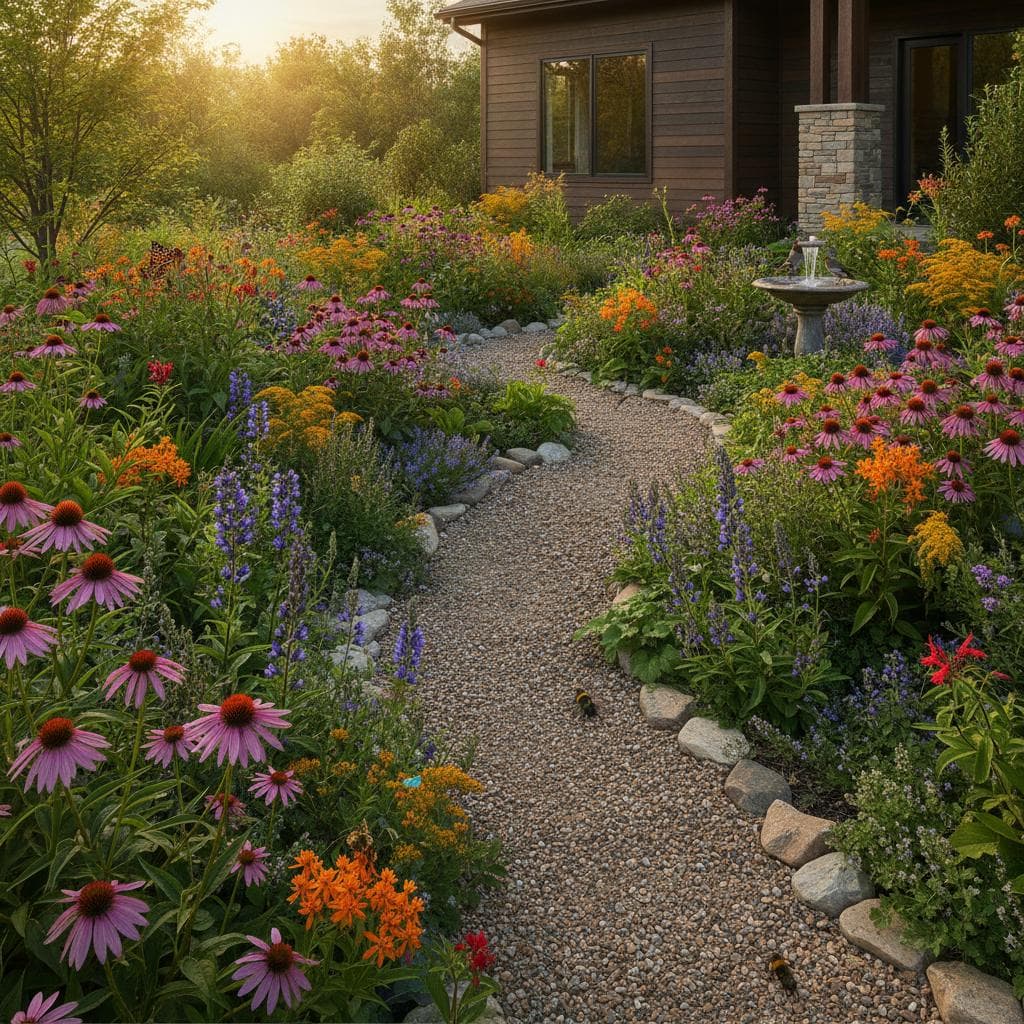
- Install permeable pathways using pavers, gravel, or decomposed granite. These surfaces allow water to filter through rather than pool or run off.
- Build rain gardens as shallow planted basins near downspouts. Species such as irises and coneflowers filter runoff and retain moisture for adjacent plants during dry months.
- Add drip irrigation paired with soil moisture sensors. Delivery occurs only at root zones and only when required.
- Apply organic mulch to moderate soil temperature, reduce evaporation, and suppress weeds while improving long-term soil structure.
- Position trees and shrubs to create shade and wind protection that lowers evaporation rates.
Real-World Transformations
Los Angeles homeowner Kendra Liu removed her lawn and installed native shrubs, gravel paths, and a central rain garden. The space now supports butterflies and bees while remaining attractive after extended dry periods. Designer Adrian Cruz addressed repeated flooding by combining native grasses, permeable stone, and raised beds that direct water into subsurface storage for later use.
Observe and Adapt Your Landscape
Begin with direct observation of water flow during storms and dry zones in summer. Replace one turf section first, then add a rain garden or test permeable materials. Local botanical gardens and municipal rebate programs supply further guidance. The finished yard manages extremes through ongoing collaboration with natural patterns rather than resistance to them.