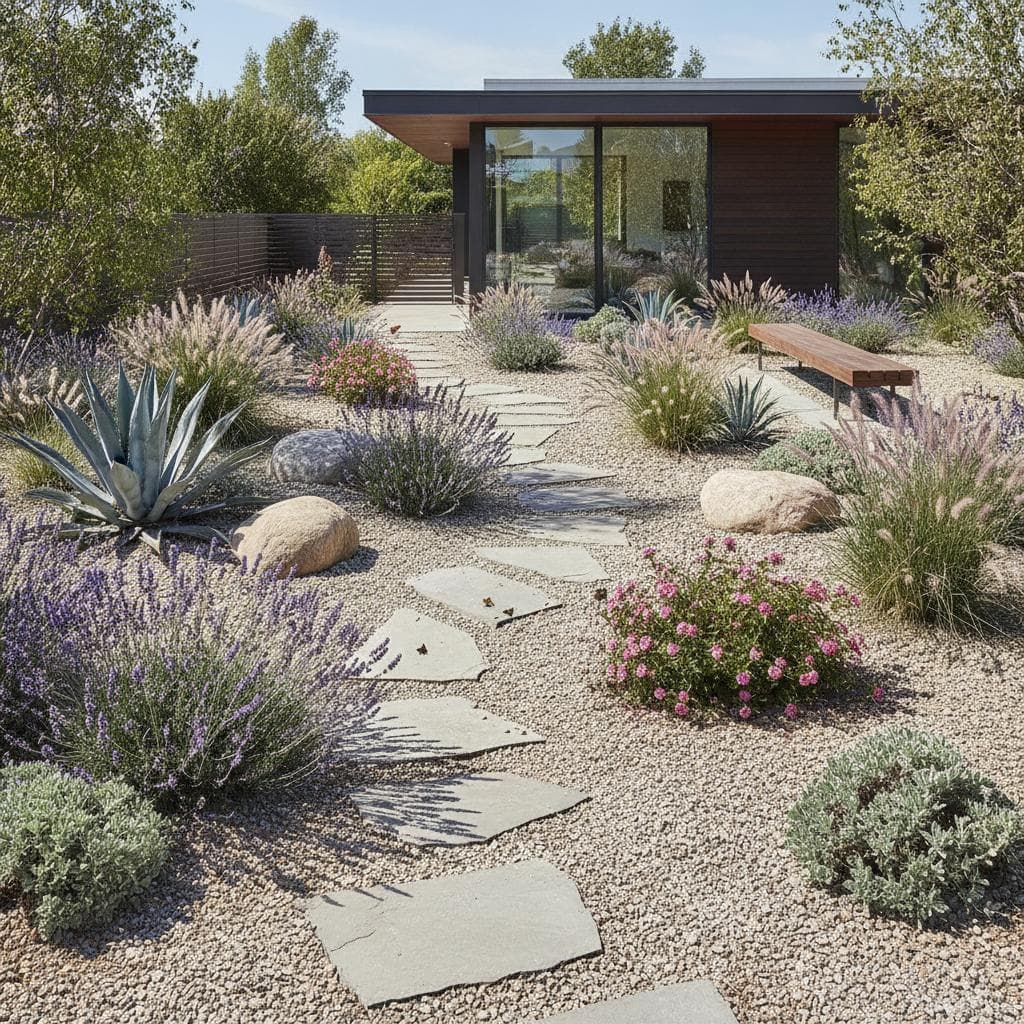
Climate-Smart Gardens Built for Droughts and Floods
- Observe water flow across the property during rain to identify runoff paths and low spots.
- Amend soil with compost to improve absorption and retention capacity.
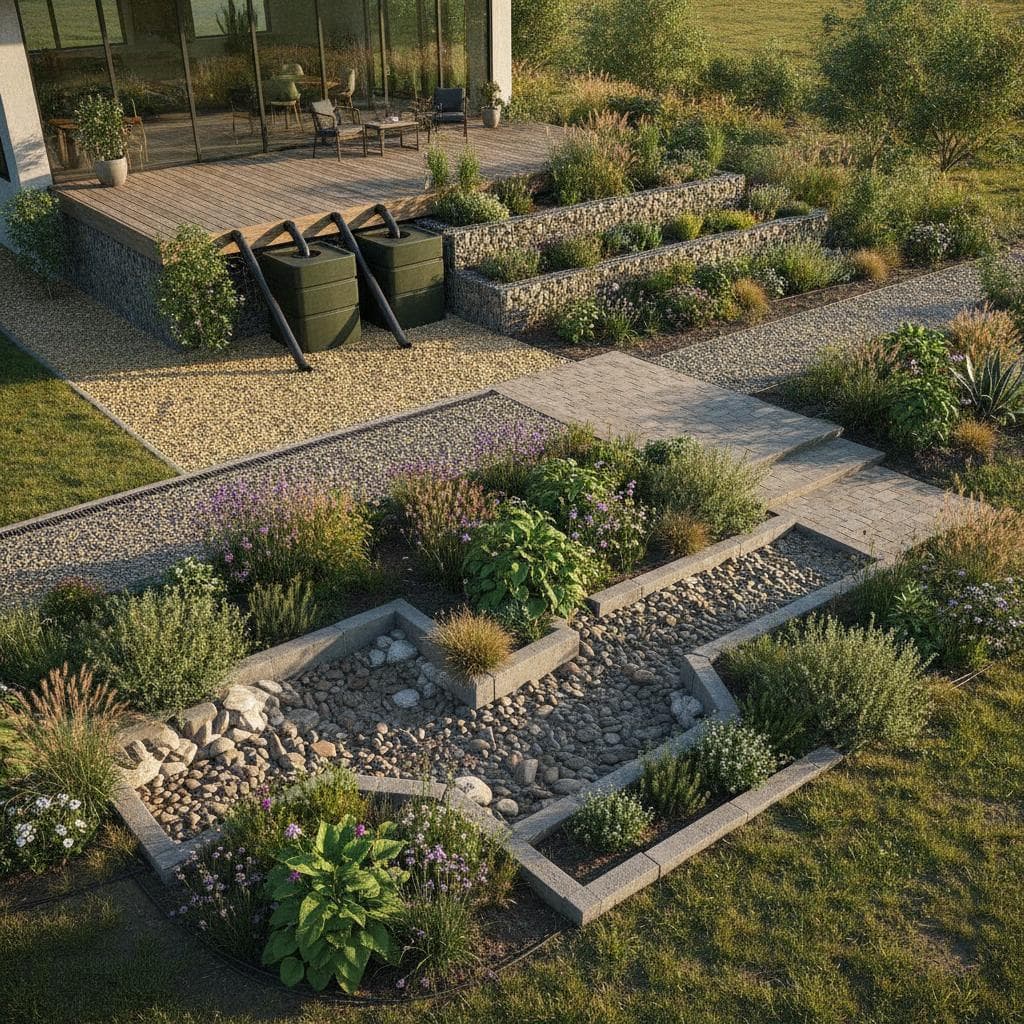
- Install swales, rain gardens, and rain barrels to manage excess water.
- Select native plants grouped by moisture needs for long-term resilience.
- Apply mulch consistently and build permeable surfaces to reduce erosion.
- Maintain systems through seasonal checks and adjustments.
Climate-related weather extremes have made traditional landscaping less practical. Gardens that once relied on predictable rainfall now face extended dry periods followed by intense storms. The solution lies in designing landscapes that adapt rather than resist these patterns. A climate-smart garden applies water management, soil improvement, and targeted plant selection to endure both droughts and floods.
Project Overview
When to DIY vs Hire
This project suits homeowners with basic landscaping experience. Steep slopes, persistent foundation drainage problems, or active erosion require consultation with a landscape engineer. Professional handling is necessary for major grading, retaining walls, or underground pipe installation. Most homeowners can safely construct swales, rain gardens, and plant beds independently.
Materials and Tools
Materials:
- Native and drought-tolerant plants
- Mulch such as wood chips, straw, or gravel
- Compost and organic matter
- Permeable pavers or crushed stone
- Rain barrels or water tanks
- Drainage rock and perforated pipe where needed
- Landscape fabric for erosion control
Tools:
- Shovel and garden rake
- Wheelbarrow
- Level and measuring tape
- Pruning shears
- Garden hose or drip irrigation kit
- Trowel for planting
Budget-conscious gardeners can reuse concrete chunks as edging or fallen logs as water barriers. These low-cost elements provide effective control while blending naturally into the site.
Step-by-Step Process
1. Study Your Yard’s Water Flow
Observe water movement during rainfall. Note high points, collection areas, and natural drainage routes. Mark these locations with stakes to guide feature placement.
2. Improve Soil Structure
Healthy soil absorbs water during wet periods and holds moisture in dry spells. Incorporate compost into the upper soil layer without compaction. On clay soils, blend in coarse sand to enhance drainage.
3. Create Water Storage and Drainage Features
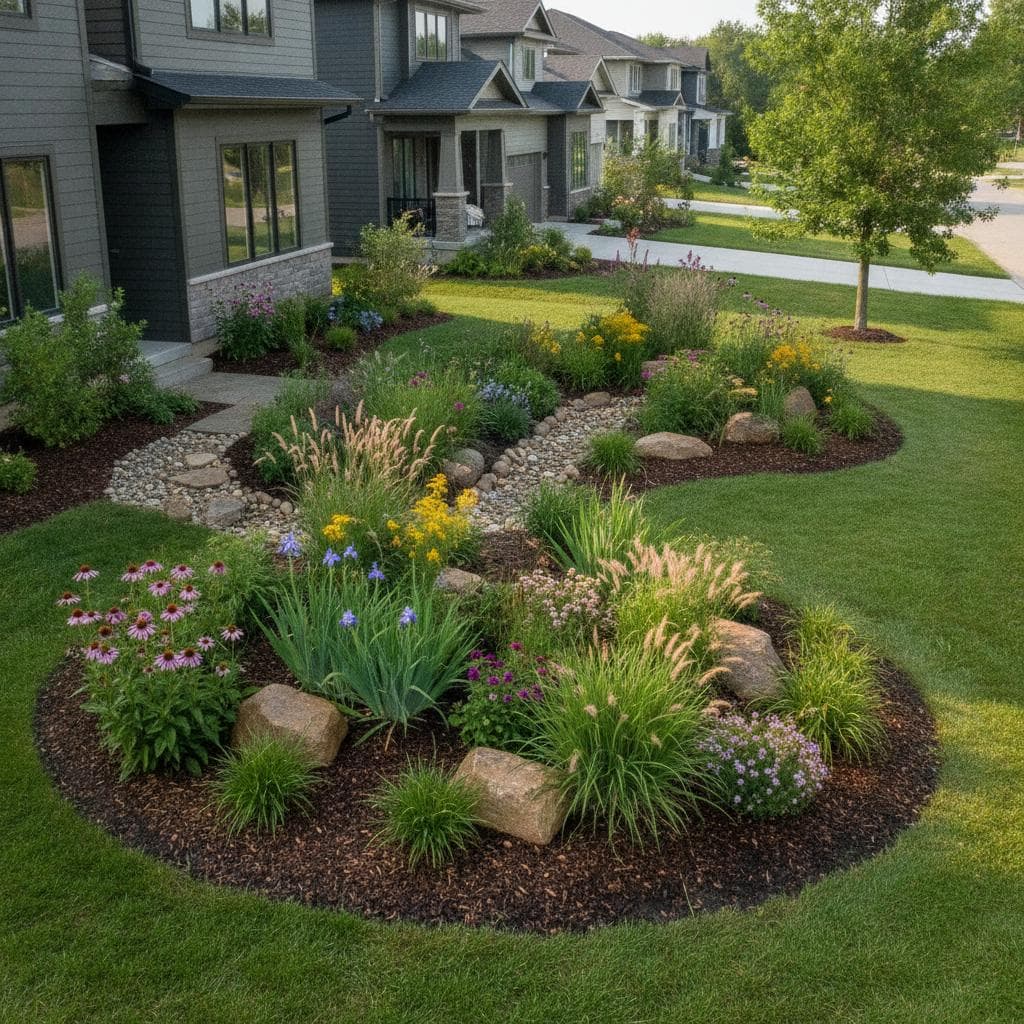
Position a rain garden at slope bases to capture runoff. Form shallow swales to direct water away from buildings. Install rain barrels at downspouts for later use. In flood-prone zones, construct gravel trenches or rock-lined channels that convey water safely while contributing visual interest.
4. Choose Climate-Resilient Plants
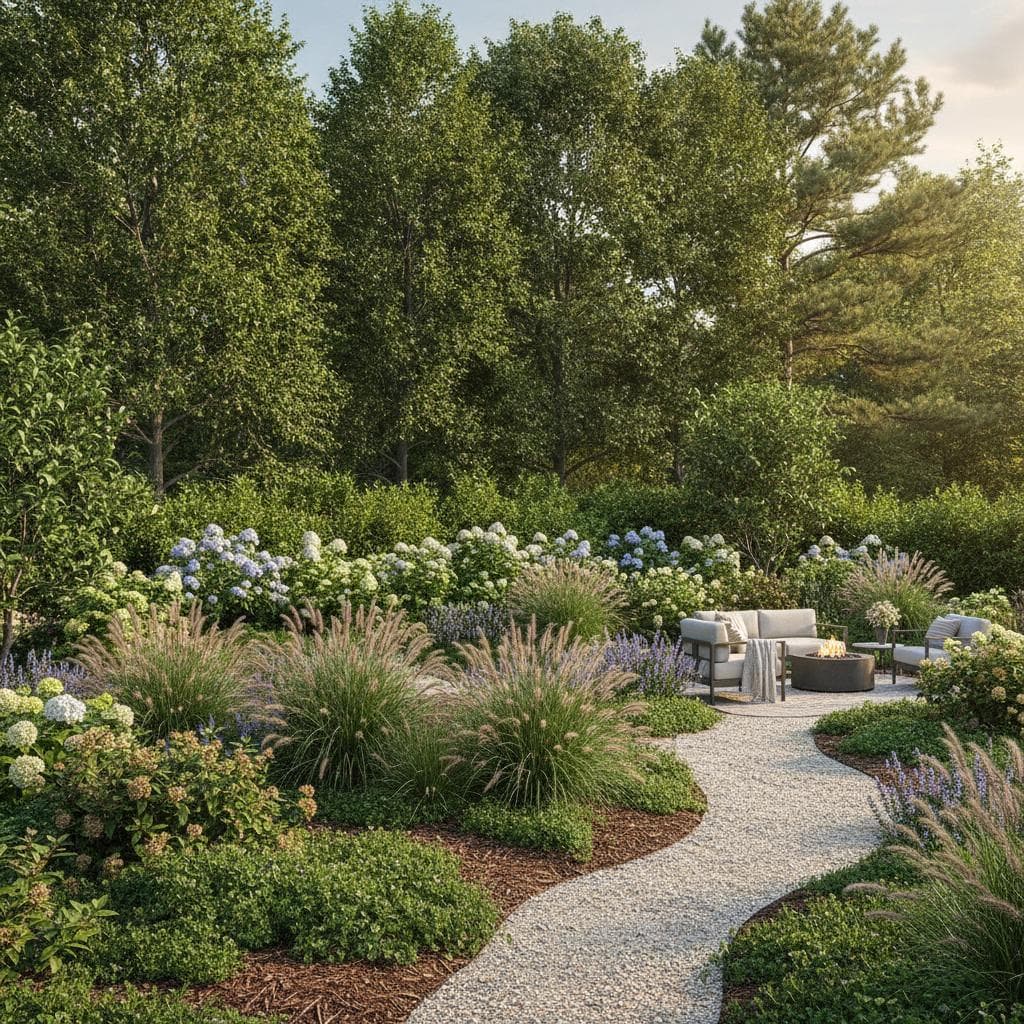
Native species perform best because they match local conditions. Combine deep-rooted perennials, grasses, and shrubs tolerant of both wet and dry phases. Examples include switchgrass, coneflower, black-eyed Susan, and sedges. Group plants according to water requirements, placing moisture lovers near collection areas and drought-tolerant varieties on higher ground.
5. Mulch for Moisture Control
Apply two to three inches of mulch to moderate soil temperature and limit evaporation. Use gravel in flood zones to prevent displacement. Keep mulch away from stems to avoid rot.
6. Install Smart Irrigation
Employ drip lines or soaker hoses during dry intervals. Connect systems to timers or sensors that respond to actual soil moisture levels.
7. Build Permeable Surfaces
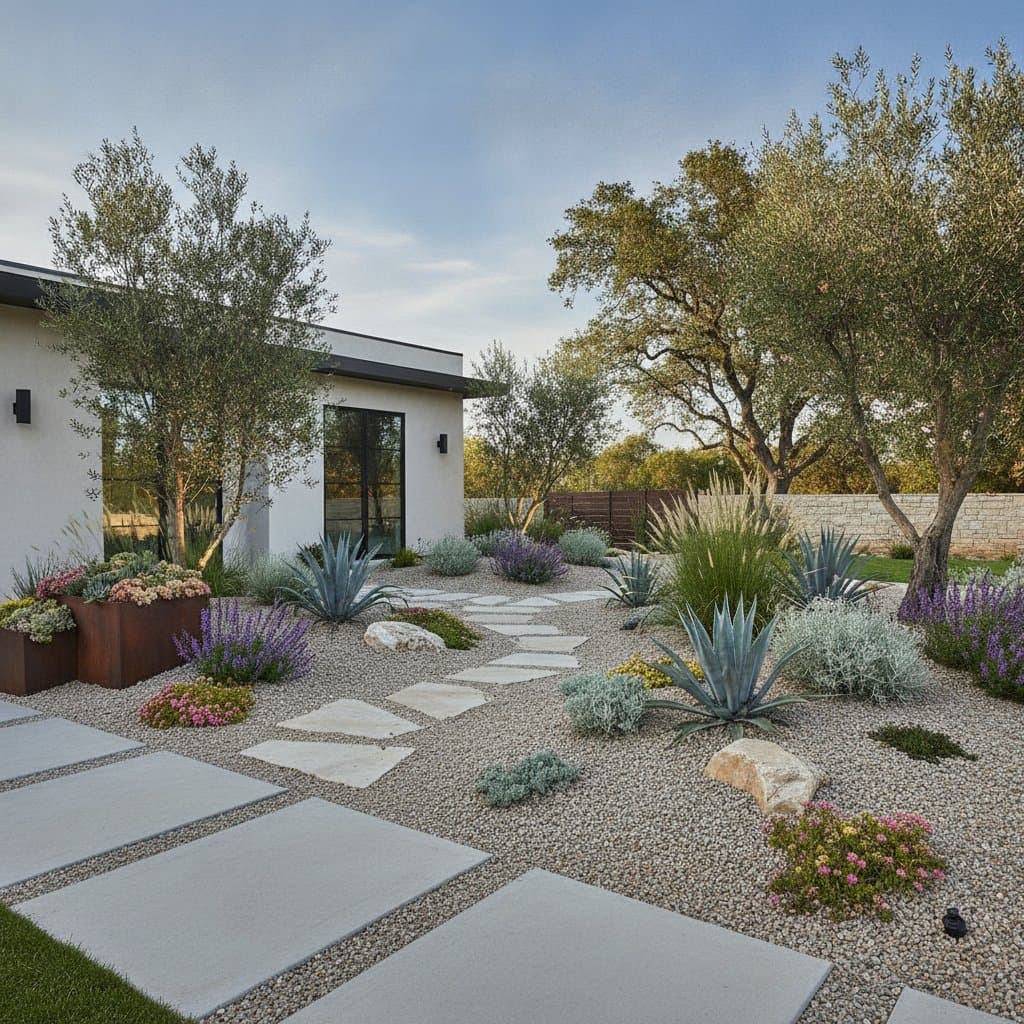
Substitute solid pavement with permeable pavers, gravel paths, or open stone joints. These materials allow infiltration and reduce pooling near structures.
8. Maintain and Monitor
Inspect drainage paths after storms. Clear debris and replenish mulch as needed. Prune for airflow and replace plants that do not establish well. Over successive seasons the garden stabilizes and demands less attention.
Quality Control
Verify that rain gardens drain within 48 hours. Adjust slopes or add coarse material if water lingers. Maintain uniform mulch depth and ensure grading prevents erosion. Proper planting depth and soil preparation determine long-term stability.
Long-Term Maintenance and Performance
Root systems deepen over time, reinforcing soil and improving infiltration. Native plants spread to suppress weeds naturally. Seasonal composting restores organic content without purchased amendments. Clean gutters and inspect collection components regularly to sustain function for years.
Expanding Your Resilient Landscape
After the core garden is established, incorporate pollinator strips, edible beds, or small water features that also serve storage functions. Each addition increases self-sufficiency while supporting biodiversity. Thoughtful application of these methods produces a landscape that protects property and adapts to variable conditions.