Climate-Smart Gardens That Beat Drought and Floods
If you have ever watched your yard swing between cracked soil in dry spells and soggy puddles after heavy rain, you already know how unpredictable weather can wreck a garden. Most traditional landscaping fails under these conditions because grass lawns, thirsty ornamentals, and shallow-rooted plants cannot adapt. You can create a garden that survives these swings and actually thrives. Success begins when you work with local climate patterns rather than against them.
Why Most Gardens Fail Under Climate Stress
Most gardens collapse during drought or flood because they prioritize appearance over resilience. Homeowners often select plants based on trends or looks alone. These choices rarely align with actual soil type, drainage, or rainfall patterns. Shallow roots dry out quickly in drought, while compacted soil prevents drainage during heavy rain.
Getting the Foundation Right
Begin with the soil before planting. Healthy soil absorbs water during storms and releases it gradually in dry periods. Add organic matter such as compost, shredded leaves, or aged manure to improve both drainage and moisture retention. Amend clay soils with coarse sand and organic material. Amend sandy soils with compost to increase water-holding capacity.
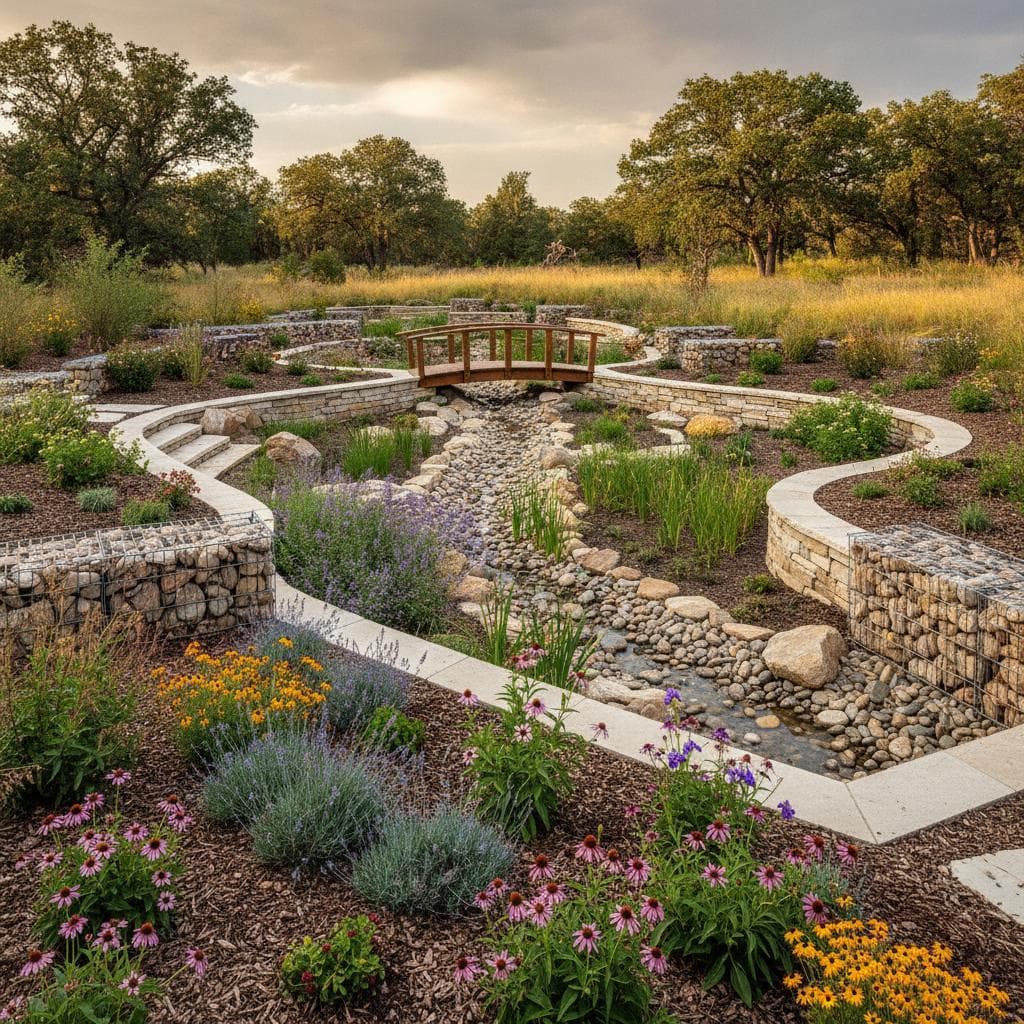
Shape the land to guide water movement. Direct slight slopes away from buildings yet toward planting areas. Install shallow swales to slow runoff and increase absorption. In flood-prone zones, build raised beds or berms to keep roots above saturated ground.
The Right Plants for the Job
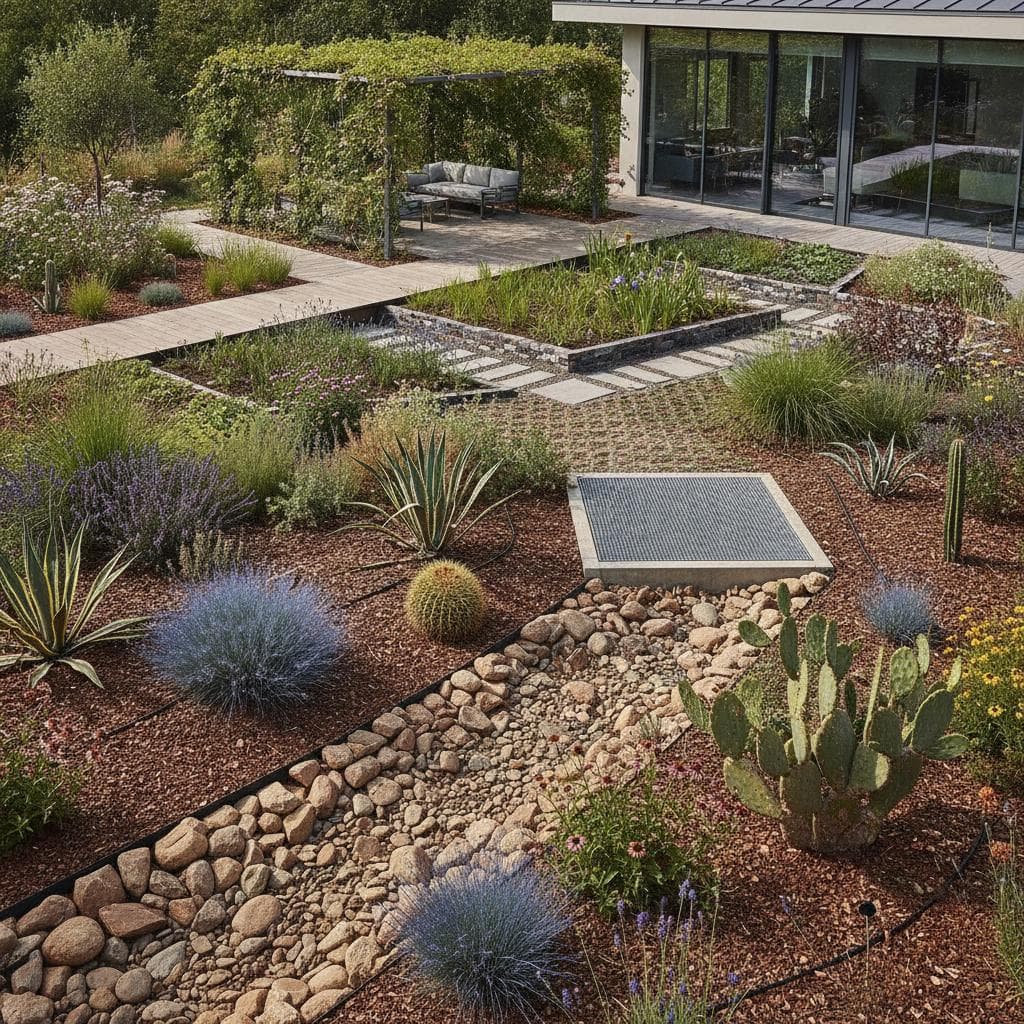
Select climate-adaptive plants to increase garden resilience. Focus on species that tolerate both dry and wet conditions. Deep-rooted native grasses, drought-tolerant perennials, and flood-resistant shrubs perform reliably.
Consider these options:
- Switchgrass (Panicum virgatum) manages both soggy and dry soil once established.
- Coneflower (Echinacea purpurea) withstands drought yet recovers after heavy rain.
- Redtwig dogwood (Cornus sericea) grows well along wet edges and adds winter color.
- Yarrow (Achillea millefolium) resists heat and dry conditions.
- Serviceberry (Amelanchier) adapts to moisture changes and supports wildlife.
Group plants by similar water needs through hydrozoning. This approach avoids overwatering drought-hardy species while meeting the requirements of thirstier plants.
Smarter Water Management
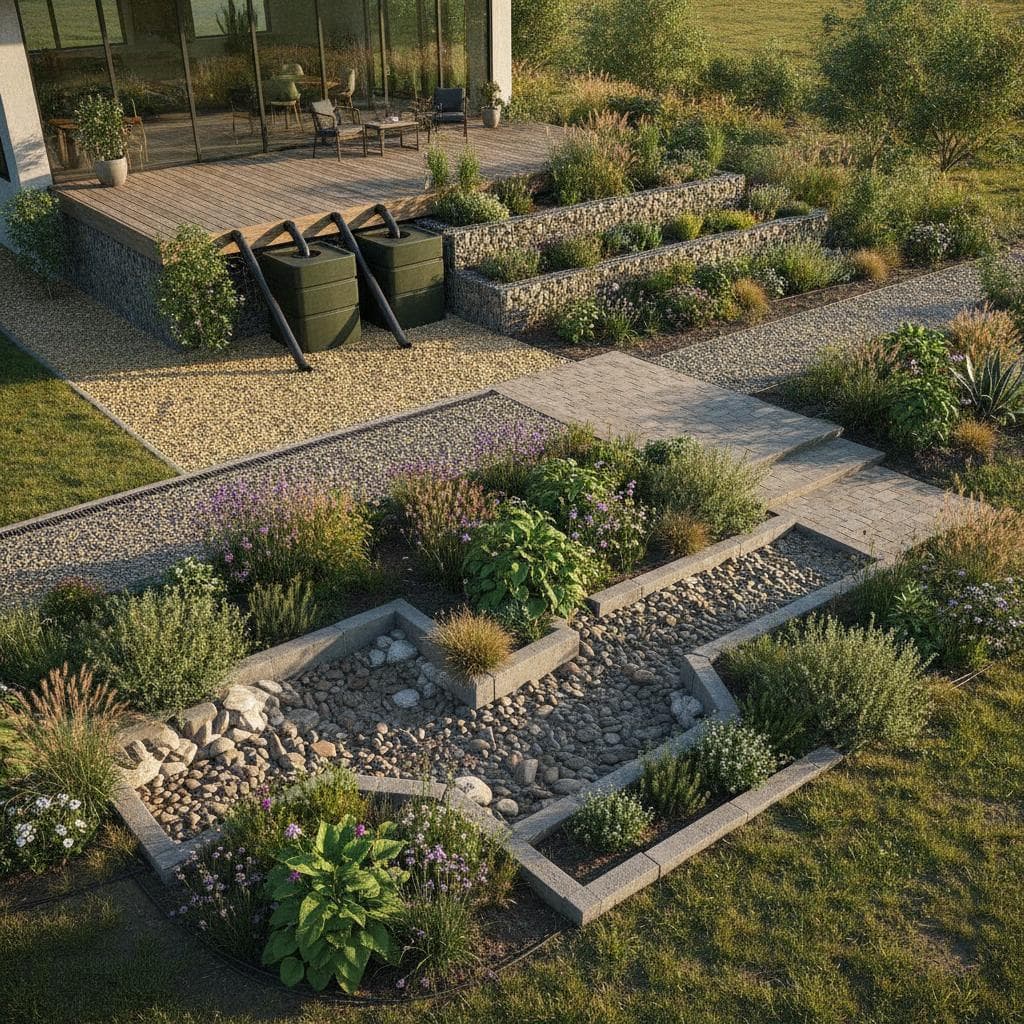
Even resilient gardens benefit from efficient supplemental water. Install drip irrigation to deliver moisture directly to roots and reduce evaporation. Apply a two- to three-inch layer of shredded bark or compost as mulch, keeping it away from stems. Connect a rain barrel to a downspout for dry-period supply. Create a rain garden to collect and filter runoff while preventing flooding.
Building Resilience Through Design
Design the garden as an interconnected system. Trees reduce evaporation through shade. Groundcovers prevent erosion. Perennial roots stabilize soil during storms. Replace large turf areas with native meadow mixes, pollinator strips, or low-growing groundcovers such as creeping thyme or sedum. These alternatives require less irrigation and recover faster from stress.
Common Mistakes to Avoid
Avoid expecting instant results from climate-adaptive landscaping. Soil improvement and root establishment require time. Refrain from heavy fertilization or overwatering during the first weeks. Allow plants to develop deep roots before adjusting irrigation schedules. Perform regular maintenance including weeding, pruning, and post-storm inspection.
Practical Steps for Long-Term Success
Start with a small area and expand based on observed results. Record rainfall, soil moisture, and plant performance to identify patterns. Choose native plants suited to local conditions. Test irrigation systems seasonally. Walk the yard after heavy rain to note pooling and adjust grading as needed.
Ongoing Care for Lasting Results
Established gardens require observation more than constant work. Monitor plant recovery from stress to guide future selections. Add organic matter each season. Reapply mulch as it decomposes. Landscapes built on these principles adapt and improve over time, reducing maintenance demands while providing consistent beauty.