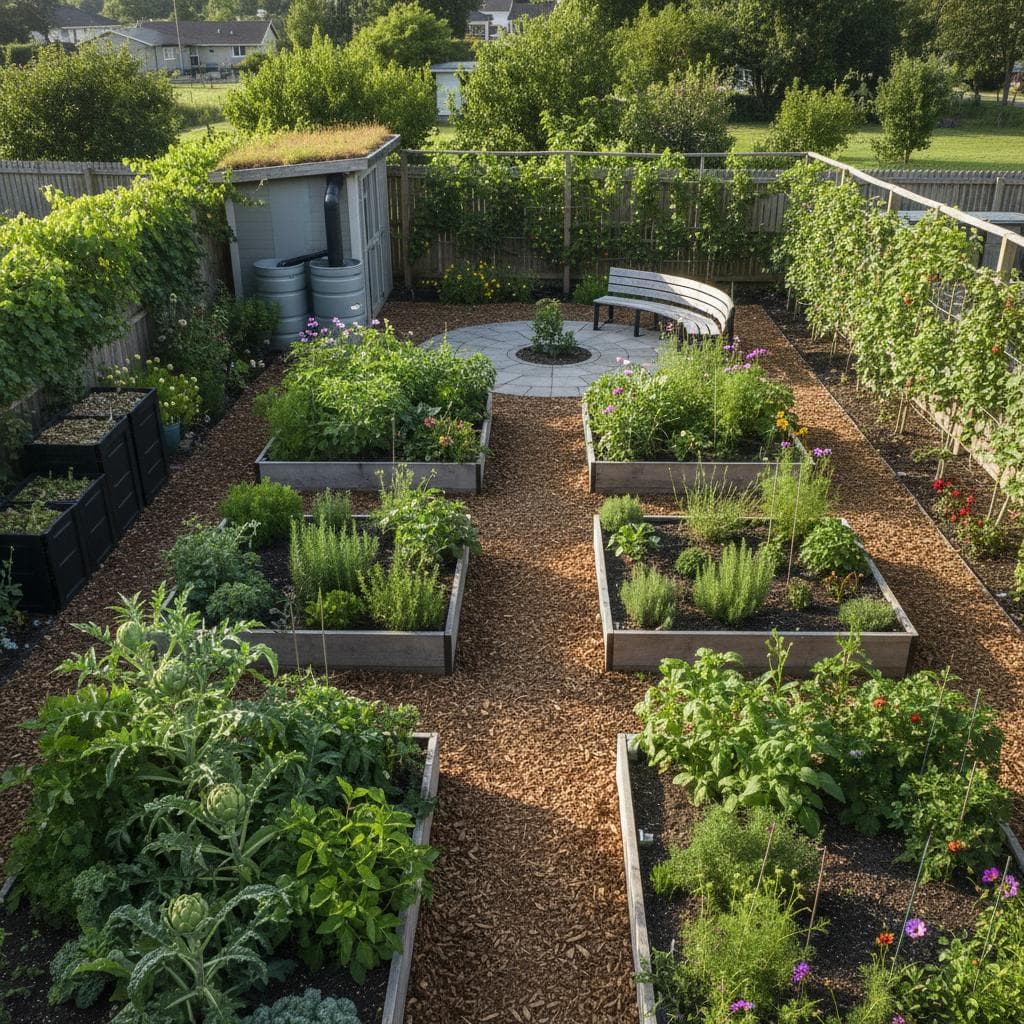
Climate Gardens: Food, Beauty, and Emission Reductions
Consider a modest plot of earth and its potential impact. A garden extends beyond providing sustenance for the household or enhancing landscape appeal. It sequesters atmospheric carbon, sustains pollinators, and revitalizes depleted soil. This forms the essence of a climate garden, a dynamic ecosystem that aids planetary health while gratifying human needs and senses.
Cultivating with Intention
A climate garden diverges from conventional vegetable plots. Rather than viewing soil merely as a substrate for growth, regard it as a vibrant ecosystem. Each root, earthworm, and microorganism contributes to functionality. The objective involves maintaining soil coverage, vitality, and biodiversity. Such conditions retain carbon in the earth, preventing its release into the atmosphere.
Designs That Sustain and Inspire
An effective climate garden achieves elegance without resembling agricultural fields. Integrate form and productivity through deliberate planning. Construct raised beds bordered by salvaged stone, serpentine pathways flanked by culinary herbs, or orchards interplanted with nectar-rich blooms.
Incorporate visual elements such as the vibrant hues of rainbow chard, the metallic sheen of lavender foliage, or the delicate petals of alpine strawberries. These choices elevate utilitarian crops into artistic displays. Compact areas, including patios or entryways, yield abundantly via vertical supports, suspended planters, or tiered arrangements.
For urban settings, select dwarf fruit varieties like columnar apples that thrive in containers. Pair them with trailing nasturtiums for edible ground cover. In larger yards, establish guilds: cluster nitrogen-fixing beans with corn and squash to mimic natural synergies, optimizing space and resources.
Strategies for Carbon Sequestration
To establish a garden as a dedicated carbon sink, emphasize perennials. These plants persist across seasons, minimizing tillage that releases stored carbon. Their extensive roots anchor emissions underground for decades. Suitable options include serviceberry trees, currant shrubs, rhubarb crowns, and established mint varieties, all harmonizing within regenerative frameworks.
Deploy cover crops strategically. These green manures shield bare earth from erosion, infuse nutrients upon decomposition, and offer forage for beneficial insects during off-seasons. Select crimson clover for nitrogen boost in temperate zones, hairy vetch for nitrogen in cooler climates, or winter rye for hardy suppression. Sow them in fall after harvesting summer yields, then till lightly in spring to integrate benefits.
Composting represents a cornerstone practice. Divert kitchen scraps, yard trimmings, and paper products from waste streams into dedicated bins. Layer greens and browns in a 1:2 ratio, turning weekly to aerate and accelerate breakdown. The resulting humus returns to beds, closing the nutrient loop and averting methane production in landfills. Aim for a three-bin system to manage stages efficiently, yielding several cubic feet of material yearly.
Fostering Deeper Connections
Beyond ecological advantages, a climate garden cultivates mindfulness. Harvesting homegrown produce heightens sensitivity to cycles of seasons, climatic shifts, and the fulfillment of stewardship. Appreciation extends to the granular nuances of earth, the activity of insects, and the morning light on harvestable leaves.
Engage senses fully: note the earthy aroma after rain, the tactile joy of weeding, or the flavor burst from sun-ripened tomatoes. These experiences build resilience, encouraging communities to share seeds, knowledge, and harvests, amplifying collective impact.
Implementing Regenerative Practices
Commence modestly. Dedicate a single raised bed or cluster of pots to core principles. Source native species, which align with local ecosystems, demanding minimal irrigation and maintenance. Examples include black-eyed Susans for Midwest pollinator support or manzanita for arid West adaptations.
As proficiency increases, scale up. Explore polycultures where legumes enhance tomato vigor or marigolds deter nematodes. Develop food forests with layered canopies: tall nuts over fruits, shrubs, herbs, and groundcovers. Practice seed collection from robust performers to perpetuate adapted genetics.
Monitor progress with simple journals, tracking yields, soil tests, and biodiversity sightings. Adjust based on observations, such as adding mycorrhizal inoculants for root health. A climate garden embodies integrated living, where aesthetics, sustenance, and stewardship converge. Each deliberate planting affirms that individual actions contribute meaningfully to global equilibrium, right in one's own domain.