Noise-Reducing Plants Reshape Garden Design
Unwanted noise from traffic or neighbors disrupts the calm many seek in a backyard. Certain plants absorb and scatter sound waves through their leaves, stems, and layered structures. This approach turns ordinary yards into quieter outdoor areas while supporting local wildlife.
Designers now combine dense foliage with strategic placement to lower sound levels. Homeowners and renters apply the same methods on patios and balconies. The result blends visual appeal with measurable acoustic improvement.
How Plants Reduce Sound
Sound waves lose energy when they strike irregular surfaces such as thick leaves or rough bark. Dense hedges absorb high-frequency noise, while taller trees interrupt lower-frequency sounds from vehicles. Multiple vegetation layers increase the overall reduction.
Living Walls and Screens
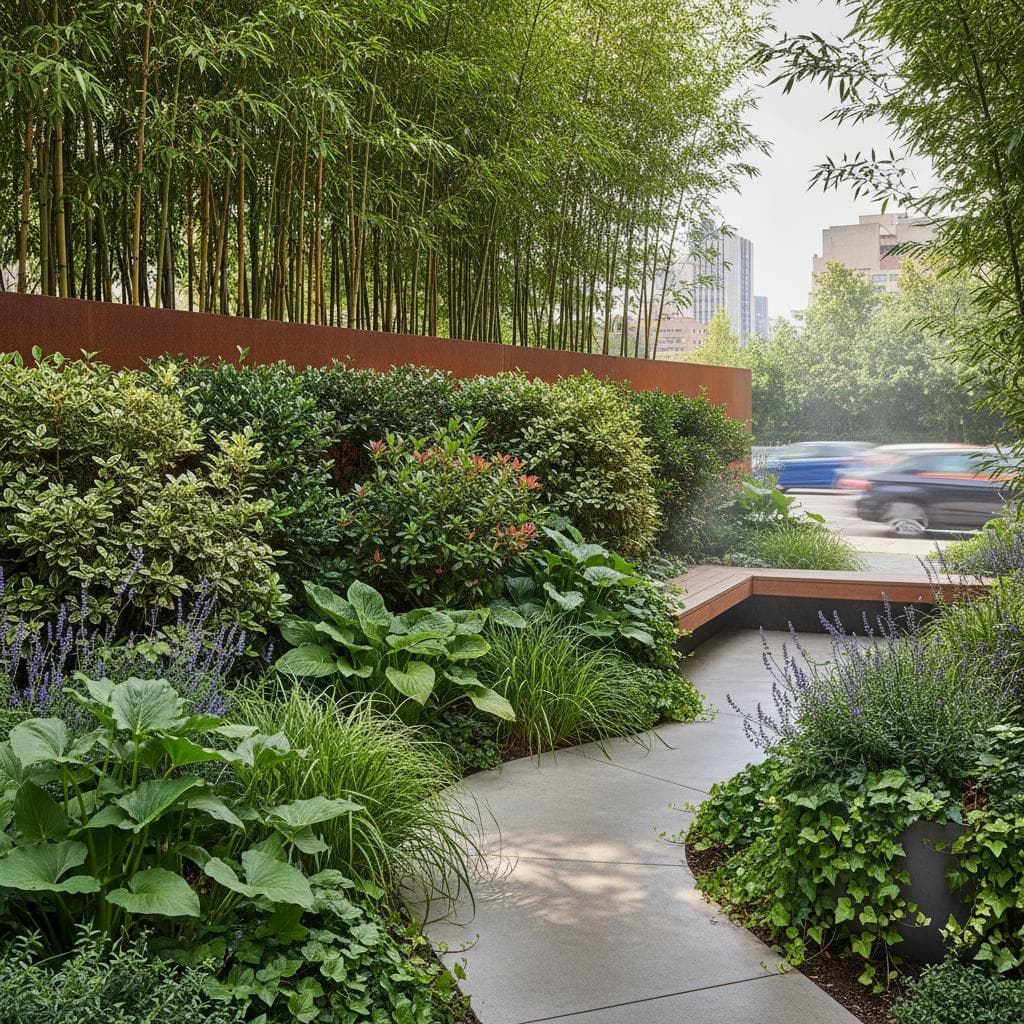
Vertical gardens built from modular panels hold soil and support ferns, vines, or flowering species. These installations buffer sound along fences or building walls. Tall bamboo or ornamental grasses planted in contained beds sway with wind and further break up noise.
Bamboo requires root barriers or large pots to control spread. When positioned correctly, the stems create both visual movement and a rustling mask for external sounds.
Recommended Plants for Sound Absorption
Select species that provide year-round density and varied heights. Combine evergreens, grasses, vines, shrubs, and canopy trees for best results.
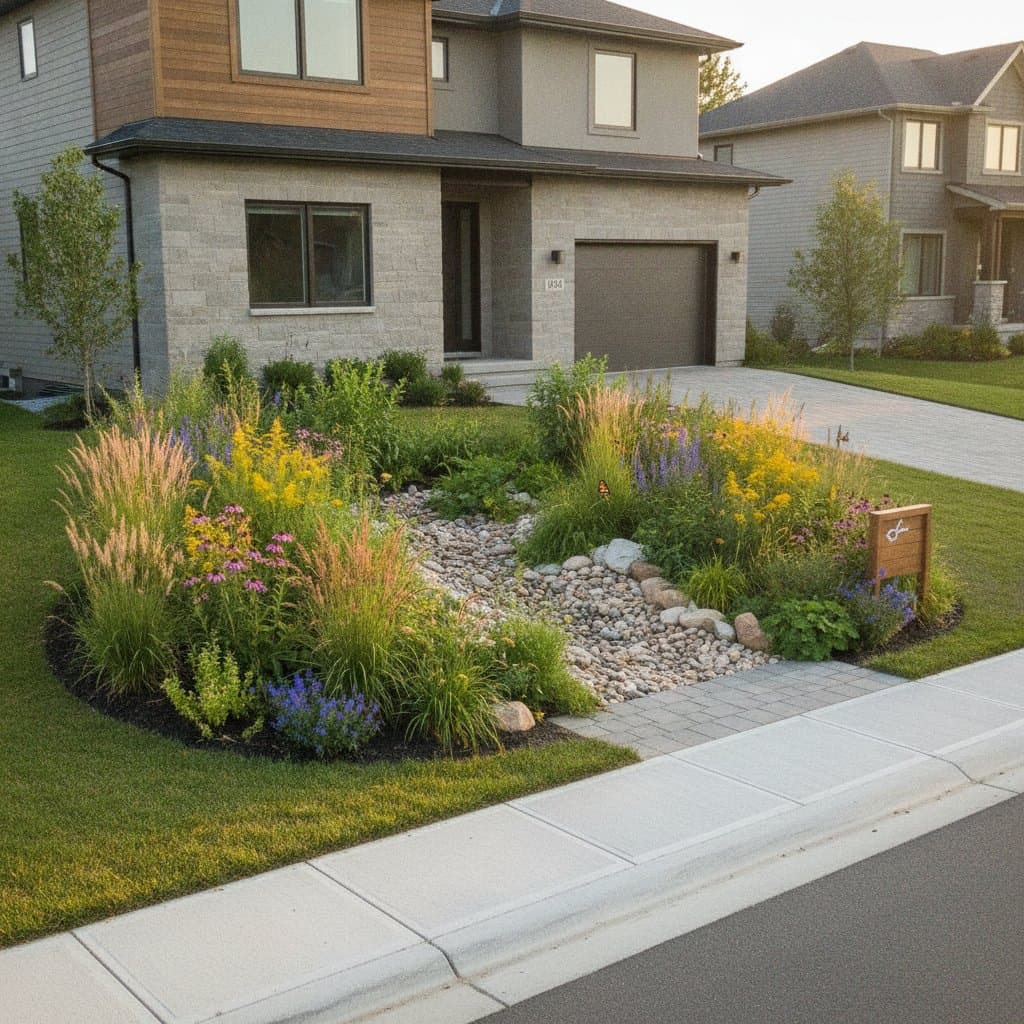
- Evergreen hedges such as laurel, holly, and boxwood maintain thick coverage that traps noise and adds privacy.
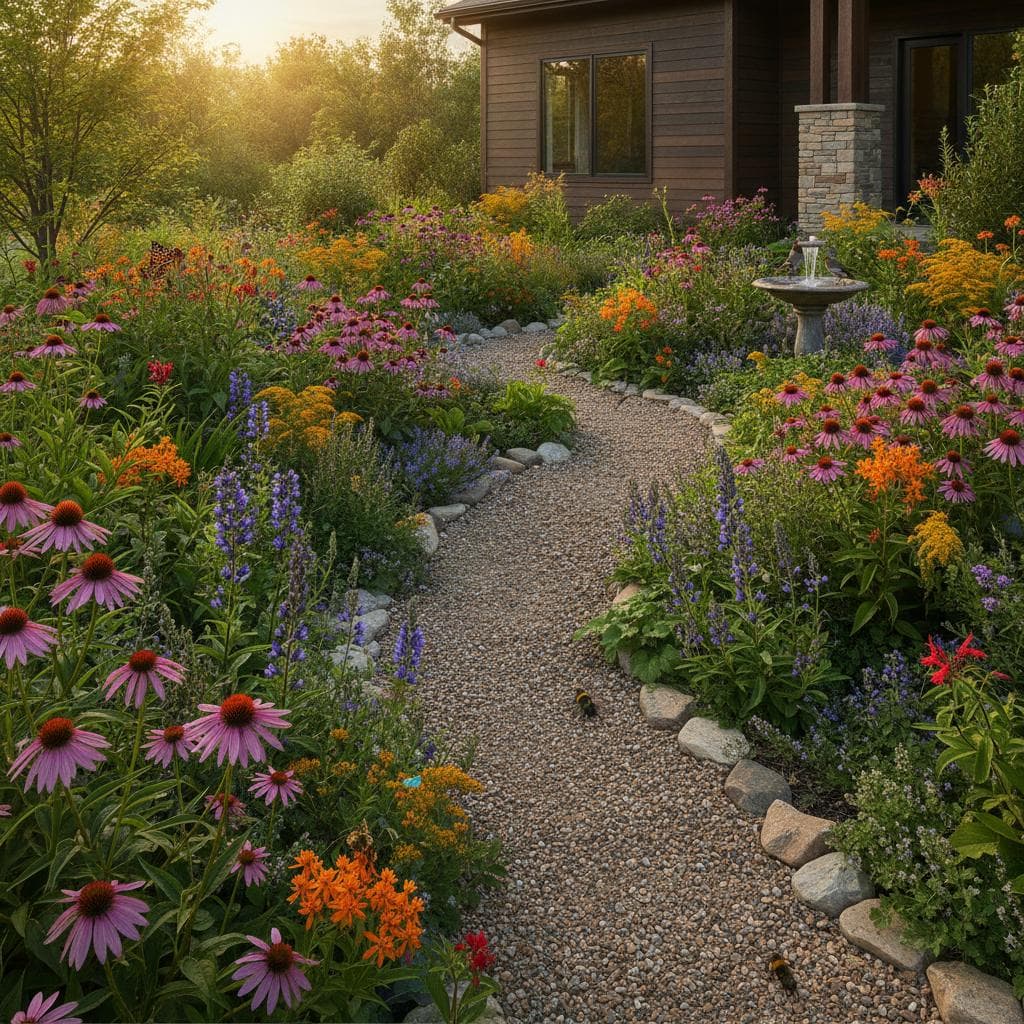
- Tall grasses including miscanthus and feather reed grass produce soft movement that masks distant sounds.
- Climbing vines like English ivy and jasmine cover fences to close openings where sound passes through.
- Broad-leaved shrubs such as hydrangea and viburnum scatter waves at mid-height while supporting pollinators.
- Dense-canopy trees including cypress and magnolia block overhead noise near roads.
Layer plants from the noise source inward, placing the tallest and densest material closest to the disturbance.
Planning and Installation Steps
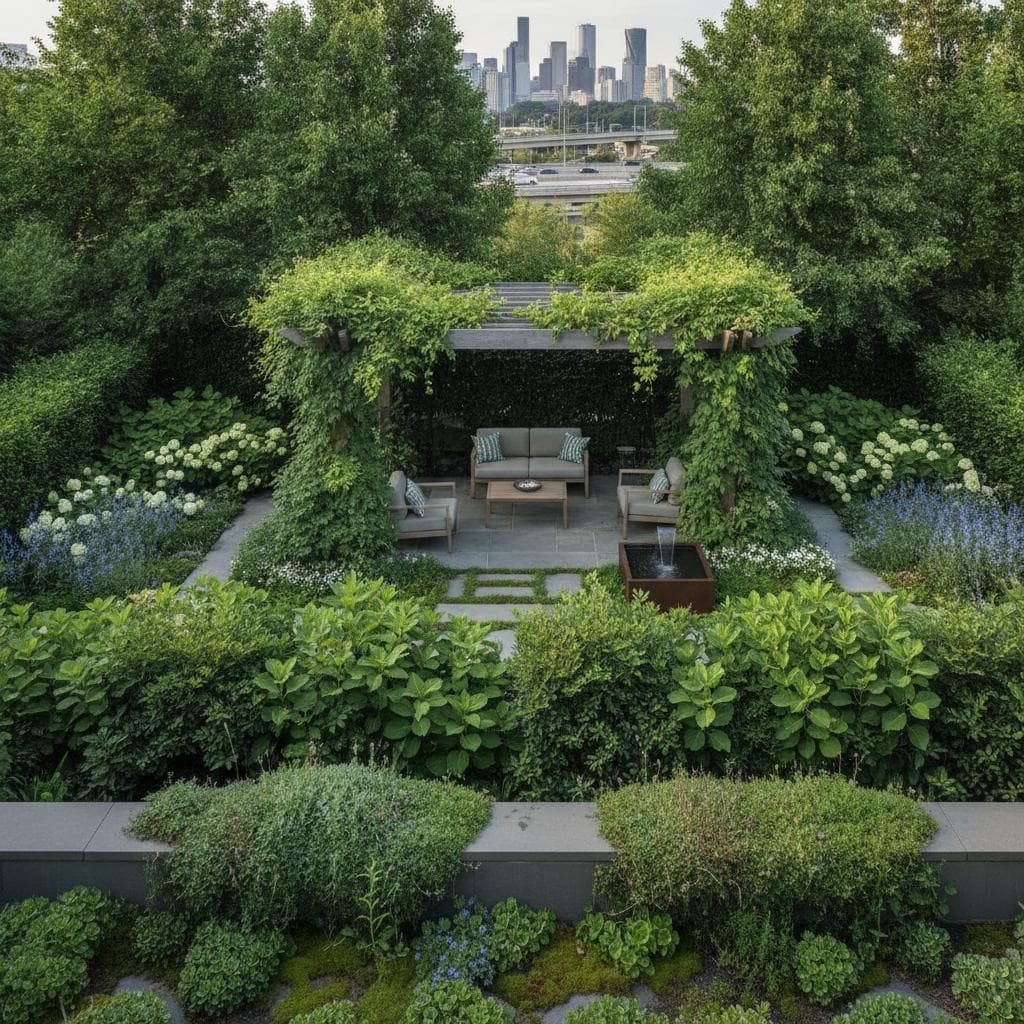
Observe the direction and type of noise before planting. Position the thickest barriers nearest the source, then add lighter layers toward seating areas. A low berm or wooden fence lined with vines improves performance.
In small spaces, group tall containers to form movable sound filters. Add a small fountain to introduce pleasant water sounds that further reduce perceived noise.
- Map entry points of persistent sound.
- Combine ground covers, shrubs, and trees for depth.
- Mix leaf textures to scatter waves.
- Include wind-responsive grasses for natural masking.
- Allow plants to mature with regular care.
Indoor Applications
Potted bamboo, trailing ivy, and green walls dampen echoes inside homes and offices. Soil and foliage absorb reverberation when paired with cork or wood surfaces. This creates acoustic continuity between indoor and outdoor zones.
Long-Term Benefits
These plantings improve air quality, support biodiversity, and increase in effectiveness each season. Regular pruning maintains density without special tools. The garden becomes a restorative space that invites longer outdoor use and clearer conversations.