Moss Walls: Revolutionizing Low-Maintenance Front Yards
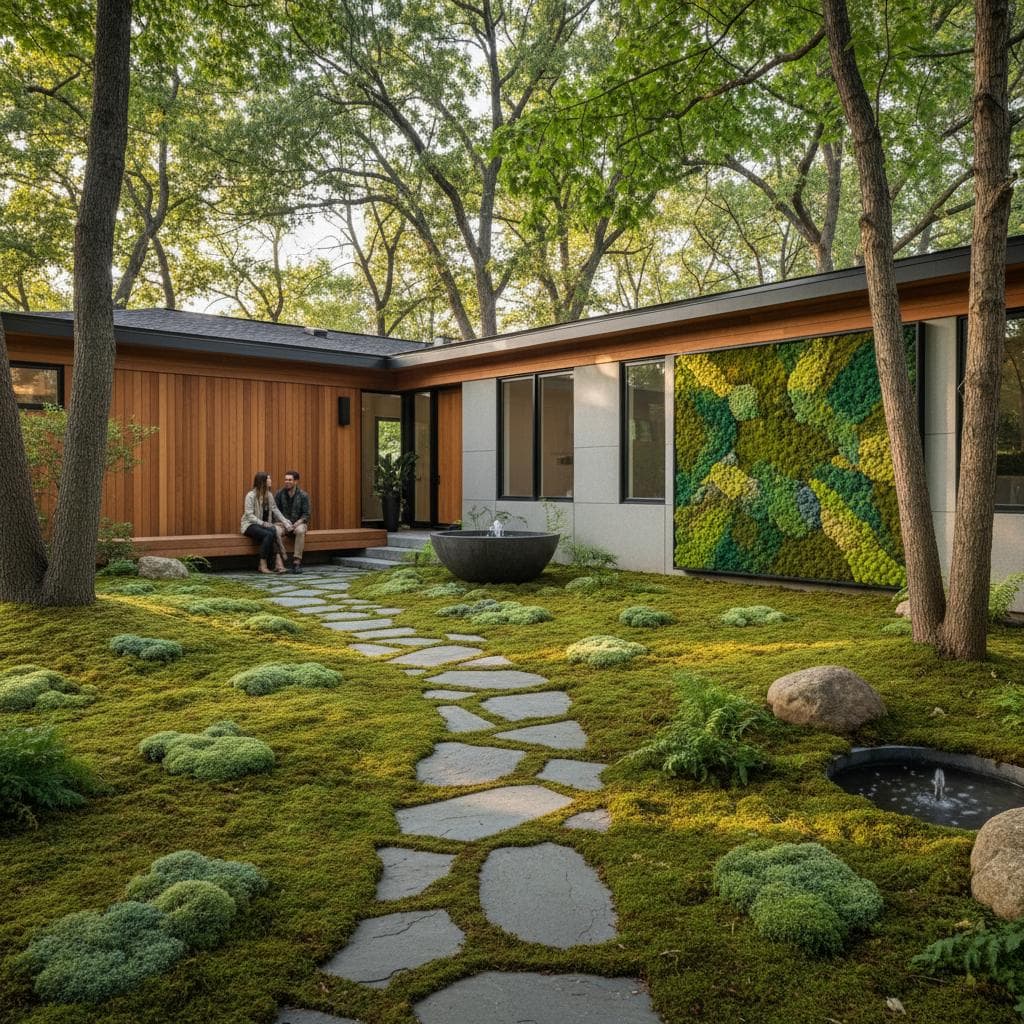
When relocating from a compact New York City apartment to a countryside cottage near the Cotswolds, the contrast in outdoor routines became immediately apparent. Neighbors dedicated weekends to lawn maintenance, with the constant drone of mowers echoing through the air. In contrast, certain properties featured vibrant green expanses devoid of grass, replaced by soft moss layers that draped low walls and spread across front gardens. This discovery revealed moss's potential to reshape front yards into attractive, effortless landscapes.
Key Takeaways
- Moss walls and lawns deliver a lush, natural aesthetic without the need for mowing, watering, or fertilizing.
- They excel in confined or shaded areas where traditional grass often falters.
- As an eco-friendly option, moss demands few resources and fosters local biodiversity.
Moss integrates seamlessly with contemporary, rustic, or farmhouse aesthetics.
Installation and ongoing care remain simple, suiting busy households or temporary residents.
Why Moss Represents the Future of Low-Maintenance Landscaping
Conventional lawns consume substantial resources. Regular mowing, irrigation, and fertilization require significant time and effort, which many households lack. Moss flourishes in conditions that challenge grass, such as shaded environments, inconsistent moisture levels, and mildly acidic soil. This adaptability positions moss as a superior choice for urban settings or compact front gardens.
Landscape designer Rebecca Linford observes, "Moss serves as nature's carpet. It requires no trimming or chemical treatments, while providing a serene, enduring ambiance." Her projects in urban and rural locations increasingly incorporate moss-focused designs at client request.
This trend manifests clearly in London, where pollution and limited sunlight lead to sparse grass in small front gardens. Moss installations address these issues by softening angular features, introducing varied textures, and demanding minimal intervention.
The Appeal of Moss Walls
Moss walls have evolved from indoor novelties to prominent outdoor elements. They introduce vertical dimension, particularly valuable in space-constrained urban areas. A moss-clad wall evokes tranquility and a direct link to the natural world. Its plush texture dampens noise, enhances air purification, and maintains visual appeal throughout the seasons.
Advancements in installation methods have democratized moss walls. Modular panels, embedded with either preserved or live moss, attach easily to fences, building exteriors, or garden partitions. These pre-cultivated units deliver immediate impact without extensive preparation.
Garden designer Paul Moretti notes that clients seek "living art rather than mere vegetation." Moss walls fulfill this vision by combining sculptural form with organic essence, evoking the peaceful minimalism of Japanese gardens suited to English terraces or American verandas.
Practical Steps for Creating a Moss Front Yard
Establishing a moss lawn or wall proves accessible even for novice gardeners. Follow these structured steps to achieve success.
1. Assess Your Conditions
Evaluate your site's shade levels, moisture retention, and soil pH. Moss prefers partial to full shade and consistent dampness, with soil acidity around 5.0 to 6.0. Partial sunlight exposure provides an optimal starting point; full sun may necessitate additional shading structures like awnings.
2. Select the Right Moss
Choose based on application:
- Acrocarpous moss grows in upright clumps, suiting vertical surfaces for structured coverage.
- Pleurocarpous moss spreads in mats, ideal for horizontal ground cover to create seamless carpets.
Source moss from local suppliers or nurseries to ensure compatibility with regional climate and soil.
3. Prepare the Surface
For ground areas, clear existing grass and weeds using a sod cutter or manual tools, then scarify the soil to promote adhesion. On walls, scrub surfaces to remove dirt and algae, favoring porous substrates such as stone, brick, or raw timber for better establishment.
4. Plant or Attach the Moss
Apply moss to a moistened base by pressing fragments firmly in place. For walls, secure with natural jute netting or install ready-made panels using adhesive hooks or screws. Water lightly each day for the initial two to four weeks to encourage rooting.
5. Maintain Lightly
Routine care involves occasional debris removal and avoidance of compacted foot traffic. During extended dry periods, apply a fine mist every few days to prevent desiccation. No fertilizers or pesticides prove necessary, preserving moss's natural vigor.
Global Inspiration for Moss Gardens
A visit to a Kyoto temple garden first showcased moss's transformative power in a serene courtyard, where subtle green hues shifted with sunlight and evoked profound calm. In France, moss naturally inhabits crevices between aged paving and stone walls, imparting a patina of timelessness.
Incorporating such influences enhances domestic spaces. In a London townhouse, moss edging along a brick pathway and filling a slim border beside the wall revitalized an overlooked area into a cherished retreat. For households, this approach yields visual comfort with negligible effort, sustaining vitality without ongoing demands.
Sustainability and Family-Friendly Benefits
Moss alleviates the burdens of traditional lawn upkeep for time-strapped families. It eliminates fertilizer applications, reduces carbon emissions from equipment, and harbors beneficial insects and pollinators essential to regional ecology.
Moss integrates well with family activities. Pair it with durable stepping stones or gravel for safe play surfaces that retain a gentle texture. Renters appreciate its portability, as installations dismantle easily without permanent alterations.
Environmental consultant Harriet Cole explains, "Transitioning from grass to moss substantially lowers garden water consumption." This adjustment aligns with broader household efforts toward sustainable living practices.
Embracing the Enduring Qualities of Moss
A moss installation matures gradually, rewarding observation with evolving patterns and depths. Its unhurried growth encourages mindfulness and value in understated details.
Visitors frequently inquire about maintenance demands upon seeing such features. The response—minimal involvement—often astonishes, underscoring moss's role in redefining outdoor harmony. Moss walls and lawns signal a lasting evolution in landscaping, promoting relaxation, ecological balance, and the celebration of resilient natural beauty.