The Science of Green Silence
Sound travels through air in waves and bounces off hard surfaces such as concrete, glass, or metal. When those waves meet soft, irregular textures like leaves and soil, they scatter and lose energy. Plants act as natural acoustic panels by breaking up sound and absorbing part of it through their structures.
Broad-leafed plants, dense hedges, and layered vegetation reduce reflected sound. Density and surface texture determine effectiveness. Leaves and branches create friction that interrupts sound waves. Bark and stems absorb lower frequencies, while leaves handle higher tones. Planted areas with multiple layers of height, from groundcover to canopy, deliver the best results.
In outdoor settings, plants also block line-of-sight sound paths and add psychological calm even when full silence is not possible. Indoors, living walls or potted clusters soften echoes, especially in rooms with minimal carpeting or fabric.
Plant Choices for Noise Reduction
Broad-Leafed Foliage Plants
Large leaves act like miniature sound shields. They reflect and diffuse sound across multiple directions.
- Rubber Plant (Ficus elastica): Thick, glossy leaves absorb sound efficiently and thrive indoors with moderate light. Position one near a window to intercept street noise.
- Monstera deliciosa: Fenestrated leaves provide visual drama and acoustic softness. Group several plants to increase surface area.
- Peace Lily (Spathiphyllum): Compact and moisture-loving, this plant excels at absorbing mid to high frequencies in low-light corners.
Dense Shrubs and Hedges
Outdoor spaces benefit from shrubs that form thick barriers.
- Boxwood (Buxus sempervirens): Use this classic hedge to reduce noise reflection from nearby walls. Maintain a minimum depth of 18 inches for measurable effect.
- Privet (Ligustrum): Plant along property lines for fast coverage and perimeter screening.
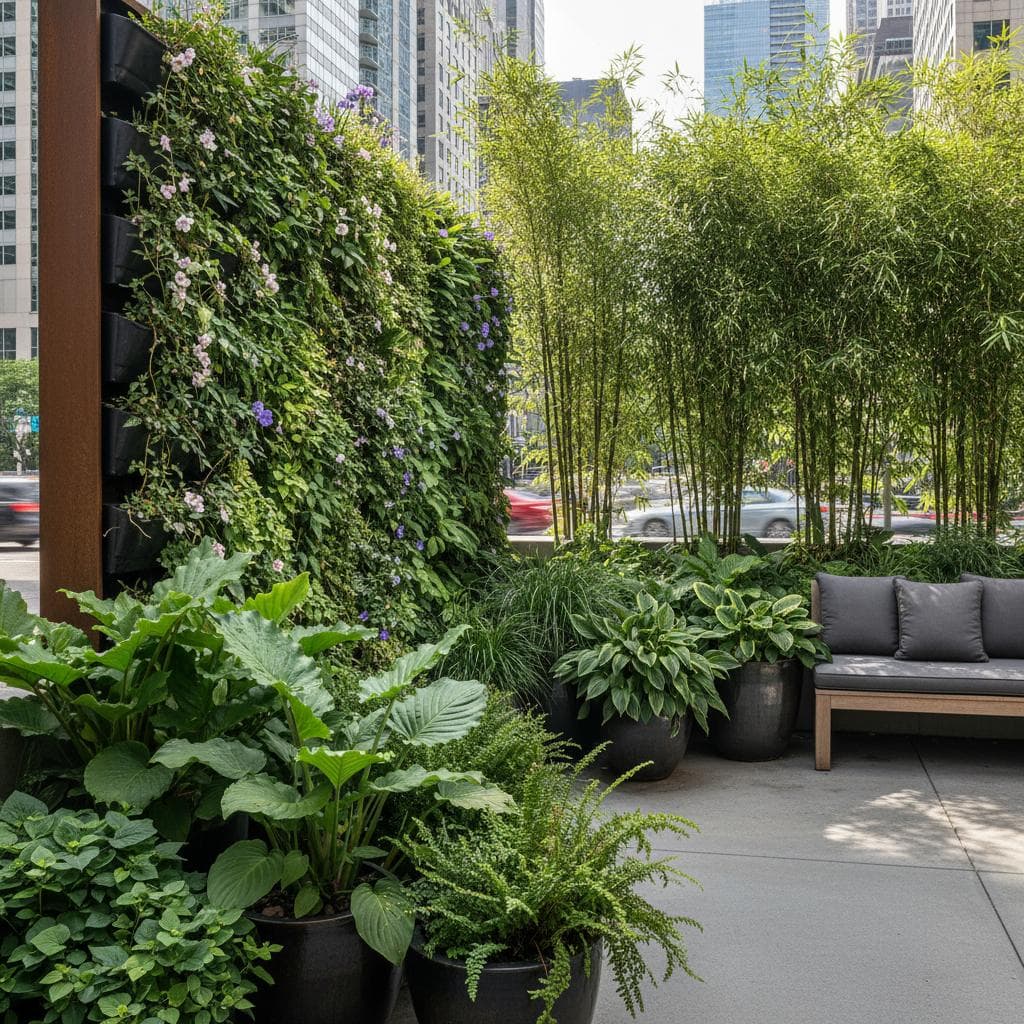
- Bamboo (various species): Flexible canes and dense foliage create both visual and auditory screens when installed in sturdy containers.
Grasses and Layered Groundcovers
Tall grasses introduce gentle ambient sound that masks harsher frequencies.
- Pampas Grass (Cortaderia selloana): Feathery plumes scatter sound while moving in light wind. Site it where breezes reach the plumes.
- Feather Reed Grass (Calamagrostis): Vertical structure and dense stalks suit modern garden layouts.
- Hostas and Ferns: Layer these under taller plants in shaded corners to add texture and absorption.
Climbing and Vertical Plants
Vertical arrangements supply acoustic benefits without consuming floor space.
- English Ivy (Hedera helix): Train this vine on facades to form a living insulation layer.
- Philodendron varieties: Mount on trellises or moss poles indoors for depth and coverage.
- Creeping Fig (Ficus pumila): Allow it to cover walls densely and trap sound.
Vertical Garden Advantages
Vertical gardens reduce reflected noise in enclosed spaces by several decibels when built with proper substrate and layering. Panels filled with soil, moss, or felt-like media absorb sound through both vegetation and retained moisture. Micro-gaps between plants function as miniature sound traps.
Apartment residents can mount a vertical garden on balconies, patios, or interior walls. Combine plants with varying leaf sizes to create visual rhythm and acoustic complexity. Pair broad-leafed philodendrons with trailing ivy or ferns to build depth and texture.
Environmental Benefits Beyond Sound
Acoustic gardens purify air, regulate temperature, and support mental wellness. Greenery reduces stress and enhances focus. In noisy environments, the psychological relief of plant-filled surroundings proves profound.
These gardens replace synthetic soundproofing with living systems. They support pollinators, reduce urban heat, and increase biodiversity. Native species lower maintenance and water needs, resulting in a balanced space that feels alive both visually and audibly.
Practical Applications
- Urban Balcony Retreat: Line bamboo planters along the railing to filter traffic noise. Add hanging ferns above and a small water feature below for layered control.
- Office Lounge: Install moss panels and a living wall behind seating to reduce chatter echo and improve productivity.
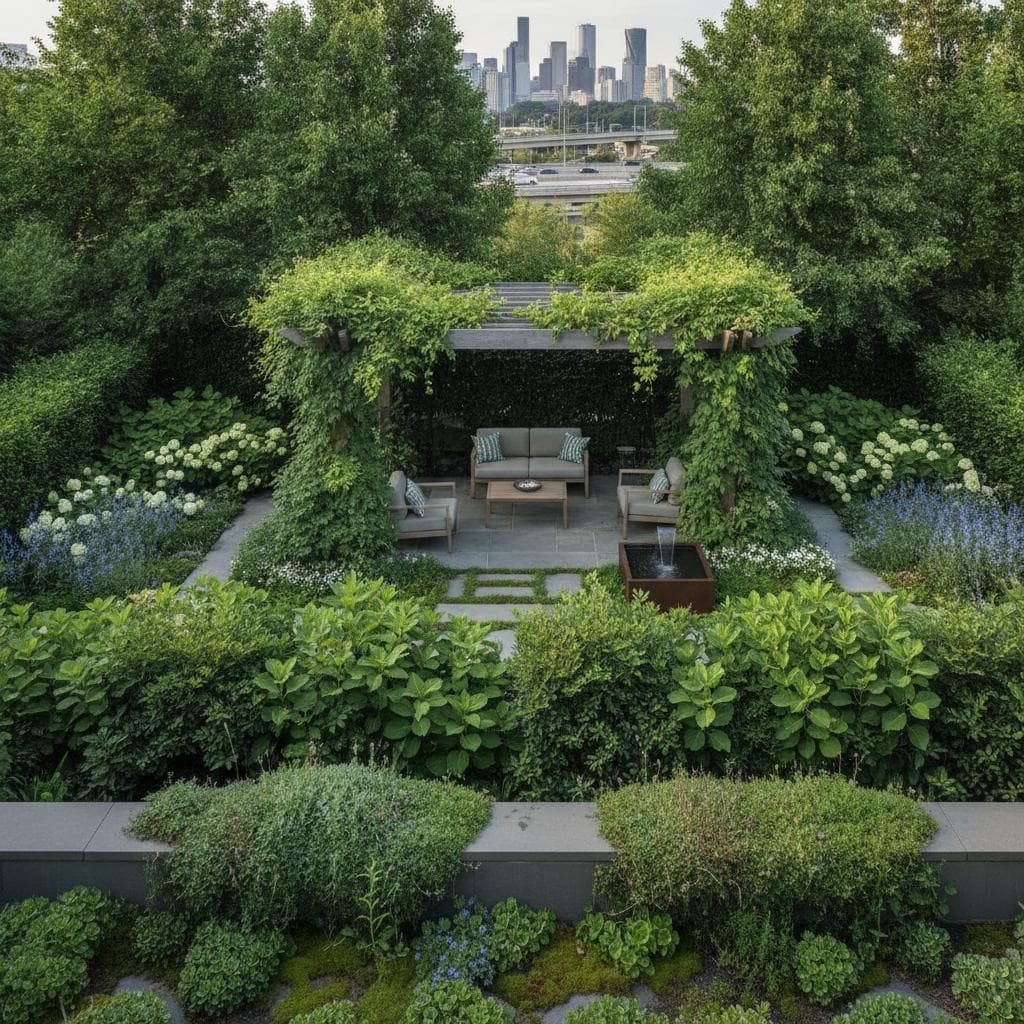
- Backyard Sanctuary: Combine boxwood hedges with ornamental grasses along a fence to dampen street noise while adding movement.
- Recording Room or Podcast Studio: Place peace lilies and rubber plants to soften echoes without compromising style.
Getting Started
Observe your environment at different hours to locate the most intrusive noise sources. Match plant placements to those points. Begin with a single vertical planter or a cluster of broad-leafed plants. Expand by layering textures, shapes, and colors to achieve balance.
The result is a living sound barrier that improves daily comfort and connects indoor or outdoor spaces with natural calm.