Moss Walls: A Trend Enhancing Indoor Air and Acoustics
Imagine entering a living room where the walls seem to breathe. A soft green expanse rises like velvet, capturing light in subtle shifts. The air feels fresher, sounds muffled, and the atmosphere radiates tranquility. This scene captures the essence of moss walls, a design innovation that turns interiors into vibrant ecosystems. Once limited to high-end hotels and sustainable offices, moss walls now attract homeowners, renters, and professionals. Beyond aesthetics, these installations purify air, regulate humidity, and dampen noise, creating healthier living spaces.
Origins and Growth of Moss Walls
As urban dwellers spend over 90 percent of their time indoors, access to clean air grows scarce. Houseplants offer a partial solution, but moss walls elevate this approach. Constructed from preserved or live moss, they demand little upkeep compared to soil-based green walls that need sunlight and regular trimming.
Improving Indoor Air Quality
Moss walls extend beyond visual appeal to actively refine indoor environments. Their porous surfaces trap dust, volatile organic compounds, and fine particulates, much like natural filters. Research on vegetation demonstrates that such elements remove harmful substances, including formaldehyde from furnishings and benzene from cleaning products.
Moss stands out due to its direct absorption method. Without roots or soil, it draws water and nutrients from the atmosphere, engaging continuously with surrounding air. In environments with low humidity or mechanical ventilation, these walls restore balance, easing respiration and preventing dry skin or respiratory irritation.
Structure and Functionality of Moss
Examine moss up close, and its form reveals a dense network of stems and leaves, akin to a miniature woodland floor. This architecture enables exceptional moisture retention and particle capture. When scaled to wall size, countless such elements collaborate to cleanse and stabilize air.
Varieties like reindeer moss and cushion moss prove especially efficient owing to their thick, interwoven fibers. Installers often combine species for aesthetic diversity and performance optimization. Resulting panels display a spectrum of greens, from lush emerald to vibrant lime, adding dimension without additional flora.
Versatile Applications in Design
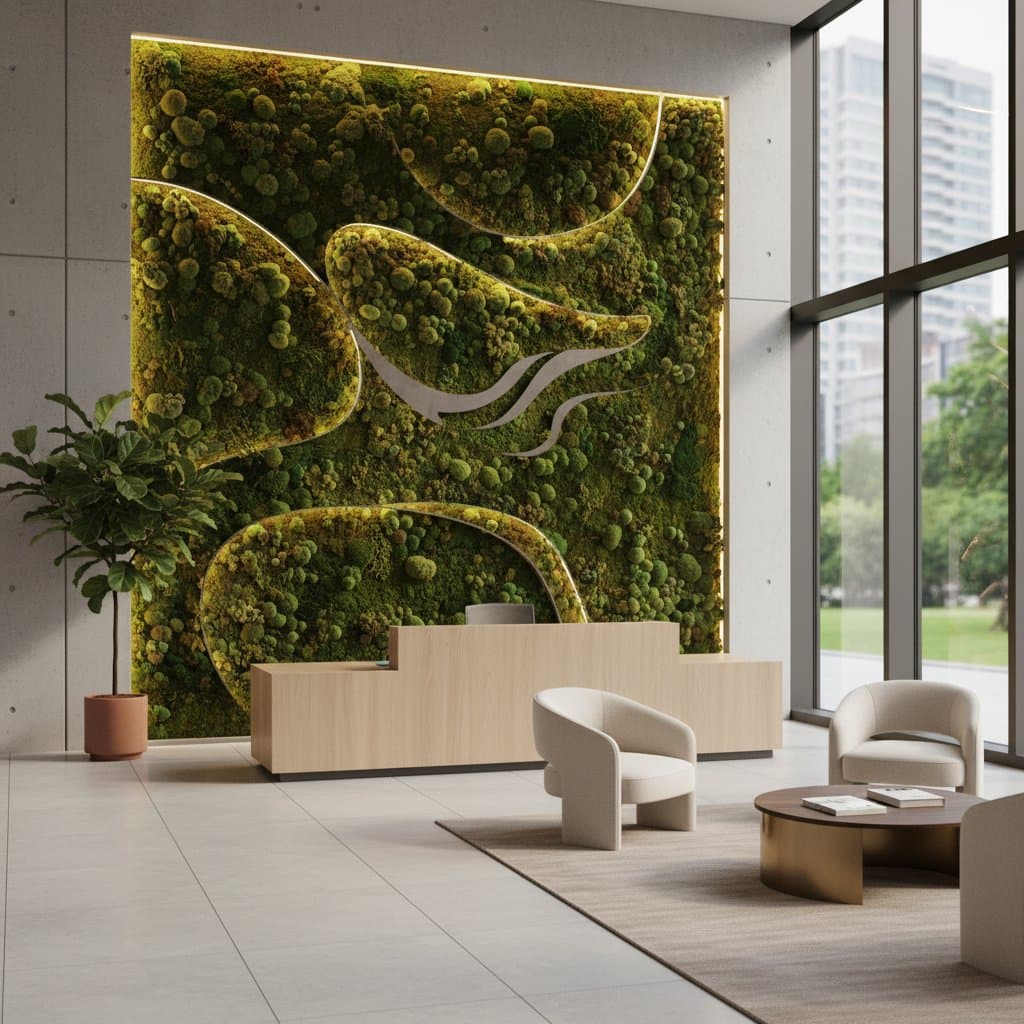
Moss walls adapt seamlessly to diverse aesthetics, from sparse lofts to opulent residences. A compact wooden-framed panel serves as focal artwork, while expansive coverings convert rooms into verdant retreats. The material tempers stark elements like concrete and glass, infusing warmth into contemporary settings.
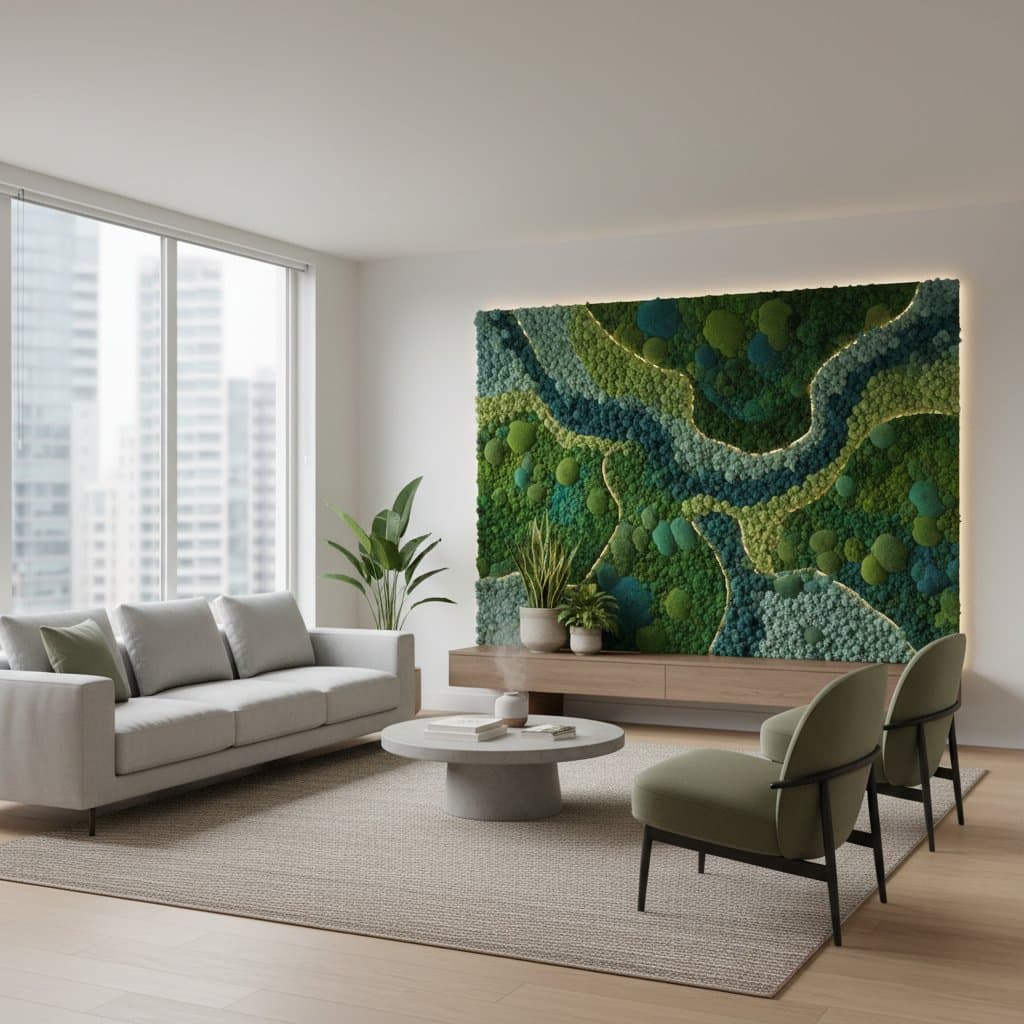
Renters appreciate portable moss accents that avoid permanent alterations or watering routines. Homeowners might install full features in foyers or lounges, evoking serene gardens. Subtle backlighting accentuates textures, and pairings with timber, rock, or alloy enhance organic modernity.
In workplaces, moss walls foster biophilic principles, mitigating open-office distractions. Their noise-dampening properties, derived from fibrous density, lower reverberation and promote concentration amid ambient clamor.
Maintenance for Lasting Appeal
The appeal of moss walls lies in their simplicity. Unlike potted plants requiring irrigation and ideal lighting, preserved moss undergoes treatment with glycerin and safe colorants to retain suppleness indefinitely. It remains tactile and vivid without growth, trimming, or natural light exposure, suiting dim or windowless areas.
Live moss variants need only weekly misting, diffuse illumination, and moderate moisture to flourish. Replicate forest understory conditions: damp yet drained, shaded yet visible. These walls even manage surplus moisture in humid zones like lavatories or cooking areas, functioning as passive regulators.
Building a Moss Wall at Home
Crafting a moss wall offers a rewarding hands-on project. Select moss based on desired effect: sheet moss for even coverage, cushion moss for volumetric interest, or reindeer moss for varied hues. Secure it to a durable base such as cork, timber, or repurposed panels.
Apply eco-friendly adhesive to affix clusters, building layers for natural depth. Incorporate mixed tones and forms to mimic organic patterns. Frame with salvaged lumber for rustic charm or expose edges for untamed style. Modular units simplify large setups, enabling pattern trials prior to final placement.
For live installations, add automated sprayers or position near moisture sources. Steer clear of intense sun, which desiccates the material. Routine spritzing and minor adjustments suffice, allowing the piece to adapt to ambient conditions.
Sustainability Benefits
Moss walls align with eco-conscious practices. Free from soil, chemicals, or intensive cultivation, they surpass many ornamental plants in resource efficiency. Preserved options employ plant-derived preservatives and non-toxic colorants, minimizing environmental impact. Opt for sustainable mounts like recycled composites to amplify green credentials.
Their durability spans years with minimal wear, curbing replacement needs and waste. This endurance supports long-term interior strategies that prioritize harmony between form and function.
Perspectives from Design Professionals
Experts in interior design hail moss walls for uniting creativity and utility. A sustainability specialist notes, "Individuals desire tactile nature in their surroundings, yet often lack space or conditions for live greenery. Moss walls provide that vital link with effortless integration."
Such endorsements highlight their role in enhancing mental health. Environmental studies indicate that organic textures and foliage mitigate stress, steady heart rhythms, and sharpen focus. Moss installations evoke outdoor respite, fostering relaxation and nature attunement in city confines.
Innovative Design Approaches
Moss walls inspire boundless adaptation. Artisans craft angular motifs, from hexagonal arrays to undulating bands. Integrate slices of bark, pebbles, or metallic elements for textured relief. Subdued tinting with harmless agents introduces hues like sage or teal alongside classics.
Pair with epiphytes or petite fronds for evolving tableaux. Vertical arrangements respond to climatic shifts, offering dynamic art that matures subtly. These options invite personalization, limited only by vision.
Integrating Moss Walls for Everyday Enhancement
Upon installation, a moss wall alters spatial perception profoundly. It attenuates echoes, instills serenity, and bridges interior with exterior realms. Users often liken it to an animated canvas that refreshes room dynamics.
In compact dwellings, it purifies atmosphere and expands perceived scale. In spacious abodes, it anchors attention with quiet drama. Beyond utility, moss walls cultivate presence, urging gentle observation of nuances in color and form. This understated elegance redefines comfort as an accessible, natural indulgence.