Moss Walls: Reviving Indoor Air Naturally
Upon relocating from a compact New York apartment to a cottage in the Cotswolds, the difference in indoor air quality became immediately apparent. Rural air held hints of grass and rain, whereas urban air often felt denser and less invigorating. This realization prompted consideration of how to infuse city dwellings with that same fresh essence, leading to the discovery of moss walls as a timeless yet innovative solution.
These verdant installations serve beyond decoration. They actively filter air, mitigate sound, and foster tranquility that surpasses synthetic alternatives. Suitable for confined urban flats or expansive family residences, moss walls provide an effective means to restore a connection to the outdoors.
Key Takeaways
- Moss walls purify indoor air through natural absorption of volatile organic compounds and excess moisture.
They integrate effortlessly into limited areas with little ongoing upkeep.
Versatile designs range from expansive accent walls to compact framed displays.
Benefits for households include enhanced respiratory health and lowered anxiety.
As a green option, they align with sustainable practices while demanding minimal intervention.
Understanding Moss Walls
A moss wall consists of preserved or living moss affixed to a sturdy backing. Distinct from potted plants, these setups typically employ moss treated with non-toxic preservatives to retain texture and hue indefinitely, eliminating the need for routine hydration or pruning.
Two primary varieties exist:
- Preserved Moss Walls
- Demand no irrigation or illumination.
- Suit schedules of professionals or temporary residents.
- Feature diverse forms, such as reindeer moss for volume, cushion moss for density, or flat moss for sleekness.
- Living Moss Walls
- Incorporate actively growing moss.
- Require periodic misting and diffused lighting.
- Deliver superior filtration by capturing particulate matter like dust and allergens.
Interior stylist Carla Dupont, specializing in Parisian urban spaces, notes, "Preserved moss walls suit renters due to their portability, whereas living versions appeal to property owners seeking integrated ecosystems."
Strategic Placement for Moss Walls
Moss walls excel in versatility, scaling from modest panels to commanding features. Consider these applications, drawn from personal installations and client projects:
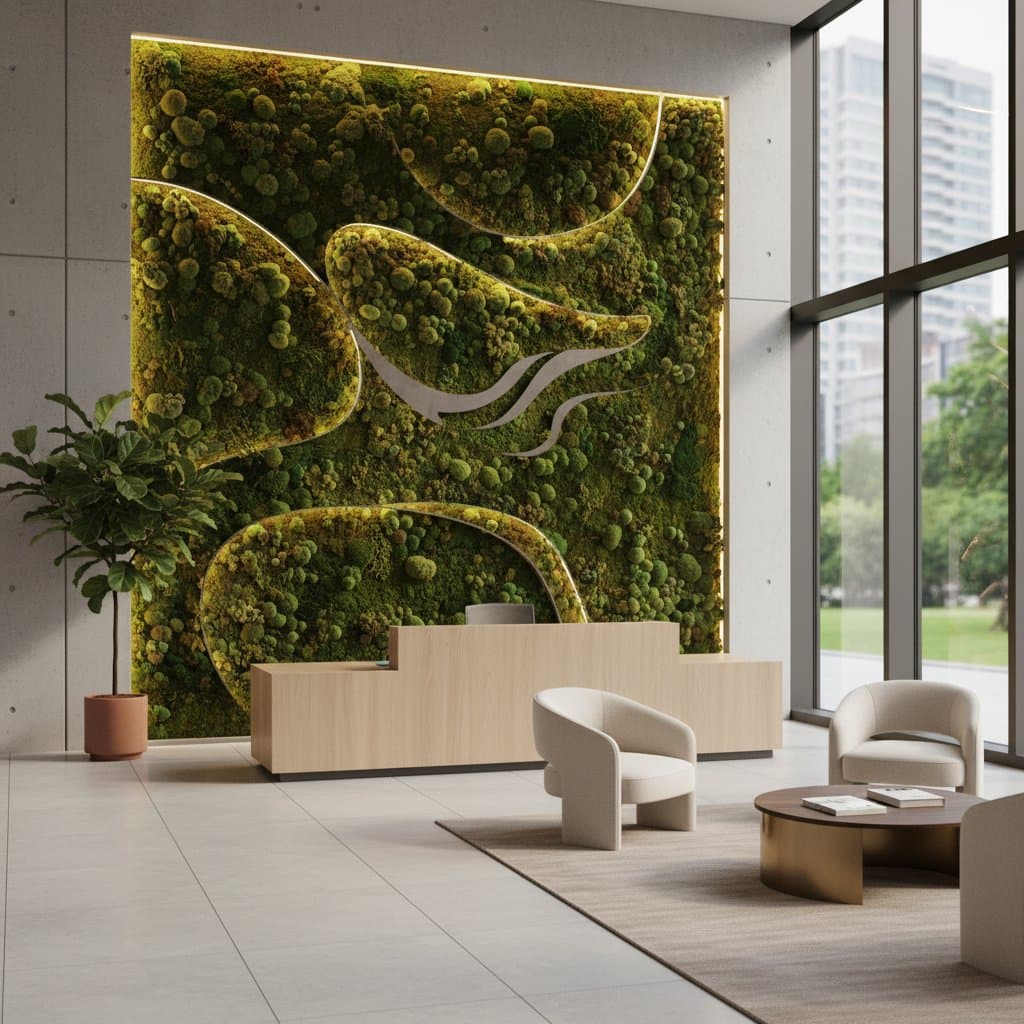
- Entryways: A verdant panel creates an inviting threshold, softening harsh lines.
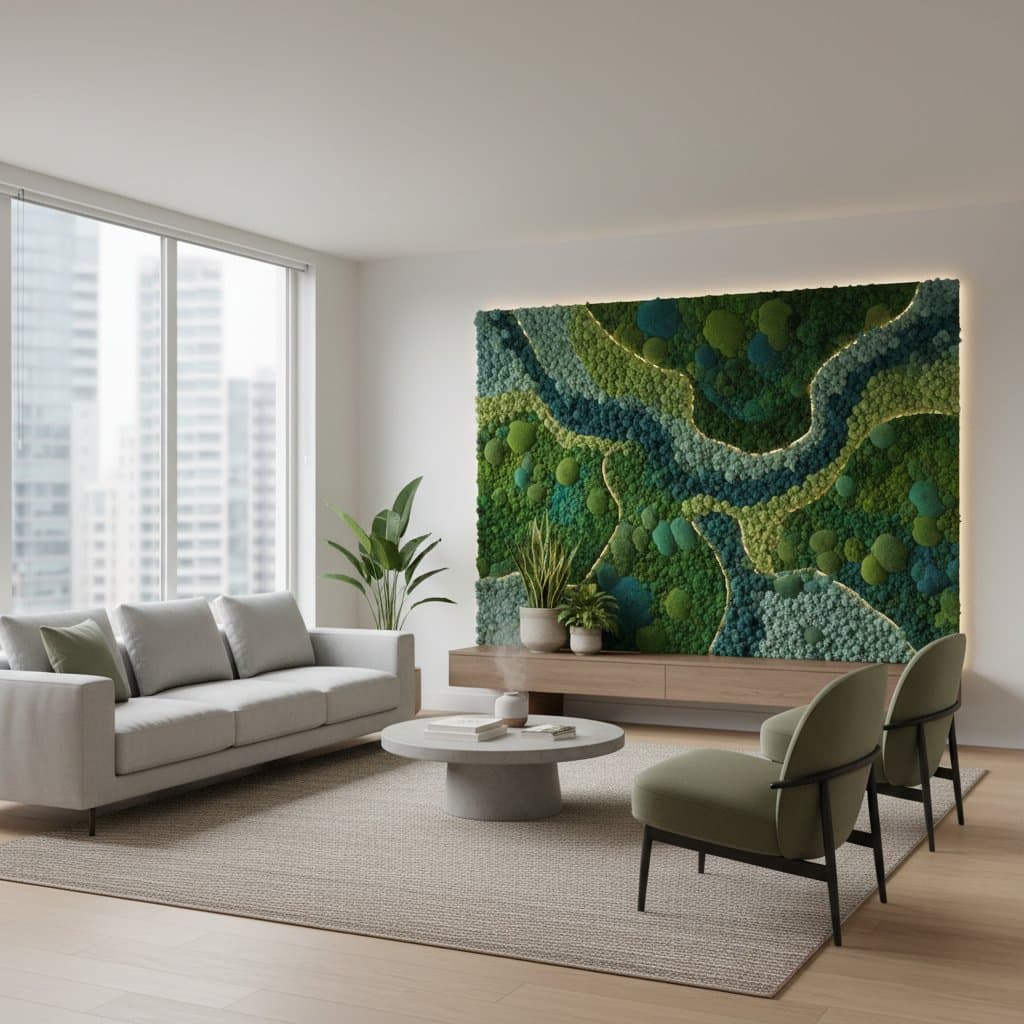
- Living Areas: Position behind seating or entertainment centers to enhance visual depth.
- Workspaces: Placement near desks combats fatigue and sharpens concentration by regulating air.
- Bathrooms: Pair with stone elements for a therapeutic ambiance that balances humidity.
- Youth Bedrooms: Stimulate environmental awareness while providing soothing scenery.
In a former Paris residence, a moss accent above the dining area improved sound quality and added warmth to the compact layout. The current English home features a hallway installation that greets visitors with an element of surprise and serenity.
To optimize placement, assess light exposure and traffic flow. For instance, avoid direct sunlight on preserved types to prevent fading, and ensure living moss receives four to six hours of indirect light daily for vitality.
Cost-Effective Sourcing and Installation
Expenses fluctuate based on dimensions and composition, yet accessible avenues exist for budget-conscious integration.
- DIY Options: Online suppliers offer pre-cut preserved moss sheets, attachable via hook-and-loop fasteners or frames for under $100 per square foot.
- Artisan Collaborations: Regional creators produce bespoke pieces at 30 to 50 percent less than chain store equivalents, often using locally harvested materials.
- Repurposed Materials: Transform salvaged wood frames or crates into bases, reducing costs while promoting reuse.
During time in France, partnerships with area florists yielded custom panels from regional moss at half the price of commercial imports. Such local sourcing cuts transport-related carbon footprints and bolsters community economies.
Installation proves straightforward: Secure the backing to walls with brackets for larger formats or adhesive for portability. For living walls, incorporate a hidden reservoir system if growth demands consistent moisture.
Worldwide Design Influences
Global creators draw on moss for innovative applications. Japanese traditions employ moss in contemplative gardens to evoke peace and regeneration. Nordic aesthetics incorporate preserved varieties into sparse settings, mimicking woodland hush.
In rural France, moss adorns stone-clad bathrooms, harmonizing with rugged surfaces for organic flow. Urban Singapore projects feature moss facades on high-rises, tackling pollution while beautifying concrete expanses.
These examples underscore biophilic design's enduring appeal. The innate desire to bridge urban isolation with nature persists across cultures, elevating indoor well-being through subtle, effective means.
Integrating Moss Walls into Daily Life
Renters benefit from detachable modules that leave no residue upon relocation. Homeowners gain enduring enhancements that boost property appeal and comfort.
The true advantage emerges in seamless incorporation: Moss walls demand attention only during initial setup, then contribute quietly to healthier atmospheres. Across varied locales and lifestyles, they affirm that vibrant homes nurture both body and spirit through nature's gentle presence.