Moss Walls Bring Natural Beauty to Dining Spaces
Picture this: dinner is ready, candles flicker across the table, and conversation rises with the aroma of roasted vegetables and warm bread. Then your eye travels beyond the place settings to a wall covered in velvety green texture. The room suddenly feels calmer, softer, and connected to the outdoors.
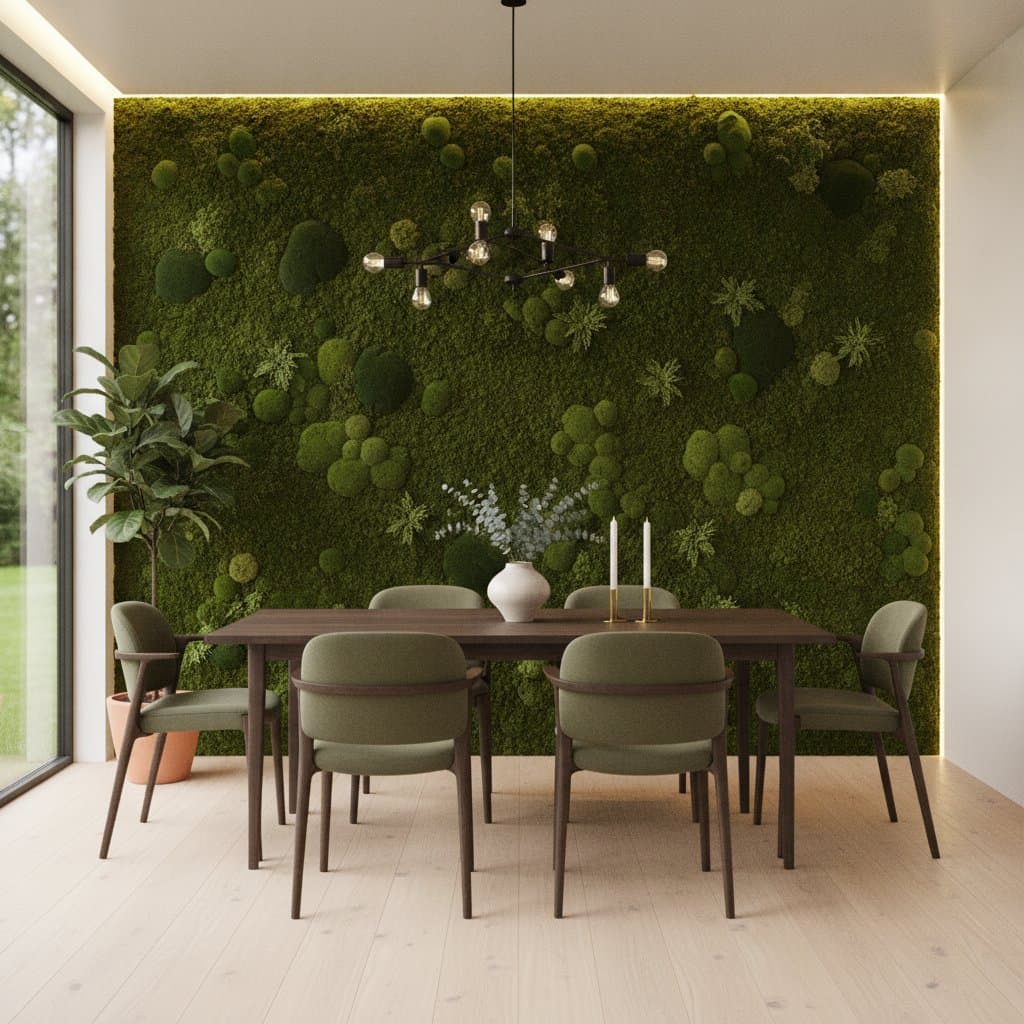
That is the quiet magic of moss wall art. It turns an ordinary dining area into a natural retreat without demanding a major renovation or a collection of fussy plants. Whether you choose preserved moss, living moss, or a mixed botanical installation, this biophilic decor can give your dining space a distinctive focal point and an inviting sense of place.
Why Moss Works So Beautifully in Dining Rooms
Dining spaces often have a tricky design assignment. They need to feel polished enough for guests, comfortable enough for everyday meals, and flexible enough to support everything from quick breakfasts to long celebrations. A moss wall can satisfy all three needs with color, texture, and organic movement.
Choosing Between Living and Preserved Moss
The first decision is whether your dining room needs a living plant installation or the low maintenance charm of preserved moss.
Living moss requires a suitable environment. Most moss species prefer consistent moisture, indirect light, and good air circulation. A living wall may need misting, careful watering, and occasional trimming. It can be rewarding for plant lovers who enjoy hands-on care, but it is not a set-it-and-forget-it feature.
Preserved moss has been treated to retain its color, softness, and shape after it is harvested. It does not need water, sunlight, soil, or fertilizer. This makes preserved moss especially practical for dining areas with limited natural light or fluctuating indoor conditions. Keep it away from radiators, heating vents, fireplaces, and strong direct sunlight, since heat and dryness can make the material brittle or faded.
Preserved moss is not technically a living plant, yet it still brings the texture and visual language of nature indoors. If your goal is effortless living-plant decor, pair preserved moss with a few genuinely living plants in nearby pots. A potted fern, trailing plant, or compact tree can complement the moss while taking on the active growing portion of your indoor garden.
Finding the Right Wall
A moss installation needs room to breathe visually. The wall behind a dining table is an obvious choice, especially when the table sits in the center of the room and the installation can become a natural backdrop. Yet other locations can be just as successful.
Consider a narrow wall beside a dining nook, the surface behind a built-in bench, or the wall separating the kitchen from the eating area. In an open floor plan, moss can help define the dining zone without blocking light or conversation. A vertical panel placed near the table can create a subtle boundary between meals and other household activities.
Before mounting anything, examine the wall for moisture problems, strong sunlight, and nearby heat sources. A moss wall should never be used to conceal water damage or mold. Repair the surface first, then let it dry fully. Natural beauty deserves a healthy foundation.
Selecting a Shape and Style
Moss wall art can be tailored to nearly any interior. A rectangular panel feels crisp and architectural. An organic edge creates a softer woodland impression. Circular arrangements work beautifully above round tables, while a tall, narrow piece can emphasize ceiling height in a compact dining area.
You can choose a single moss variety for a calm, minimalist effect or combine textures for a more dramatic composition. Sheet moss creates broad, lush coverage. Reindeer moss offers a cloudlike texture and comes in shades ranging from pale sage to deep forest green. Mood moss adds soft mounds, while preserved ferns, branches, bark, and dried grasses can introduce additional form.
Keep the surrounding decor in mind. A room with colorful dishes and patterned upholstery may benefit from a restrained moss panel. A neutral dining space can welcome a more expressive design with layered greens and sculptural botanical details.
A useful design rule is to repeat one or two colors from the room. If your chairs are walnut, include warm brown bark or wood framing. If your tableware features muted blue, select a moss composition with cool green tones and gray accents. The result feels intentional rather than randomly collected.
Creating a Moss Wall on a Modest Budget
A full custom installation can be expensive, but smaller projects deliver plenty of atmosphere. Start with a framed art panel, shadow box, or shallow wooden tray. Choose a backing material that will remain stable and dry, then arrange preserved moss across the surface with a suitable craft adhesive.
Work in small sections. Fluff the moss gently, place it over the backing, and press it into position without flattening its natural volume. Layering different textures creates depth, much like arranging a miniature landscape. Add a few pieces of preserved fern or bark, but resist packing every inch. Open areas give the eye a place to rest.
For a flexible arrangement, create several small panels instead of one large piece. Hang them in a loose grid, staggered cluster, or gentle vertical line. This approach makes installation easier and allows you to rearrange the composition when the dining room evolves.
Renters can place panels inside lightweight frames and use removable hanging hardware appropriate for the wall surface. Check the weight of each piece and follow the manufacturer instructions carefully. A beautiful display should stay securely in place during everyday life.
Lighting the Greenery
Lighting determines whether moss feels like a glowing forest floor or a dark patch on the wall. Aim for soft, indirect illumination that reveals texture without bleaching the color.
A picture light above the panel can create an artful gallery effect. Adjustable wall sconces on either side offer balanced illumination, while a ceiling fixture with a warm, diffused glow can support the entire dining room. If you have access to natural light, position the moss where it receives brightness without harsh rays.
Avoid placing strong bulbs directly against preserved moss. Heat can dry the material, and intense light may cause fading. Living moss has different needs, so research the selected species before installing dedicated plant lighting. A timer can help maintain a steady routine, though living moss still requires thoughtful watering and monitoring.
Caring for Your Moss Wall
Preserved moss needs surprisingly little attention. Dust can settle into its texture, especially in a dining room where cooking and daily activity are nearby. Use a feather duster, a soft artist brush, or a hair dryer set to cool and low power. Hold the dryer far enough away to avoid disturbing the moss.
Never soak preserved moss or spray it with household cleaners. Moisture can damage the backing and encourage unwanted growth. Keep the room at a comfortable indoor humidity level, and watch for signs of excessive dryness such as brittleness, fading, or shedding.
Living moss calls for a different routine. Check the surface moisture regularly, mist according to the plant needs, and remove dead material gently. Good ventilation helps reduce the chance of fungal problems. If the wall begins to smell musty or develop dark patches, pause watering and investigate the drainage, airflow, and lighting conditions.
Natural does not mean maintenance free, but the care can become a pleasant ritual. A quick inspection while setting the table keeps small issues from turning into major repairs.
Making the Dining Experience Feel Complete
A moss wall becomes most effective when the rest of the dining room supports its natural character. Repeat organic materials through linen napkins, woven placemats, wooden serving boards, ceramic dishes, or stone accents. These details create a conversation between the wall and the table.
Keep the centerpiece lower than eye level so guests can see one another across the meal. A shallow bowl of seasonal fruit, a few clipped branches, or a low arrangement of herbs can echo the moss without competing with it. Choose unscented candles or gentle natural fragrances around food, since strong aromas can interfere with the dining experience.
For a playful touch, use the moss wall as a backdrop for changing table settings. Earthy ceramics and linen can create a rustic mood, while clear glassware and simple white dishes give the green installation a modern, gallerylike presence.
Bringing the Idea Home
A moss wall does not need to dominate the room to make a memorable impression. Start with the space you already have, observe its light and layout, and choose a scale that supports the way you dine.
Select natural materials thoughtfully, give the moss proper care, and let texture do the decorating. Soon, ordinary meals can feel like gatherings in a quiet garden, even when the weather outside is uninviting. Your dining room already holds the ingredients for transformation.