Embracing Wabi-Sabi in the Dining Room
Wabi-sabi design brings the quiet beauty of Japanese philosophy into everyday spaces. This approach values imperfection, natural materials, and simple craftsmanship. By combining rustic textures, handmade details, and thoughtful restraint, a dining area can feel warm, grounded, and serene.
Project Basics
- Budget remains moderate because the focus stays on texture, lighting, and handmade items rather than new furnishings.
- Safety stays low risk since most changes involve surface refinishing or décor arrangement.
- Skill level suits beginners to intermediate users. Basic sanding or refinishing experience helps but is not required.
- Time commitment ranges from a single weekend for visible updates to several sessions for a complete transformation.
- Outcome delivers a dining space that celebrates authenticity and natural beauty.
Materials and Tools
Materials include a solid wood dining table or reclaimed planks, natural oil or matte sealant, linen or cotton table runners, handmade ceramic dishes, woven placemats, clay vases, and soft lighting with warm bulbs. Tools consist of an orbital sander, paintbrushes, soft cloths, measuring tape, and basic hand tools for repairs.
Optional additions such as reclaimed shelving boards or handmade cushions fit individual budgets. The overall palette should remain subdued and natural.
Step-by-Step Process
Begin with Decluttering
Wabi-sabi design relies on simplicity. Remove excess décor and unused items that distract from calm function. Retain only pieces that serve a purpose or carry personal meaning.
Refinish the Dining Table
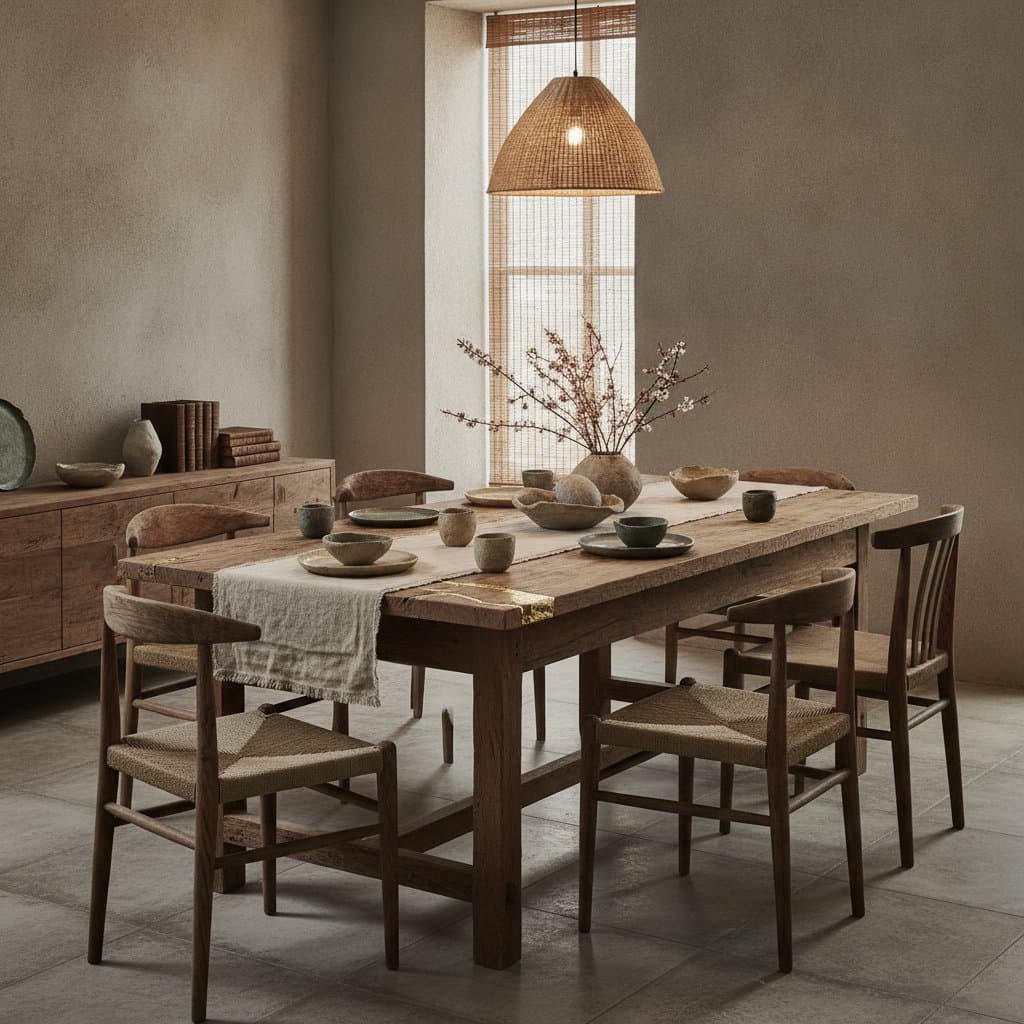
A solid wood table forms the foundation. Inspect the surface for scratches and worn areas. Lightly sand the top to reveal natural grain, then apply tung or linseed oil. Allow the wood to develop an uneven patina over time. When building from reclaimed boards, keep knots and cracks visible.
Select Authentic Materials
Choose materials that show their true qualities. Rough linen, unglazed ceramics, and raw-edged wood support the theme. Avoid glossy plastics. Thrift stores and flea markets often yield handmade pottery or vintage wood pieces with character.
Apply a Subdued Color Palette
Soft neutrals such as clay, sand, taupe, gray, and muted greens create harmony. Paint walls in matte finishes or leave existing surfaces raw when they already show texture. Natural wood tones on chairs and benches complement the approach better than fresh paint.
Plan Lighting and Shadows
Use warm bulbs and diffused fixtures that produce gentle shadows. A woven pendant or wall sconces work well. Keep window treatments minimal so natural light shifts throughout the day.
Introduce Handcrafted Elements
Display handmade pottery, wooden boards, or woven baskets. Each small variation tells a story of human touch. Simple woodworking projects such as a serving tray can incorporate visible tool marks.
Add Natural Elements
Place a single branch in a clay vase or river stones on the table. Rotate these items with the seasons. Avoid overly styled arrangements. Spontaneous, asymmetrical forms feel more authentic.
Choose Sturdy Furniture
Select pieces made from solid wood or metal that will age well. Repair joints and apply oil rather than replace items. Visible stitching on upholstery adds character while maintaining function.
Quality and Craftsmanship
Craftsmanship remains important even when celebrating imperfection. Sand surfaces evenly and apply finishes with care. Use matte products on walls and furniture. Check that all joints remain tight and structurally sound.
Ongoing Care
Wipe wood surfaces with a damp cloth and reapply oil once or twice each year. Wash ceramics and textiles gently by hand. Minor chips and frayed edges enhance charm. Make small repairs promptly to extend the life of each piece.
Practical Advice
Start with one or two elements such as a refinished tabletop before expanding. Leave empty space so textures can stand out. Combine rough wood with smooth ceramics and soft linen for depth. Resist filling every surface. Observe how materials change over time and allow that process to become part of the design.