Key Elements for Success
- Blend traditional patterns with updated finishes to achieve balance.
- Source secondhand pieces to support sustainability and add unique character.
- Layer lighting options for an inviting atmosphere during meals.
- Mix inherited items with contemporary accents to reflect personal stories.
- Edit collections regularly to prevent overcrowding while maintaining visual interest.
Setting the Scene with Pattern and Memory
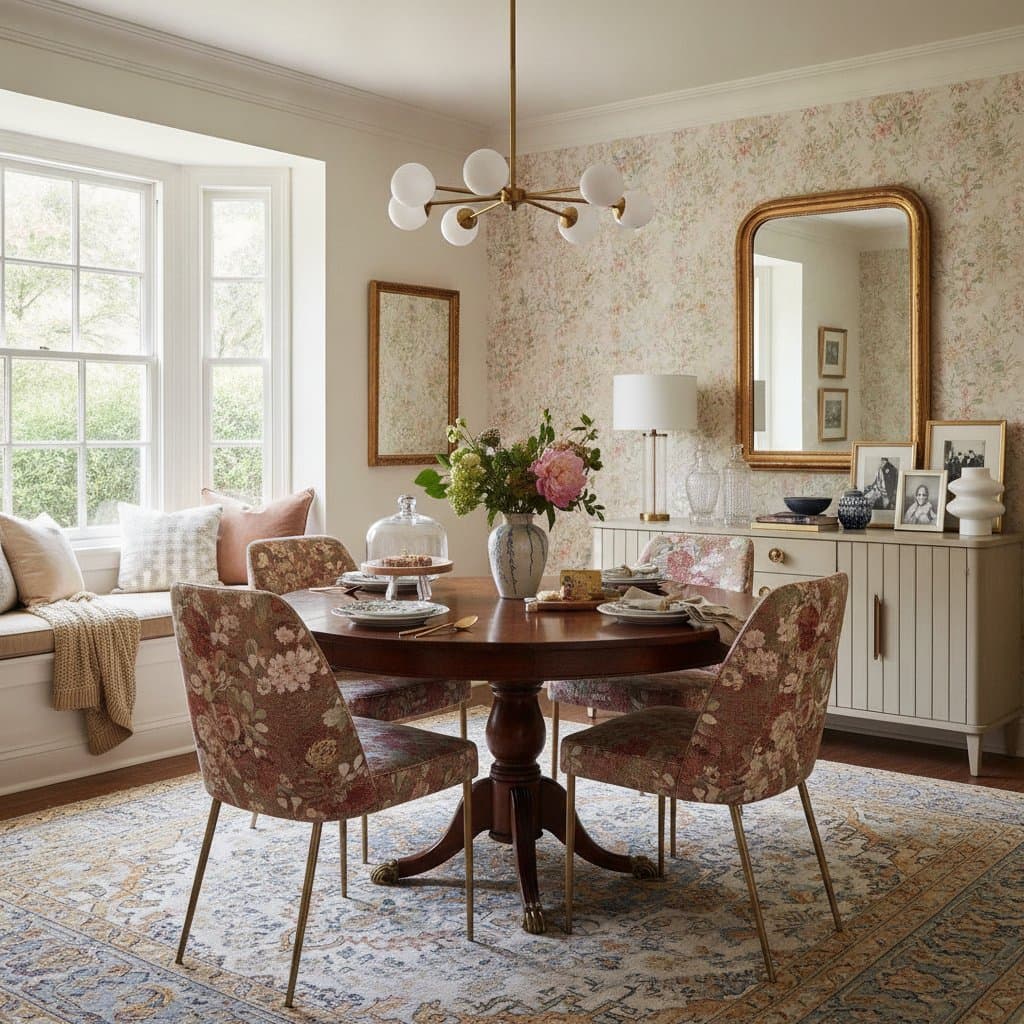
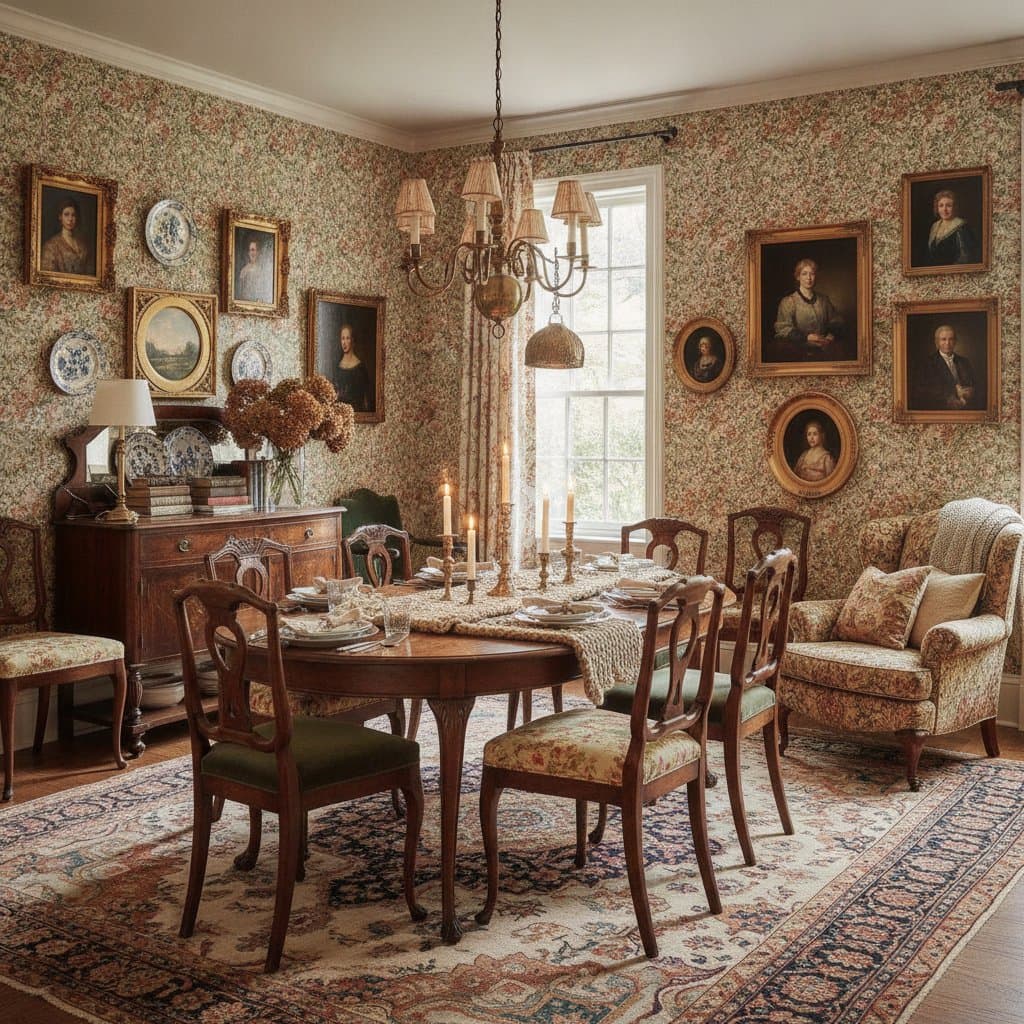
A dining room with blooming wallpaper, a glowing chandelier, and a table set with polished silver alongside vintage porcelain creates an immediate sense of comfort. This approach feels both familiar and refreshed at once. The grandmillennial style reclaims elements once considered outdated and shapes them into personal expressions.
It centers on emotional connections rather than fleeting trends. Craftsmanship and tradition receive emphasis through collected items that support daily rituals.
Roots of the Revival
Core Components of the Design
Materials, patterns, and personal items combine to define the aesthetic. Each element draws from the past while supporting modern routines.
Floral and Patterned Fabrics
Curtains and upholstery feature florals in layered scales. Pair large botanical prints on walls with smaller motifs on napkins or cushions for a curated effect.
Antique and Vintage Furniture
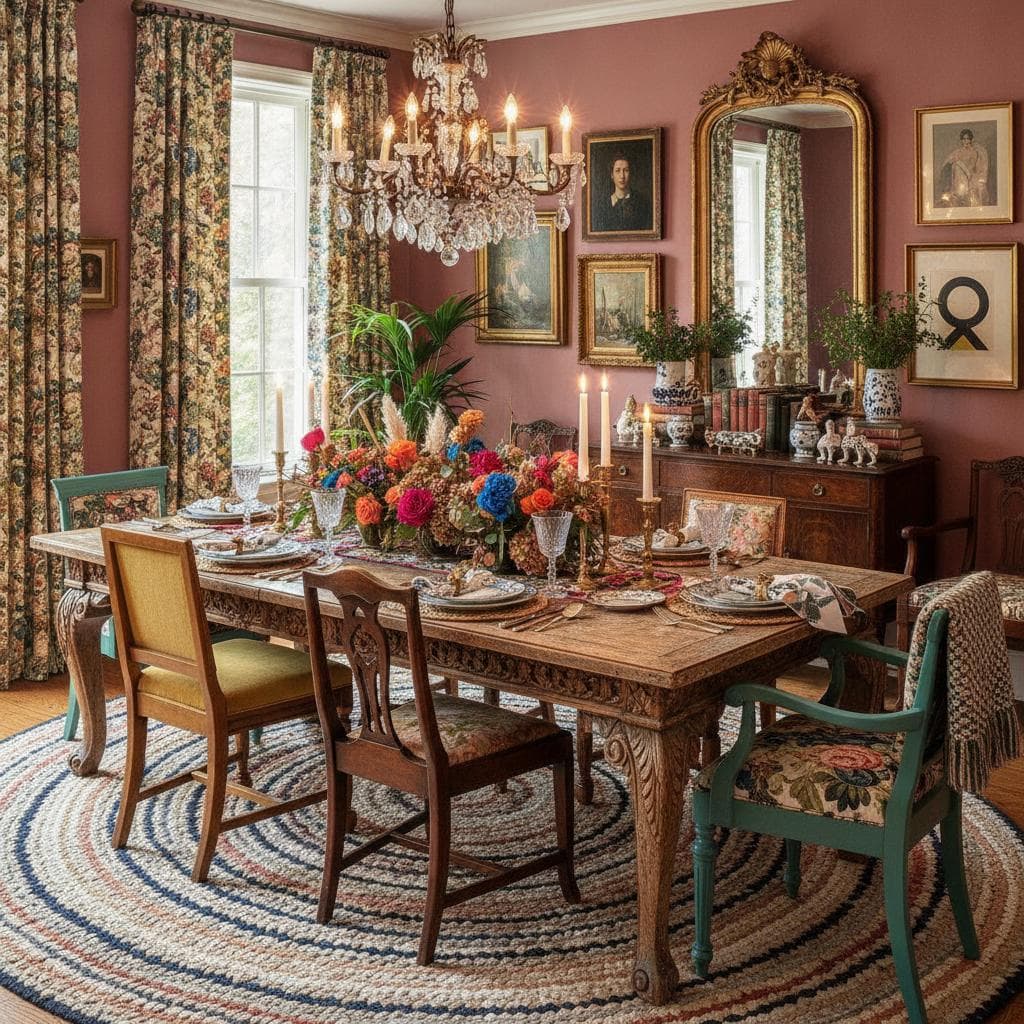
Mahogany tables, brass-handled sideboards, and mismatched chairs anchor the room. Secondhand sourcing adds character and reduces environmental impact.
Classic Table Settings
Fine china, crystal, and embroidered linens elevate everyday meals. Mixing inherited pieces with newer tableware keeps the arrangement dynamic.
Layered Lighting
Chandeliers work alongside wall sconces, vintage lamps, and candles. Warm bulbs create depth and intimacy without formality.
Color Palette
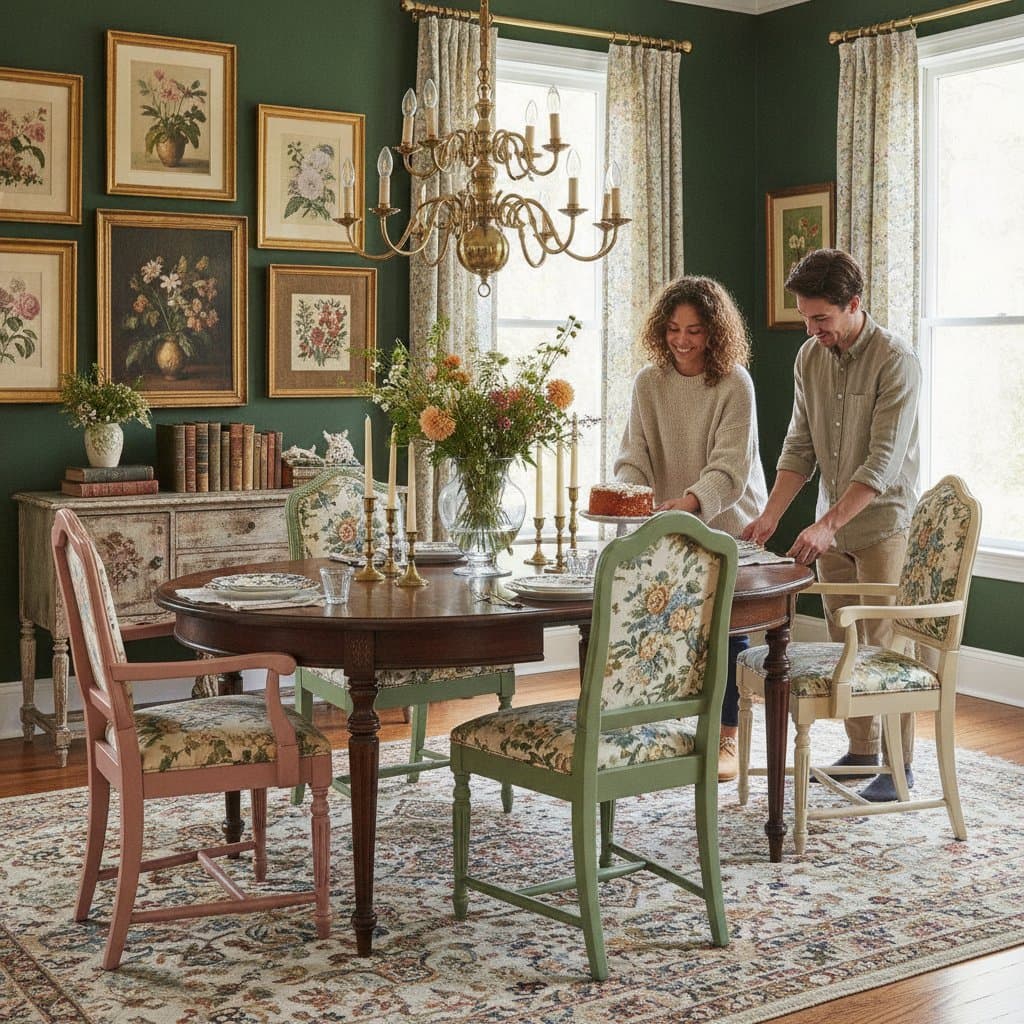
Soft pastels such as mint green, rose, and powder blue harmonize with warm neutrals and dark wood. Consistency in tone prevents visual overload.
Current Relevance and Sustainability
Tradition provides grounding during uncertain periods. Slow dinners and handwritten notes gain appeal in this setting. Textures and heirlooms recall simpler gatherings.
Repurposing furniture aligns with mindful consumption. Restoration of scratched buffets or outdated cabinets preserves patina while extending usability. Demand for such pieces continues to rise as buyers value durability over new production.
Fresh Updates for Contemporary Appeal
Abstract art above a traditional buffet introduces contrast. Lacquered finishes on hutches or matte hardware on cabinets add subtle modern notes. Mid-century vases or minimalist glassware sit comfortably beside ornate china.
Steps to Build the Room
Begin with one anchor item like a table or chandelier to direct choices. Introduce florals through wallpaper or linens based on preference. Combine eras by pairing antique silver with current dinnerware.
Add texture via velvet curtains or lace runners. Display family photos in vintage frames to embed narrative. Prioritize comfort through upholstered seating and practical storage.
Avoiding Common Pitfalls
Edit collections so pieces have room to breathe. Balance busy prints with solid fabrics or neutral rugs. Select warm lighting to enhance textures. Match furniture scale to room size to maintain openness.
Storytelling Through Design
Each item carries history, from a floral print reminiscent of family curtains to a cabinet holding generations of meals. The room functions as a living record of shared experiences. This quality draws from period dramas and vintage publications that inspire similar atmospheres at home.
Daily Integration and Maintenance
Host regular dinners and arrange flowers in porcelain vessels to activate the space. Refresh fabrics or rotate art with seasons. Integrate new flea market finds gradually for intentional growth. Authenticity matters more than perfection when sourcing from estate sales or experimenting with combinations.