Transform Gardens into Quiet Havens with Acoustic Plants
Sound travels freely through open yards, echoing off hard surfaces and disrupting outdoor peace. Acoustic plants provide a natural remedy by absorbing and scattering noise waves through their dense foliage and textured leaves. Gardeners achieve substantial sound reduction by selecting species with thick growth and implementing layered designs, resulting in lush spaces that filter traffic, voices, and machinery while supporting local ecosystems.
Project Overview
Working time: 1 to 2 weekends for initial planting and layout
Total time: Several seasons for plants to mature and reach peak effectiveness
Skill level: Beginner to intermediate
Estimated cost: Moderate, varying by plant size, quantity, and local availability
This approach suits most residential properties, offering a cost-effective alternative to solid fences or soundproof panels. Homeowners gain immediate aesthetic benefits alongside gradual noise mitigation as vegetation thickens. For best results, focus on sites exposed to consistent external sounds, such as those near roads or neighboring properties.
When to DIY or Consult a Professional
Understanding Acoustic Plants
Acoustic plants earn their name through physical traits that interact with sound waves: dense branching captures vibrations, rough leaf surfaces diffuse high-pitched noises, and thick canopies block low-frequency rumbles. Evergreens maintain year-round coverage, while deciduous options add seasonal variety without sacrificing effectiveness. Together, these elements form a living filter that reduces decibel levels by up to 10-15 in mature installations, depending on density and placement.
Higher-frequency sounds, such as car horns or conversations, scatter easily on textured foliage like that of ornamental grasses. Lower tones from engines or appliances require deeper layers of broad-leaved shrubs to absorb energy effectively. Beyond noise control, these plants improve air filtration and attract pollinators, enhancing overall garden health.
Materials and Tools
Materials
- Evergreen shrubs: Select boxwood for compact density, holly for glossy leaves that reflect minimal sound, or viburnum for rapid growth and berries that draw birds
- Tall grasses: Choose miscanthus for feathery plumes that sway and diffuse air vibrations, switchgrass for native adaptability, or pampas grass for dramatic height in larger areas
- Climbing vines: Opt for English ivy to cover fences quickly, clematis for colorful blooms amid foliage, or jasmine for fragrant vertical screens
- Groundcovers: Use pachysandra for evergreen mats that fill gaps, hosta for shade-tolerant broad leaves, or ferns for delicate fronds that soften ground-level echoes
- Mulch: Apply 2-3 inches of organic bark or shredded wood to dampen vibrations at soil level and conserve moisture
Tools
- Shovel or spade for digging planting holes
- Hand trowel for precise work around roots
- Garden rake to level soil and remove debris
- Wheelbarrow for transporting materials
- Soil amendments like compost or peat moss to enrich planting beds
- Hose with adjustable nozzle or drip irrigation system for consistent watering
Step-by-Step Process
1. Assess Noise Sources
Visit the garden during peak noise hours, such as morning rush or evening gatherings. Walk the perimeter to pinpoint entry points for sounds and identify reflective elements like concrete patios or metal siding that amplify echoes. Sketch a simple map marking these areas to guide planting priorities.
2. Plan Layered Barriers
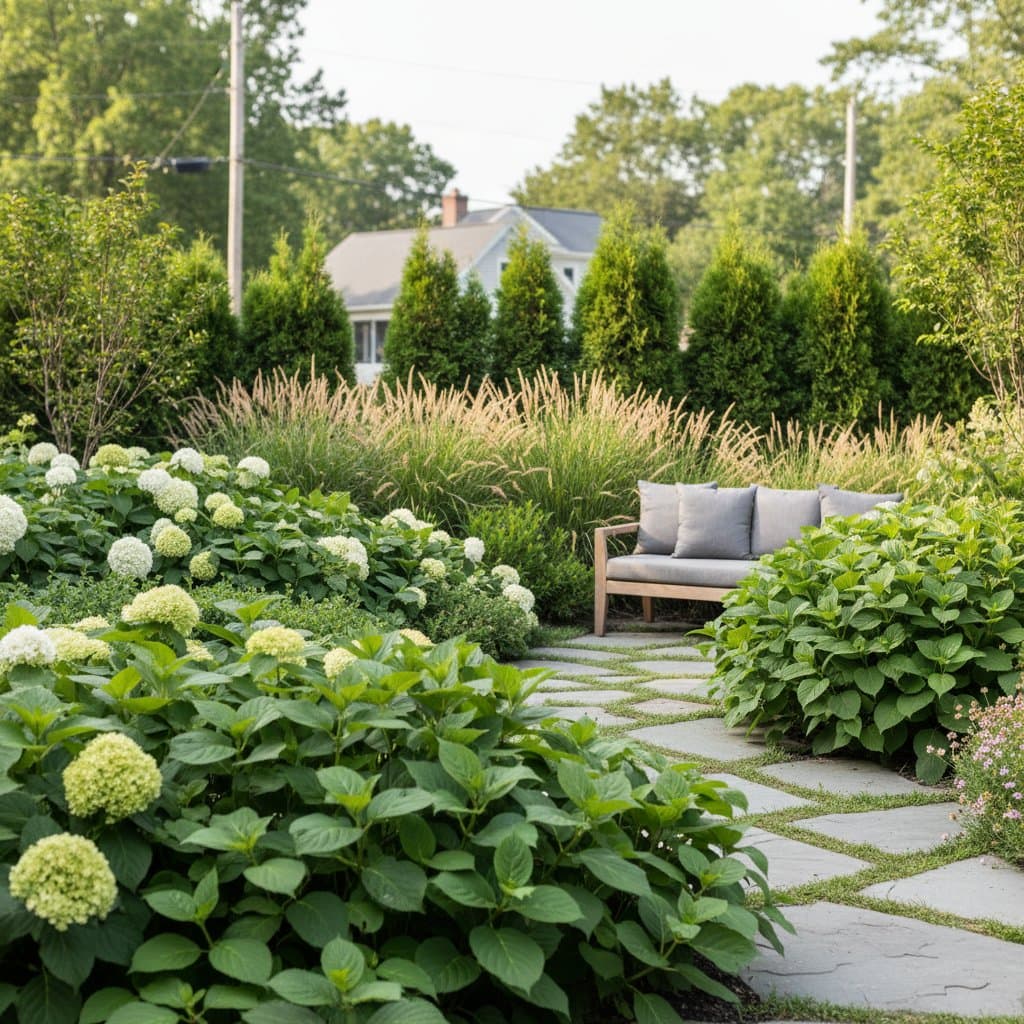
Effective sound barriers rely on graduated heights and densities to trap waves progressively. Position the tallest elements, such as evergreen hedges or small trees, nearest the noise origin to form the primary shield. Follow with mid-level shrubs and grasses for added diffusion, then low groundcovers to seal the base and prevent sound leakage.
This staggered arrangement mimics natural woodlands, where multiple canopy layers naturally quiet environments. Aim for 6-10 feet of total depth in high-traffic zones for measurable reduction. Adjust spacing to 3-5 feet between plants in the front row and 4-6 feet in rear layers to promote interlocking growth.
3. Prepare the Soil
Vigorous plant growth depends on well-aerated, nutrient-rich soil that supports extensive root systems. Turn the top 12 inches of earth with a shovel to break up compaction, then incorporate 2-4 inches of compost per square yard for better drainage and fertility. Test pH levels if possible, adjusting to a neutral range of 6.0-7.0 for most species to promote healthy establishment.
Remove weeds and rocks during preparation to minimize competition. For clay-heavy soils, add sand or gypsum to improve aeration, ensuring roots expand without restriction.
4. Plant Strategically
Space plants in irregular patterns to avoid straight-line gaps that allow sound passage. Dig holes twice as wide as root balls but no deeper than the root depth, positioning evergreens as anchors and filling interstices with flowering perennials for visual interest. Incorporate a mix of evergreen and deciduous types to ensure coverage across seasons while varying textures for broader acoustic benefits.
Water each plant thoroughly upon placement to settle the soil. For vines, train initial shoots along supports to encourage upward growth and faster coverage.
5. Water and Mulch
Saturate the root zones immediately after planting, providing 1-2 inches of water weekly during the first season. Spread mulch evenly around bases, keeping it 2 inches from stems to deter rot. This layer not only muffles ground vibrations but also regulates soil temperature for stronger growth.
Monitor moisture levels in dry spells, adjusting to deep, infrequent watering that penetrates 6-8 inches into the soil. Avoid overhead sprinkling to prevent fungal issues on foliage.
6. Add Vertical Elements
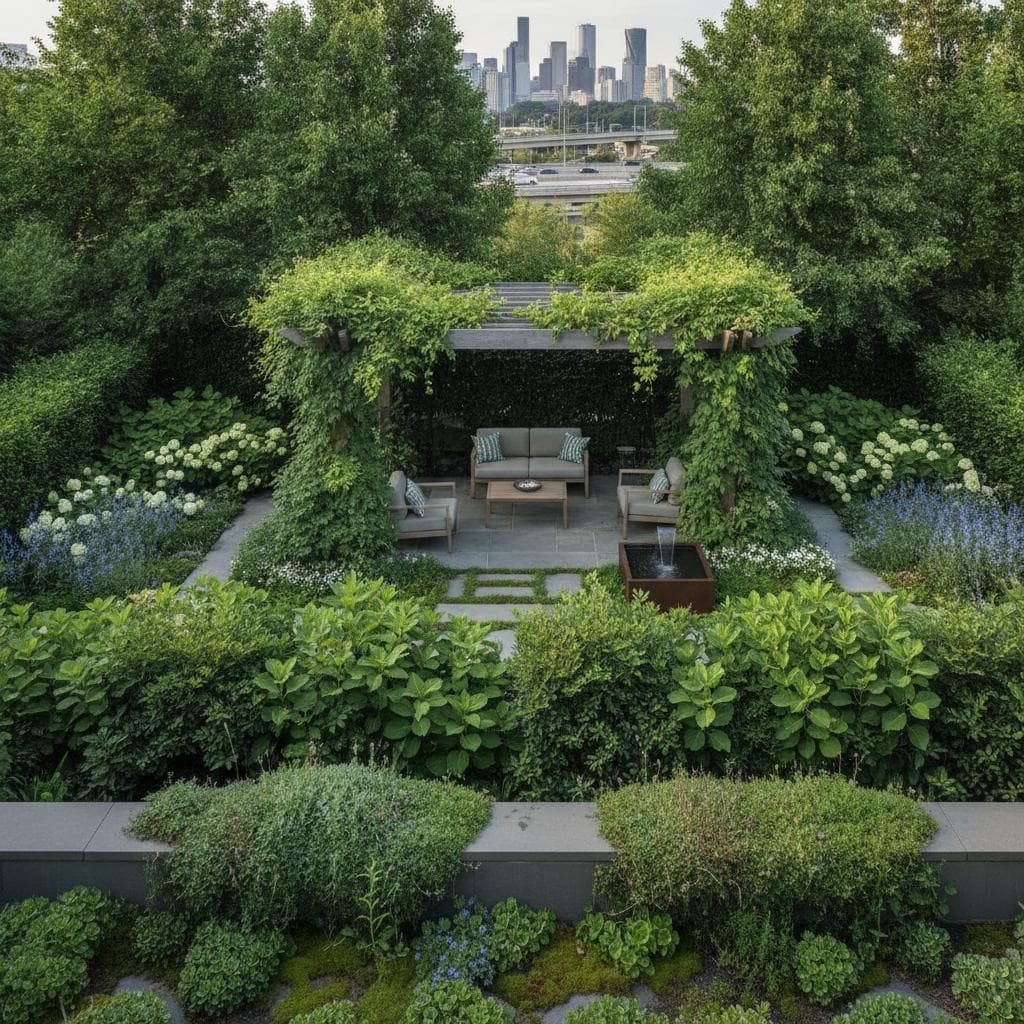
In compact yards, erect trellises or lattice from pressure-treated wood or wire mesh to support vines. Secure these structures 6-8 feet high near reflective surfaces like patios to redirect sound upward. Vines establish quickly, often covering structures within one growing season for immediate privacy gains.
Anchor bases firmly with stakes if needed, and prune vines annually to maintain density without overcrowding.
Quality Control
Monitor the installation regularly to maintain performance. Check for bare spots in the canopy and plant fillers like fast-establishing ferns to close them promptly. Remove any diseased foliage to sustain overall vigor, and ensure irrigation reaches deeper roots without causing waterlogging.
Light pruning preserves leaf density, which directly correlates with absorption capacity. As plants fill out over 2-3 years, measure noise levels with a smartphone app to track improvements and adjust as needed. Target a 5-10 decibel drop initially, refining layers for further gains.
Maintenance and Long-Term Care
Regular upkeep ensures sustained acoustic function and plant vitality. Clear fallen debris in spring to reduce pest habitats, and refresh mulch layers each fall to maintain soil health. Apply a balanced, slow-release fertilizer in early spring to encourage bushy growth without excessive legginess.
Shear evergreen hedges lightly after new shoots appear, shaping them to retain fullness at 4-6 feet tall. Cut back ornamental grasses to 6 inches in late winter, allowing fresh blades to emerge densely. These routines demand only a few hours seasonally, yielding enduring results.
Inspect for pests quarterly, using organic controls like neem oil if infestations arise. Rotate fertilizer types every other year to prevent nutrient imbalances.
Pro Tips for Success
Prioritize native plants adapted to the region's climate, as they thrive with minimal intervention and support biodiversity. Combine plants with varied leaf surfaces, such as the coarse edges of holly alongside the soft plumes of miscanthus, to target a wider sound spectrum. Site relaxation zones like benches behind the thickest barriers to maximize tranquility.
Incorporate a small fountain or birdbath, where trickling water provides a soothing overlay to residual noises. Allow time for maturation; initial plantings reduce sound by 5-7 decibels, increasing to 12-15 as canopies develop. Experiment with reflective mulches in sunny spots to enhance light diffusion and plant vigor.
Enjoy the Tranquil Rewards of Your Soundproofed Garden
Thoughtful integration of noise-absorbing plants yields outdoor areas that invite relaxation and connection with nature. These living barriers temper external disturbances while fostering privacy and aesthetic appeal through diverse foliage and blooms. With consistent care, the garden evolves into a resilient sanctuary, where natural sounds dominate and urban bustle fades into the background.