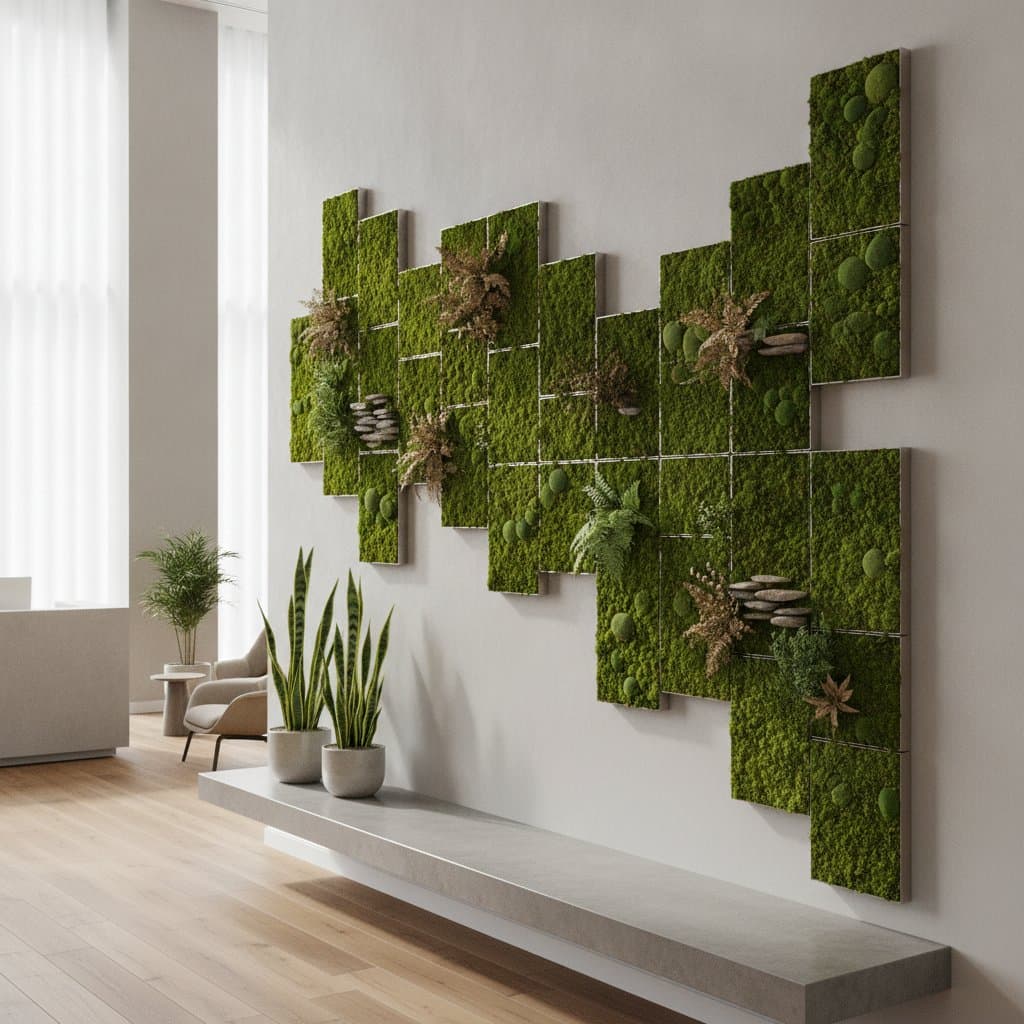
Transform Your Home with Moss Walls and Living Ceilings
Key Takeaways
- Moss walls and living ceilings introduce natural elements indoors, enhancing air quality and alleviating stress.
- These installations suit urban apartments and rural homes alike, adapting to diverse living environments.
- Low-maintenance preserved moss options make greenery viable for households with demanding schedules.
- Incorporating global design elements fosters unique interiors that balance style and vitality.
- Professional consultation ensures installations align with specific spaces and routines.
Why Green Walls and Ceilings Are Gaining Popularity
Contemporary designers worldwide recognize a growing desire for deeper connections to nature. Interior designer Clara Jensen from Copenhagen notes that clients seek elements that feel vibrant yet demand minimal upkeep. Moss walls and living ceilings fulfill this need effectively.
Designing a Moss Wall That Fits Your Space
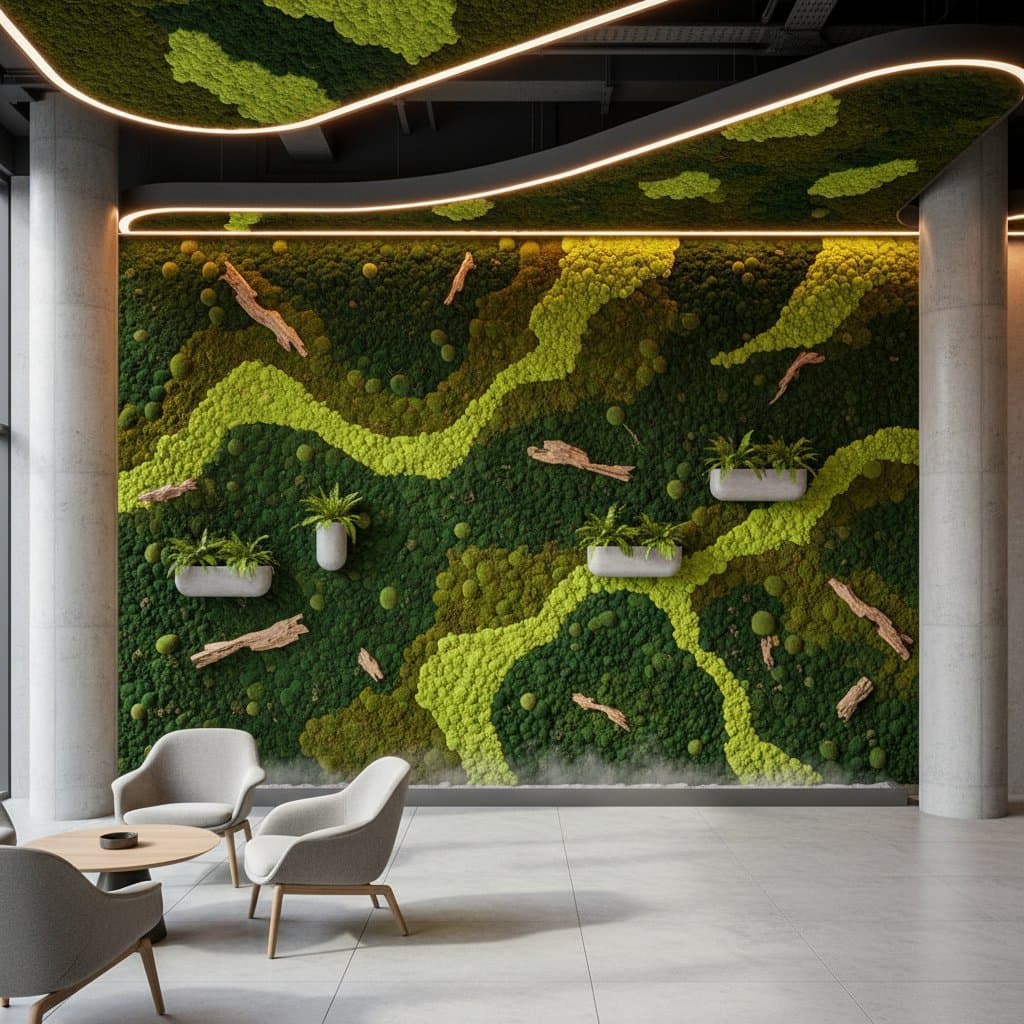
Moss walls range from subtle accents to bold focal points. Determine the primary function first, whether as a visual centerpiece, noise reducer, or aesthetic enhancer.
Consider these design principles:
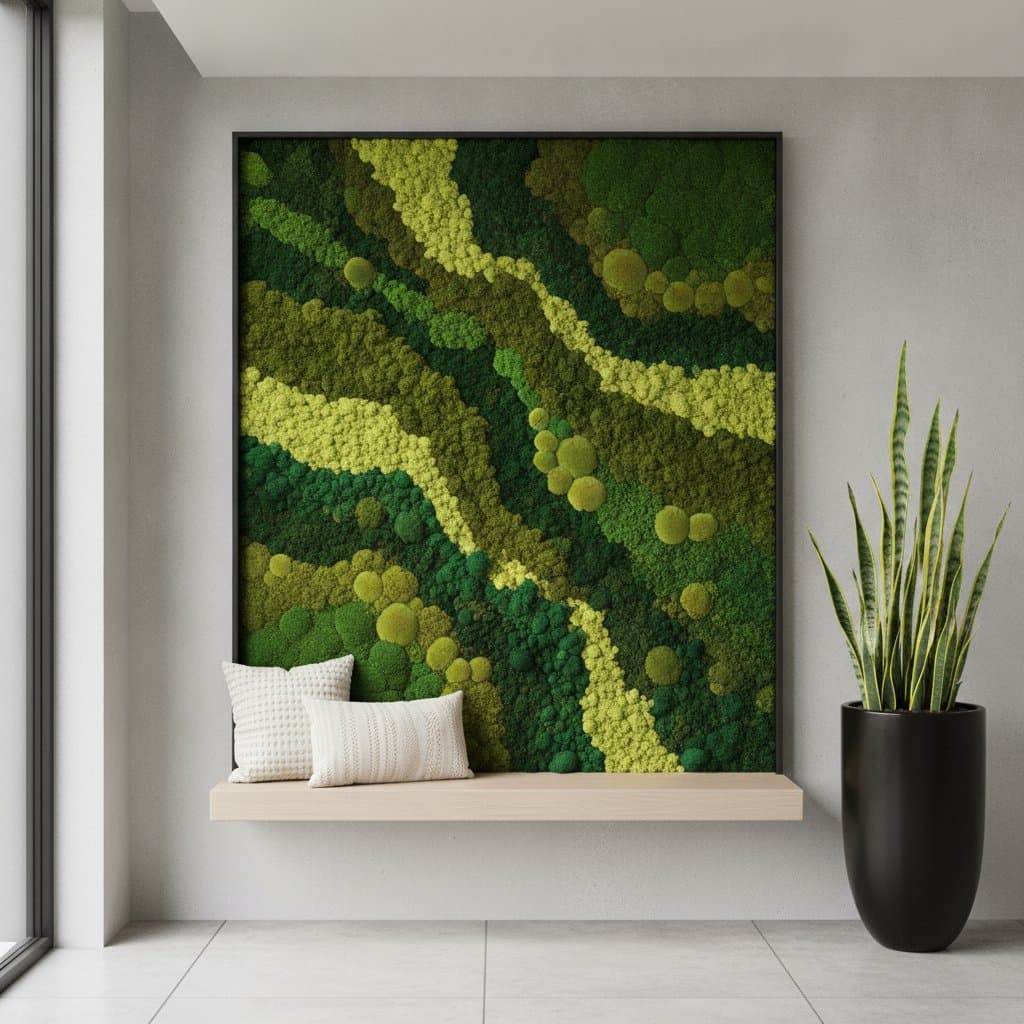
- Blend moss types, such as reindeer, bun, and sheet varieties, to achieve layered textures.
- Choose forms like framed panels for versatility or expansive coverings for striking effects.
- Prepare surfaces with waterproof sealants or use mounting panels to ensure secure adhesion.
- Integrate lighting strategically, employing soft uplights to highlight contours and hues in low light.
- Enhance with natural accents, including wooden frames, driftwood, or pebbles, to refine the overall look.
Interior stylist Fiona Rowe from London advises beginning modestly. She suggests, "A single framed moss panel introduces natural appeal without a major commitment. The impact often inspires further integration."
Maintenance and Care Simplified
Contrary to common assumptions, green walls and ceilings require little ongoing effort. Advanced systems cater to lifestyles filled with professional and personal demands.
For living moss installations:
- Maintain moderate humidity through periodic misting.
- Position away from direct sunlight and heating vents.
- Prune excessive growth annually or biannually.
For preserved moss versions:
- Remove dust using a soft brush or low-suction vacuum.
- Protect from moisture and intense light to sustain vibrancy.
Horticulturist Daniel Liu emphasizes that moss flourishes under steady conditions rather than rigorous regimens. He states, "Consistent, light attention preserves its allure for extended periods." Such approaches suit travelers, professionals, and families alike.
Family-Friendly Design Considerations
Practicality complements aesthetics in natural installations for homes with children. Prioritize safety, resilience, and flexibility during planning.
Essential guidelines include:
- Select non-toxic materials and chemical-free adhesives.
- Position fragile areas beyond the reach of young children.
- Opt for modular panels that allow simple replacement after damage.
- Pair moss with robust surfaces, such as sealed wood or plaster, to facilitate cleaning.
One effective placement involves hallways, where the feature remains accessible yet shielded from high-traffic zones. This setup permits family interaction while preserving the installation's condition amid daily activities.
Integrating Nature into Daily Life
Installation of a moss wall or living ceiling yields prompt enhancements. Air quality improves noticeably, lighting appears more diffused, and ambiance shifts toward tranquility. Guests frequently interact with the surfaces, appreciating the soft, tactile quality.
These elements serve as subtle prompts to pause and connect with natural serenity amid routine demands.
Steps to Create Your Installation
Developing a moss wall or living ceiling redefines spatial experiences beyond fleeting trends.
Begin with a modest area to gauge integration, then expand based on results. Such features soon harmonize with household patterns, enriching everyday surroundings.