Acoustic Garden Walls: Achieving Silence and Style in Outdoor Spaces by 2026
Homeowners often envision an ideal outdoor retreat where morning coffee accompanies birdsong rather than mechanical disturbances. Persistent noise ranks among the primary obstacles to enjoying gardens as peaceful sanctuaries. Acoustic garden walls address this challenge effectively, serving as intelligent barriers that foster calm and seclusion while enhancing the overall aesthetic of any yard.
The Impact of Outdoor Noise on Personal Well-Being
Noise pollution extends beyond mere interruptions; it undermines the emotional connection individuals feel toward their living spaces. Gardens function best as refuges for relaxation, introspection, and renewal. Persistent sounds erode this tranquility, yet advancements in design now align with the demand for serenity. Acoustic garden walls redefine outdoor experiences by uniting aesthetic form, practical utility, and acoustic performance.
Defining Acoustic Garden Walls
An acoustic garden wall constitutes a purpose-built partition engineered to absorb or redirect sound waves, thereby reducing auditory intrusion. Distinct from conventional fencing, these walls incorporate multilayered compositions that capture and dissipate vibrations. This approach yields a substantial decrease in ambient noise, cultivating a serene atmosphere without inducing confinement.
Contemporary designers fuse acoustic functionality with visual allure. Common elements include dense hardwood panels, composite reinforcements, and vegetation-integrated frameworks that mitigate sound while presenting striking appearances. Properly executed, these walls not only suppress noise but also delineate garden boundaries with grace.
Principles of Acoustic Performance
Sound propagates as vibrations through the air. Rigid surfaces, such as concrete, typically reflect these vibrations, amplifying echoes. In contrast, porous or irregular materials capture and convert them into minimal energy. Acoustic walls leverage this dynamic through deliberate construction.
A standard configuration comprises:
- An exterior layer providing durability against elements and aesthetic enhancement.
- An internal core of sound-dampening substances, including mineral wool, repurposed rubber, or engineered foams.
- A finishing layer of foliage or textured elements that further disrupt wave propagation.
Optimal efficacy depends on elevation and positioning. Structures exceeding six feet in height interrupt direct sound trajectories, while staggered vegetation or sloped profiles disperse residual echoes. The outcome manifests as a gentle, organic quietude that integrates naturally with the surroundings.
Integrating Living Elements for Enhanced Acoustics
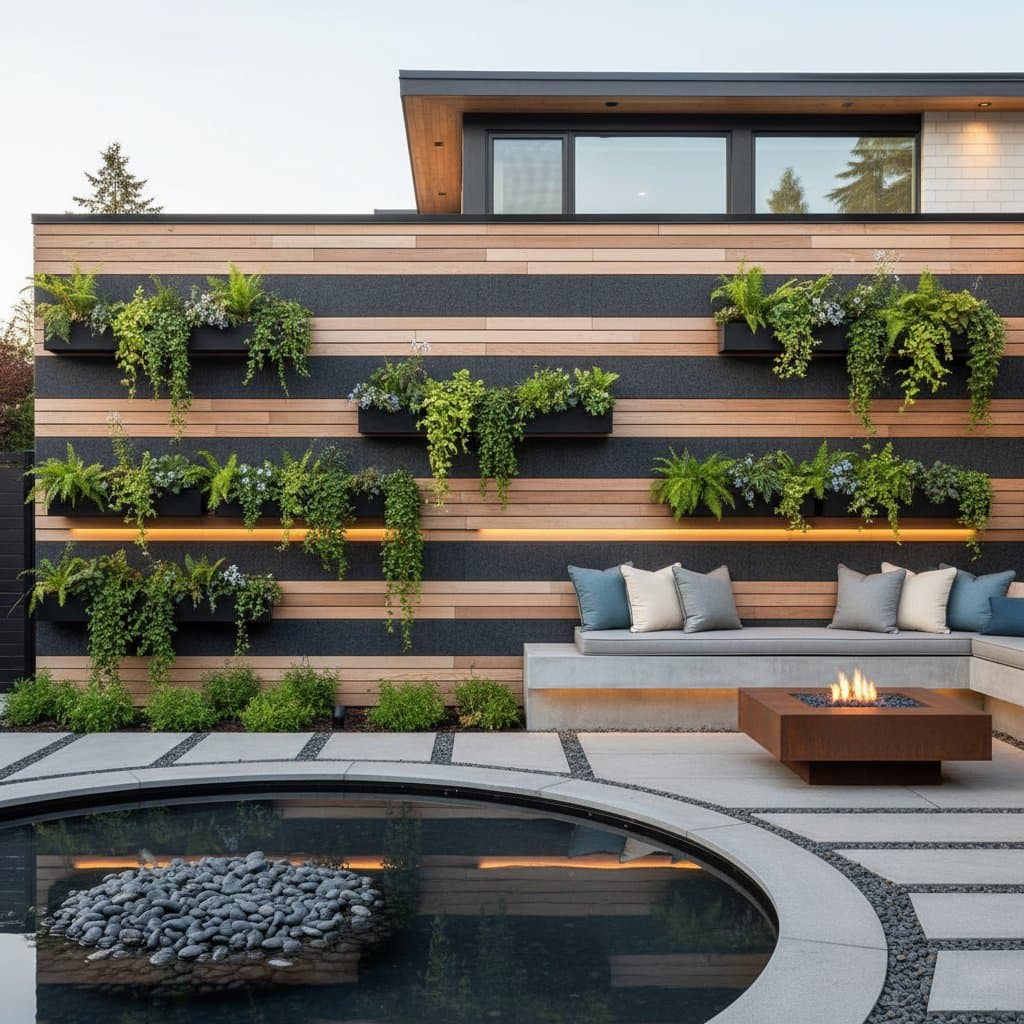
Innovative developments position acoustic garden walls as multifunctional living walls, where botanical features complement technological components. Vertical installations of ferns, ivy, or moss not only absorb sound but also impart a vibrant, verdant facade. This synergy of flora and structure establishes an equilibrium between auditory calm and visual richness.
Such walls additionally purify air, support biodiversity by drawing pollinators, and introduce tactile variety. They suit compact urban plots requiring both seclusion and character. Automated irrigation systems simplify upkeep, ensuring longevity without excessive effort.
Balancing Aesthetics and Functionality
Perceptions that acoustic walls appear utilitarian or cumbersome prove unfounded. Available designs offer broad adaptability:
- Minimalist enthusiasts favor matte composite panels with clean, linear orientations.
- Advocates of organic styles select salvaged wood accented by vining flora.
- City dwellers prefer prefabricated concrete units tempered with bamboo or herbaceous borders.
- Those pursuing opulence incorporate illuminated accents, embedded benches, or cascading water elements to evoke resort ambiance.
This range allows acoustic walls to serve as prominent features or subtle integrations, tailored to individual preferences.
Tailoring Designs to Lifestyle Needs
Effective planning for an acoustic garden wall begins with evaluating daily routines. Consider whether the space hosts al fresco gatherings, supports remote work, or aims to buffer urban clamor versus neighboring activity. These factors dictate customized specifications.
- In dense city environments, robust materials and elevated profiles deliver superior isolation.
- Suburban layouts benefit from hybrid solid and permeable segments, preserving ventilation alongside discretion.
- Enclosed patios or decks accommodate adjustable panels that define zones flexibly without enclosure.
Financial considerations influence scope as well. Initial installations often target problematic areas, with phased expansions. Prioritize resilient components that withstand climatic variations and retain acoustic integrity over time.
The Enduring Appeal of Acoustic Innovations
Unlike fleeting fads, acoustic garden walls possess sustained relevance. They counteract contemporary issues such as urban density, auditory overload, and psychological health. Alignment with sustainable practices and sensory-focused architecture underscores their value, where utility intersects with experiential enhancement.
Outdoor areas increasingly mirror indoor comforts, warranting investments akin to quality furnishings or illumination. Acoustic solutions elevate these extensions, aligning environments with desired lifestyles and emotional states.
Realizing and Maintaining the Benefits
Installation of an acoustic garden wall prompts swift perceptual shifts. Ambient sounds soften, dialogues gain intimacy, and the garden evolves into a genuine haven.
Over time, these features mature gracefully. Maturing vegetation and subtle patinas enhance integration with the terrain, amplifying character.
Access to quiet remains a premium asset, yet acoustic garden walls render it achievable. Initiate with modest applications, explore material options, and align choices with personal vision to secure both silence and sophistication.