Grandmillennial Gardens: Cottagecore's 2026 Revival
The trend reemerges with lace-trimmed linens, heirloom roses, and vintage teacups appearing in homes and gardens across the landscape. The grandmillennial aesthetic, sometimes referred to as granny chic, extends its influence outdoors. This movement, which began as a nostalgic interior style, evolves into a more vibrant and verdant expression. Grandmillennial gardens represent the latest evolution of cottagecore, offering authenticity, comfort, and whimsy for outdoor environments.
Why Grandmillennial Gardens Resonate
This revival combines familiarity with innovation. Minimalism and precise landscaping once prevailed in design landscapes, featuring manicured boxwoods, smooth pavers, and subdued color schemes. Society now seeks warmth and imperfection in response. The grandmillennial garden inverts those ideals, emphasizing abundance, individuality, and historical depth.
Essential Elements of a Grandmillennial Garden
Achieving this aesthetic requires no vast property or extensive funds. Concentrate on foundational components that capture the essence of the design.
1. Vintage-Inspired Planting Schemes:
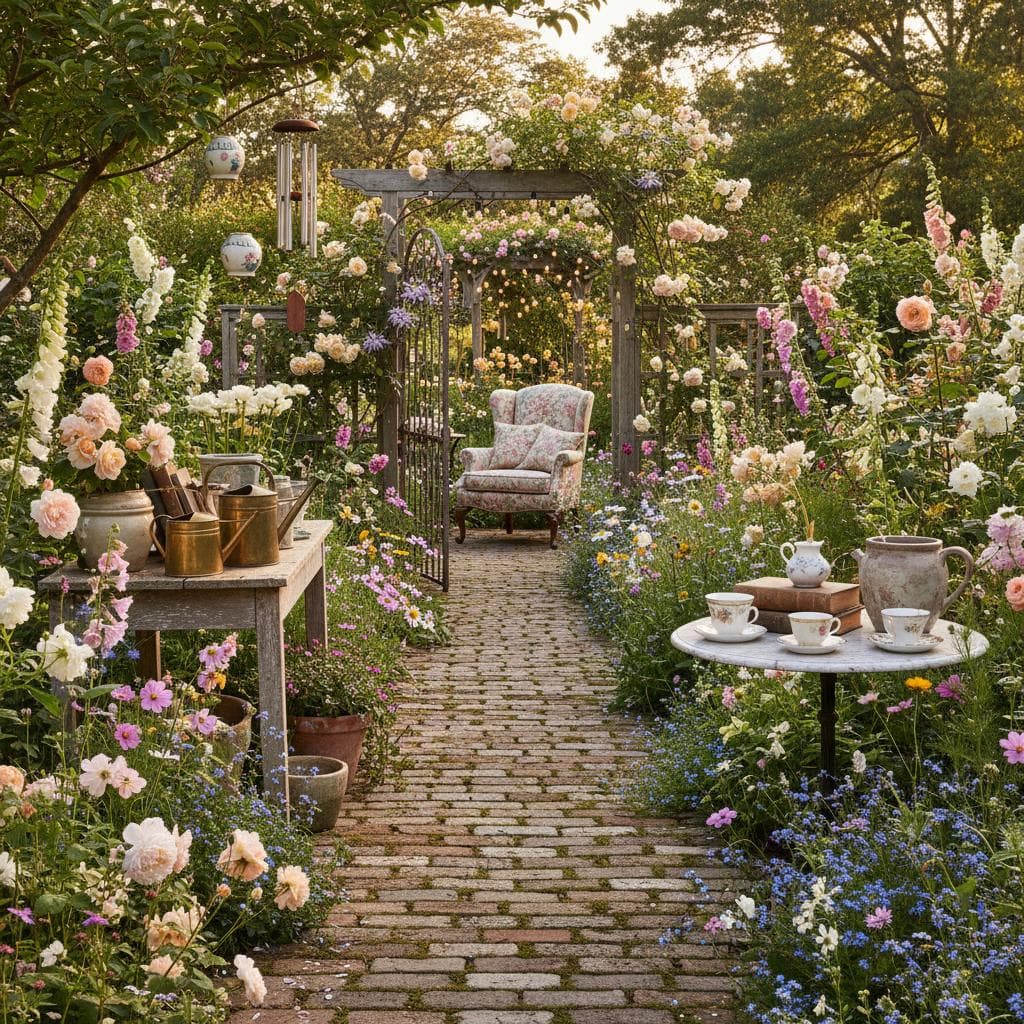
Select heirloom varieties and traditional flowers such as foxgloves, hollyhocks, lavender, and hydrangeas. Arrange them in free-form clusters rather than straight lines. Diversity and tactile contrast drive the grandmillennial appeal. Allow plants to intermingle and cascade, producing a gentle, romantic ambiance that appears organic yet deliberate. For best results, prepare soil with compost to support root establishment, ensuring blooms thrive in partial shade or full sun based on variety.
2. Enduring Color Schemes:
Pastel tones dominate, including soft whites, muted blues, and pale pinks. Introduce accents like coral or rich plums to add vitality without overwhelming the palette. Harmony guides the selection over strict consistency. Incorporate zinnias or delphiniums that evoke personal memories, planting them in groups of three to five for visual impact.
3. Sentimental Furnishings and Accents:
Infuse the space with individual flair through aged benches, enamel-painted iron seating, or wicker settees adorned with floral pillows. Source items from antique markets for authenticity. Position a vintage birdbath centrally or repurpose a ceramic urn as a focal point. Elements that suggest familial legacy enhance the narrative quality, turning the garden into a canvas for personal history.
4. Varied Textures and Surfaces:
Combine gravel walkways with lichen-covered stones, interweave wicker elements with cast iron, and layer linen fabrics over chintz patterns. The contrast between delicate and robust materials creates enchantment. Transform a compact patio by stacking woven mats, dense foliage, and select heirloom pieces, fostering depth in limited areas.
Adapting for Contemporary Lifestyles
Practical considerations ensure the style suits varied schedules. Select durable flora that requires minimal upkeep once rooted. Heritage selections like peonies, lavender, and roses tolerate irregular attention when sited appropriately, such as in well-drained soil with morning sun exposure.
Opt for perennial layers that reappear annually, reducing annual replanting efforts. In constrained yards, employ container arrangements with pots filled with rosemary, cascading ivy, or dwarf roses. Cluster five to seven vessels near entryways to mimic overflowing abundance without soil commitment.
Incorporate evening illumination through solar-powered string lights or compact lanterns hung from branches. This addition extends usability into dusk, enhancing the enchanting atmosphere with minimal installation.
The Relevance of This Design Shift
Design trends mirror cultural sentiments. Current desires center on relationships, tranquility, and purpose. Grandmillennial gardens deliver these qualities effectively. The approach grounds individuals, encouraging mindful plant care and seasonal observation. Witnessing a rosebush flower repeatedly or pollinators frequenting lavender provides profound solace.
Sustainability underpins the aesthetic unexpectedly. Prioritize indigenous species, nectar-rich blossoms, and natural maintenance methods like mulching to retain moisture. This integration demonstrates that aesthetic appeal and ecological stewardship align seamlessly. Though rooted in reminiscence, the philosophy advances progressive ideals.
Infusing Personal Elements
Exemplary grandmillennial gardens reflect unique identities. Plant hydrangeas to recall a childhood garden, or transform an antique watering can into a herb container. Refresh a weathered bench with a coat of resilient outdoor paint in a preferred hue, such as soft sage.
Extend indoor comforts outside with weatherproof textiles: a patterned tablecloth for gatherings, needlework pillows on seats, or a durable outdoor rug beneath a pergola. Select UV-resistant fabrics that withstand rain, maintaining the seamless flow between home interiors and garden exteriors.
Nurturing the Garden's Evolution
As the space develops, permit organic changes. Seeds may scatter, tendrils extend, and surfaces patina over time. Such progression embodies the style's inherent appeal. A grandmillennial garden remains dynamic, maturing alongside its creator.
Adapt guidelines to fit preferences; maintain tidier edges if desired, or allow untamed growth where suitable. Trust intuition in selections. The objective centers on crafting an outdoor haven resonant with heritage, ease, and subtle reminiscence. Upon stepping into the area and sensing accomplishment alongside serenity, the revival's core manifests fully.