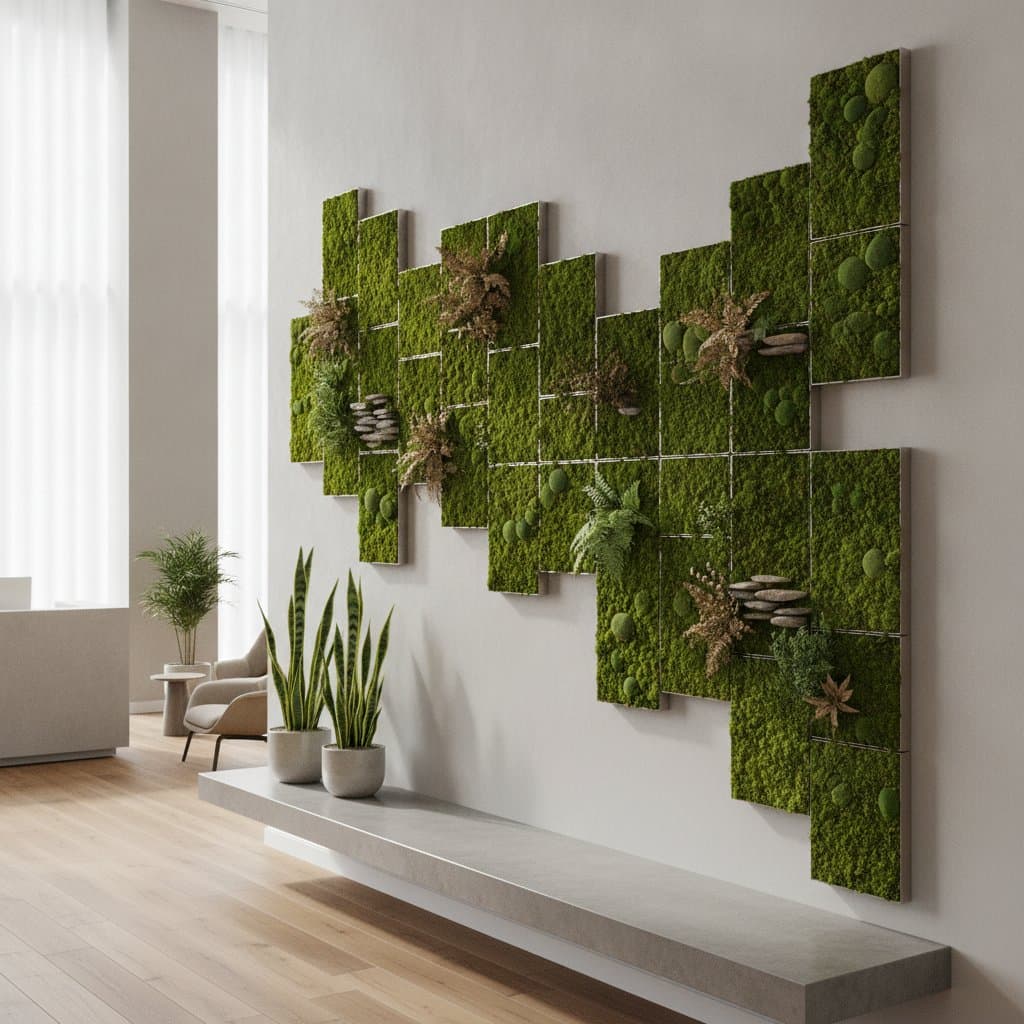
Living Moss Walls: The Low-Maintenance Solution for Indoor Air Purification
Living moss walls evoke images of luxurious spas or contemporary art exhibits, yet they represent an accessible upgrade for modern residences. As awareness of natural elements and indoor environmental health rises, these verdant vertical gardens integrate seamlessly into daily living spaces. Their appeal lies in the simplicity of care, setting them apart from more demanding greenery options.
The Rising Popularity of Moss Walls
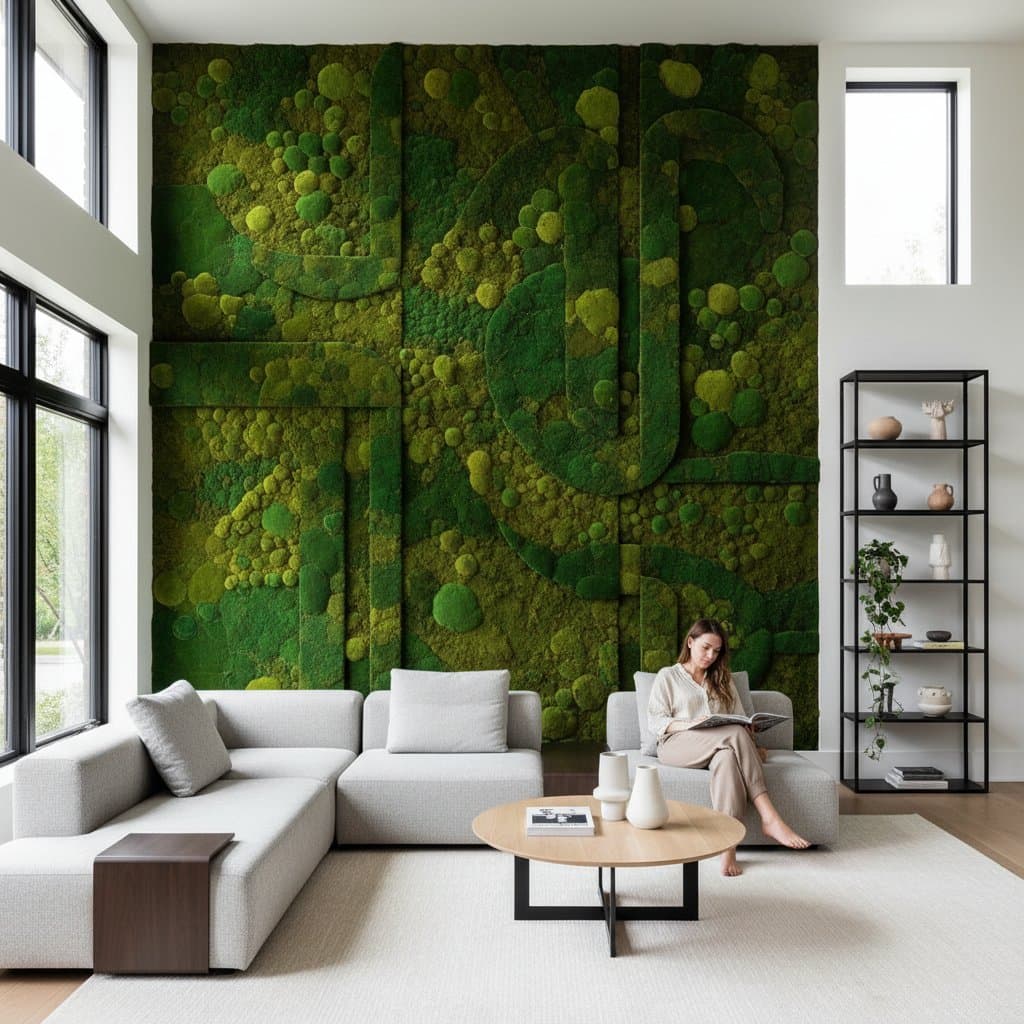
Homeowners seeking to infuse vitality into neutral interiors often turn to moss walls for their transformative impact. Interior designer Cara Jennings of Greenline Interiors notes, "People are craving calm, and moss brings a sense of quiet that painted walls simply can't." These installations provide immediate visual interest through layered textures, subtle hues, and a gentle softness that enhances any environment.
Enhancing Indoor Air Quality with Moss
Moss walls extend their value beyond decoration by actively improving air conditions. Moss species naturally capture airborne pollutants, including volatile organic compounds and particulate matter, while also moderating humidity fluctuations. Environmental designer Luis Ortega elaborates, "Moss acts like a gentle filter, capturing dust and balancing moisture in the air."
In urban settings with restricted airflow, such as high-rise apartments, this filtration proves especially beneficial. Moss binds to allergens and toxins on its surface, preventing their recirculation through the space. Over time, occupants report reduced instances of dry air discomfort and a perceptible freshness that elevates overall well-being.
Although moss walls complement rather than substitute mechanical purifiers, their passive operation integrates effortlessly into holistic home strategies. Pair them with open windows during mild weather or alongside ventilation systems for amplified results. The subtle moisture regulation also discourages mold growth in humid climates, fostering a healthier indoor ecosystem.
Selecting the Ideal Moss Varieties
Indoor moss walls draw from a selection of species tailored for preserved applications. Understanding their unique characteristics aids in achieving the desired aesthetic and functional outcome.
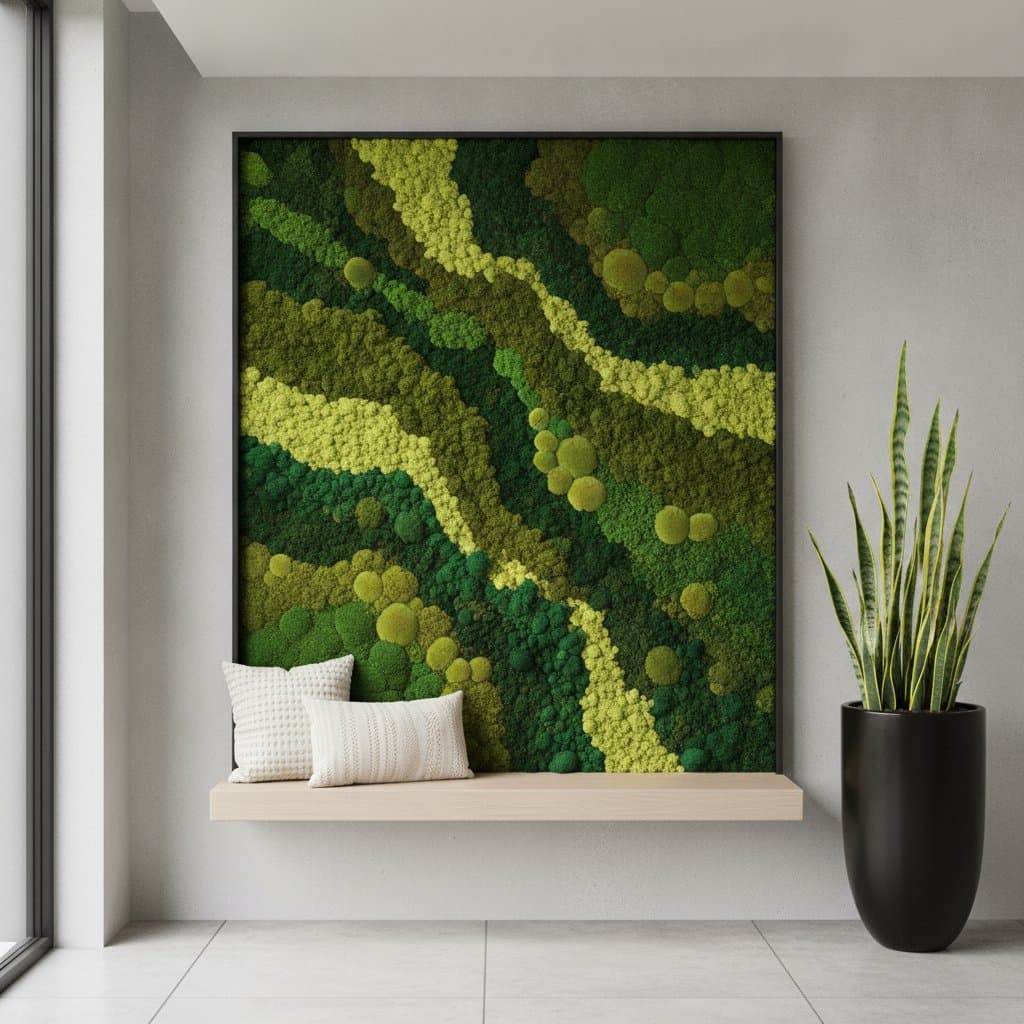
- Reindeer moss features a plush, ethereal form resembling soft clouds, available in an array of natural tones from vibrant greens to muted earth shades. Its lightweight structure suits expansive installations without overwhelming the wall.
- Sheet moss presents a smooth, carpet-like expanse with a luxurious velvet finish, ideal for creating seamless backdrops in contemporary designs. This variety excels in flat panels that mimic expansive forest floors.
- Pillow moss forms compact, spherical clusters that introduce organic dimension and subtle motion, perfect for adding focal points in textured arrangements.
For streamlined modern interiors, opt for a uniform moss type in a single shade to maintain clean lines. In contrast, blend multiple varieties and tones for a wild, layered effect that evokes untamed landscapes in bohemian or transitional spaces. Consult with suppliers to source ethically harvested moss, ensuring sustainability aligns with the installation's eco-conscious ethos.
Optimal Placement Strategies for Moss Walls
Moss performs best in indirect light and stable conditions, away from intense sun exposure or excessive dampness. Prime locations include living areas, sleeping quarters, corridors, and dedicated workspaces where they can diffuse natural serenity throughout the day.
Steer clear of positions near heat sources like radiators or above moisture-heavy zones such as bathrooms, as these factors accelerate degradation. In open-plan configurations, position moss walls to partition visual zones softly, enhancing acoustic comfort by absorbing echoes.
Renters benefit from modular framed panels that mount like conventional artwork, offering portability and reversible installation. These units, often available in standard sizes from 12 by 12 inches to larger formats, allow experimentation without permanent alterations. For custom fits, professional installers can fabricate panels to match specific dimensions, ensuring a tailored integration.
Maintenance Essentials for Longevity
Preserved moss walls demand minimal intervention to sustain their allure. Position them out of direct sunlight to avert color fading, and employ a soft brush or compressed air for periodic dusting, ideally every two to four weeks depending on ambient dust levels.
In arid environments, introduce a fine water mist monthly using distilled water to maintain suppleness, applying it sparingly to avoid saturation. Monitor for signs of uneven drying, such as brittle patches, and address them promptly with targeted hydration.
Those preferring authentic vitality might select living moss variants, which require a humidity level of 40 to 60 percent and weekly misting sessions of five to ten minutes. Automated humidifiers facilitate this care in consistent climates. However, preserved options generally offer equivalent visual impact with superior durability, making them the practical choice for most households.
Integrating Moss Walls into Daily Life
A moss wall transcends mere ornamentation, reshaping the sensory experience of a room. Its presence invites deeper relaxation, prompting slower breaths and heightened appreciation for home environments. Begin with a modest framed piece to test compatibility, then scale up to immersive full-wall designs as confidence grows.
Observe how the installation influences routines, such as using it as a meditative focal point during evening wind-downs. Over time, this natural element fosters a profound connection to the outdoors, enriching indoor sanctuaries with enduring calm and purity.