Japandi Gardens: Blending East and West for Serene Outdoor Spaces
Key Takeaways
- Japandi gardens combine Japanese minimalism and Scandinavian warmth to produce calm, equilibrated outdoor environments.
- The approach emphasizes simplicity, natural materials, and deliberate arrangement of features.
- Individuals can achieve serenity in compact urban courtyards or leased patios through integration of textures, foliage, and equilibrium.
- Deliberate upkeep and seasonal mindfulness sustain harmony throughout the year.
- This aesthetic suits active households seeking structure, tranquility, and a bond with the natural world.
Understanding the Japandi Philosophy
Japandi embodies harmony at its core. Japanese elements introduce wabi-sabi, which appreciates the allure of imperfection and transience. Scandinavian influences add hygge, the sense of ease and satisfaction derived from straightforwardness.
The Core Principles of Japandi Garden Design
1. Simplicity and Purpose
Each item must justify its position. Start by purging clutter, such as surplus furnishings, neglected containers, or ornaments lacking utility. The aim involves cultivating open areas that invite quietude.
To implement this, assess your space and retain only pieces that enhance function or calm. For instance, select a single, versatile bench over multiple scattered seats.
2. Natural Materials
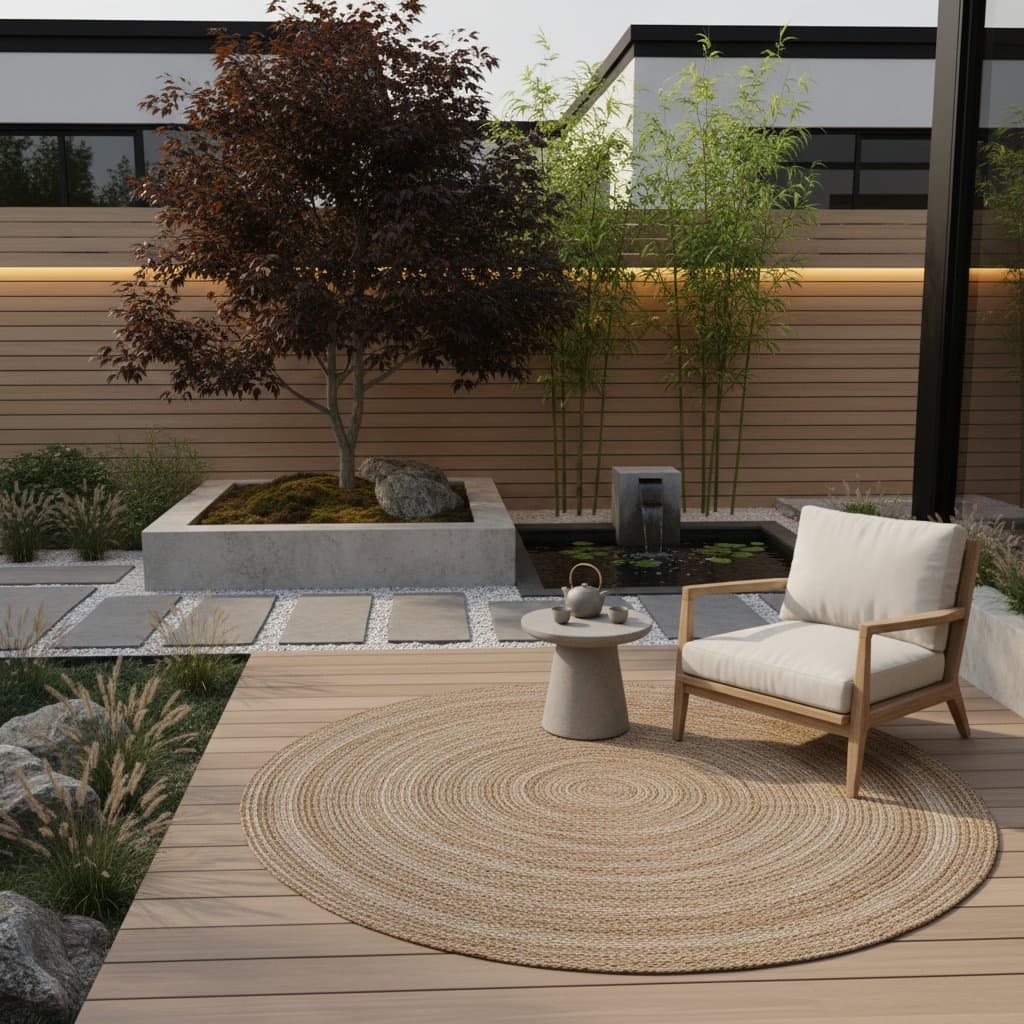
Timber, rock, and aggregate establish the base. Opt for raw or subtly treated finishes that develop patina over time. Incorporate bamboo partitions, cedar platforms, or light-toned limestone walkways to harmonize texture and hue.
Source materials locally when possible to align with sustainability. Weathered oak planks, for example, provide durability while blending seamlessly with surrounding flora.
3. Balance and Symmetry
Japandi balance appears organic, distinct from strict Western alignment. Combine polished rocks with velvety moss, or upright reeds with sprawling ground plants. Allow oppositions to emerge naturally rather than imposed.
Achieve this by observing natural patterns; position a solitary tree to counterbalance a cluster of boulders, creating visual rest without rigidity.
4. Neutral and Earthy Colors
Employ subdued shades mirroring the earth. Consider verdant moss tones, gentle grays, terracotta browns, and ivory whites. Introduce a lone ebony pottery vessel or sooty aggregate trail for dimension absent disorder.
Test color integration by layering gradually; begin with dominant neutrals and add accents sparingly to maintain cohesion.
5. Function Meets Tranquility
Japanese and Scandinavian heritages prize practicality. Design benches with integrated storage, construct paths for effortless care, and arrange seating to facilitate dialogue or solitary perusal.
Prioritize multifunctional elements, like a low table that also stores tools, ensuring the space supports daily routines without sacrificing peace.
Small Space Adaptations
Japandi principles adapt readily to confined areas, including verandas, terraces, and sill arrangements.
- Balconies: Swap bulky items for collapsible teak seating and a modest pottery fountain.
- Patios: Employ aggregate or modular decking to delineate serene sectors. Incorporate containerized reeds or compact bamboo for subtle motion.
- Windowsills: Assemble a restrained display of lichen, stones, and one bonsai to form a petite contemplative nook.
In a modest New York residence, a plain timber platter with sand and select rocks served as a miniature garden. This setup illustrated that tranquility demands intention more than expanse.
Global Inspirations and Local Adaptations
Experiences in the French rural landscape and the Cotswolds reveal Japandi's flexibility across environments and resources.
French gravel yards and lavender expanses provide an innate foundation for understated terrain shaping. Introducing Japanese acers or a basic bamboo barrier adds subdued form.
British gardens tend toward abundance, so exercise moderation. Select limited plant types and permit their robust growth. One bed of decorative grasses delivers tactile interest and dynamism without sensory excess.
Scandinavian urban verandas often feature concise Zen accents, like reduced-scale stone arrangements or cedar boxes with conifers. Universally, the ethos persists: simplicity, inherent elegance, and poise.
Seasonal Awareness
Japanese and Scandinavian societies honor seasonal cycles profoundly. Japandi gardens accentuate these shifts rather than resist them.
- Spring: Emerging verdure and lichens revitalize the area.
- Summer: Sheer textiles and unobstructed lounging encourage leisure.
- Autumn: Shed foliage integrates into the composition, representing flux.
- Winter: Stripped limbs and basic luminaires underscore quiet.
This cadence cultivates appreciation and attentiveness, particularly for indoor-bound families.
Implementing Your Japandi Garden
Establishing a Japandi garden requires no immediate overhaul. Initiate modestly by selecting one sector, refining it with care, and evaluating its impact. Consider starting with a lone seat and several container plants, or substituting vivid padding with neutral linens.
Advise clients and audiences that serenity develops incrementally. The finest Japandi gardens mature alongside their inhabitants. Gradually, foliage drops, timber matures, rocks embed, and these alterations narrate a tale of enriched existence.
Traversing my garden yields the gentle grind of gravel, the sun-warmed cedar seat, and serene atmosphere. The space lacks flawlessness yet radiates peace.
Integrating the Garden into Daily Life
As your Japandi garden materializes, permit it to shape routines. Emerge with morning brew, partake in subdued family repasts, or allow young ones to investigate surfaces and aromas.
The garden transcends adornment to instruct in forbearance, equilibrium, and mindfulness.
Regardless of urban dwelling or rural abode, Eastern and Western tranquility converge just beyond the threshold. A Japandi garden seeks neither magnificence nor impeccability, only nurturing, straightforwardness, and resolve.