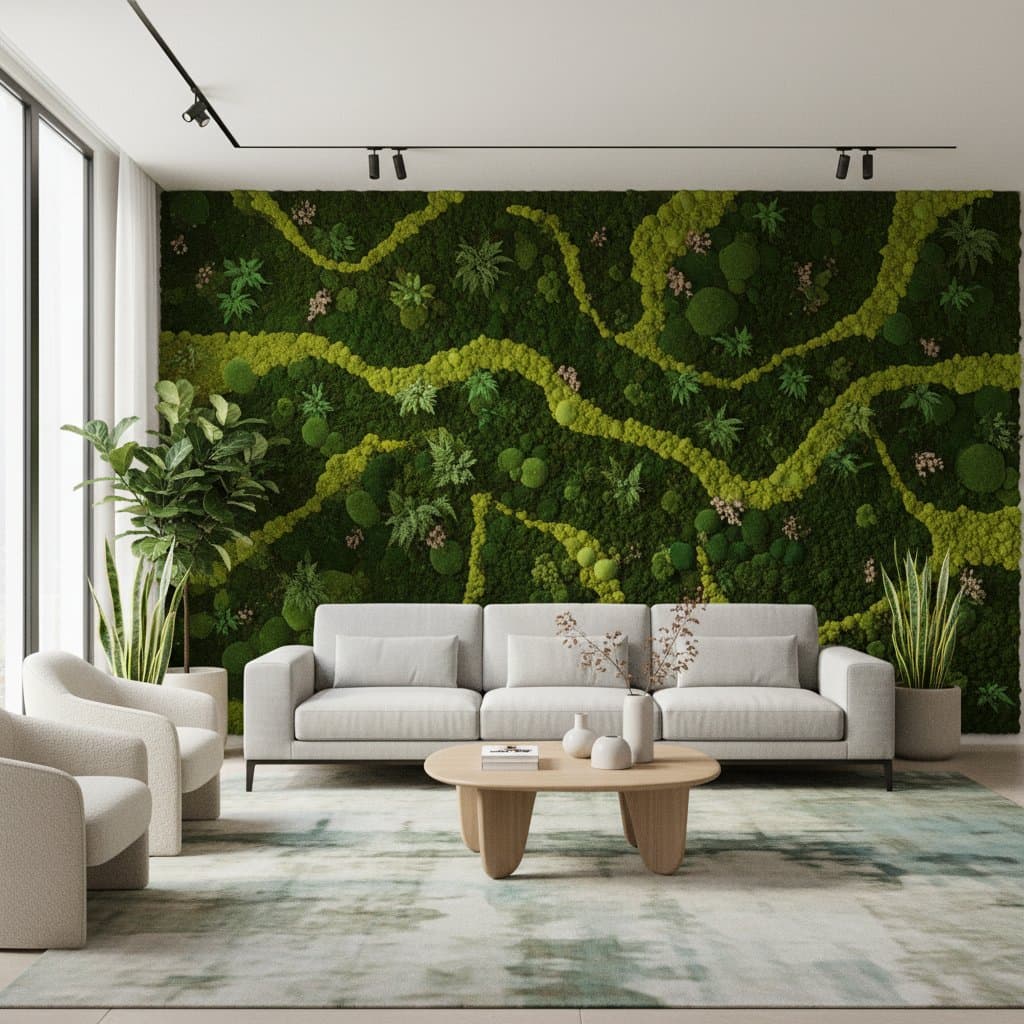
Understanding Moss Walls in Modern Interiors
Moss walls consist of preserved natural moss arranged on panels for vertical display. These installations introduce organic texture and color into dining rooms without requiring soil or watering. Designers select them to soften hard architectural lines and create focal points that draw the eye.
Preserved moss maintains its appearance for years when kept away from direct sunlight and excessive moisture. This quality makes it suitable for spaces where live plants might struggle.
Core Benefits for Dining Spaces
Moss walls absorb ambient sound, which reduces echo during conversations and meals. The effect proves especially useful in rooms with hardwood floors and large windows.
The material contributes to a sense of calm through its connection to natural forms. Studies in biophilic design link such elements to lower stress levels among occupants.
Selecting the Right Style and Scale
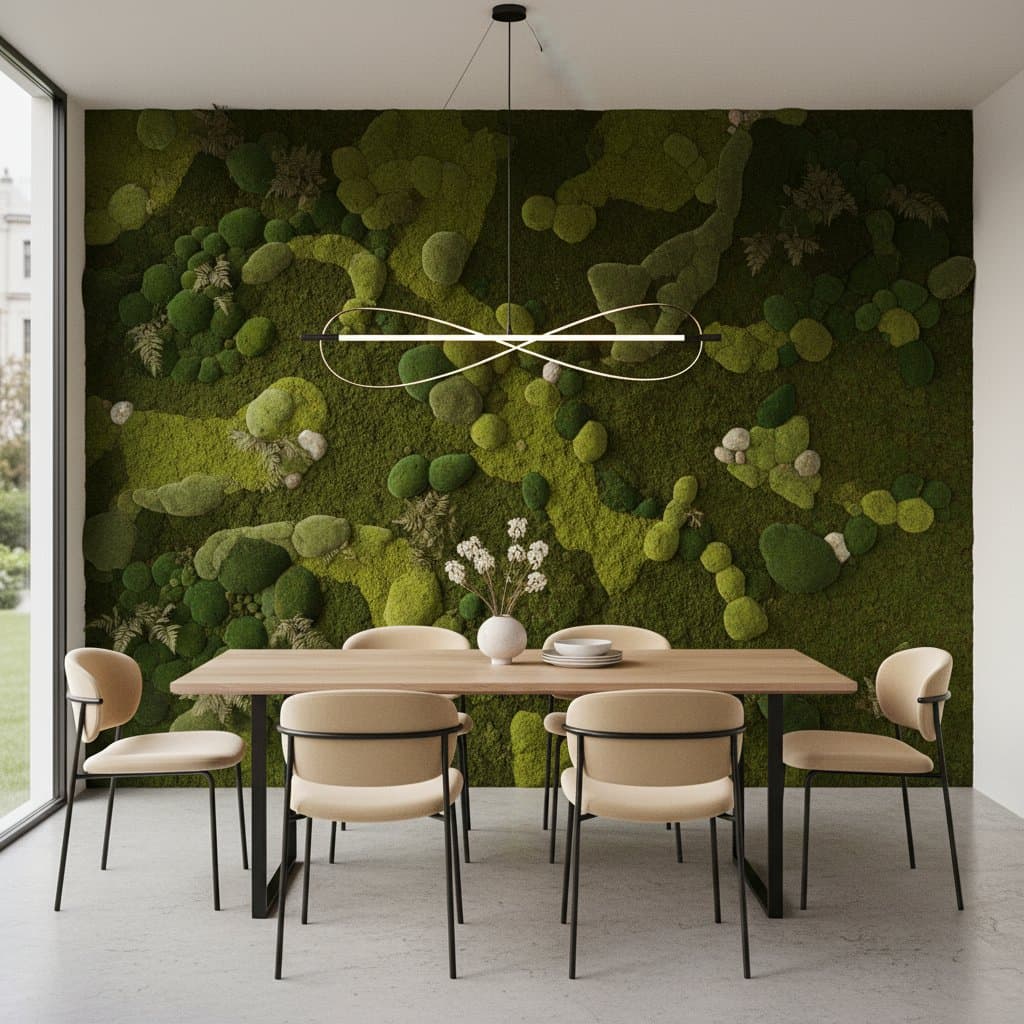
Small panels placed behind a sideboard add subtle interest without dominating the room. Larger installations spanning an entire accent wall create drama suitable for open concept homes.
Color variations range from deep forest greens to lighter chartreuse tones. Mixing shades within one panel produces depth and visual movement.
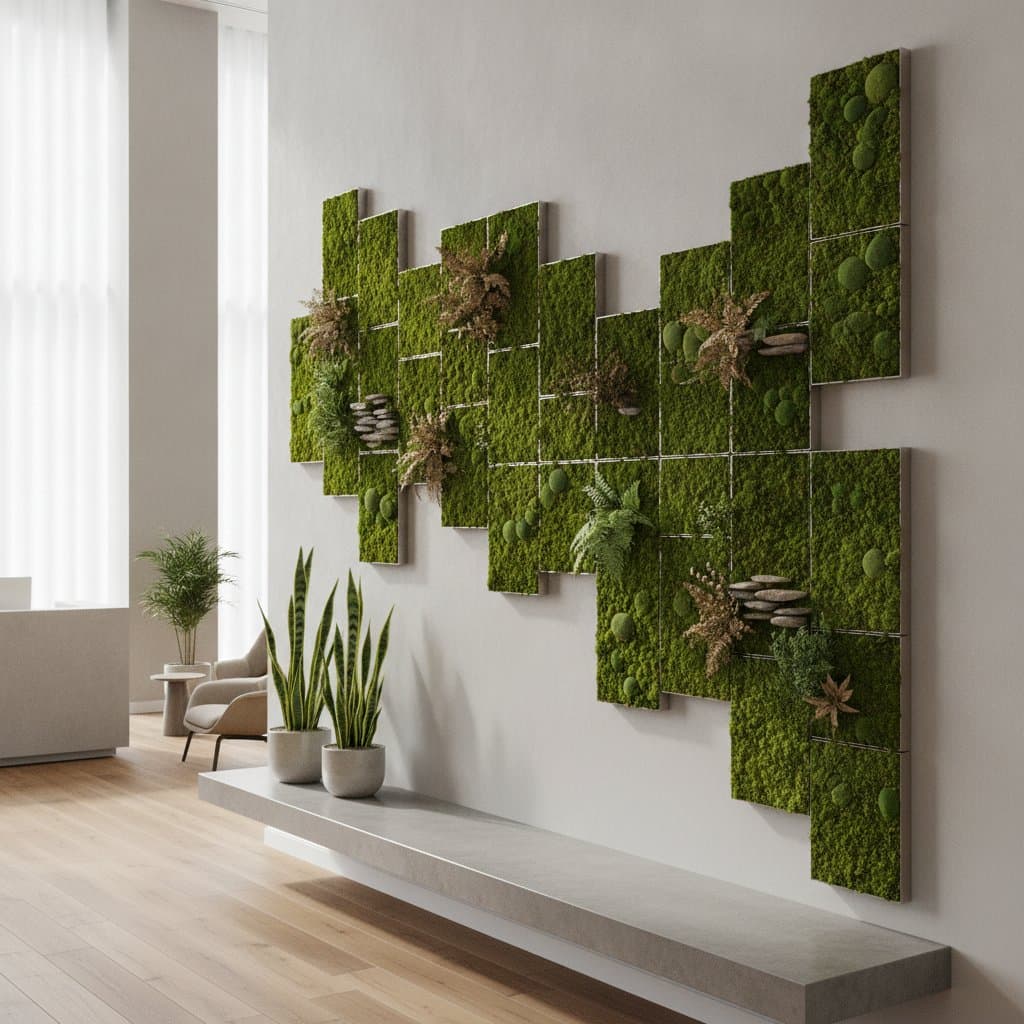
Frame choices influence the final look. Thin wood borders keep the focus on the moss itself, while metal frames introduce a contemporary edge.
Practical Placement Strategies
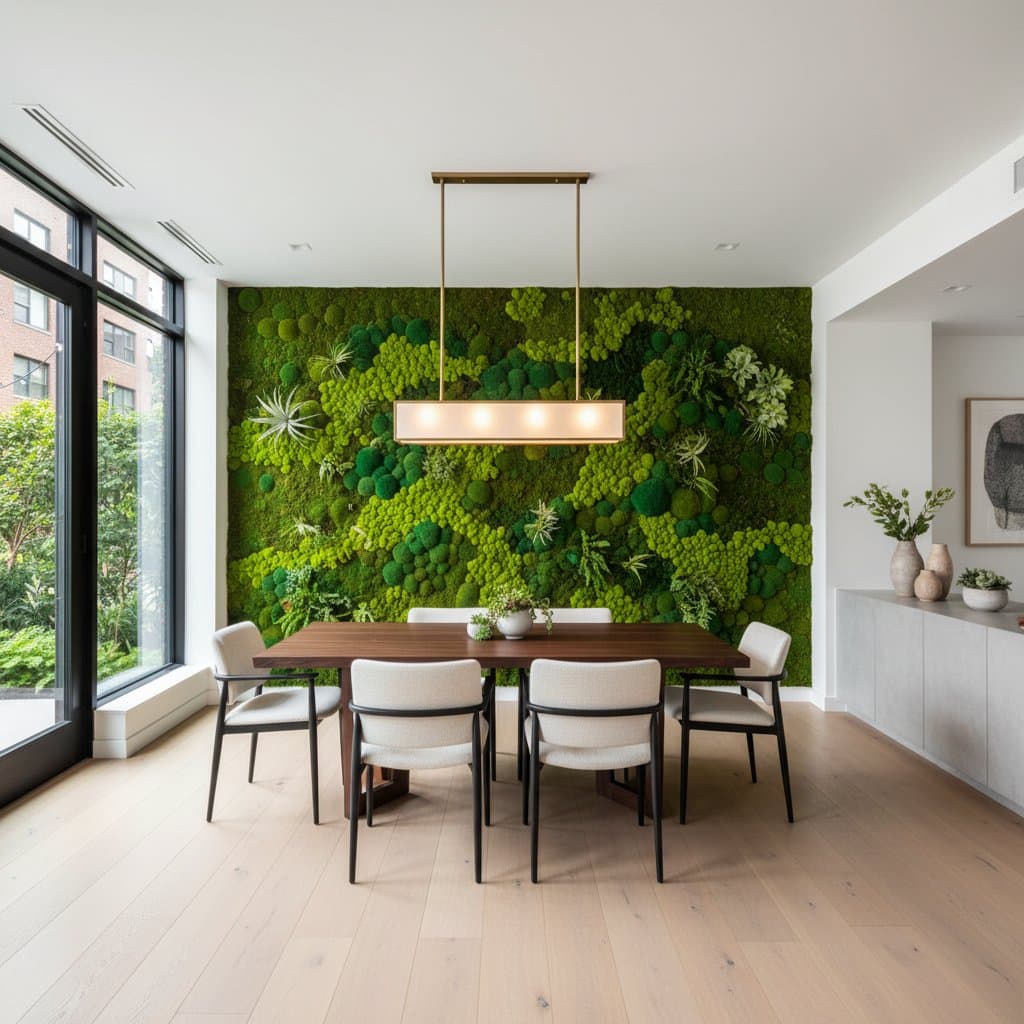
Position moss walls opposite windows to catch indirect light and highlight texture. Avoid locations near heat sources or vents that could dry the material prematurely.
In smaller dining areas, a single vertical strip beside the table serves as an art piece. Larger rooms accommodate multiple panels arranged in a grid or asymmetrical pattern.
Consider sight lines from adjacent spaces. A moss wall visible from the kitchen or living area extends the natural theme throughout the home.
Installation and Ongoing Care
Professional installers mount lightweight panels directly to drywall or wood backing. The process typically requires a few hours and minimal disruption.
Maintenance involves occasional dusting with a soft brush. No watering, pruning, or fertilizing is necessary, which distinguishes preserved moss from living green walls.
Inspect panels seasonally for signs of fading. Rotate or replace individual sections if exposure patterns cause uneven color changes over time.
Integrating Moss with Existing Décor
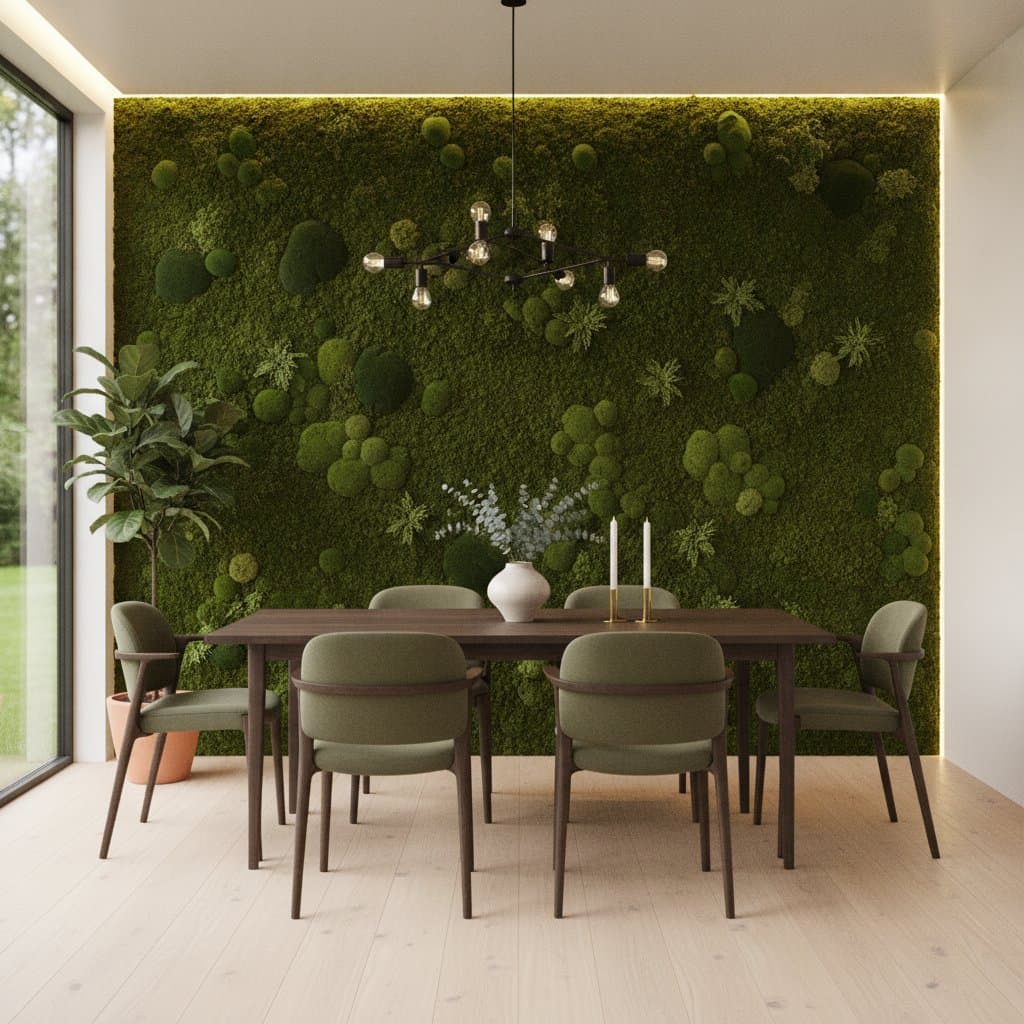
Pair moss walls with natural wood dining tables and linen upholstery to reinforce an organic palette. Leather chairs add warmth that complements the soft moss surface.
Lighting plays a key role. Uplights positioned at the base of the wall emphasize height and texture during evening meals.
Seasonal table arrangements can echo the wall colors through simple greenery or stoneware in matching tones.
Long Term Value in Residential Design
Moss walls retain their appearance with little effort, offering consistent visual return on the initial investment. Their durability supports both daily family use and formal entertaining.
Homeowners report increased satisfaction with dining rooms that incorporate these elements, citing improved atmosphere and easier upkeep compared to traditional artwork or live plants.