Key Benefits of Living Moss Walls in Bathrooms
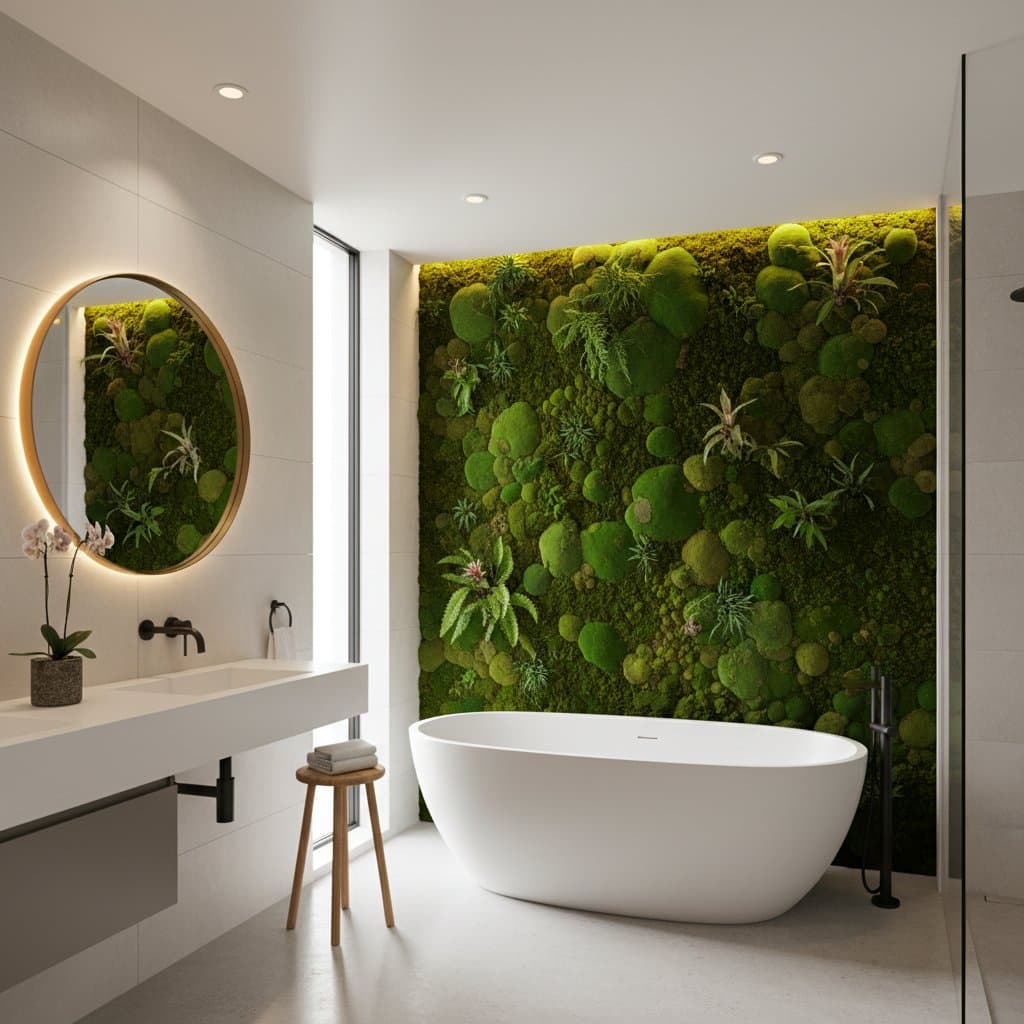
Living moss walls merge natural beauty with practical functions in bathrooms. They absorb excess moisture to balance humidity and dampen echoes from hard surfaces. This combination supports wellness by incorporating nature into daily routines.
Homeowners appreciate the low-maintenance nature of these walls. Moss draws hydration from the air, eliminating soil needs. Proper setup ensures longevity in steamy conditions.
The rise of moss walls ties into biophilic design, which connects indoor spaces to the outdoors. Such elements reduce stress and foster tranquility. Selecting suitable moss types and installation methods maximizes these advantages.
Understanding Moss Biology for Indoor Use
Moss walls consist of live or preserved moss affixed to panels. Live moss absorbs atmospheric moisture, thriving without roots in soil. This adaptation suits bathrooms, where steam from showers maintains ideal conditions.
Evaluating Your Bathroom for Moss Installation
Assess humidity first, aiming for 40 to 60 percent relative levels. Use a hygrometer to measure; add a humidifier if ventilation dries the air too quickly. Moss flourishes in balanced moisture but suffers in extremes.
Ensure adequate air movement to prevent mold. Operate exhaust fans intermittently and open windows when possible. Stagnant conditions harm moss health.
Check lighting: indirect sources work best. Install sheer curtains to filter harsh rays. For low-light bathrooms, position near windows or use timers on grow lights.
Inspect walls for smoothness and resistance to water. Seal porous surfaces with waterproof coatings. Tile or cement board provides stable bases.
Consider time for upkeep. Moss needs weekly checks, but demands less effort than potted greenery. Address these factors to predict success.
Gathering Materials and Planning the Project
Compile essential items for a reliable installation. Choose sheet, cushion, or reindeer moss based on texture preferences. Opt for live moss for authenticity or preserved for simplicity.
Select panels from PVC, marine plywood, or aluminum composites. These materials resist warping in humidity. Include waterproof sealants and strong adhesives rated for moist areas.
Tools include measuring tapes, levels, utility knives, and spray bottles for misting. Add LED grow lights if natural illumination falls short. Budget for mounting hardware like screws and clips.
Prioritize safety: wear gloves during adhesive work and test bonds on scraps. Avoid installing near electrical features to prevent hazards. Schedule during low-use periods, allowing 24 hours for curing.
Complete preparatory tasks like painting or tiling beforehand. This minimizes contamination. Map the layout on paper to visualize coverage and seams.
Step-by-Step Installation Guide
Preparing the Surface
Start by cleaning the wall with mild soap and water. Rinse thoroughly and dry completely. Apply a waterproof membrane, following product instructions for drying times.
This barrier shields against leaks. Sand rough spots for even adhesion. Verify the surface remains free of residues.
Mounting the Panels
Measure the area precisely and outline panel positions with a level. Dry-fit pieces on the floor to check fit. Mark guidelines on the wall for alignment.
Secure panels with corrosion-resistant screws or clips, spacing evenly. Butt edges closely to avoid moisture traps. Double-check stability by applying gentle pressure.
Attaching the Moss
For preserved moss, spread adhesive evenly on panels. Press moss sheets firmly, starting from the center outward. Smooth bubbles and trim overhangs with scissors.
With live moss, use mesh-backed mats for air circulation. Secure by pinning or gluing, ensuring even distribution. Work section by section to maintain control.
Setting Up Moisture and Light
Mist the moss lightly post-installation to settle it. Monitor humidity and adjust ventilation cycles. Install grow lights on timers for 8 to 12 hours daily if needed.
Position lights 12 to 18 inches away to prevent heat damage. Test the setup over a week, observing moss response.
Final Touches
Seal edges with clear silicone where moss meets fixtures. Wipe away excess adhesive promptly. Inspect for uniform coverage and color.
Step back to evaluate aesthetics. Adjust as necessary for seamless integration.
Ensuring Long-Term Performance
Monitor color for even green tones; brown spots signal under-hydration. Gently tug edges to confirm secure bonds. A fresh, earthy scent indicates health; mustiness suggests issues.
Use a hygrometer weekly to track humidity. Adjust misting if levels deviate. These checks catch problems early.
If issues arise, isolate affected areas. Increase airflow for dampness or add moisture for dryness. Consistent vigilance preserves the wall's vitality.
Ongoing Care Routines
Mist moss once or twice weekly, using distilled water to avoid minerals. Apply in fine sprays to prevent saturation. Observe plant response and tweak frequency.
Remove dust with a soft brush or low-suction vacuum monthly. Avoid harsh cleaners that strip natural oils.
Inspect panels quarterly for loosening. Tighten fasteners and reapply sealant as needed. Manage lighting to mimic natural cycles.
Adapt to seasons: boost misting in dry winters, enhance ventilation in humid summers. These habits sustain lush growth.
Integrating Biophilic Principles
Biophilic design uses nature to enhance mental health in interiors. Moss walls introduce organic forms and colors, countering the sterility of tiles and fixtures.
Green shades calm the mind, lowering cortisol levels. The soft texture encourages touch, deepening relaxation. Pair with water sounds for amplified serenity.
Such features elevate bathrooms beyond utility. They create spaces for reflection and rejuvenation. Evidence shows biophilic elements improve mood and focus.
Budgeting and Installation Options
Costs range from $50 to $150 per square foot, depending on moss type. Preserved options save on upkeep tools. Factor in panels, adhesives, and lights.
DIY suits small projects: follow guides closely for safety. Acquire materials from specialty suppliers. Expect 4 to 8 hours for a 4-by-6-foot wall.
Professionals handle complex setups, ensuring code compliance. They assess structures and integrate features like automated misting. Invest for larger areas or custom designs.
Weigh skills against scope. Beginners start small to build confidence.
Resolving Potential Challenges
Address fading by blocking direct light and misting more often. Relocate lights if bleaching persists.
Combat mold with better circulation: run fans longer post-shower. Dry excess water immediately.
Fix loose sections by cleaning and re-gluing. Use compatible adhesives for strong holds.
Even out texture through uniform care. Balance humidity across the wall. Prompt action maintains appeal.
Achieving a Transformative Bathroom Upgrade
Living moss walls blend aesthetics, function, and wellness seamlessly. They regulate air quality, soften sounds, and invite peace into humid havens.
Evaluate conditions, select materials, and install methodically for best results. Maintain with simple routines to enjoy enduring benefits.
This addition fosters a deeper home-nature bond. Daily rituals gain restorative power amid verdant surroundings. Sustain the installation to reap years of serene, vibrant use.