Key Points
- Moss walls introduce natural warmth and texture to living rooms without requiring ongoing maintenance.
- These installations align with biophilic design principles, which enhance indoor air quality and foster a sense of calmness.
- Preserved moss options suit moderate DIY projects, while live moss systems often demand professional installation.
- Expenses range based on materials and scale, yet compact accent panels deliver significant visual impact.
- Proper maintenance ensures a moss wall endures for years as a central element in living spaces.
Project Overview
Working Time: 3 to 8 hours for preserved moss installations; extend for live moss systems
Total Time: 2 to 3 days, accounting for preparation and curing periods
Skill Level: Intermediate
Estimated Cost: $150 to $900, influenced by size and material selection
Reasons Homeowners Choose Moss Walls
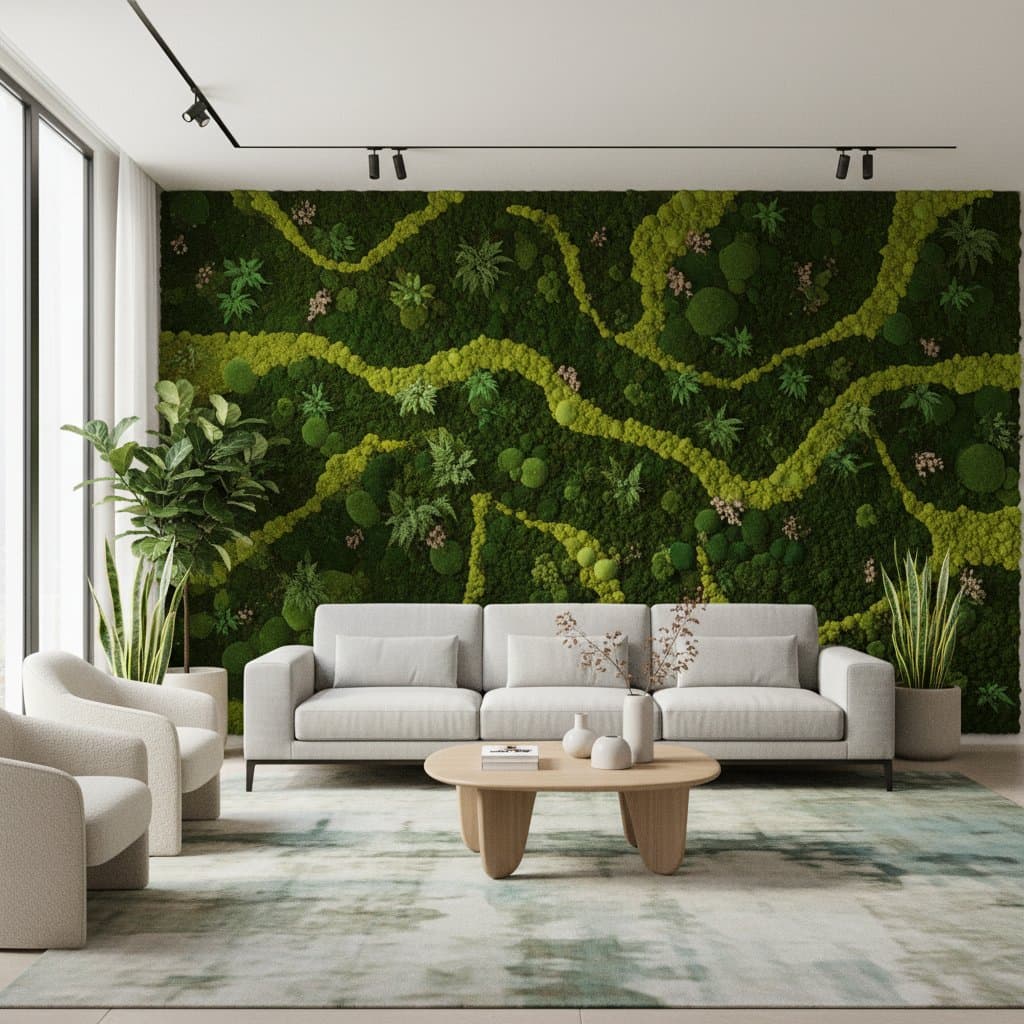
Contemporary living rooms often feature flat, inert surfaces such as painted walls or patterned wallpaper. While these options serve basic needs, they seldom deliver the depth or energy found in organic elements. Moss walls address this limitation by offering a preserved or living surface that tempers the room's ambiance and links the interior to the outdoors.
Biophilic design emphasizes the incorporation of natural components into constructed settings, a practice proven to alleviate stress and stimulate innovation. Moss walls embody this approach through their plush, irregular forms that dampen acoustics, moderate moisture levels, and provide soothing visuals. This influence proves particularly effective in spaces dominated by rigid materials, including hardwood flooring or masonry hearths.
On a functional level, moss walls overcome typical hurdles associated with houseplants. They eliminate the need for soil or ample sunlight, and preserved varieties demand no irrigation whatsoever. For individuals with demanding schedules, this translates to effortless access to verdant accents.
Deciding Between DIY and Professional Installation
Moss walls fall into two primary categories: preserved and living.
Preserved Moss Walls
These utilize moss processed to retain its hue and form indefinitely, without further development. Such walls lend themselves well to self-directed assembly. Their light weight facilitates handling, and assembly involves only bonding agents, a sturdy substrate, and methodical application.
Living Moss Walls
These systems rely on active vegetation sustained by hydration, circulation, and occasionally programmed watering mechanisms. Professional expertise proves essential here, given the necessity for impermeable linings and adequate air exchange.
Individuals proficient in basic tools and joinery can construct a preserved moss wall independently. The process yields a fulfilling endeavor that intertwines fabrication, aesthetics, and ecology. For expansive, vital installations, however, engage specialists versed in botany and structural integration.
Essential Materials and Tools
For Preserved Moss Walls
- Varieties of preserved moss, including reindeer, sheet, or pillow types
- Plywood or medium-density fiberboard as the substrate
- Construction-grade adhesive or hot-melt glue
- Frame moldings or timber edging
- Secure mounting fixtures
- Gloves and a particulate respirator for protection
For Living Moss Walls
- Prefabricated panels or moss modules
- Impervious substrate with moisture shielding
- Drip or aerosol irrigation apparatus
- Supplemental lighting fixtures where daylight falls short
Repurpose leftover timber from prior endeavors for framing, which reduces expenses and imparts a handcrafted quality.
Step-by-Step Installation Guide
-
Design the Layout: Outline the intended dimensions and select between a comprehensive coverage or segmented framed units. Position a compact framed segment thoughtfully to achieve comparable prominence to a full expanse.
-
Prepare the Substrate: Trim the plywood or fiberboard to specifications. Smooth the borders with sandpaper and apply a polyurethane coating to guard against fluid ingress.
-
Secure the Moss: Don protective gear, then dispense adhesive in discrete zones. Affix the moss with gentle pressure, blending assortments of textures and tones for authenticity. Preserve loft by avoiding excessive compression.
-
Add Framing and Secure Placement: Upon moss adhesion, affix bordering trim. Anchor the assembly to the wall via robust supports or interlocking cleats.
-
Apply Finishing Details: Spritz sparingly to dispel residue and revive vibrancy. For preserved moss, perform this procedure once, as it forms no part of routine upkeep.
Preserved moss accommodates adjustments during placement, and minor voids fill straightforwardly. Prioritize an irregular arrangement over rigid symmetry to evoke natural irregularity.
Ensuring Durability and Performance
A moss wall's resilience hinges on component quality and ambient conditions. Preserved moss sustains its allure for extended periods when shielded from intense light and excessive dampness. Should fading occur, a brief application of distilled water restores its patina.
Living moss walls thrive under steady moisture and ventilation regimes. Excess hydration risks fungal growth, whereas insufficiency prompts desiccation. Sophisticated setups manage these variables through integrated controls.
In self-built versions, opt for robust sealants and adhesives to avert separation or staining. Select formulations certified safe for interior applications to maintain air purity.
Managing Costs Effectively
Moss walls accommodate diverse financial plans. Compact preserved assemblies assemble for minimal outlay, whereas elaborate living configurations escalate accordingly. To economize, initiate with a delimited area or pictorial panel format.
Incorporate moss alongside salvaged lumber or lithic accents to extend resources and introduce variety. For instance, intersperse moss strips amid timber slats for a harmonious, terrestrial motif suited to rustic or contemporary vernacular styles.
Safety Protocols and Upkeep Routines
Preserved moss poses low risk and suits indoor environments. Employ gloves and respiratory protection during manipulation to prevent dermal or inhalation issues. Adhere to conventional precautions when operating machinery for substrate or frame preparation.
Living moss installations, incorporating fluid delivery, warrant heightened vigilance. Verify that any powered elements, like illuminants or circulators, comply with moisture-resistant standards.
Upkeep for preserved walls remains straightforward: employ a gentle bristle or pneumatic stream for periodic cleaning. Position away from direct solar exposure and zones of frequent contact.
Integrating Moss Walls for Lasting Appeal
A moss wall transcends mere ornamentation, embodying respect for artisanal skill, ecological mindfulness, and nature's tranquil essence. Whether assembled personally or commissioned, it cultivates a living room atmosphere of stability, serenity, and tactile richness. Through diligent execution and placement, this element endures, affirming the timeless allure of organic integration and meticulous construction.