Acoustic Panels as Stylish Art for Better Acoustics
The first time acoustic panels appeared in my Staten Island home office, they resembled giant gray sponges affixed to the wall. Practical results followed immediately. Visual appeal remained absent. Every glance away from the laptop created the sensation of confinement in a padded cell. Design writing demands better solutions, so the search for intentional sound control began.
That search revealed modern acoustic panels that function as wall art, headboards, and sculptural elements. Recording studio performance now integrates with residential aesthetics. Style and acoustic performance operate together without compromise.
Everyday Noise Challenges
Residents in busy neighborhoods encounter constant sound layers. Garbage trucks, thin-wall conversations, barking dogs, and hallway foot traffic combine into persistent background disturbance. Standard remedies such as heavy curtains, additional rugs, and white noise machines provide only partial relief.
Acoustic Panel Function
Sound waves reflect from hard surfaces and generate reverberation. Acoustic panels absorb those waves rather than reflect them. The outcome is reduced echo, improved speech clarity, and richer audio reproduction.
Panels typically contain dense foam, fiberglass, or recycled cores wrapped in fabric. Strategic wall or ceiling placement controls sound in home offices, podcast setups, and dining spaces. Earlier designs suited corporate environments only. Current options prioritize residential integration.
Design Options That Serve Dual Purposes
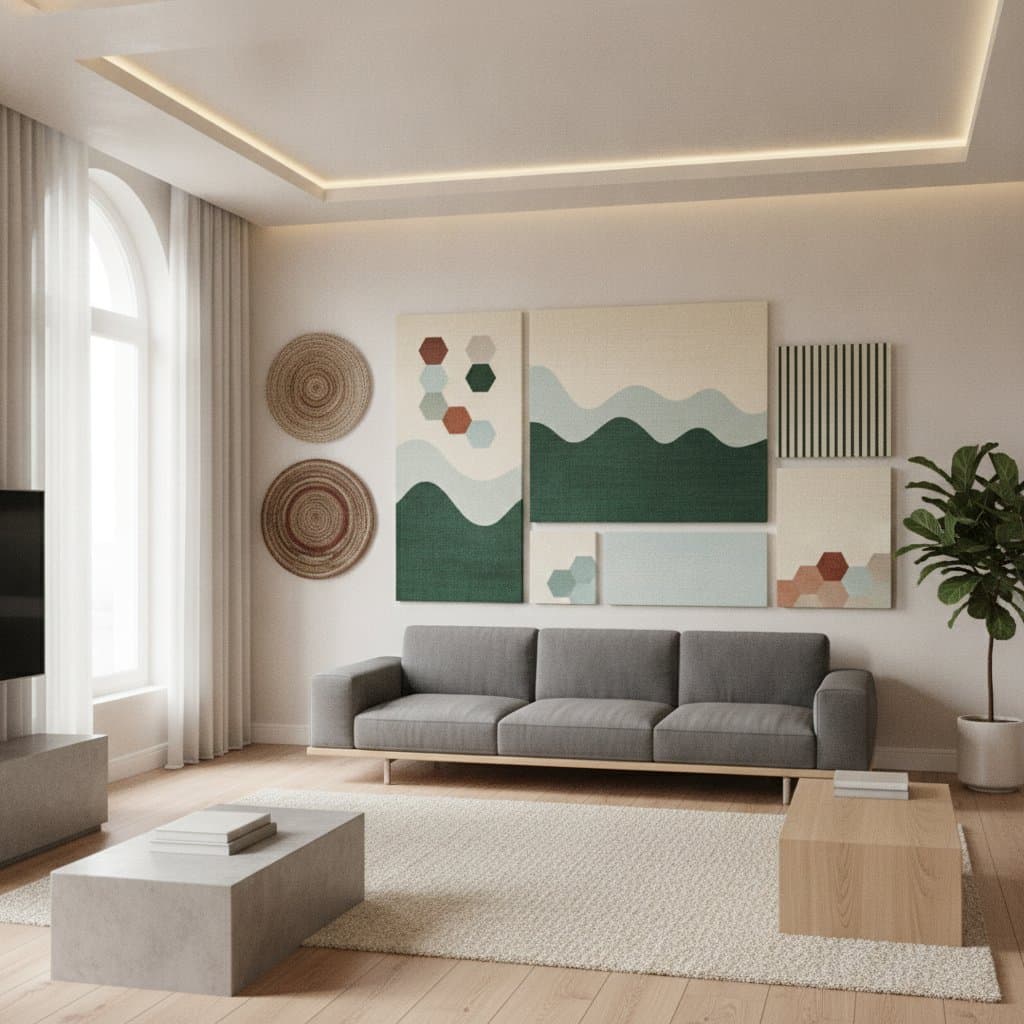
Panels now appear in varied shapes, colors, and finishes that align with multiple interior styles. Modular tiles arrange like geometric puzzles. Other versions replicate wood slats, woven textures, or printed artwork. Layout decisions become part of the decorating process.
Effective approaches include the following:
- Framed fabric panels that resemble large artwork while absorbing sound. Linen or wool-blend coverings complement existing wall colors.
- Hexagonal or triangular tiles arranged into custom patterns suitable for minimalist rooms.
- High-resolution printed images applied to acoustic fabric for cityscapes or abstract designs.
- Wood-veneer panels with slats or perforations that add warmth and texture.
- DIY boards wrapped in leftover curtain fabric for custom color matches and immediate testing.
Selection and Placement Guidance
Define the primary acoustic goal before purchase. Echo reduction in living rooms requires different coverage than neighbor noise control or video-call clarity. Map noise sources first. Focus panels on shared walls when external sound enters. Distribute panels across open surfaces when internal reverberation dominates.
Maintain balance between hard and soft materials. Ear-level placement works best in seating areas. Higher positions suit standing zones. Temporary test pieces confirm optimal locations before final installation. Panels absorb rather than block sound, so combine them with door seals and rugs for comprehensive results.
Suitable Locations
Home offices gain clearer audio during calls. Living rooms lose harsh ceiling echo. Bedrooms become calmer for rest. Dining areas avoid restaurant-style reverberation. Even entryways and stairwells benefit from targeted placement that eliminates hollow acoustics during phone use.
Personal Integration Methods
Treat panels as part of an existing art collection. Mix sizes and colors to establish visual rhythm behind sofas or beds. Three large fabric panels combined with two framed prints can produce a curated appearance rather than a technical installation. Professional acoustic designers share examples of warm, balanced rooms that demonstrate similar results on modest budgets.
Installation Errors to Prevent
Insufficient coverage leaves large rooms unchanged. Target twenty to thirty percent of wall area for measurable improvement. Corners collect sound and require additional treatment. Tall ceilings need overhead panels or baffles. Smooth fabrics reflect sound; textured felt, wool, or cotton absorb it more efficiently. Color coordination ensures panels read as intentional design elements.
Daily Experience After Installation
Constant background noise previously reduced concentration. Its absence now registers as a noticeable improvement. Soft sounds remain audible without amplification. Conversations stay intimate. The shift alters how the entire home feels during routine activities.