Key Points
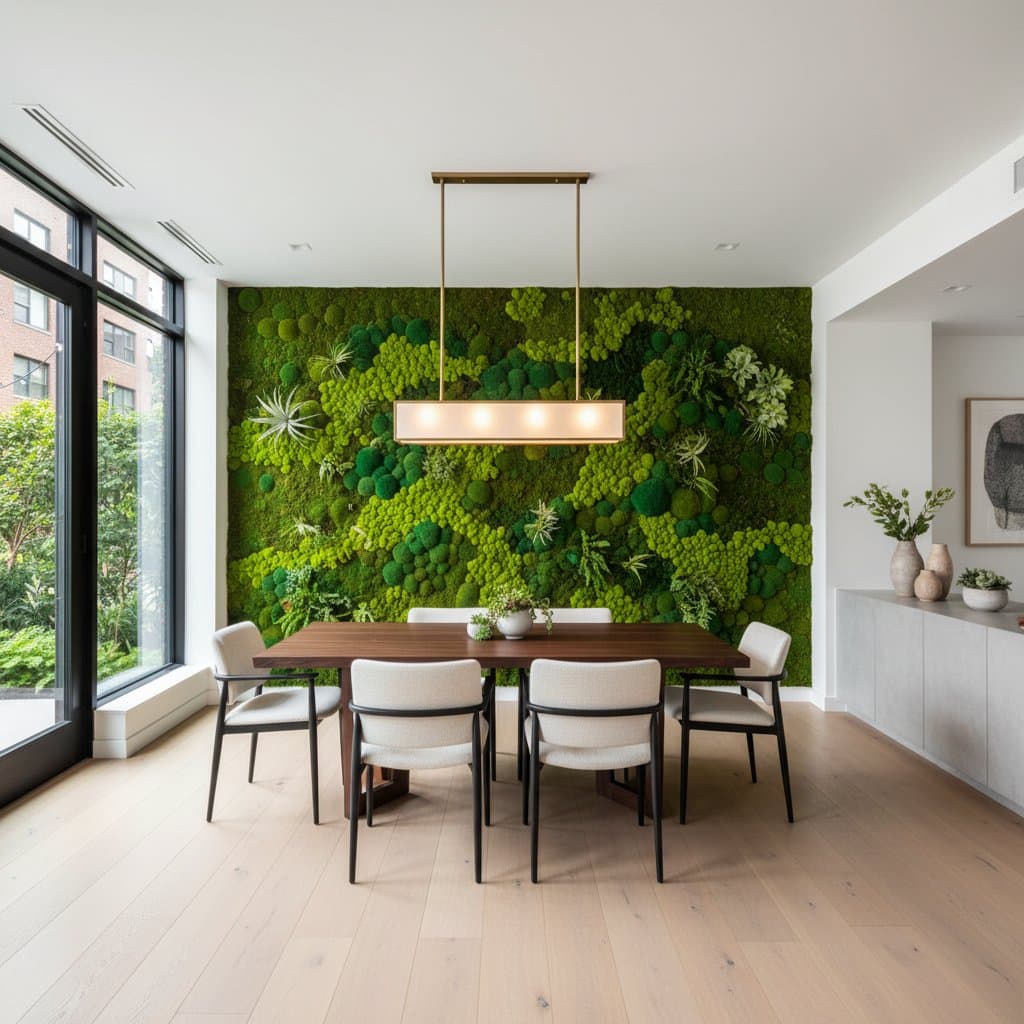
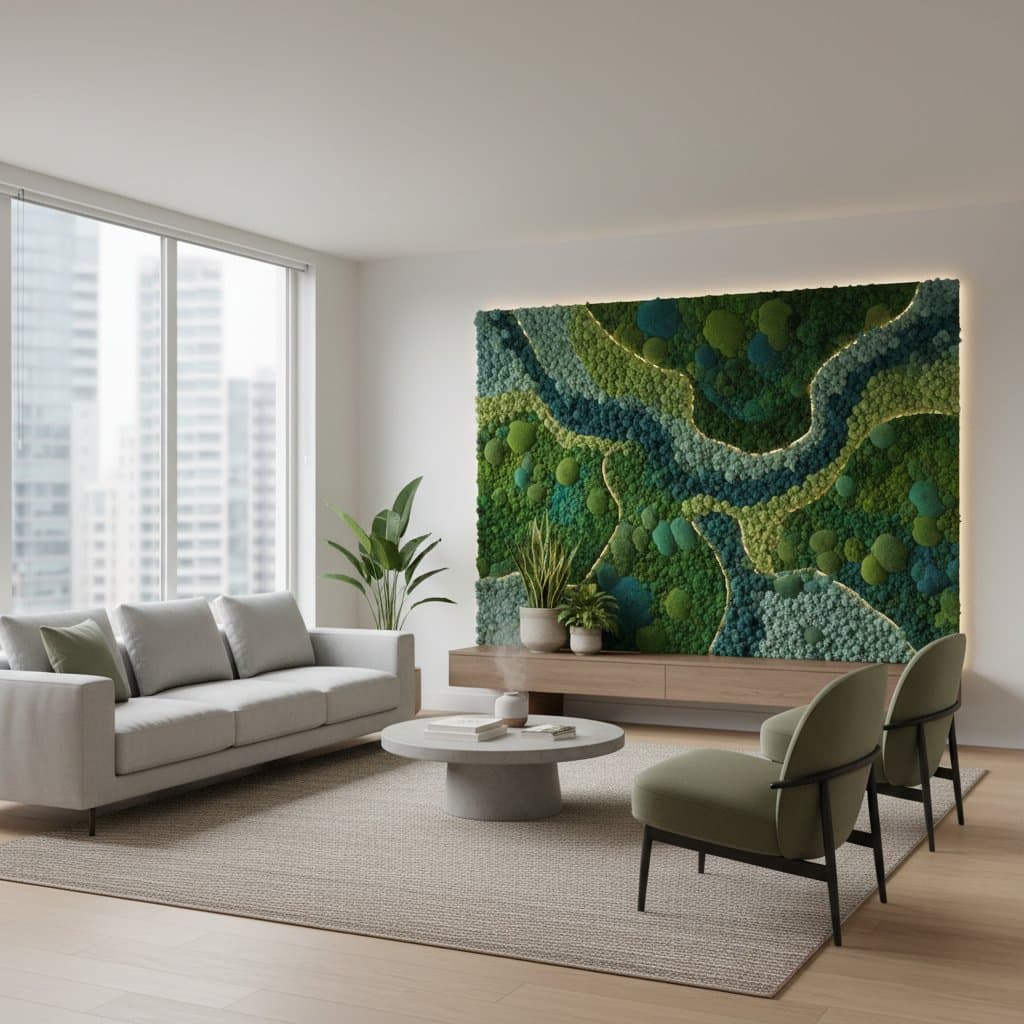
- Moss walls establish a vibrant natural centerpiece that boosts dining ambiance while enhancing air purification.
- They embody biophilic design, fostering human-nature bonds that encourage calm and meaningful interactions.
- Thorough preparation covers moisture regulation, illumination, and surface readiness.
- Living moss demands active care, whereas preserved options offer simplicity and lower expenses.
- Professional mounting, sealing, and routine checks safeguard walls and sustain visual appeal.
Technical Background
Biophilic design incorporates natural components into indoor settings to support health and alleviate tension. In dining areas, moss walls achieve this through their tactile surfaces, verdant hues, and irregular shapes. Moss inherently muffles echoes, balances moisture, and captures pollutants from the air. Such attributes suit communal zones for meals and discussions.
Assessment
Prior to launching a moss wall initiative, scrutinize the dining room's climate and structural elements. Essential considerations encompass:
- Humidity levels: Living moss flourishes at moderate dampness. Arid conditions lead to browning and contraction.
- Sunlight exposure: Opt for diffused light. Intense rays bleach the moss, and complete shade hinders vitality.
- Wall composition: Drywall requires sealing primers, wood needs moisture-resistant finishes, and masonry benefits from permeable coatings. All surfaces demand protection from water ingress.
- Air circulation: Adequate ventilation curbs mold growth behind installations and promotes uniform dampness.
- Lifestyle needs: Those seeking minimal upkeep often select preserved panels over live configurations.
This evaluation guides the decision between live and preserved moss and outlines the setup process.
Planning Phase
Tools and Materials
- Moss panels or stabilized moss sheets
- Mounting framework, including backer boards or modular grids
- Moisture-resistant membrane
- Waterproof sealant or primer
- Level, tape measure, and power drill
- LED illumination or diffused light sources
- Digital hygrometer for dampness tracking
- Maintenance brush and microfiber cloth
Timing and Logistics
Dedicate multiple days to prep and assembly. Allow sealants and primers to dry fully. For live moss, permit adjustment to the environment prior to securing. Position lights and wiring ahead of panel attachment.
Safety and Code Compliance
Adhere to guidelines for glues and finishes from suppliers. Verify that light wiring aligns with home electrical standards. Don protective gear during material handling. If panels obscure outlets or controls, incorporate hinged access covers.
Implementation
Step 1: Surface Preparation
Examine the wall for fissures, flaking layers, or wet spots. Patch imperfections and wipe down thoroughly. Coat with a moisture-blocking primer. On masonry, select a vapor-permeable sealer to permit airflow while blocking excess dampness.
Step 2: Install Vapor Barrier and Backer Board
For live setups, layer a slim moisture shield over the base. Secure a sturdy backer, like PVC sheeting or waterproof plywood, for firm backing. Fasten with rust-proof fasteners and align precisely using a level tool.
Step 3: Mount Moss Panels or Frames
Assemble modular units starting low to maintain straight lines. Apply natural-material-safe adhesive for preserved moss. Position panels with steady pressure to preserve fluffiness. Ensure joints align seamlessly for a cohesive look.
Step 4: Integrate Lighting
Subtle illumination accentuates moss contours and layers. Mount LED tapes or rail systems overhead or underneath for gentle radiance. In live installations, employ spectrum-balanced grow lights at low wattage. Angle sources to minimize warmth that might desiccate the moss.
Step 5: Humidity and Maintenance Setup
Place a hygrometer close by for ongoing readings. Sustain live moss with periodic fine mists or a programmed humidifier, targeting even coverage without drenching. Skip water on preserved moss; address dust via gentle brushing.
Step 6: Finishing Touches
Caulk borders where moss adjoins moldings or walls with transparent silicone against leaks. Frame the display with simple accents for definition. Polish nearby areas and test lights plus humidity controls.
Quality Assurance
Post-installation, review for complete coverage and secure bonds. Scan for voids, color inconsistencies, or detachments. Observe live moss closely in initial weeks for mold hints or arid zones, adjusting conditions swiftly.
Sustained performance hinges on regular oversight. Log dampness data weekly and assess moss feel. Preserved moss retains suppleness; live moss displays lively bounce. In busy dining spots, brush lightly biweekly to clear particles, steering clear of direct suction.
Maintenance
Living Moss Walls
- Moisture Control: Target 40 to 60 percent relative humidity. Deploy a compact humidifier in arid periods.
- Lighting: Ensure steady indirect exposure. Swap bulbs if tones warm or cool undesirably.
- Trimming: Clip faded areas with fine shears to halt deterioration.
- Inspection: Peer behind units monthly for moisture buildup on bases.
Preserved Moss Walls
- Dust Removal: Sweep lightly to uphold texture. Shun liquids or aerosols.
- Lighting: Shield from harsh sun to avert color loss.
- Temperature: Preserve even room climates. Heat spikes induce fragility.
- Longevity: With care, preserved moss stays vivid for years, needing no revival.
Troubleshooting Common Issues
- Moss Drying Out: Signals insufficient dampness or strong drafts. Tune humidifiers or reroute air flows.
- Discoloration: Stems from sun exposure or nearby chemicals. Employ mild cleaners and temper lights.
- Odor Development: Points to hidden dampness. Boost airflow and probe for seepage.
- Panel Separation: Results from weak bonds. Clean and reattach with fresh adhesive.
Swift resolutions preserve aesthetics and stability.
Pro Tips for Success
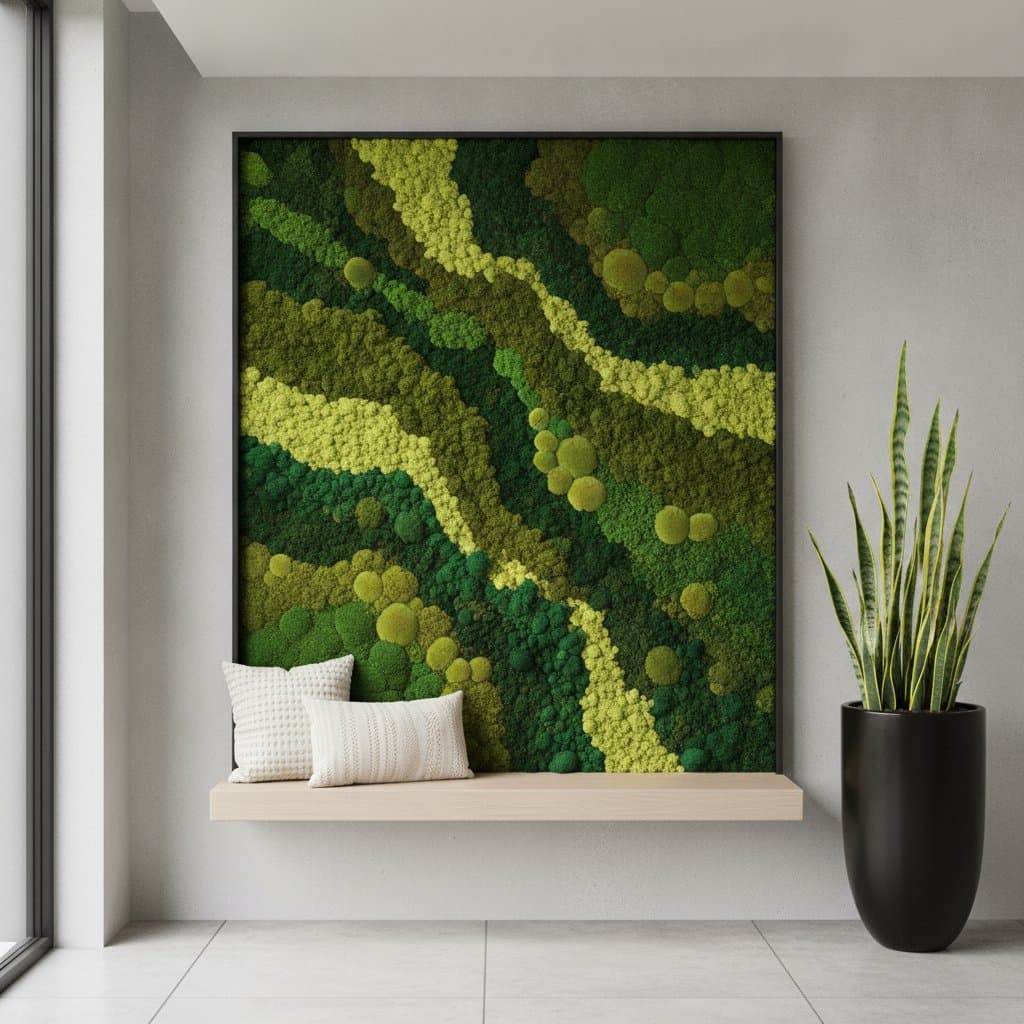
- Blend moss varieties like reindeer for texture, cushion for density, and sheet for smoothness to build visual interest.
- Pair with raw timber or rock edges to amplify earthy vibes.
- Select subdued room palettes so greens pop without dominating.
- Align the wall within a layered light scheme featuring adjustable settings for dinners.
- Layer sound-dampening boards under preserved moss to quiet reverberations in open layouts.
Sustaining the Natural Harmony
A moss wall redefines the dining room as a restorative haven. It tempers sounds, refines air, and links inhabitants to the outdoors amid windowless confines. Diligent care turns these elements into enduring assets merging creativity, ecology, and form.
Strategic planning, apt choices, and steady routines enable anyone to craft a biophilic dining nook that nurtures ease and bonds. Beyond looks, it cultivates deeper environmental attunement.