Understanding Acoustic Planting for Backyard Serenity
Homeowners seek backyards that deliver instant calm the moment they step outdoors. Traffic, neighbors, or even pets frequently interrupt this vision with constant noise. Acoustic planting counters these disturbances through vegetation that absorbs and redirects sound waves, yielding a quieter setting that blends beauty with functional noise control.
This method relies on sound wave behavior and plant biology. Thick leaves capture vibrations across frequencies, while rough surfaces break up echoes. Homeowners can select and position plants to lower surrounding noise by several decibels, creating a more restful environment.
Choosing Plants for Effective Noise Reduction
Successful acoustic planting depends on plants that offer density for trapping sound, height for blocking paths, and texture for scattering waves. These features build layered defenses that fit naturally into any yard design.
Tall Plants as Primary Barriers
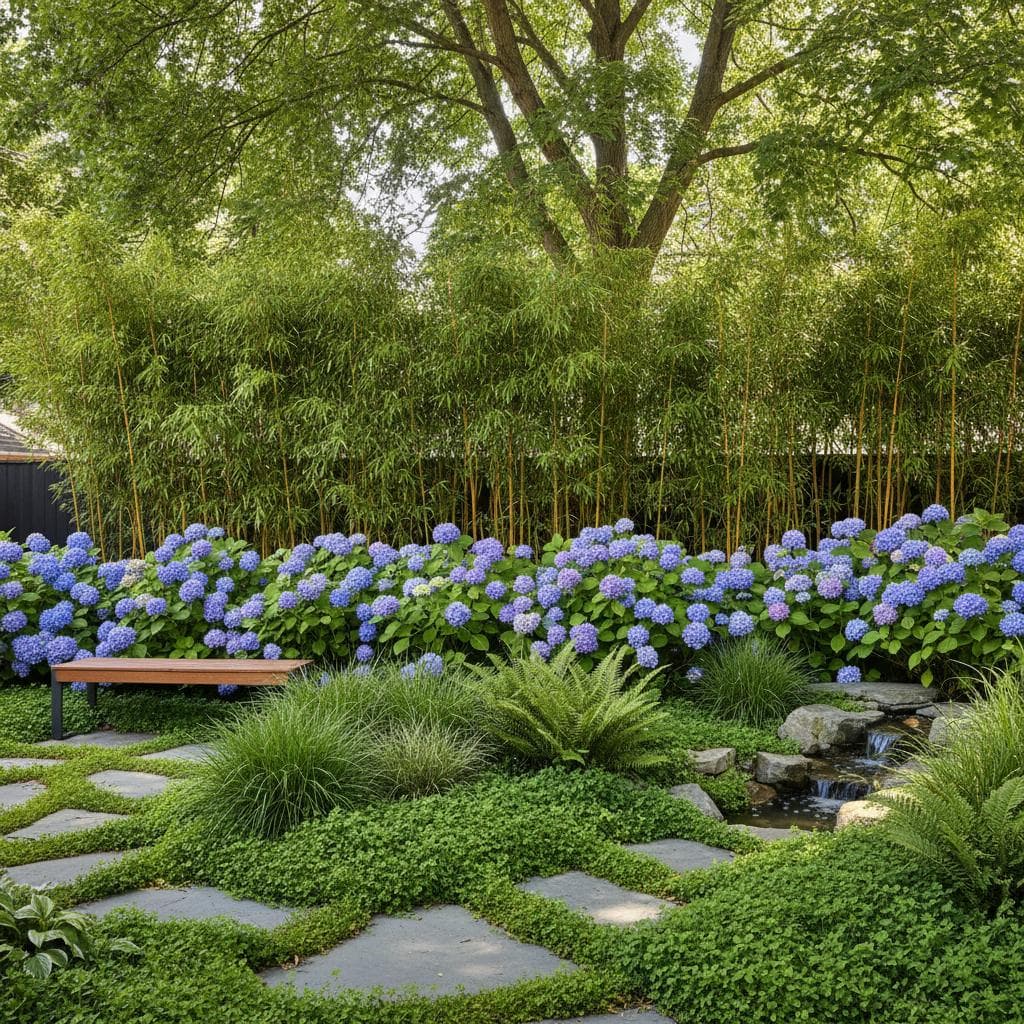
- Clumping bamboo varieties establish quickly and create dense screens; their foliage produces a soft rustle that covers sharper sounds.
- Italian cypress or upright junipers fit tight spaces with their slender shapes, and their needle leaves capture mid-frequency noises effectively.
- Photinia or viburnum deliver constant coverage with wide evergreen leaves, boosting privacy alongside sound blocking.
Choose non-invasive clumping bamboo to avoid spread issues; add root barriers during installation for extra containment.
Mid-Height Shrubs and Perennials for Added Layers
Plants at mid-level enhance the barrier by catching sounds that clear taller growth.
- Boxwood holds a neat shape with small leaves that handle high-pitched sounds well; trim it each year to keep it thick.
- Hydrangea spreads broad leaves and blooms that diffuse noise and add gentle visual appeal.
- Lavender or rosemary reduce sound while releasing scents; their thin stems and flowers move lightly in wind to mask minor noises.
Place these plants 2 to 3 feet from yard edges to optimize the layered effect.
Groundcovers and Low Plants to Curb Reflections
Low-growing options stop sound from bouncing off bare ground or paths, rounding out the noise control.
- Liriope creates low mounds that break up sounds near the soil; it performs well in partial shade with little care.
- Creeping thyme fills gaps between pavers or borders, emitting aroma as it absorbs vibrations.
- Hosta provides broad leaves for shade areas that soak up echoes; combine it with mulch for better results.
Spread a 2-inch layer of organic mulch under these plants to cut down on sound bounce even more.
Vines to Cover Vertical Elements
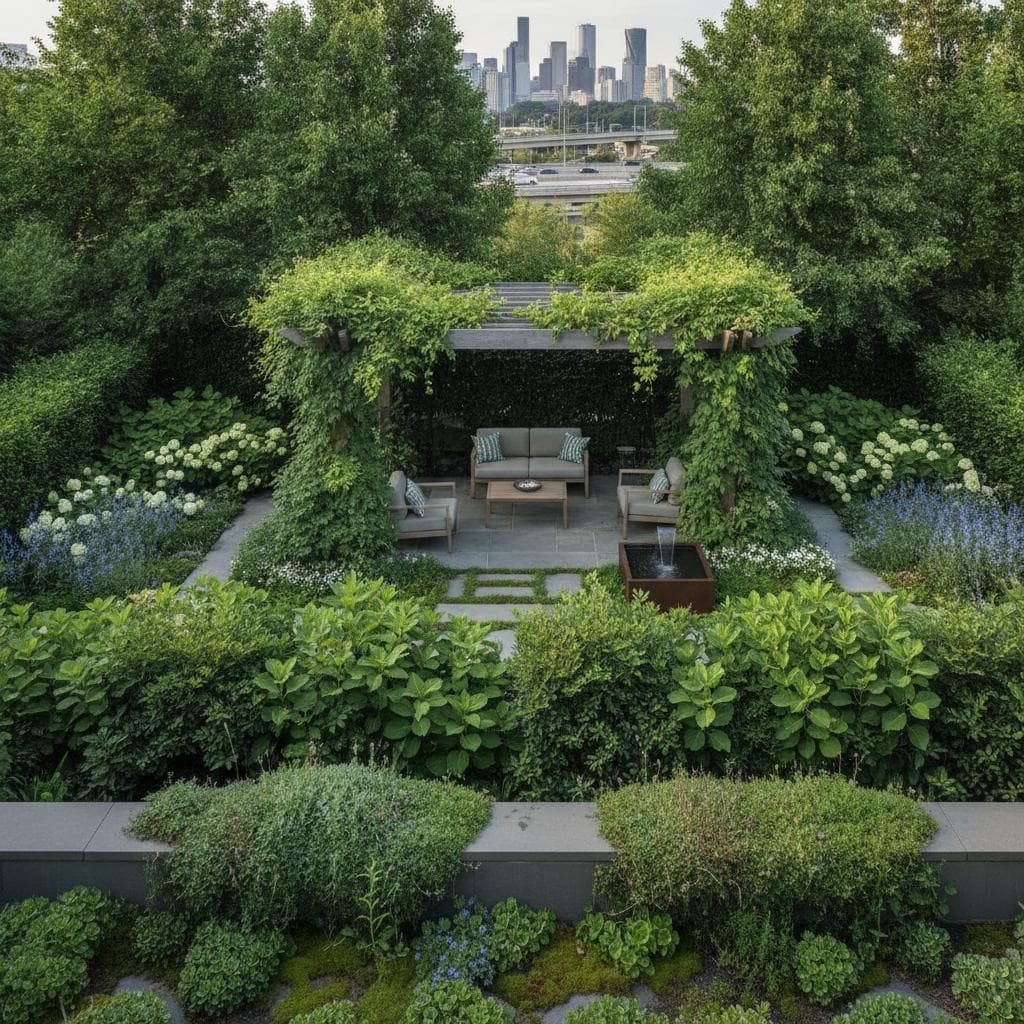
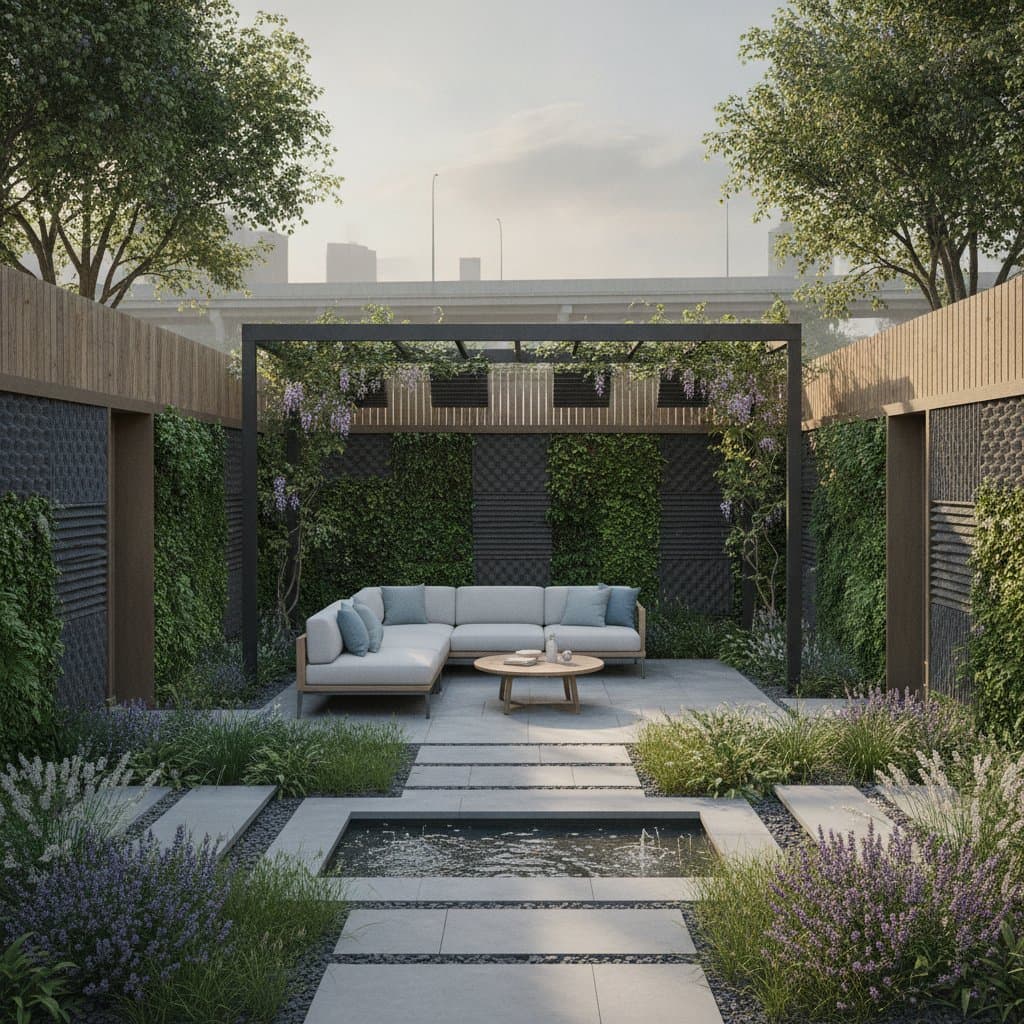
Vining plants turn fences and walls into noise-trapping surfaces, blocking vibrations through built structures.
- Boston ivy or creeping fig attaches directly to surfaces, forming a thick cover that limits sound passage.
- Star jasmine offers full growth and scent; guide it over trellises to direct coverage toward relaxation spots.
Anchor trellises securely and trim vines regularly to promote dense foliage instead of thin strands.
Layering these plant types creates a strong defense system. For example, bamboo in the back paired with hydrangeas in the middle and liriope up front can reduce noise by up to 10 decibels, based on how thickly they grow and where they sit.
Building an Acoustic Yard Design Affordably
Secure noise reduction without high expenses by rolling out the project in stages.
Start along the edges with budget-friendly, fast-growing choices like privet hedges or clumping bamboo; buy from nearby nurseries to save money.
Add mid-level shrubs and groundcovers next, focusing on local plants that suit your weather and soil.
Bring in standout features, like blooming hydrangeas, after the base takes shape.
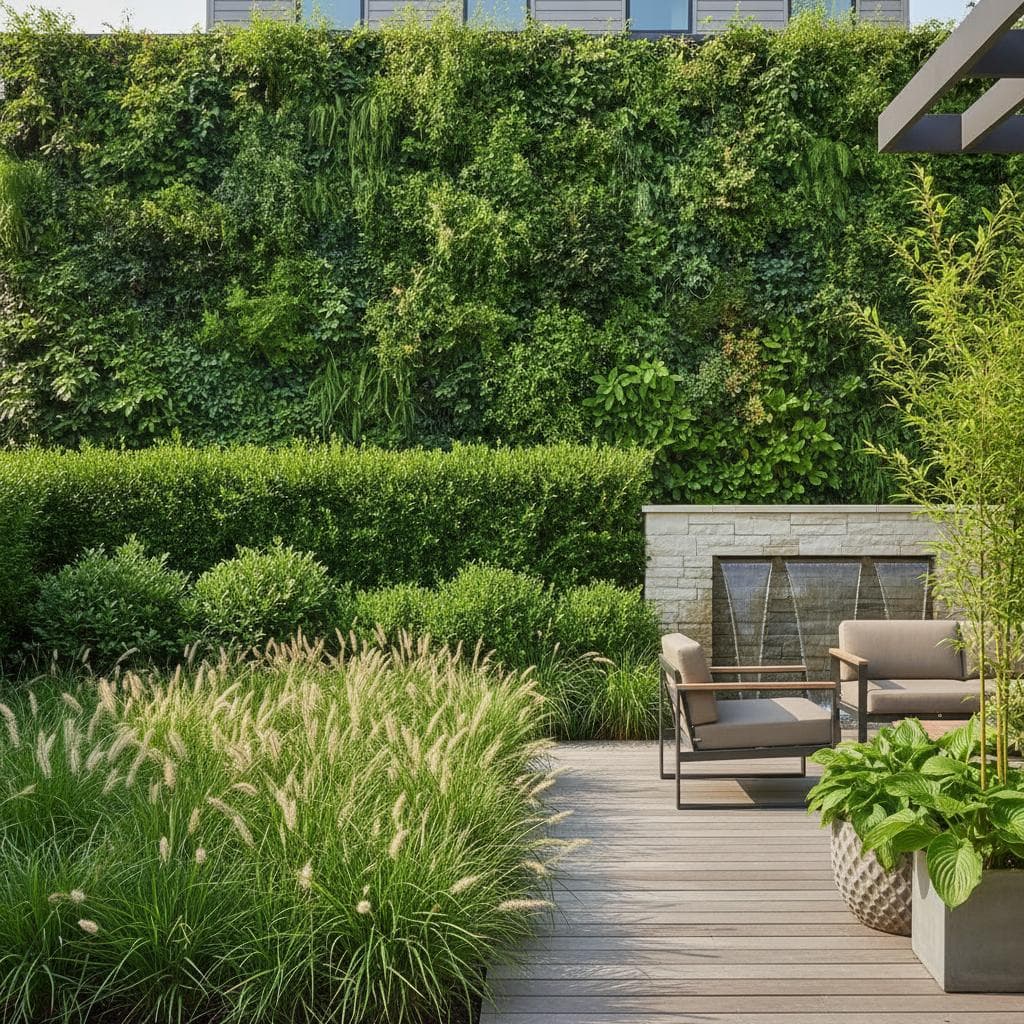
In rentals or for quick fixes, use big pots with tall grasses or small trees. Line them up to make movable barriers; shift them around as your needs change.
Maintaining Plants for Lasting Noise Control
Mature acoustic landscapes require steady care to keep their sound-blocking power intact. Trim plants carefully to preserve bulk, steering clear of cuts that thin out coverage.
Match watering and feeding to each plant's needs; steady hydration supports strong leaf development key to sound capture. Use organic mulch such as bark chips to hold in moisture and cut reflections; skip gravel that would heighten echoes.
Over 2 to 3 years, as roots deepen and branches spread, the noise shield strengthens. Check regularly for insects or illness to keep everything thriving.
Sensing the Shift in Your Outdoor Space
An effective acoustic garden changes more than just volume; it redefines how you experience time outside. Talks feel closer without outside distractions, and birds or insects add their own subtle sounds to the mix.
Notice how parts work together each day: tall grasses along walks muffle steps, or jasmine scent pairs with quieter surroundings. Such observations guide tweaks to make the yard suit you perfectly.
Mapping Out and Starting Your Acoustic Landscape
Evaluate your yard by identifying noise sources and routes; mark areas you use most to focus efforts there. Draw zones for planting according to light levels, dirt quality, and style preferences.
Begin in one edge or corner, spacing plants properly: 18 inches apart for shrubs, 24 inches for low covers. Soak the soil right after planting and watch closely through the first growing period.
This step-by-step method builds lasting quiet along with deep calm. Your yard becomes a healing spot where nature's balance takes hold.