Acoustic Panels as Stylish Dining Room Art
Dining rooms often suffer from excessive echo due to hard surfaces like bare walls, large tables, and flooring materials that reflect sound. During gatherings, multiple conversations can create a noisy environment that hinders clear communication. Acoustic panels address this issue by absorbing sound while serving as decorative elements on the walls.
Traditional soundproofing solutions focused solely on functionality, often concealed behind walls or limited to professional studios. Modern acoustic panels integrate aesthetics and performance, allowing homeowners to enhance both acoustics and visual appeal. These panels create a serene atmosphere without altering the room's architecture.
With years of experience in home renovations, the author confirms that acoustic panels deliver tangible improvements in comfort and style. This upgrade requires minimal disruption compared to a full remodel. The following sections outline practical steps to implement this solution effectively.
Assessing Your Dining Room Needs
Selecting Appropriate Acoustic Panels
Acoustic panels vary in design and function, so select based on your room's style and acoustic goals. The primary types include fabric-wrapped panels, printed art panels, and wood slat panels. Each offers unique benefits for sound control and decoration.
Fabric-Wrapped Panels
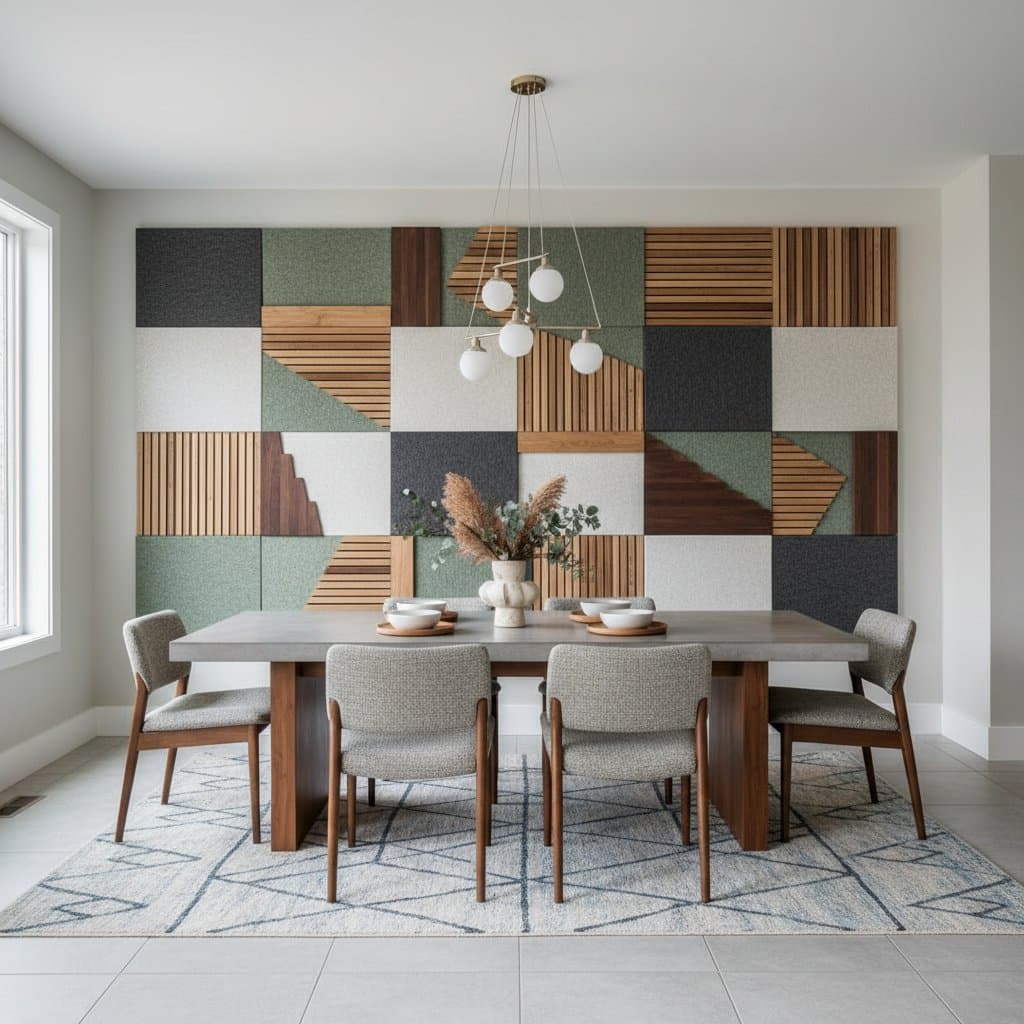
Fabric-wrapped panels feature sound-absorbing cores encased in acoustically transparent fabric. Available in numerous colors and textures, they suit classic or minimalist interiors. Opt for neutral shades that harmonize with wall colors, furniture, or textiles to maintain a cohesive appearance.
Printed Art Panels
Printed art panels incorporate digital images on absorbent surfaces, resembling framed artwork. Customize with personal photographs, abstract motifs, or artistic patterns to blend seamlessly into the decor. These panels provide targeted sound absorption while appearing as intentional design features.
Wood Slat Panels
Wood slat panels use thin wooden strips over acoustic felt backing to diffuse and absorb sound. They introduce natural warmth and texture, ideal for contemporary or Scandinavian-style dining rooms. Ensure the wood finish complements existing elements like cabinetry or flooring.
Detailed Installation Process
Follow these steps to install panels accurately and safely. Preparation ensures even placement and optimal performance.
Step 1: Measure and Plan Layout
Determine the wall area for panels and sketch a layout, such as a grid or asymmetrical arrangement. Measure dimensions precisely and mark positions with a pencil. Verify straight lines using a level to achieve professional results.
Step 2: Identify Mounting Points
Scan walls with a stud finder to locate structural supports behind planned panel spots. Mark stud centers or edges for secure attachment. For non-stud locations, select heavy-duty wall anchors capable of supporting the panel weight, typically 5 to 15 pounds per unit.
Step 3: Prepare Hardware
Choose mounting systems like Z-clips or French cleats based on manufacturer recommendations. Pre-drill pilot holes to avoid splitting wood or damaging drywall. Align hardware components carefully before securing with screws.
Step 4: Mount the Panels
Position each panel by aligning it with the hardware. For cleat systems, hook the panel's lower edge first, then tilt and lower it into place. Secure brackets by snapping or fastening them firmly, ensuring no gaps between panels.
Step 5: Final Review and Adjustments
Examine the installation from various angles to confirm alignment and stability. Make minor adjustments to hardware tension if panels shift. Allow time for any fabric to settle before finalizing.
Scenarios Requiring Professional Assistance
Engage experts for installations involving elevated positions, oversized panels, or integrated features like lighting. High ceilings or vaulted designs pose safety risks during solo efforts. Professionals ensure precise alignment across expansive walls.
Incorporate electrical elements, such as LED strips behind panels, only with a licensed electrician's oversight. This prevents hazards and complies with building codes. Even experienced DIY enthusiasts benefit from professional input in complex setups.
Budgeting for the Project
Costs range from $50 to $300 per panel, depending on size, material, and customization. Fabric-wrapped options fall on the lower end, while printed or wood slat designs command premiums. Factor in hardware and tools, though basic items like drills may already be available.
Begin with essential placements on primary reflection surfaces, such as walls opposite the table, to maximize impact affordably. Expand coverage gradually as budget allows. Prioritize quality to avoid frequent replacements.
Essential Tips for Optimal Results
- Test arrangements by adhering temporary foam prototypes with painter's tape to assess acoustics and visuals without commitment.
- Consider lighting interactions; panels alter reflections, so incorporate adjustable sconces to accentuate textures and colors.
- Align panel hues with room accents like chair fabrics or area rugs for visual unity.
- Balance coverage to absorb echo without over-dampening; target 20 to 30 percent of wall surface area initially.
- Select durable mounting hardware rated for at least twice the panel weight to ensure long-term stability.
Realizing the Benefits in Your Dining Room
After installation, the room transforms into a more hospitable venue for meals and discussions. Sound clarity improves, reducing strain during conversations, while the added decor elevates the overall ambiance. Guests experience the enhancement intuitively, fostering relaxed interactions.
This approach merges acoustic functionality with artistic expression, yielding a space that performs as well as it pleases the eye. Plan meticulously, execute with care, and enjoy a dining area optimized for both comfort and style.