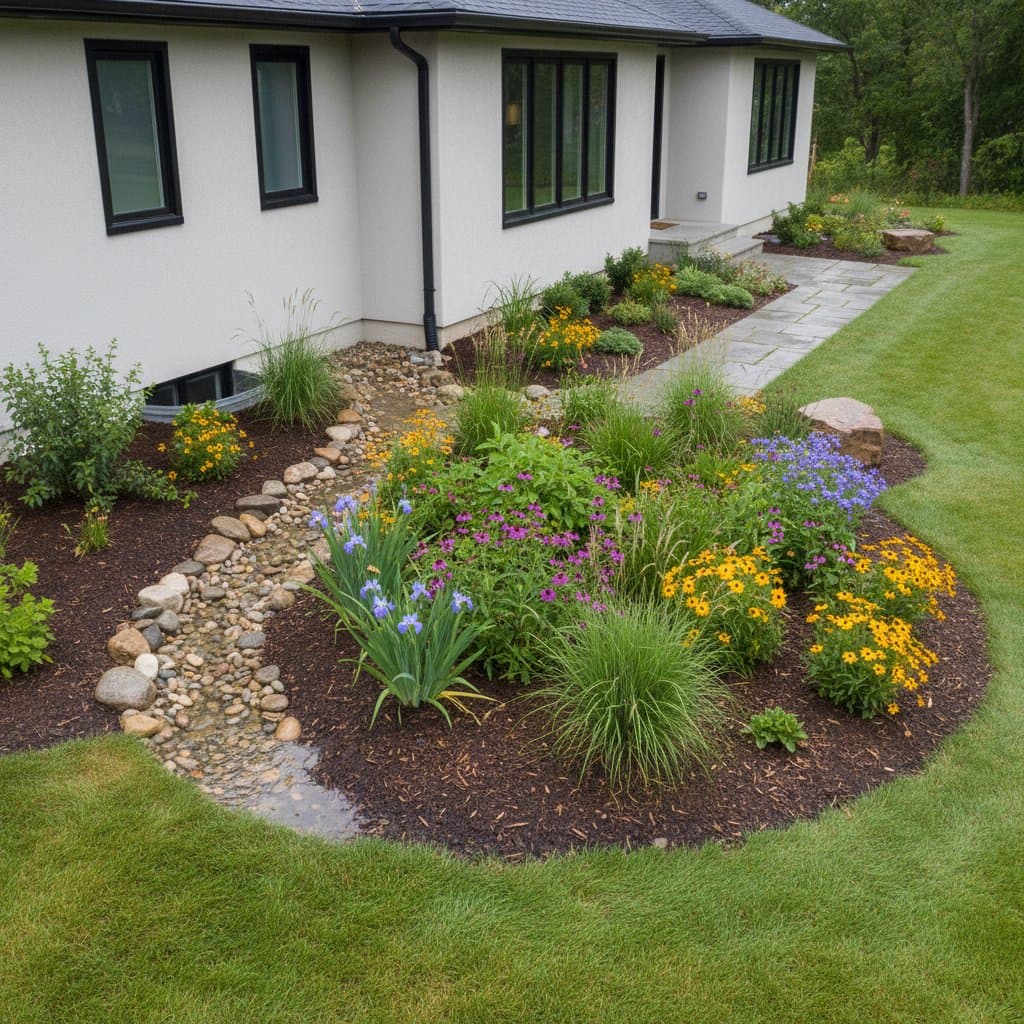
Rain Gardens: Managing Yard Flooding Through Intelligent Design
Yards that transform into shallow ponds during rainfall present a common challenge for homeowners. Soggy lawns, soil erosion, and water accumulation near foundations affect many properties. Surface water often lacks adequate absorption due to grass and compacted soil, which repel rather than retain it. While French drains and regrading offer solutions, they frequently involve higher costs and specialized equipment. In contrast, rain gardens provide an efficient, low-maintenance method to control stormwater and enhance landscape aesthetics.
Understanding the Causes of Yard Flooding
Examine the root issues before planning a rain garden. Prolonged water presence in the yard extends beyond mere inconvenience; it threatens foundations, destroys grass, fosters mosquito breeding, and erodes topsoil. Homeowners often attempt remedies such as adding soil or creating shallow trenches, yet these measures prove temporary by overlooking core drainage problems.
Functions of a Rain Garden
A rain garden consists of a shallow, bowl-like depression filled with deep-rooted native plants and grasses. It gathers rainwater from impervious surfaces like gutters and driveways, then channels it through soil layers and root systems for filtration. Rather than directing stormwater to streets or adjacent properties, the design promotes groundwater recharge.
This feature differs from a pond; a well-constructed rain garden empties within one to two days post-storm. The objective involves temporary water retention to enable absorption. Plants and amended soil perform essential tasks, removing contaminants and stabilizing soil against erosion.
Essential Preparations
Determine three key factors prior to excavation: the volume of runoff, natural water flow patterns, and existing soil composition.
Prepare the following items:
- Shovel and spade for digging and forming the basin
- Tape measure and string for precise outlining
- Level or line level to verify even grading
- Compost and sand to enhance soil permeability
- Native plants adapted to fluctuating moisture levels
- Mulch for weed suppression and moisture conservation
Assess soil drainage by excavating a one-foot-deep hole and filling it with water. Suitable sites drain within 24 hours. Prolonged retention signals the need for soil amendments with sand and compost or relocation of the garden.
Selecting an Optimal Location
Site selection proves critical to success. The garden must capture inflow without generating additional issues. Choose areas receiving runoff from roofs, driveways, or slopes, ensuring a minimum ten-foot distance from the home foundation. Steer clear of septic fields and zones with invasive tree roots.
Avoid excavating in perpetually wet low spots, as these may hinder drainage. Position the garden slightly upslope from pooling areas to divert water proactively and prevent accumulation.
Determining Dimensions and Form
Scale the rain garden to match anticipated water volume. Allocate space equivalent to one-tenth of the contributing impervious area; for instance, a 1,000-square-foot roof section requires a 100-square-foot garden.
Opt for organic, curving contours that integrate seamlessly with surroundings and promote water deceleration. Maintain depths between four and eight inches, adjusting for soil: deeper for sandy types with rapid drainage, shallower for clay to avoid stagnation.
Installation Process
With planning complete and supplies gathered, proceed through these steps:
-
Outline the perimeter using string or spray paint for accuracy.
-
Clear grass and topsoil, reserving sod for composting or relocation.
-
Dig the basin progressively, ensuring a flat base; mound excavated soil into a downhill berm to contain water.
-
Incorporate compost and sand into the soil for improved texture and flow.
-
Install an inlet via a gentle swale or subsurface pipe to direct runoff.
-
Arrange plants by moisture needs, positioning wet-adapted varieties centrally and drier ones peripherally.
-
Spread two to three inches of shredded hardwood mulch to deter weeds and erosion.
-
Evaluate performance by simulating flow with a hose or observing natural rain.
Selecting Appropriate Plants
Plant choices directly influence efficacy. Prioritize natives with robust roots for superior water uptake and minimal care. Recommended options include:
- Switchgrass or little bluestem for structural support and deep penetration
- Coneflower, black-eyed Susan, and bee balm for vibrant blooms and pollinator attraction
- Blue flag iris and marsh milkweed for inundation-prone sections
- Serviceberry or red osier dogwood as compact shrubs
Exclude species demanding constant aridity or exhibiting aggressive spread. Aim for diversity to accommodate wet-dry variations.
Pitfalls to Sidestep
Frequent errors undermine rain garden performance. Incorrect placement in flood-prone depressions results in chronic saturation. Neglecting soil modifications in clay soils impedes infiltration.
Excessive watering of young plants leads to root rot, while insufficient coverage permits weed dominance and filtration gaps. Overlook overflow routes at peril; design spillways for intense downpours to protect surrounding areas.
Engaging Experts When Necessary
Severe erosion, expansive drainage zones, or persistently sodden soil warrant professional input. Landscape designers or stormwater engineers can compute volumes, refine grading, and verify compliance with regulations. For typical residential settings, however, dedicated homeowners equipped with fundamentals can complete the project over a weekend or two.
Ongoing Maintenance
Rain gardens demand less effort than conventional beds yet require vigilance. Focus on the initial year: provide regular irrigation for establishment, eradicate weeds promptly, and replenish mulch annually. Mature plantings develop self-sustaining roots that secure soil and suppress invasives.
Extending Landscape Knowledge
Constructing a rain garden extends beyond immediate drainage relief. It imparts insights into water dynamics, soil-plant synergies, and property hydrology. Apply these principles to broader yard enhancements for sustained environmental harmony.
This installation fosters a resilient ecosystem that enriches soil, aids pollinators, and fortifies against water threats. Initiate modestly, adhere to basics, and refine based on observations for enduring results.