Elements of a Japandi Garden
Designing a Japandi garden requires intentional planning rather than mere imitation of images. Balance arises from blending structure with natural flow, rigidity with gentle curves.
Natural Materials for Grounding Connection
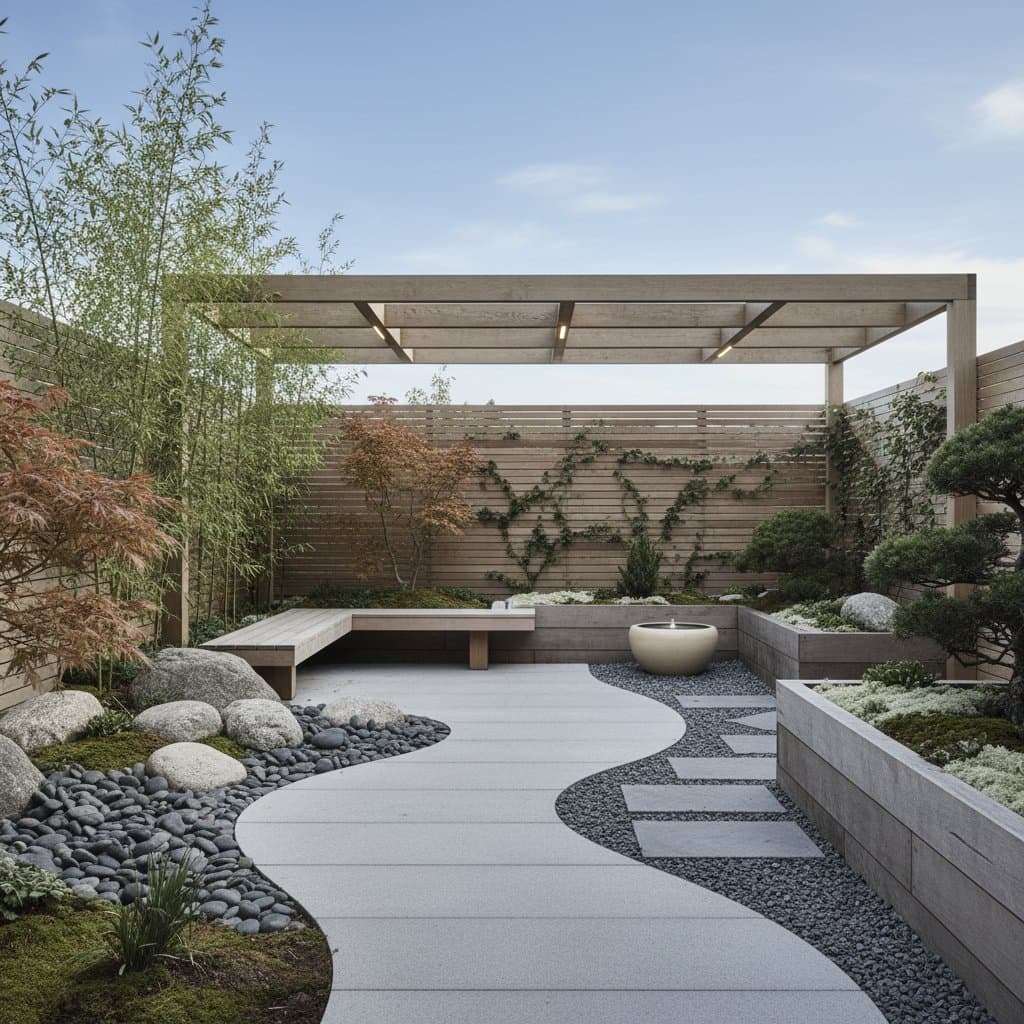
Japanese and Scandinavian traditions alike favor materials drawn directly from nature to bridge people and the earth. Consider options like river stones, slender bamboo stalks, reclaimed timber, and fine gravel. Opt for matte finishes and tactile surfaces over shiny or smooth ones. For instance, a bench fashioned from aged cedar not only withstands the elements but also evolves, recording the passage of seasons through its patina.
Subdued Color Harmony
Colors in Japandi gardens whisper rather than shout, exerting influence through restraint. Dominant hues include pale greens, crisp whites, warm taupes, and cool grays. Vibrant flowers appear sparingly, serving as accents that enhance rather than disrupt the peace. Select a single variety, such as delicate white anemones, to echo the precision of a minimalist artwork.
Textural Layers for Depth
Japandi avoids dense plantings in favor of stratified textures that build visual interest without chaos. Begin with low-lying ground covers like creeping thyme, progress to mid-level shrubs such as ferns, and culminate with sparse trees for height. Favorites include swaying feather reed grass, lush hosta leaves, and the delicate branching of Japanese maples, all of which add movement and shadow play.
Guided Pathways and Views
Paths wind gently or angle slightly to direct the eye and invite exploration. This arrangement cultivates anticipation, unveiling fresh perspectives around each bend, even within confined areas. Scandinavian practicality ensures usability, while Japanese subtlety infuses lyrical progression.
Incorporating Water for Serenity
Water elements provide auditory and visual calm. Install a modest koi pond, a granite water basin, or a softly bubbling fountain to unify the composition. These features not only reflect surrounding foliage but also prompt moments of contemplation, drawing visitors into the present.
Integrated Seating Solutions
Furniture remains understated, positioned low to the ground, and crafted from organic substances. Choose a bench from salvaged oak or molded concrete that blends into the terrain. Such pieces enhance the garden's unity, functioning as extensions of the landscape itself.
Implementing Japandi in Your Space
Homeowners can introduce Japandi elements gradually, without overhauling an entire yard. Begin by assessing current features and eliminating those that serve no practical or aesthetic purpose.
Declutter for Clarity
Clear out non-essential items, such as faded plastic ornaments or overgrown vines. This creates an open foundation where serenity can emerge. Retain only pieces that contribute to the overall harmony.
Refine the Color Scheme
If bold hues dominate your garden, transition to a palette of two to four muted shades. Introduce neutral-toned pots in terracotta or stoneware, paired with gravel borders, to achieve cohesion. Over time, this adjustment fosters a more restful atmosphere.
Emphasize Sensory Textures
Layer contrasting surfaces to stimulate touch and sight. Pair polished river rocks with the rugged texture of tree bark, or velvety moss against the firmness of slate tiles. These combinations invite interaction while maintaining composure.
Illuminate with Subtlety
Select lighting that enhances rather than dominates the evening scene. Embed solar-powered path lights or position minimalist lanterns to cast soft glows. This approach extends the garden's inviting quality into the night without harsh contrasts.
Establish a Central Feature
Anchor the design with one prominent element, be it a contorted bonsai pine, a substantial granite boulder, or a reflective pool. Direct pathways and plantings toward this point to concentrate focus and instill purpose.
For those in apartments or with limited courtyards, scale down accordingly. Arrange containerized conifers, spread a thin layer of pea gravel, and erect a bamboo partition to evoke Japandi tranquility in mere square footage.
The Restorative Power of Japandi
Japandi gardens resonate emotionally by equilibrating discipline and invitation. Zen principles from Japan illuminate the profoundness of open space, transforming voids into meaningful pauses. Hygge from Scandinavia infuses warmth and a sense of inclusion, making the outdoors feel intimately welcoming.
This interplay elevates Japandi beyond aesthetics into a philosophy of mindful habitation. Choices in flora, furnishings, and layout all align with purposeful existence. Consequently, the garden evolves into a haven that nurtures well-being, where visitors find renewal amid deliberate simplicity.
Steps to Cultivate Your Japandi Sanctuary
Embark on your Japandi garden by cultivating awareness before acquiring supplies. Pause to evaluate your space, identify what to preserve, and envision equilibrium.
Commence modestly by reworking a single area. Position a shallow stone basin for water, surround it with clusters of feather grass, and include a simple timber stool. Return frequently to this nook, observing shifts in light and mood that affirm the design's impact.
Ultimately, a Japandi garden transcends mere landscaping to become a personal retreat. It demonstrates that true peace arises from curation, where each retained element amplifies connection to nature and self.