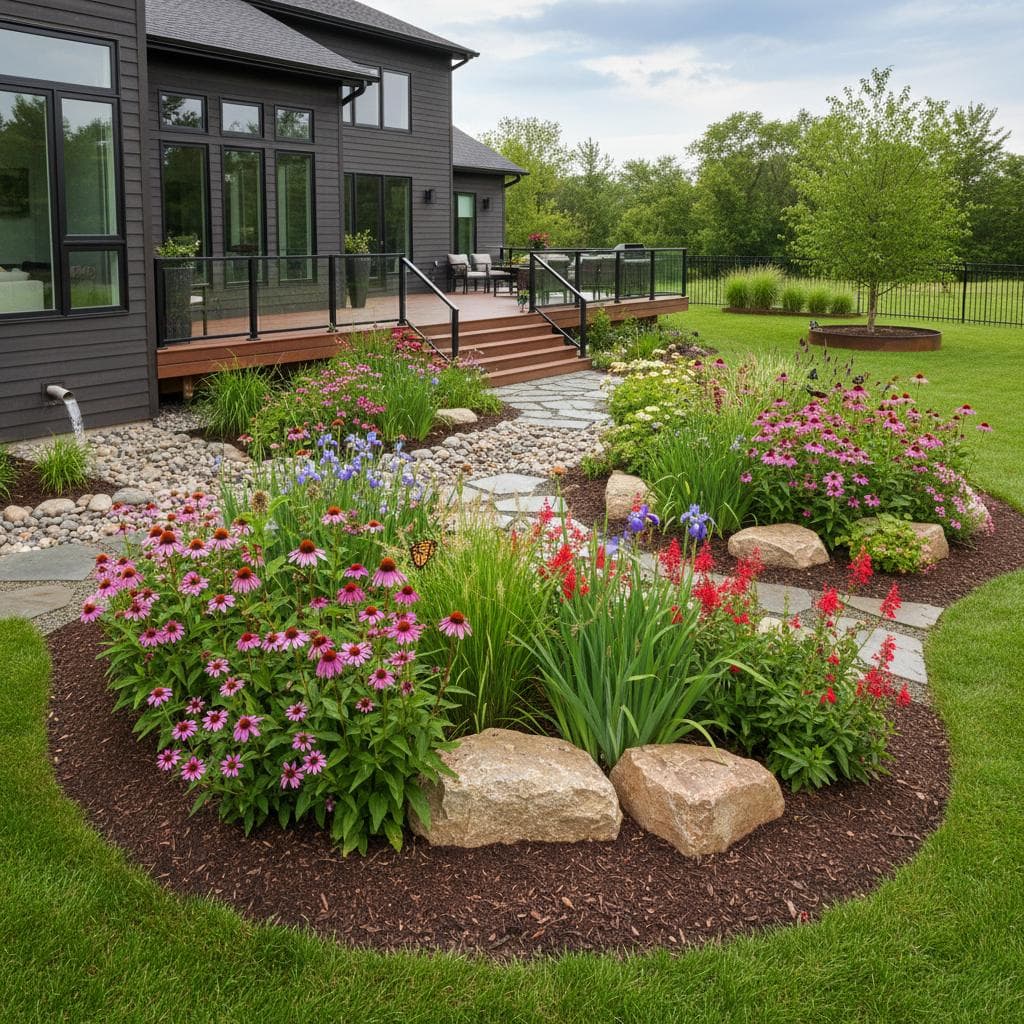
Rain Gardens: Managing Water in Your Outdoor Space
Rainwater management poses a common challenge in varied settings, from rural cottages to urban apartments. During intense downpours, excess water often overwhelms lawns, saturates flower beds, and forms persistent puddles near patios. This issue prompted the creation of many first rain gardens, reshaping how outdoor areas accommodate precipitation.
A rain garden represents a straightforward yet effective solution. It integrates aesthetic appeal with practical water control, converting problematic zones into vibrant landscape elements. Suitable for suburban properties, city terraces, or modest rental plots, these features adapt to diverse environments and lifestyles.
The Function and Benefits of Rain Gardens
Rain gardens consist of shallow, vegetated depressions that capture and retain runoff from impervious surfaces such as roofs, driveways, and walkways. The collected water infiltrates the soil gradually, avoiding direct entry into municipal storm systems or surface accumulation.
Step-by-Step Guide to Constructing a Rain Garden
Selecting an appropriate site forms the foundation of success. Identify low-lying areas or spots receiving runoff from downspouts and paved surfaces, ensuring the location remains at least ten feet from building foundations to prevent moisture damage.
1. Define the Layout
Opt for organic shapes that harmonize with surrounding landscapes. Lay out a garden hose or flexible string to outline the perimeter, aiming for dimensions that match available space; a typical garden measures five to ten feet in width and length, scalable based on runoff volume.
2. Excavate the Basin
Dig to a depth of six to twelve inches, sloping the bottom gently toward the center for even water distribution. Remove sod and debris, then test infiltration by filling the basin with water and observing drainage time; ideal sites absorb water within twenty-four to forty-eight hours.
3. Amend the Substrate
Blend the native soil with equal parts compost and coarse sand to promote percolation while retaining nutrients. For clay-heavy soils, incorporate up to fifty percent sand to counteract compaction. Avoid fine sands or pure topsoil, which may impede drainage.
4. Install Water Direction Features
Channel inflow via a vegetated swale or perforated pipe buried two inches below the surface. Design an overflow path, such as a gravel trench leading to a safe drainage point, to handle heavy storms without erosion.
5. Select and Plant Vegetation
Prioritize native perennials and shrubs adapted to fluctuating moisture levels, such as switchgrass, bee balm, or inkberry holly in temperate regions. Arrange taller species like Joe-Pye weed in the basin's core for visual depth, flanking them with low-growers like sedges along edges. Plant densely to minimize weeds, spacing according to mature sizes, and mulch with two inches of organic material to conserve moisture.
Integrating Rain Gardens into Daily Routines
Families benefit from designs that balance beauty and usability. Maintain shallow depths to ensure safe play, and install flat stones or gravel paths for easy access during upkeep or recreation.
These gardens serve as educational tools, illustrating water cycles and natural filtration to children. Observations after rainfall reveal how plants uptake and purify water, fostering appreciation for ecological principles.
For those in rentals or constrained spaces, portable options like raised planters or container modules offer flexibility. Fill large pots with water-tolerant varieties such as ostrich ferns or cardinal flower to manage balcony drippage, allowing relocation upon moving.
Sustaining and Enhancing Your Rain Garden
Established rain gardens require light ongoing care. Weed monthly during the first year, replenish mulch each spring, and divide overcrowded plants every two to three years to sustain vigor.
Monitor performance by noting water retention post-rain; adjust inlets if pooling persists. Over seasons, expect reduced surface runoff, increased soil fertility from organic matter, and a thriving community of wildlife. This evolution not only resolves drainage issues but also elevates the outdoor environment into a resilient, nurturing feature.