Key Points
- Budget: Achieve a Japandi garden aesthetic through affordable natural materials and efficient layouts, bypassing costly installations.
- Safety: Steer clear of extensive digging or drainage alterations without prior knowledge; seek expert advice for significant terrain changes or builds.
- Skill Level: Best for those with intermediate abilities in tasks like arranging stones, planting, and basic assembly.
- Outcome: Develop a minimalist retreat that integrates Japanese poise and Scandinavian clarity, fostering enduring peace and visual appeal.
Project Overview
Working Time: Two to three weekends, scaled to the garden's dimensions
Total Time: Three to four weekends, including establishment of plants and final touches
Skill Level: Intermediate
Estimated Cost: Moderate, featuring economical substitutes for high-end options
When to DIY vs Hire
Handle the project yourself if it entails straightforward landscaping, planting, and minor woodworking, such as constructing a seat or edging a trail. Patience and precision outweigh the need for advanced tools in these efforts.
Engage a specialist for elements like water installations, drainage adjustments, or walls exceeding knee height. Such work demands engineering insight and adherence to regional regulations. A landscape architect proves valuable for optimizing scales and handling sloped terrains.
Materials and Tools
Materials:
- Natural stone slabs or pea gravel
- Bamboo panels or cedar slats for screens
- Concrete vessels or terracotta containers
- Fine pebbles or sand for zen-style zones
- Hardy native perennials or shrubs
- Warm-hued exterior lanterns or path lights
Tools:
- Spade, garden fork, and soil compactor
- Spirit level and tape measure
- Pruning saw or power miter for timber elements
- Garden cart for hauling supplies
- Protective gloves, goggles, and respirator
For stringent finances, source salvaged rocks or repurposed aggregates from local depots. These aged finds impart authenticity at no premium.
Step-by-Step Process
1. Planning the Layout
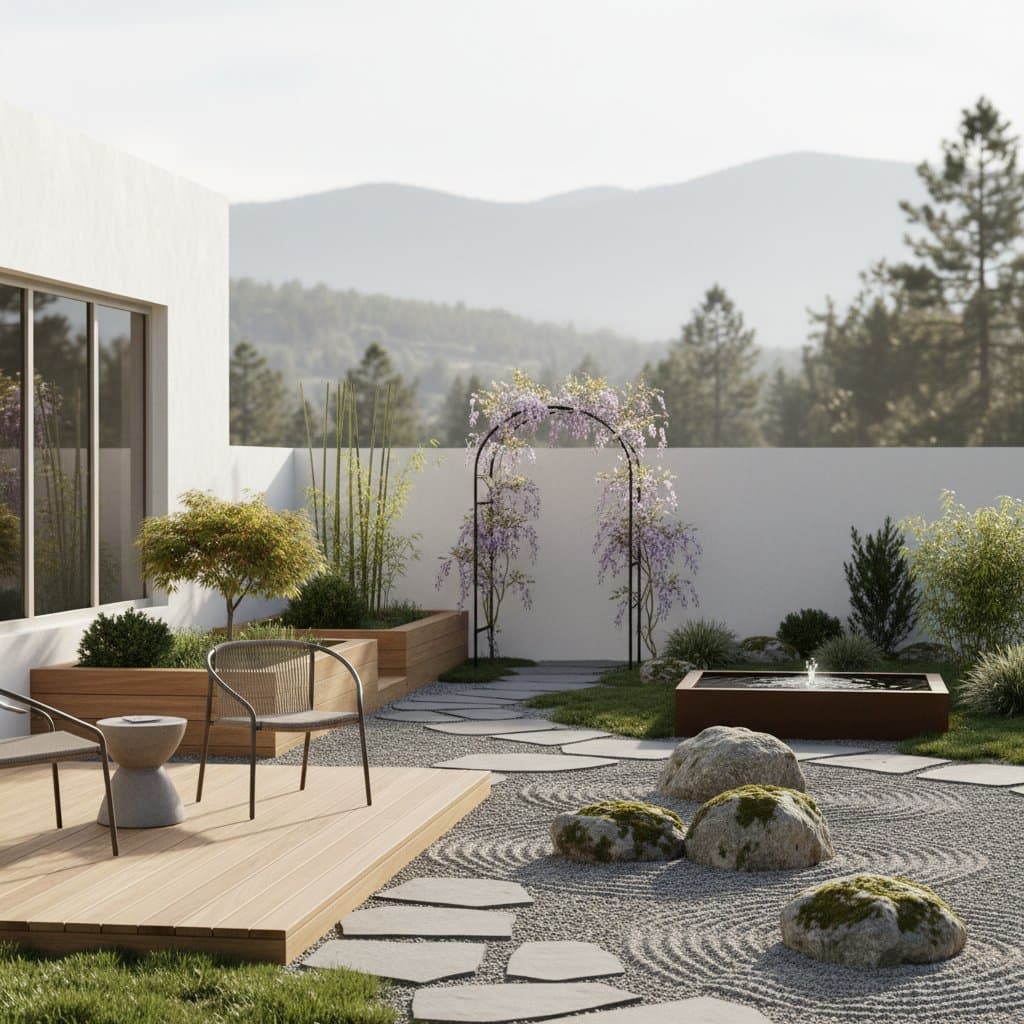
Sketch the area on graph paper to delineate zones for repose, circulation, and observation. Japandi principles emphasize unoccupied expanses, so incorporate broad sweeps of pebbles or low mats to offset denser plantings. Opt for asymmetrical arrangements that evoke natural progression over rigid patterns.
Outline routes using twine and pegs, then assess solar progression across the site. Position vertical features or robust greenery toward the northern or western edges to minimize disruptive shadows on key areas.
2. Preparing the Ground
Clear away sod, roots, and litter with a hoe and trowel. Smooth the earth using a grading rake, then firm it down with a tamper for stability. For pebble beds or zen gardens, border them with metal or wood strips to secure the fill; lay geotextile underlay to suppress weeds while permitting percolation.
Test for evenness by walking the surface; adjust low spots with topsoil amendments. This foundation ensures longevity and prevents settling issues over seasons.
3. Building Simple Structures
Construct a modest cedar seat or bamboo partition to introduce coziness and seclusion. Employ straightforward joints and exposed fastenings for an honest aesthetic. Secure with corrosion-resistant bolts and apply linseed oil for protection, avoiding synthetic coatings that alter the material's inherent warmth.
Measure twice before cutting to fit the space precisely; sand edges for comfort. These additions enhance usability without dominating the serene backdrop.
4. Selecting Plants
Select specimens that echo the dual influences of Japandi: disciplined forms alongside fluid textures. Pair compact conifers with billowing sedges or ground-level carpets. Recommended varieties encompass:
- Acer palmatum varieties or Pinus mugo for accents
- Hosta varieties or Dryopteris ferns for lush understory
- Miscanthus sinensis for dynamic sway
- Sphagnum moss or Thymus serpyllum for seamless flooring
Restrict palettes to verdant tones accented by faint blooms or autumn hues. This selection soothes without saturation, promoting year-round composure.
5. Incorporating Water and Stone
Introduce a modest basin or fountain if funds permit, sited to reflect daylight and murmur softly. Arrange boulders or flagstones in loose clusters to guide movement naturally. Embed each piece securely, elevating slightly above the substrate to facilitate runoff and avoid stagnation.
Source stones in varying sizes for visual interest; cleanse them to reveal natural veins. Water elements amplify reflection, deepening the garden's meditative quality.
6. Adding Finishing Details
Install subdued illumination along trails or beside furnishings, favoring amber LEDs for a soft ambiance over stark beams. Integrate sparse ornaments, like a stone lantern or woven mat, positioned to invite contemplation rather than compete for attention.
Test lights at dusk to confirm even distribution; wire safely above ground if possible. These subtle enhancements extend the garden's allure into evenings.
Quality Control
Pause frequently during assembly to evaluate from multiple vantage points. Counterbalance dense masses with airy voids or delicate fronds. Verify trail flatness, substrate density, and timber finishes for tactile appeal.
Embrace subtraction over accumulation if discord arises. Restraint underscores the design's integrity, highlighting thoughtful execution.
Maintaining Your Investment
Japandi spaces demand minimal intervention for sustained vitality. Sweep pebble surfaces weekly to restore patterns, trim overgrowth biannually to uphold shapes, and reapply wood treatments annually. Shun synthetic aids or vivid coverings that jar the palette.
Clean basins monthly to deter growths, inspect fixtures before each season. As elements weather, they acquire depth, enriching the composition organically.
Extending the Design
With your initial Japandi area established, consider gradual enhancements like a contemplation nook, shaded arbor, or linking boardwalk. Uphold core tenets of poise, economy, and purpose in expansions.
This method instills deliberate practice. Through measured creation, the garden transcends mere landscaping to embody mindful refuge.