Regrow Vegetables from Scraps on Your Countertop
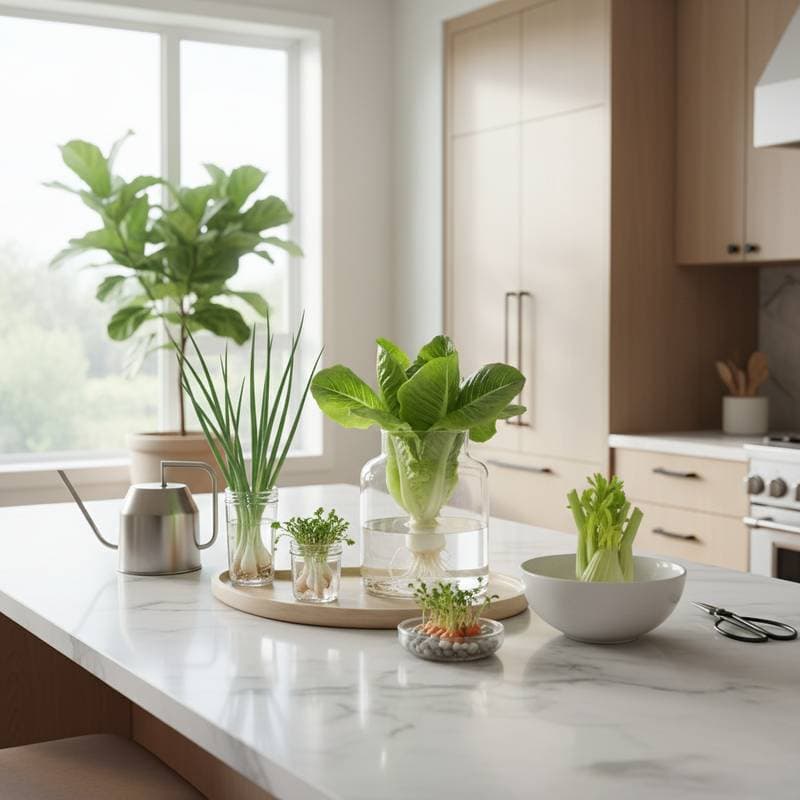
Sunlight streams through your kitchen window and reflects off a glass jar containing water and the emerging signs of new growth. A few days earlier, that jar held the root end of a celery stalk destined for the compost. Now, small leaves emerge steadily, converting former waste into a compact garden on your countertop.
This practice of regrowing vegetables from scraps represents a subtle form of kitchen transformation. It conserves resources, minimizes waste, and introduces elements of natural growth into indoor spaces. Regardless of whether you reside in an urban apartment or a rural home, your kitchen serves as an ideal location for cultivating edible plants.
Benefits of Beginning with Simple Methods
Regrowing vegetables from scraps extends beyond basic techniques; it fosters a perspective of resourcefulness. Discarded portions become sources of potential, and the process instills patience through observable stages of development. You require no outdoor space, specialized tools, or soil to begin. Curiosity, glass containers, and residual produce suffice.
Vegetables Suitable for Countertop Regrowth
Consider several common vegetables that perform well on countertops, along with precise steps to support their development.
1. Green Onions
Green onions rank among the simplest options for regrowth. Position the white root ends in a glass filled with water to a depth of one inch. Place the container in natural light, and within three to five days, green shoots will extend upward. Harvest as required, replace the water every two days, and maintain a continuous supply of fresh onions.
2. Celery
Regrowing celery resembles observing a controlled growth process. Slice the base of a celery bunch to a thickness of two inches and submerge it in a shallow bowl of water. Central leaves will appear within one week. When these leaves reach four inches in height, transfer the base to soil to promote robust development and additional stalks.
3. Lettuce
Romaine and butter lettuce varieties adapt effectively to this approach. Set the trimmed base in a dish with half an inch of water. Within four to seven days, new leaves will sprout from the center. For sustained production, relocate to moist soil; alternatively, retain in water for repeated harvests of young greens every few days.
4. Carrots and Beets
While the edible roots do not regenerate, the tops of carrots and beets yield nutritious greens with an earthy flavor. Submerge the cut tops in a shallow tray of water, ensuring the cut surface remains moist. Delicate leaves form in about one week. Incorporate these greens into pestos, soups, or as colorful garnishes in meals.
5. Garlic and Onions
Sprouted garlic cloves or onions signal readiness for regrowth. Insert them into a pot with soil, positioning the tips slightly above the surface. Green shoots appear within ten days. Snip these shoots for use in recipes, where they provide a mild, chive-like essence.
6. Herbs
Basil, cilantro, and mint regenerate reliably from stem cuttings. Submerge three to four inch stems in water after removing lower leaves. Expose to bright light, and roots develop in seven to ten days. Transplant to soil and water consistently to sustain a steady herb supply for culinary applications.
Establishing an Effective Countertop Growing Area
With knowledge of suitable vegetables, prepare your kitchen for optimal growth conditions.
Select locations with adequate illumination. Position containers near windows receiving four to six hours of daily sunlight. South-facing orientations deliver ideal exposure, though east or west windows also support healthy progress.
Opt for transparent containers such as glass jars or bowls to monitor root advancement. These materials facilitate easy observation of water levels and cleanliness.
Refresh water supplies regularly to prevent stagnation, which invites mold. Exchange the water every two to three days and rinse bases thoroughly.
Track development and adjust as needed. Upon root formation, pot the plants in soil for enhanced stability and nutrient uptake. This step extends the productive lifespan beyond water-based methods.
Approach the setup as an engaging activity. Assign labels to containers, group them aesthetically, or experiment with arrangements. The garden should enhance your daily environment with both utility and enjoyment.
Essential Care Practices
Countertop plants respond well to straightforward, organic maintenance. Avoid synthetic fertilizers; instead, apply diluted compost tea weekly or liquid seaweed extract to provide essential nutrients.
Address slow progress by evaluating light and water conditions. Use filtered, room-temperature water to sidestep chlorine effects. In low-light kitchens, supplement with a full-spectrum grow light for four hours daily, mimicking natural cycles.
For soil transitions, select organic potting mix and maintain even moisture without waterlogging. Mist foliage lightly every other day to replicate humid environments favored by leafy greens like lettuce and celery.
Integrating Harvests into Meals
The appeal of this method lies in repurposing regrown elements directly into cooking.
- Green onion shoots enhance soups, stir-fries, and eggs with crisp texture.
- Celery leaves infuse broths, salads, and dressings with subtle aroma.
- Carrot top greens blend into vibrant pestos using olive oil, nuts, and garlic for a nutty twist.
- Regrown lettuce provides delicate leaves ideal for sandwiches, tacos, or fresh wraps.
- Herb clippings maintain aromatic freshness in teas, sauces, and garnishes.
Each collection reinforces the value of sustainable practices. You cultivate not only produce but also an appreciation for resource efficiency.
Environmental and Personal Advantages
Saving scraps from disposal contributes to waste reduction and environmental conservation. This habit highlights the complete journey of food items and cultivates awareness of consumption patterns. Even in dense urban areas, it bridges connections to natural processes.
Observing sprouts emerge illustrates principles of recovery and adaptability. Such experiences motivate broader applications of renewal in everyday life. The activity functions as a meditative exercise, promoting mindfulness through direct engagement with growth.
Building a Sustainable Routine
Integrate regrowth into your schedule by selecting one or two items initially. Place setups near high-traffic kitchen zones for consistent attention. Introduce fresh scraps during meal preparation to sustain momentum.
Share observations with household members to build collective interest. Over weeks, establish patterns that align with your lifestyle, fostering creativity alongside routine tasks.
Consider gradual expansions, such as adding dedicated herb pots or a basic hydroponic kit for diversity. Focus on consistent involvement rather than elaborate setups. Your kitchen evolves into a vibrant hub of productivity and renewal.