Key Principles of Plant-Based Noise Reduction
Certain plants absorb and deflect sound waves to lower outdoor noise significantly. Dense foliage and layered designs form effective natural barriers. Factors like moisture, leaf texture, and plant density influence absorption efficiency. Position these elements near noise sources such as roads or patios for optimal results. Integrating them promotes both quiet spaces and vibrant ecosystems.
Understanding Plant Acoustics
Sound waves propagate as air vibrations that encounter obstacles in their path. Vegetation captures this energy through leaves, stems, and soil, converting portions into heat or scattering them. Plants featuring thick, textured leaves outperform smooth or sparse types in disruption. Higher moisture levels in tissues enhance this process by facilitating energy dissipation.
Evaluating Your Garden for Noise Control
Identify primary noise origins, including traffic, machinery, or adjacent activities. Map how sounds traverse your space, noting reflective hardscapes like pavement or walls. Measure distances and heights from sources to relaxation areas.
Consider wind patterns, as they influence sound direction. Prioritize zones for leisure versus high-traffic paths. This analysis directs plant placement for maximum impact.
Design Essentials: Tools and Strategies
Approach garden acoustics like structural planning, emphasizing layers, species selection, and upkeep.
Essential Tools and Materials
- Shovels and augers for soil preparation
- Pruning tools for maintaining density
- Compost and mulch to enrich soil
- Irrigation systems for steady moisture
- Trellises and stakes for vertical support
Preparation and Safety Measures
Locate utilities before excavation to avoid hazards. Use protective gear during handling and installation. Secure equipment per guidelines to prevent accidents.
Layering for Acoustic Effectiveness
Build barriers with integrated heights:
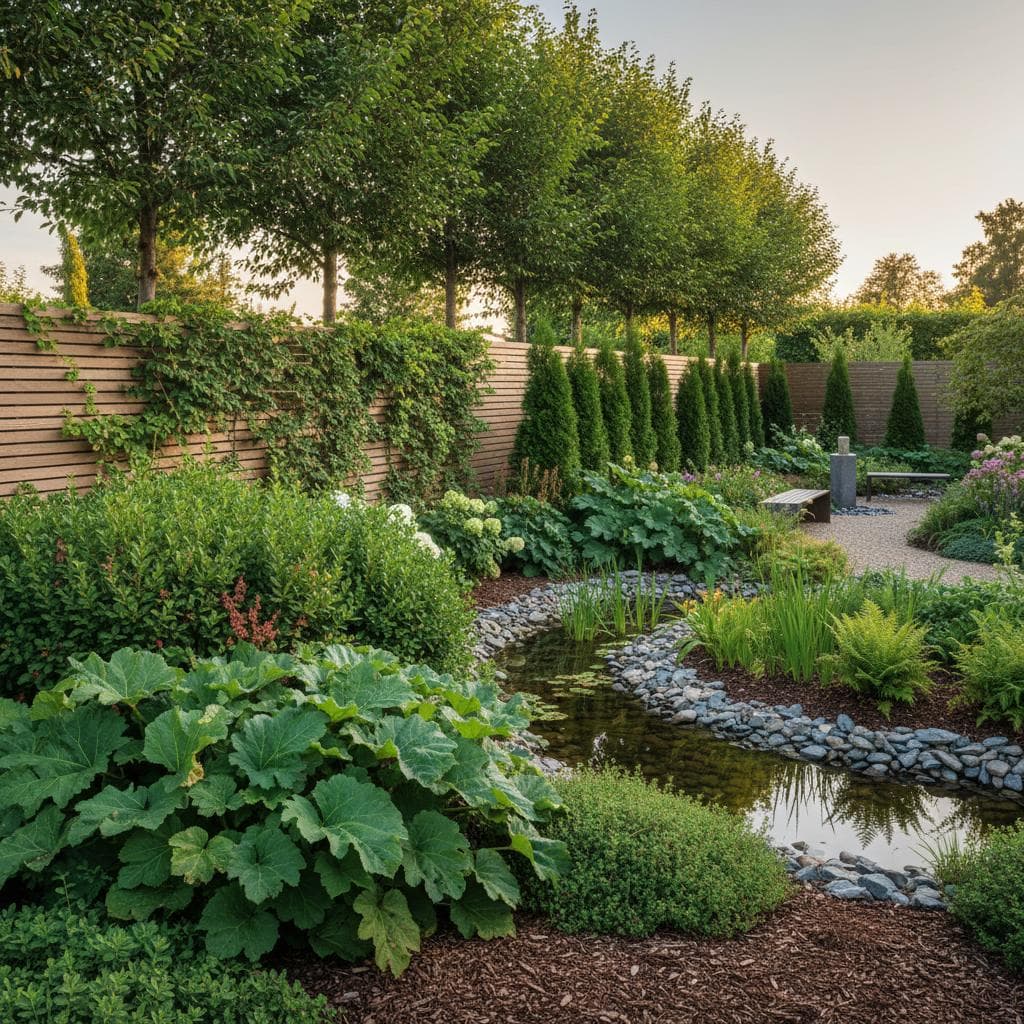
- Ground Cover: Low plants like thyme absorb surface-level sounds.
- Mid-Level Shrubs: Bamboo or boxwood form solid mid-barriers.
- Upper Canopy: Broad-leaf trees such as maples capture elevated frequencies.
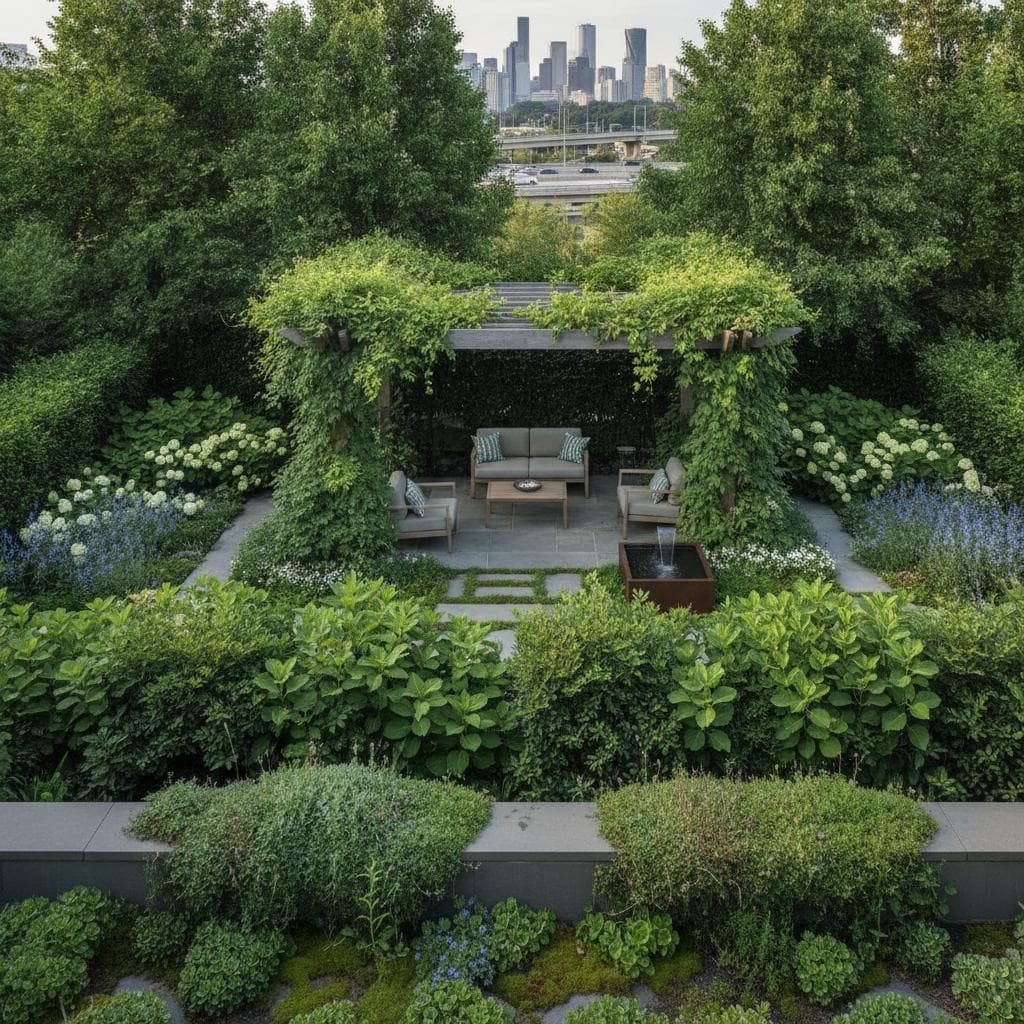
- Vertical Climbers: Ivy on structures softens reflections.
Plant closely with overlaps to eliminate sound pathways.
Building Your Noise-Reducing Garden: A Step-by-Step Process
Step 1: Map Noise Boundaries
Outline areas needing separation with stakes. Target edges near roads or equipment.
Step 2: Optimize Soil Conditions
Aerate soil and incorporate organics for retention and drainage. Moist, loose earth aids sound capture.
Step 3: Select Optimal Plants
Choose based on local climate and light. Prioritize dense, textured options:
- Clumping bamboo for vertical screening
- Evergreen holly hedges for constant coverage
- Fast-growing Leyland cypress for expansive sites
- Soft-needled arborvitae for residential settings
- Shade-tolerant ferns for understory absorption
- Vines like passionflower for wall integration
Step 4: Erect Supports
Install secure frameworks on surfaces before planting. Use durable fasteners to withstand elements.
Step 5: Plant in Layers
Position tallest elements outermost, staggering for diffusion. Irrigate deeply post-planting.
Step 6: Mulch and Water
Apply thick mulch layers under irrigation lines to sustain hydration quietly.
Step 7: Monitor and Adjust
Track development and infill gaps with fillers like grasses. Prune to sustain thickness.
Measuring Garden Acoustic Success
Observe changes during noisy times, noting reduced intensity. Employ decibel apps for quantitative before-and-after readings. Even modest drops improve perceived calm.
Regularly check density; thin spots weaken performance. Supplement with vine-covered fences or water elements if needed to mask remnants.
Ongoing Care for Peak Performance
Routine attention preserves barrier integrity. Prune biannually to foster bushiness without gaps.
Apply balanced fertilizers sparingly. Keep soil hydrated to maintain absorption. Secure climbers' supports seasonally.
Clear debris in transitions to support health and airflow.
Ecological Integration for Lasting Benefits
These gardens foster wildlife while quieting spaces. Native selections demand less water and resist pests.
Incorporate stormwater features with sound-friendly plants like willows. Steer clear of invasives; seek expert local advice.
Enhancing with Structural Features
Pair plants with built elements for amplified reduction. Vine-draped wood fences surpass plain ones.
Living walls on vertical planes save space and insulate. Berms topped with greenery block low rumbles effectively.
Practical Strategies for Optimal Results
Blend leaf textures for wide-spectrum control. Ensure hydration through irrigation. Align layers to block wave paths. Orient barriers against winds. Introduce natural sounds like water flows for added serenity.
Realizing the Rewards of a Tranquil Landscape
Mature designs replace discord with gentle foliage whispers, fostering intimate outdoor moments. They elevate property appeal and environmental harmony. Thoughtful management yields a sanctuary where peace permeates every area.