Acoustic Moss Walls: Quiet Gardens Redefined
Stepping into a garden that dampens external noise offers profound comfort. In a Provence courtyard, lush moss-covered walls created an atmosphere where sounds softened naturally, even amid children's play. This experience, revisited years later in a noisy London setting, revealed the principles behind acoustic moss walls. These installations, using living or preserved moss, introduce greenery to confined spaces while serving as effective sound absorbers to foster peaceful environments.
Key Takeaways
- Acoustic moss walls merge aesthetic appeal with sound absorption capabilities, suitable for indoor and outdoor applications.
- Options include living moss, which grows actively, and preserved moss, which requires minimal care.
- They suit urban gardens, compact patios, and family residences where noise management proves essential.
Designs draw from Scandinavian and Japanese philosophies, emphasizing harmony, serenity, and natural integration.
Professionals in design and acoustics affirm their efficacy in diminishing echoes and ambient noise within limited areas.
Living vs. Preserved Moss Walls
Understanding the distinctions between living and preserved moss walls aids informed selection. Both deliver acoustic advantages, yet they vary in maintenance demands, durability, and suitable locations.
Living Moss Walls
Living moss thrives as an active, growing element that demands consistent humidity and periodic misting. It excels in outdoor gardens, courtyards, or humid interiors like bathrooms where moisture persists naturally.
Installations typically employ soil-free substrates paired with integrated irrigation. Although maintenance intensifies, advantages include air purification, temperature moderation, and support for local biodiversity in compact green areas.
Preserved Moss Walls
Preserved moss undergoes treatment with glycerin-based solutions to retain moisture, preserving texture and hue without further growth. This process halts biological activity while maintaining a lifelike appearance.
Such walls fit seamlessly into interiors, bypassing needs for light, soil, or hydration. They appear frequently in city apartments, professional offices, and covered patios, appealing to those with demanding schedules or temporary housing.
Acoustic engineer Sophie Laurent notes that preserved moss rivals living varieties in absorption performance. She states, "It is less about the biological activity, and more about the surface density and porosity."
How Acoustic Moss Walls Function in Practical Settings
Relocating from rural France to a slender London row house highlighted the challenges of urban sound. Echoes dominated the compact courtyard until a preserved moss wall installation altered the acoustics, blending the space harmoniously with indoor areas.
In Urban Gardens
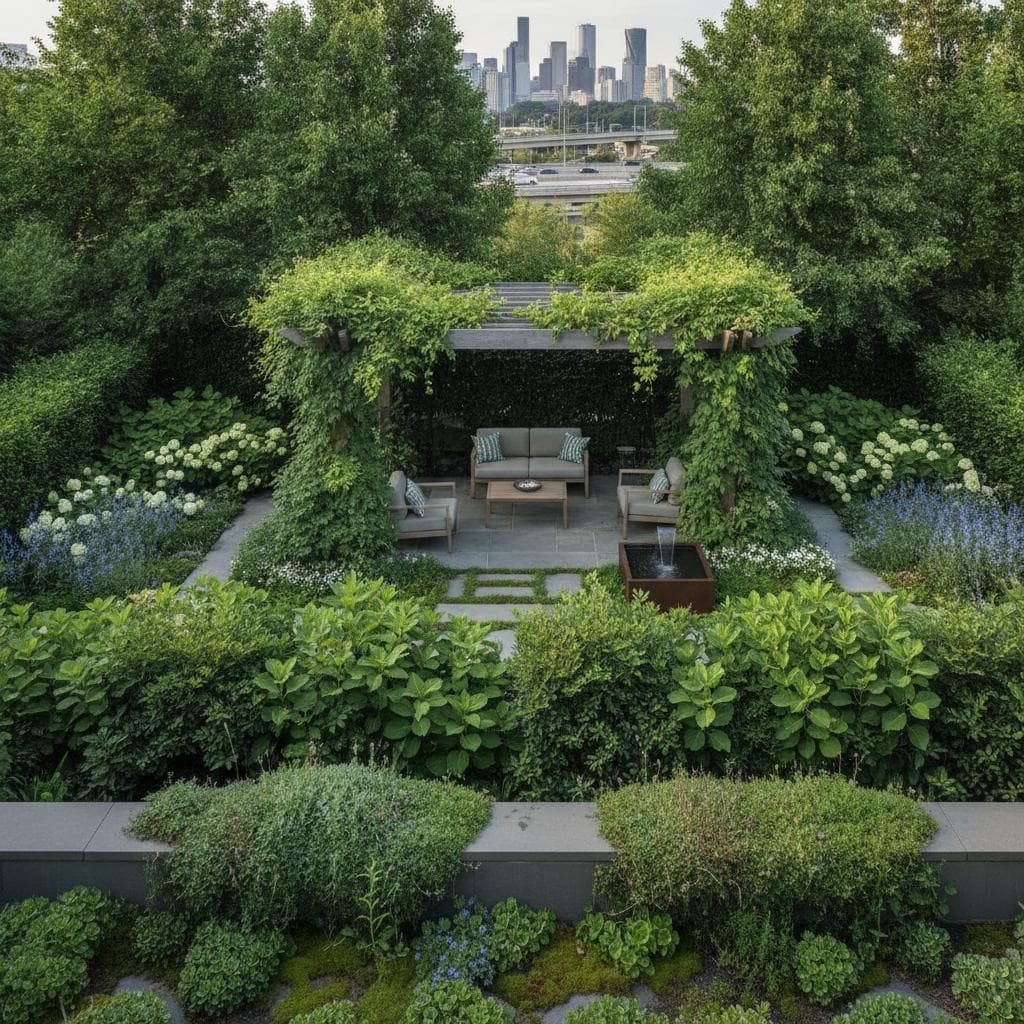
Urban gardens feature rigid materials such as brick, concrete, and metal that intensify noise. Positioning moss walls as barriers around lounging zones establishes effective sound dampening.
A single panel adjacent to an al fresco dining setup yields measurable improvements. Landscape designer Javier Morano integrates moss behind fountains, observing, "The combination of sound absorption and gentle water movement creates a layered acoustic experience."
In Family Homes
Within residences, moss walls placement behind seating, near workstations, or in corridors mitigates sound travel. Families value their role in lessening reverberations in play areas or communal rooms.
A New York family enhanced their apartment by installing one behind the television, refining audio for evenings while establishing a striking visual element.
In Workspaces and Schools
Coworking facilities and educational institutions pioneered moss wall adoption to curb distractions and boost concentration. The biophilic qualities promote stability and attentiveness, readily adaptable to domestic offices in constrained layouts.
Style and Design Possibilities
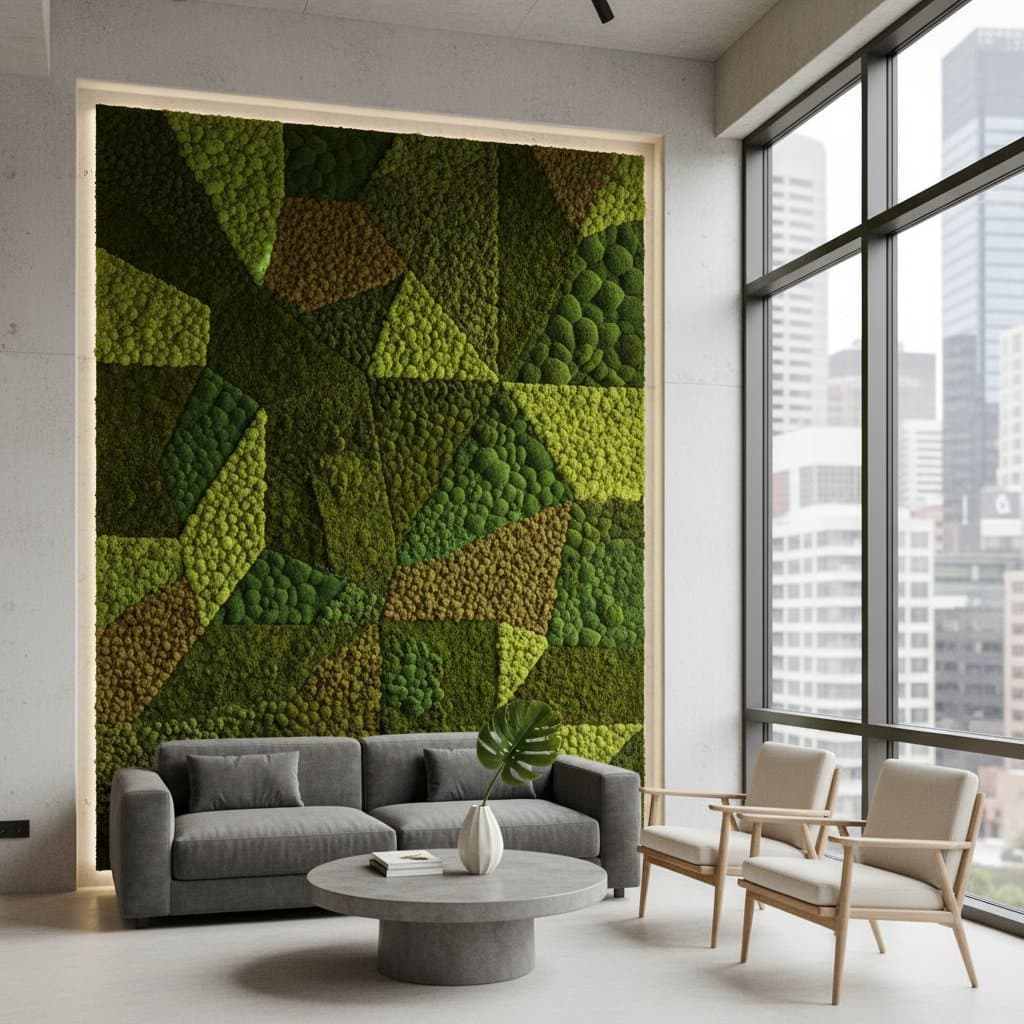
Beyond utility, moss walls serve as compelling visual anchors. Their organic forms complement wood, stone, and metal, bridging natural and contemporary motifs.
Color and Texture Variations
Preserved moss spans shades from emerald depths to vivid lime. Designers blend types like reindeer, bun, and flat moss to evoke woodland floors, or opt for consistent layers in modern schemes.
In rustic interiors, moss pairs with salvaged timber and fabric accents. Urban applications frame panels in dark metal for assertive, structural impact.
Global Inspiration
Japanese temple gardens employ moss to temper stone and rainfall acoustics, symbolizing peace and endurance. Scandinavian approaches incorporate preserved panels into hygge-centric spaces, prioritizing unadorned textures and human-nature bonds.
These traditions influence global practices, rendering moss versatile for settings from rural dwellings to metropolitan studios.
Installation and Maintenance Tips
Acoustic moss wall setup proves accessible, particularly for modest projects.
For Preserved Moss Walls
- Select shaded spots to prevent fading from sunlight exposure.
- Utilize plywood or medium-density fiberboard as stable foundations.
- Secure pre-made panels or bespoke sections with appropriate adhesives; modular tiles ensure easy assembly.
- Maintain ambient humidity to avoid drying; preserved moss tolerates variation but benefits from balance.
- Remove dust via low-power vacuuming or light brushing periodically.
For Living Moss Walls
- Incorporate drainage mechanisms to avert moisture buildup and mold.
- Equip larger surfaces with automated misting for consistent hydration.
- Position in dappled light, shielding from intense rays that accelerate desiccation.
- Prune selectively to sustain uniformity as growth occurs.
Living versions demand ongoing attention yet evolve seasonally, adding vitality.
Expert Insights on Acoustic Performance
Testing indicates moss walls capture up to 50 percent of incident sound energy, influenced by thickness and composition. Architect Daniel Kerr, an eco-design authority, attributes this to the moss's uneven topography, which disperses waves multidirectionally.
He explains, "Unlike smooth plaster or glass, moss diffuses sound waves. This prevents harsh reflections and creates a soft, natural soundscape."
Kerr highlights their suitability for modifications in existing structures. "They do not require structural changes, so you can improve acoustics in a rented flat or heritage property without permanent alterations."
This adaptability benefits households seeking enhancements without disruption.
Sustainable and Health Benefits
Moss walls advance eco-conscious living through sustainable sourcing and non-toxic treatments in preserved forms. Their endurance minimizes replacements, extending utility over years.
They contribute to interior climates by moderating humidity and capturing particulates, even in preserved states. Living moss actively processes carbon dioxide into oxygen, amplifying wellness gains.
Having navigated both countryside and city life, moss walls emerge as a refined conduit for natural serenity in otherwise deprived contexts.
Integrating Moss Walls into Your Space
To initiate your serene garden, commence with a targeted panel near a favored nook or seating. This approach delivers swift transformation, inviting nature's hush into daily surroundings.