Trending Plants for Constructing Quiet Garden Walls
Homeowners near busy roads or talkative neighbors often face intrusive sounds that disrupt outdoor enjoyment. Traffic hum or adjacent conversations can diminish the relaxation potential of any garden. Solid fences or stone walls block views but fail to dampen noise effectively. Living plant barriers offer a superior solution by absorbing and scattering sound waves while enhancing privacy and air quality.
Many individuals dismiss plant-based barriers due to concerns about slow growth. Proper selection of vigorous species and strategic placement allow establishment of an effective green wall within one to two years. This method provides dual benefits: aesthetic appeal from vibrant foliage and reduced auditory disturbances.
Preparation Steps Before Planting
Essential Tools and Materials
Gather these items for efficient installation:
- Spade or trench shovel for digging
- Pruning shears and saw for shaping
- Compost and organic mulch to enrich soil
- Hose or drip irrigation for consistent watering
- Measuring tape and string to mark layouts
For extended barriers, rent a handheld auger to speed hole digging. Contact local utilities to mark underground lines and avoid hazards.
Required Skills and Timeline
Most gardeners with basic experience can complete this project. It demands initial effort in site preparation and ongoing hydration. Allocate one weekend for setup and planting, followed by daily checks during the first season. Visible noise reduction emerges as plants reach maturity in three to six months.
Constructing a Layered Acoustic Garden Wall
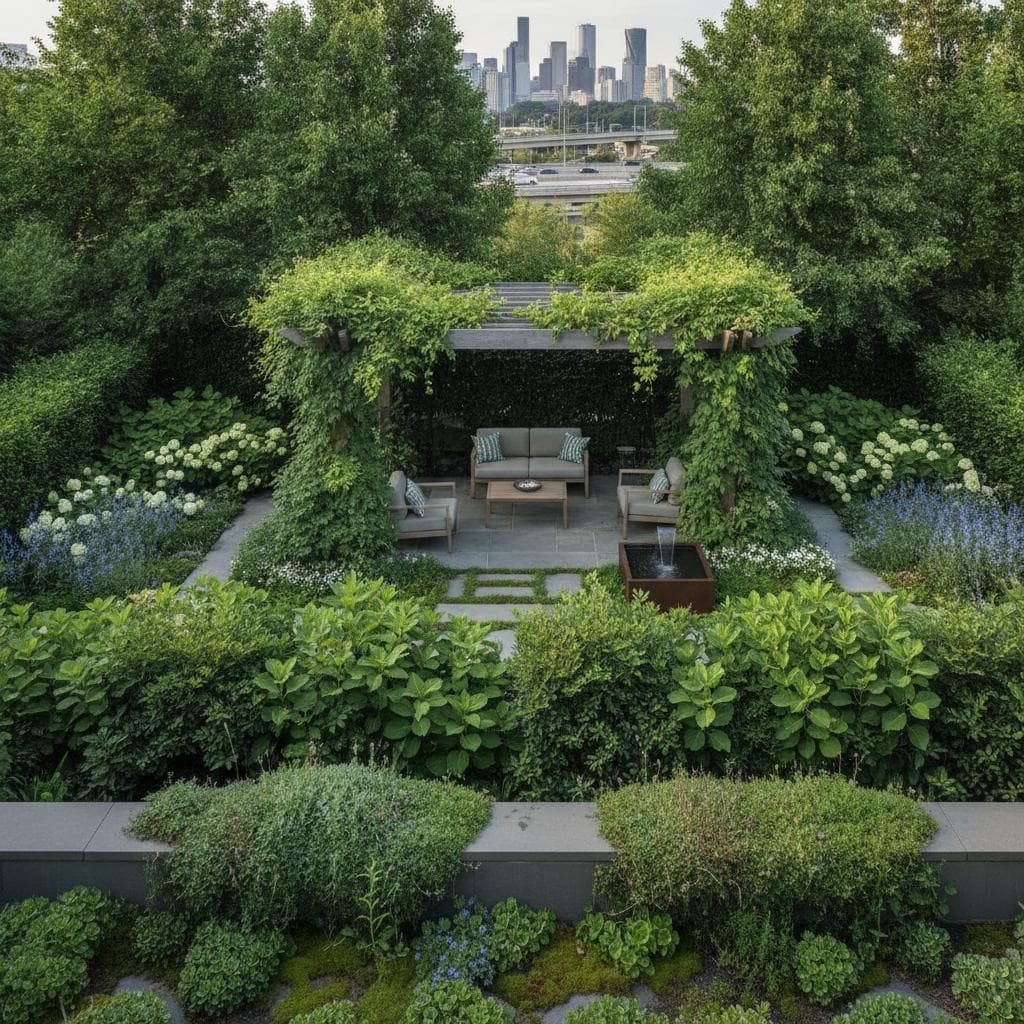
Design your barrier like a multifaceted filter that captures sound at various levels. Integrate plants of varying heights for comprehensive coverage. Aim for a dense profile to trap sound waves within foliage layers.
-
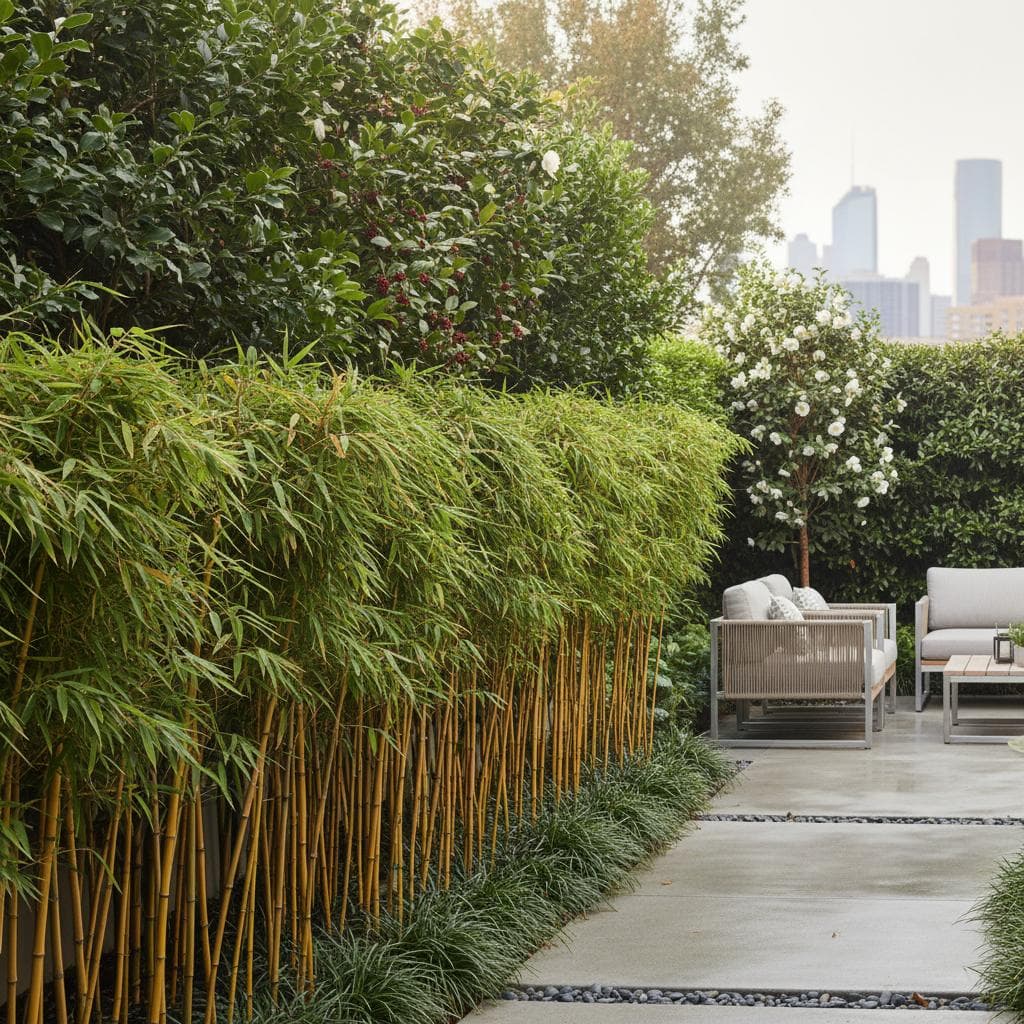
Tall Backbone Layer: Select fast-growing options such as Leyland cypress, which reaches 3 to 4 feet annually, or clumping bamboo varieties that expand 2 to 3 feet per year. English laurel provides evergreen density and grows steadily at 2 feet yearly. Plant these 6 to 8 feet apart to form a sturdy framework.
-
Mid-Level Density Layer: Incorporate thick shrubs like American holly or Japanese boxwood, both offering year-round coverage and growing 1 to 2 feet per season. These fill spaces between taller plants, creating a seamless hedge. Space them 3 to 4 feet apart for optimal thickness.
-
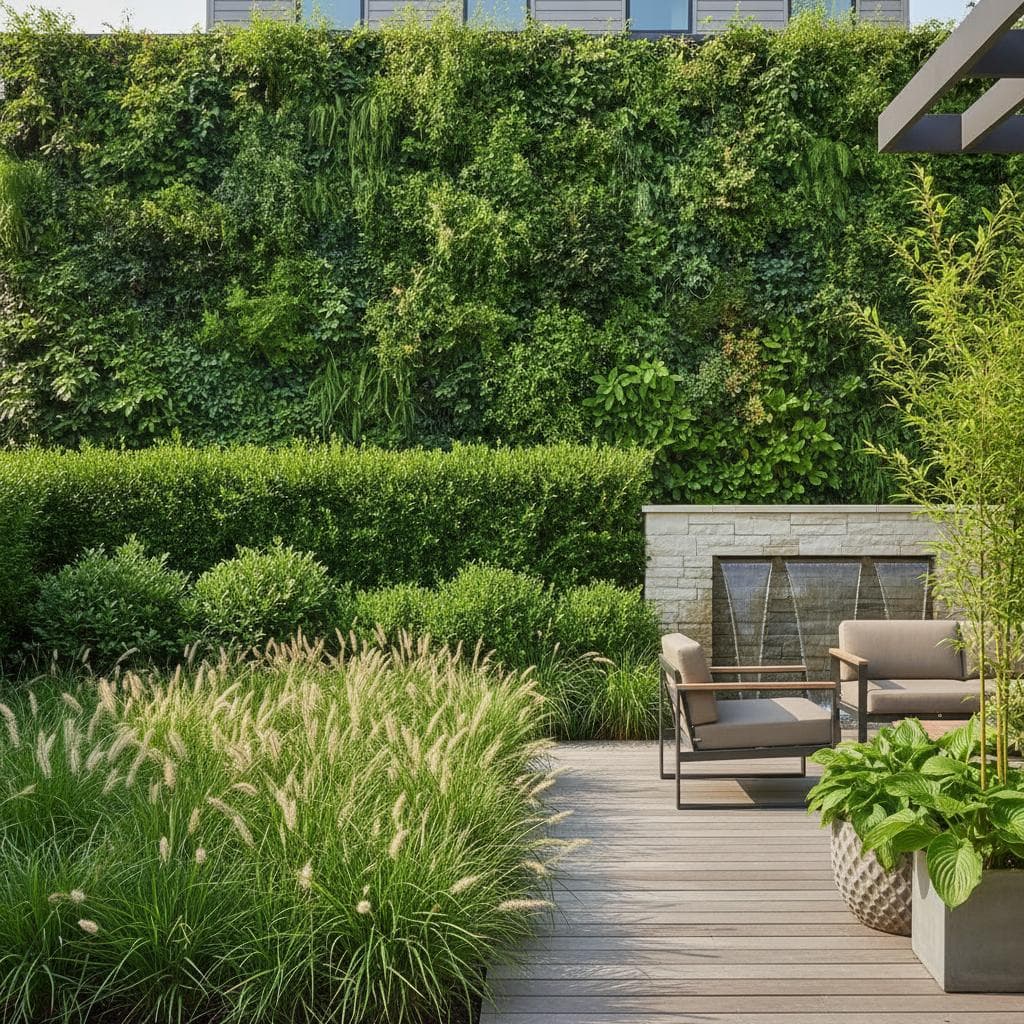
Low-Ground Absorption Layer: Use ground covers such as ostrich ferns, which spread quickly to 2 feet wide, or hostas that form low mounds absorbing near-ground noise. Ornamental grasses like miscanthus add movement and sound diffusion, maturing in one season. Position these at the base to catch low-frequency vibrations.
Maintain 3 to 5 feet of width between rows to promote air circulation and ease pruning. This configuration achieves up to 5 to 10 decibels of noise reduction, comparable to a significant hush in everyday settings.
Recommended Plants with Growth and Care Details
Choose species suited to your climate zone for reliable performance. In temperate regions, prioritize evergreens for constant screening.
-
Clumping Bamboo (Fargesia species): Thrives in partial shade, grows 1 to 2 feet yearly without invasive spread. Water weekly during establishment; mulch to retain moisture. Its rustling leaves further mask residual sounds.
-
Leyland Cypress (Cupressocyparis leylandii): Full sun lover, rapid vertical growth to 60 feet. Prune annually to control height and encourage bushiness. Resistant to most pests, it forms a tall, wind-resistant screen.
-
American Holly (Ilex opaca): Provides berries for wildlife appeal, dense foliage absorbs mid-range noises. Prefers acidic soil; fertilize in spring. Grows slowly at first but accelerates with maturity.
-
English Laurel (Prunus laurocerasus): Versatile for hedges, tolerates clay soils. Trim twice yearly for shape. Its broad leaves create an effective sound trap.
-
Ostrich Ferns (Matteuccia struthiopteris): Shade-tolerant ground cover, spreads via rhizomes. Divide every three years to maintain vigor. Adds texture without overwhelming the space.
Test soil pH and amend with lime or sulfur as needed. Install during mild seasons, spring or fall, to minimize transplant stress.
Integrating with Other Structures
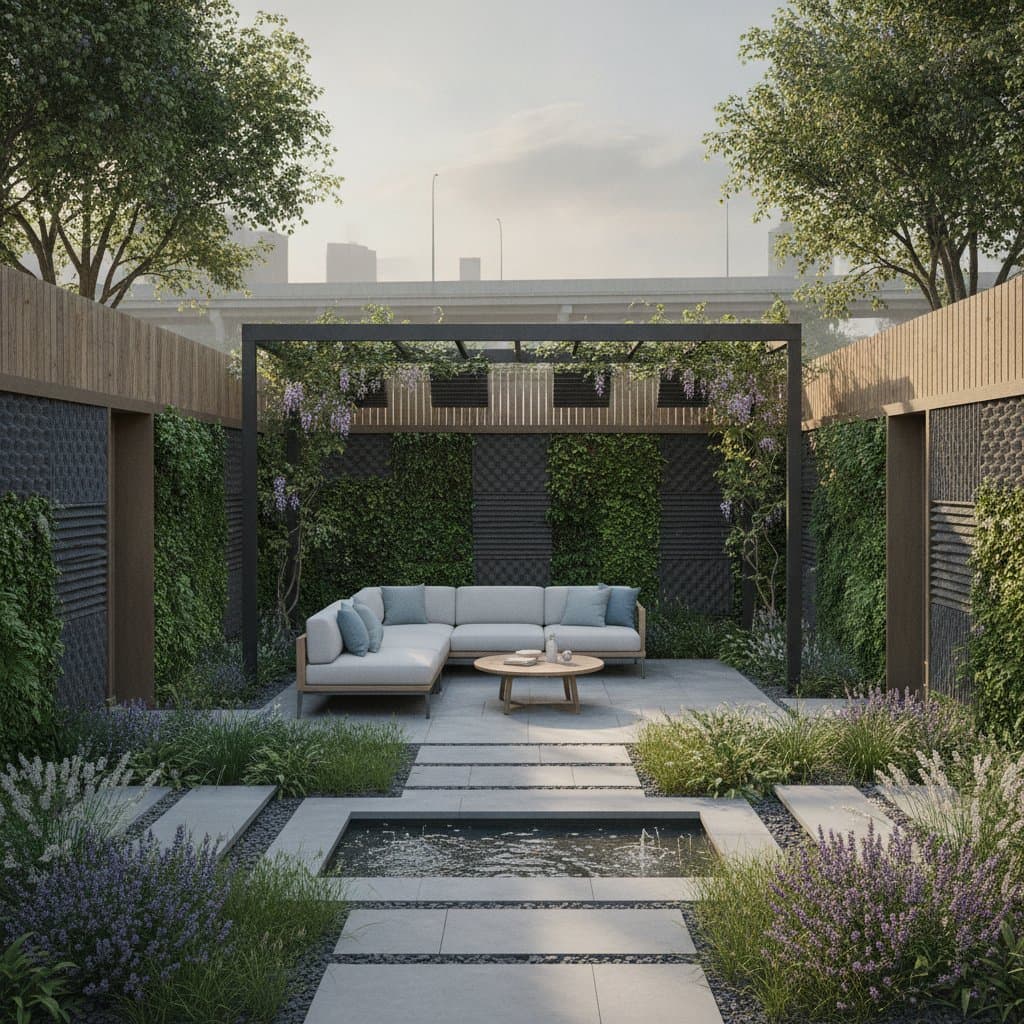
For severe noise from highways or industrial sites, plants alone may suffice minimally. Pair them with wooden fences or low masonry bases for hybrid barriers. The fence handles initial blockage, while plants soften echoes and add insulation.
Consult a landscape architect for complex sites, especially slopes or restricted areas. They ensure compliance with local regulations on height and placement. Professional input prevents common errors like overcrowding, which stunts growth.
Maintenance for Lasting Performance
Sustain your barrier through routine care to preserve density and health. Water deeply once weekly for the first year, reducing to biweekly thereafter. Apply 2 to 3 inches of mulch annually to suppress weeds and conserve water.
Prune selectively in late winter or early spring to remove dead growth and shape layers. Monitor for pests like aphids on shrubs; treat with insecticidal soap if spotted. Fertilize with balanced slow-release formula in early spring to support vigorous expansion.
Seasonal adjustments enhance effectiveness. In winter, evergreens maintain structure, while deciduous elements provide summer shade. Rotate plant positions if one area shows wear, ensuring even development.
Realizing the Benefits of Your Serene Yard
A well-maintained living barrier transforms auditory chaos into calm. It not only quiets disturbances but also purifies air by filtering pollutants and supports biodiversity with habitats for birds and insects. Over time, your investment yields a vibrant, self-sustaining feature that elevates property value and daily well-being.
Experience the difference as layers mature: privacy increases, temperatures moderate under foliage shade, and the garden becomes a true sanctuary. With these strategies, any yard gains the peace it deserves.