Artistic Acoustic Panels: Silencing Dining Room Chatter
Picture a dinner gathering where conversations flow effortlessly, free from echoing distractions. Materials like tile floors, large windows, and bare walls bounce sound waves, turning casual talks into overwhelming noise. Many homeowners assume fixes require bulky foam or major overhauls, but artistic acoustic panels deliver superior sound control with sophisticated design.
Understanding Noise in Dining Rooms
Dining areas present unique acoustic hurdles because of their hard, reflective surfaces. Elements such as wooden tables, drywall, and metal accents trap and multiply sounds from scraping chairs and clinking silverware. In groups larger than four, this buildup creates fatigue and hinders clear communication.
Designers in restaurants often use absorptive decor to manage echoes. Homeowners can apply similar principles on a smaller scale. The goal involves breaking sound waves at their source to avoid endless reflections throughout the room.
How Acoustic Panels Function
Selecting Appropriate Panels
Start by evaluating your space with a quick test: Clap your hands and listen to the echo time. If it lingers beyond one second, plan for broader coverage. Shorter echoes indicate lighter treatment works well.
Target 20 to 30 percent of wall area in standard dining rooms. Choose panels with a Noise Reduction Coefficient (NRC) of 0.7 or above for at least 70 percent absorption. Options range from simple fabric wraps to custom pieces resembling artwork.
Explore these adaptable types:
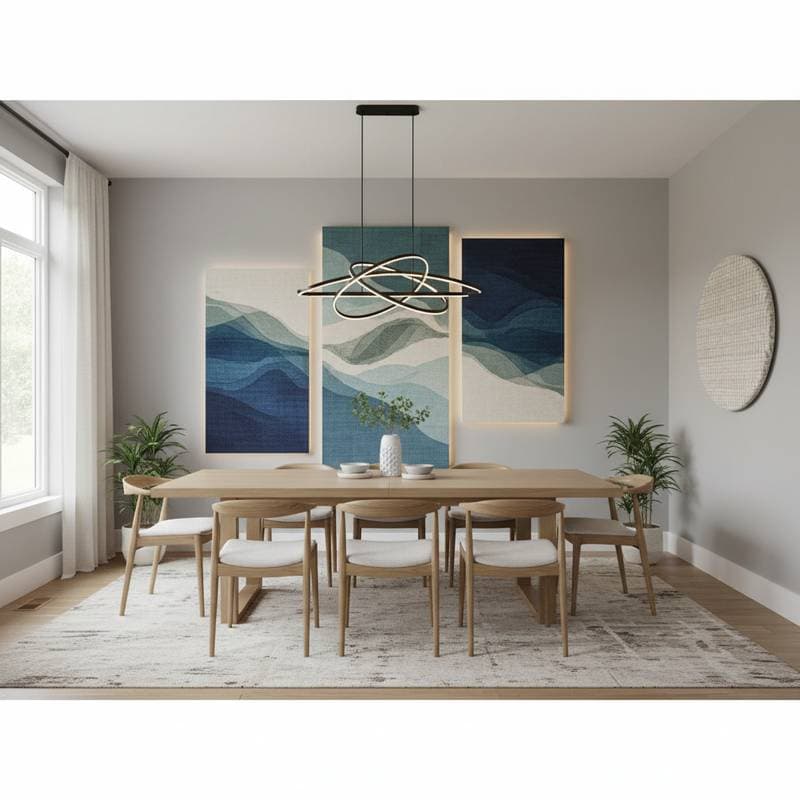
- Printed art panels: Incorporate custom images or patterns to turn walls into focal points that double as sound control.
- Wood slat panels: Combine absorptive backing with wooden strips for a warm, natural vibe in contemporary settings.
- Fabric-wrapped panels: Select colors and textures that match upholstery or rugs for cohesive room harmony.
- Modular tiles: Arrange these interlocking pieces easily, allowing rearrangements as tastes change.
Essential Installation Steps
Gather tools like a stud finder, level, tape measure, drill, and fasteners before beginning. Most panels use Z-clips, keyhole hangers, or strong adhesives; anchor heavy ones into studs for secure hold.
Follow these steps for success:
- Plan the layout: Lay panels on the floor to visualize spacing. Place them at ear height when seated to capture noise during meals.
- Mark locations precisely: Use a level to draw straight lines across the wall for even placement.
- Install hardware: Drill small holes and attach brackets or clips solidly.
- Mount and check: Lift panels into place, then step back to confirm alignment. Spread them over opposite walls for uniform sound distribution.
For high ceilings, add ceiling-mounted options like hanging baffles to address overhead echoes. Enlist a helper for safe handling at heights.
Deciding Between DIY and Professional Assistance
Most wall installations suit handy homeowners, much like hanging large pictures. Common errors include poor placement, such as too high or too few panels, which limit effectiveness. Consult an acoustics expert for accurate mapping with sound meters to identify problem zones.
Professionals excel with ceiling work or adhesive methods. Such tasks require ladders, safety gear, and teamwork to prevent accidents or wall damage.
Budgeting for Acoustic Improvements
Quality panels cost comparably to high-end wall art, starting around $50 per square foot for ready-made designs. Custom features like special prints increase prices based on materials. Factor in tools if needed, and begin with a single accent wall to test results affordably.
Expanding coverage gradually builds better acoustics without large upfront costs.
Pitfalls to Sidestep
Insufficient coverage tops the list of mistakes, as single panels ignore reflections from floors and ceilings. Neglect corners, where low frequencies build up and blur sounds. Avoid thin fabrics advertised as absorbers; true performance requires at least 1-inch thick cores.
Test placements before committing to ensure even distribution.
Strategies for Optimal Results
Pair panels with soft furnishings, such as thick curtains or area rugs, to enhance overall absorption. Leave space around lights and outlets for a clean look. For open shelves or cabinets, line interiors with thin acoustic sheets to quiet internal echoes.
Record before-and-after audio clips of normal conversation to measure improvements objectively.
Achieving Clear Conversations in Your Dining Space
Once installed, panels bring immediate clarity: Speech becomes distinct, music fills the room warmly, and meals foster genuine connections without shouting. This setup elevates the dining area into a true retreat for enjoyment. Artistic acoustics unite function and form, making every gathering more inviting.