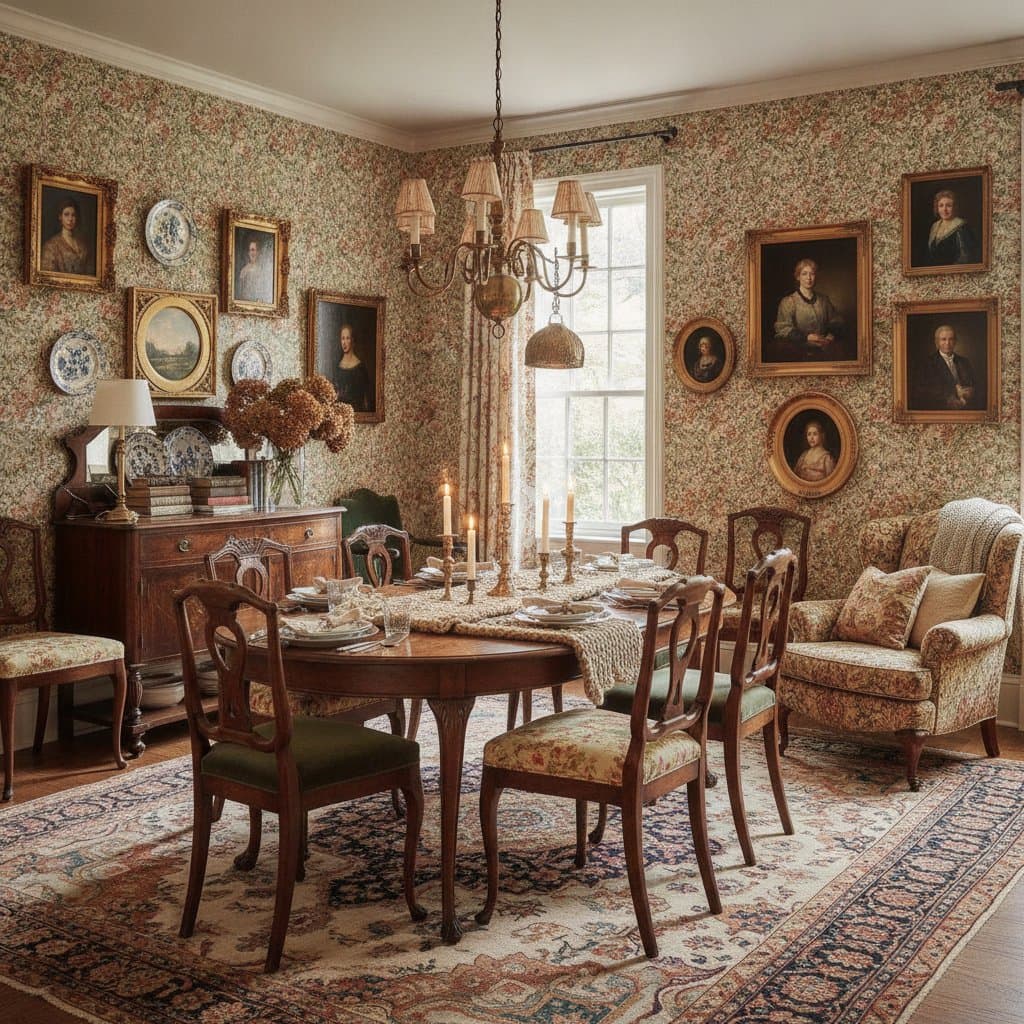
Vintage Maximalism: Breathing New Life into Dining Rooms
Dining rooms frequently become neglected areas in contemporary homes, often repurposed for storage or work. Vintage maximalism shifts this pattern by injecting energy and storytelling into these spaces. The style prioritizes abundance, historical touches, and individual flair over minimalism, resulting in areas that invite social interaction and contemplation.
Key Principles of Vintage Maximalism
- Curate abundance with intention by layering textures, colors, and periods to create warmth and visual interest.
- Blend aesthetics thoughtfully; combine family heirlooms, secondhand discoveries, and modern accents for a genuine, amassed look.
- Maintain functionality at the forefront; select ornate features that support everyday family activities without sacrificing ease.
Integrate sustainability into the design; choose pre-loved pieces that add unique character and promote environmental responsibility.
Build confidence in choices; rely on personal preferences and embrace minor flaws to embody the style fully.
Restoring the Dining Room as a Social Heart
Historically, dining rooms functioned as formal hubs, but they have evolved into practical afterthoughts. Vintage maximalism revives them as dynamic venues for expression. Drawing from sentimental roots while suiting current preferences, the approach encourages pairing passed-down dishware with finds from local markets, draping printed fabrics over hand-stitched coverings, and showcasing diverse art that sparks delight.
Interior designer Amelia Grant, celebrated for her varied London residences, observes that the most engaging dining rooms incorporate objects linked to valued individuals and locations. She emphasizes enjoyment as the guiding principle: if an item evokes pleasure, include it to enrich the environment.
Mastering the Technique of Layering
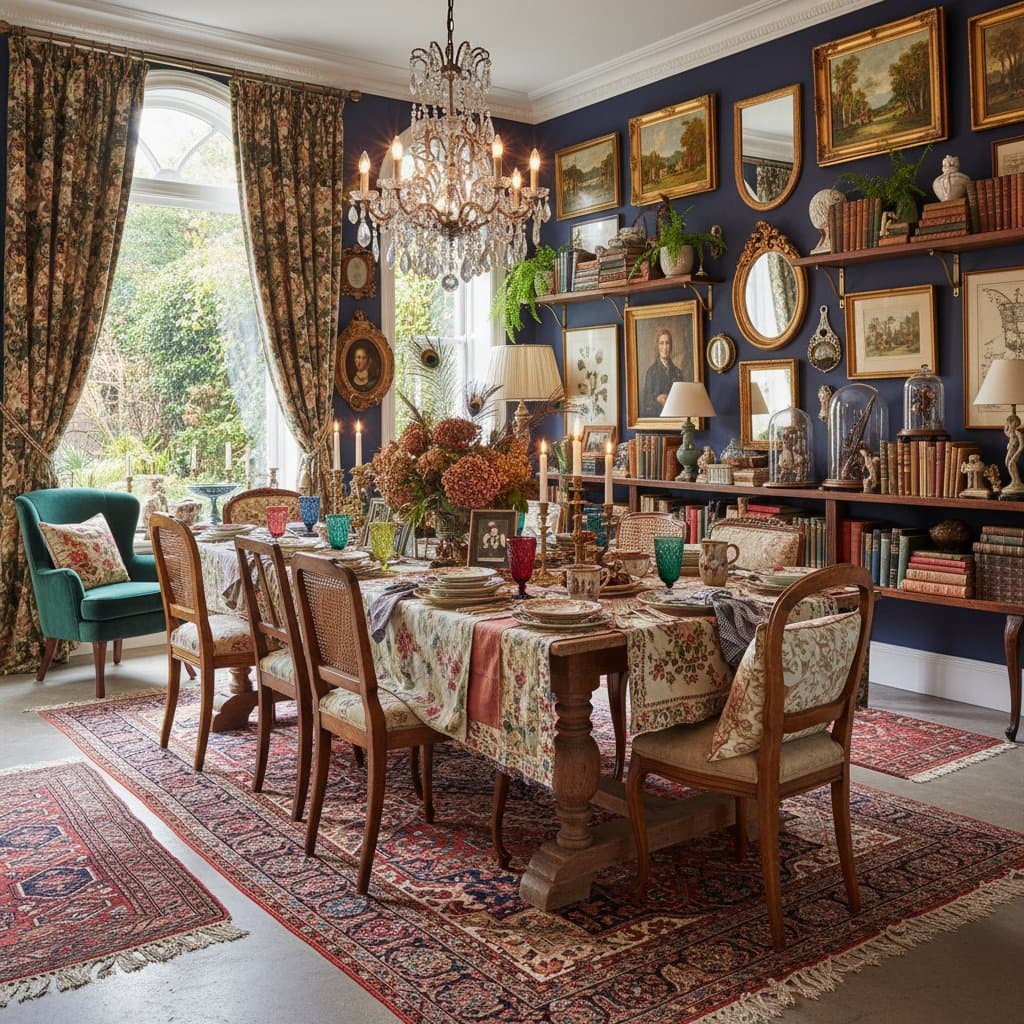
Layering defines the essence of maximalist interiors. Start with a foundational element, like a woven area rug or floral wall covering, to provide immediate depth. Add contrasting wood finishes, assorted textile patterns, and story-infused fixtures to develop intricacy.
Suspend an antique light fixture over a sturdy wooden table to fuse sophistication with approachability. Arrange a cushioned seat along one edge and varied timber chairs opposite to suggest a naturally gathered assortment. This method, inspired by rural European dwellings, harmonizes aged metal details with fresh graphics through purposeful opposition instead of uniform matching.
Adapting Maximalism for Family Use
Maximalism aligns well with household needs. Configure the central table for versatile purposes, including eating, studying, or crafting. Select durable, washable coverings for surfaces, detachable fabric protections for seating, and low-placed racks for easy access.
The design's flexibility allows patterns and materials to support rather than obstruct routines. Professional organizer Rachel Kim promotes versatile storage solutions. She describes how aged cabinets hold fabrics and utensils while enhancing the view; place daily necessities on bottom tiers and protect delicate objects above to merge utility with allure.
Sourcing and Combining Vintage Finds
The thrill of acquiring vintage components fuels maximalism. Visit outdoor markets, donation centers, and digital marketplaces to uncover pieces with visible wear and backstory. Repurpose an aged container as a holder for cut flowers or assemble irregular cutlery sets for elegant settings.
Organize acquisitions to convey a personal timeline. Select a central feature, such as a striking reflector or prominent storage unit, then surround it with supporting elements. This strategy avoids chaos, cultivating directed plenty where every part holds meaning or distinction.
Drawing from International Maximalist Traditions
Vintage maximalism incorporates global customs. Moroccan setups layer woven cloths and detailed lamps for complex coziness. Italian arrangements burst with lively shades and inherited treasures, whereas Southern U.S. styles use botanical designs and printed serveware for reassuring tradition.
Weave these inspirations into a personal, expansive feel. In smaller city dwellings, such as those in New York, the approach succeeds with upward expansions. Install a display of collected old correspondence to introduce depth without reducing ground space, focusing on palette, visuals, and sensory qualities.
Setting a Maximalist Table
The table serves as the focal point for maximalist creativity. View it as a surface for diverse substances and heights. Combine glass drinkware with clay vessels, position tapers in varied containers from different origins, and add timely touches like fruit arrangements in cooler months or plant garnishes during warmer seasons.
Such selections turn ordinary gatherings into special events. Designer Leo Martinez suggests picking a core shade to anchor the scheme. If azure appeals, apply it across additions to achieve unity amid variety.
Adopting Vintage Maximalism Gradually
Introduce the style without overhauling the entire area. Start small by swapping plain dishware for patterned versions, adding a colorful fabric strip, fitting a striking overhead fixture, or painting storage interiors in deep tones. Let the room grow naturally through ongoing adjustments.
Those in temporary housing can focus on portable items like textiles, images, and table accessories. These choices transfer easily between locations, reflecting maximalism's adaptable essence.
Cultivating Enduring Connections Through Design
A maximalist dining area changes with personal milestones. It accommodates elegant suppers one night and collaborative tasks the next, responding to evolving requirements. Choosing significant objects elevates the space beyond mere ornamentation into a collection of recollections, bonds, and progress.
This perspective values relationships, originality, and comfort above perfection. The result positions the dining room as a lively record of individual journeys and collective experiences.