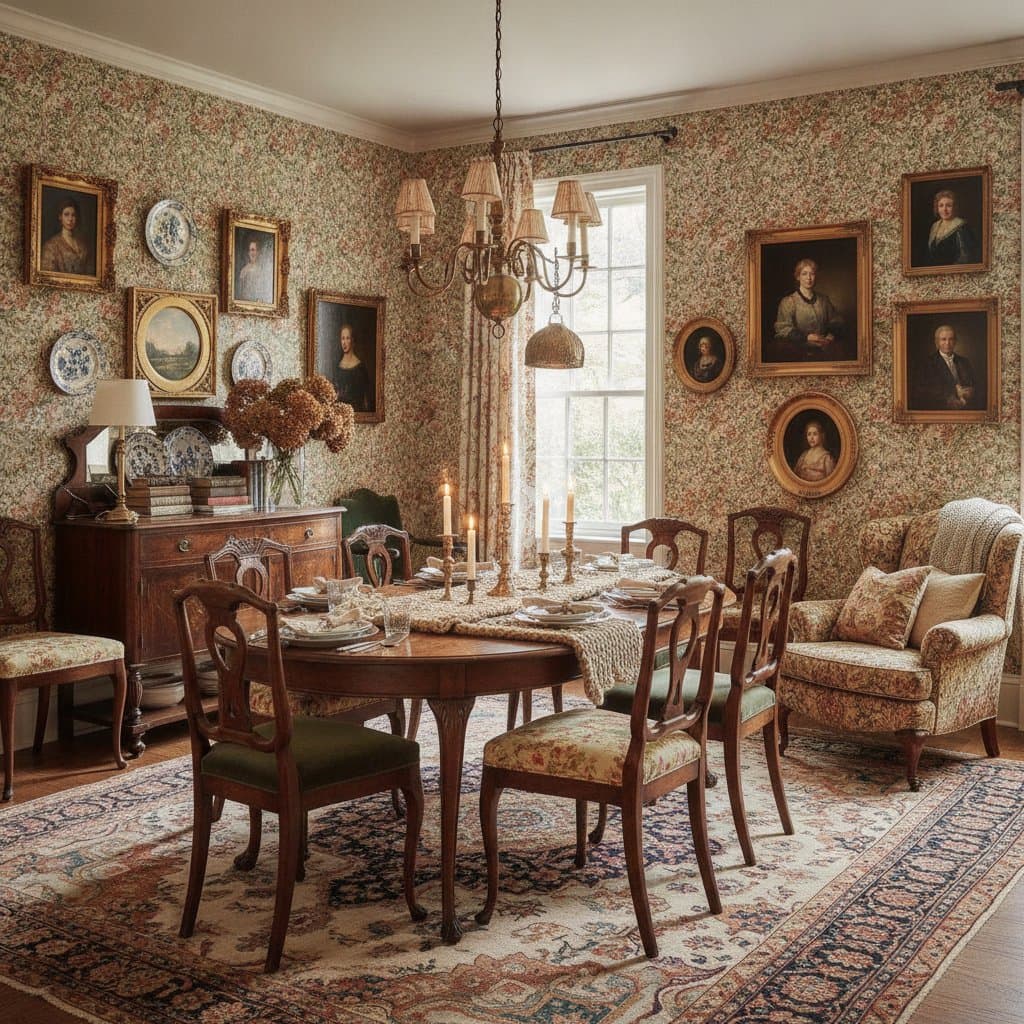
Insights from the Grandmillennial Aesthetic
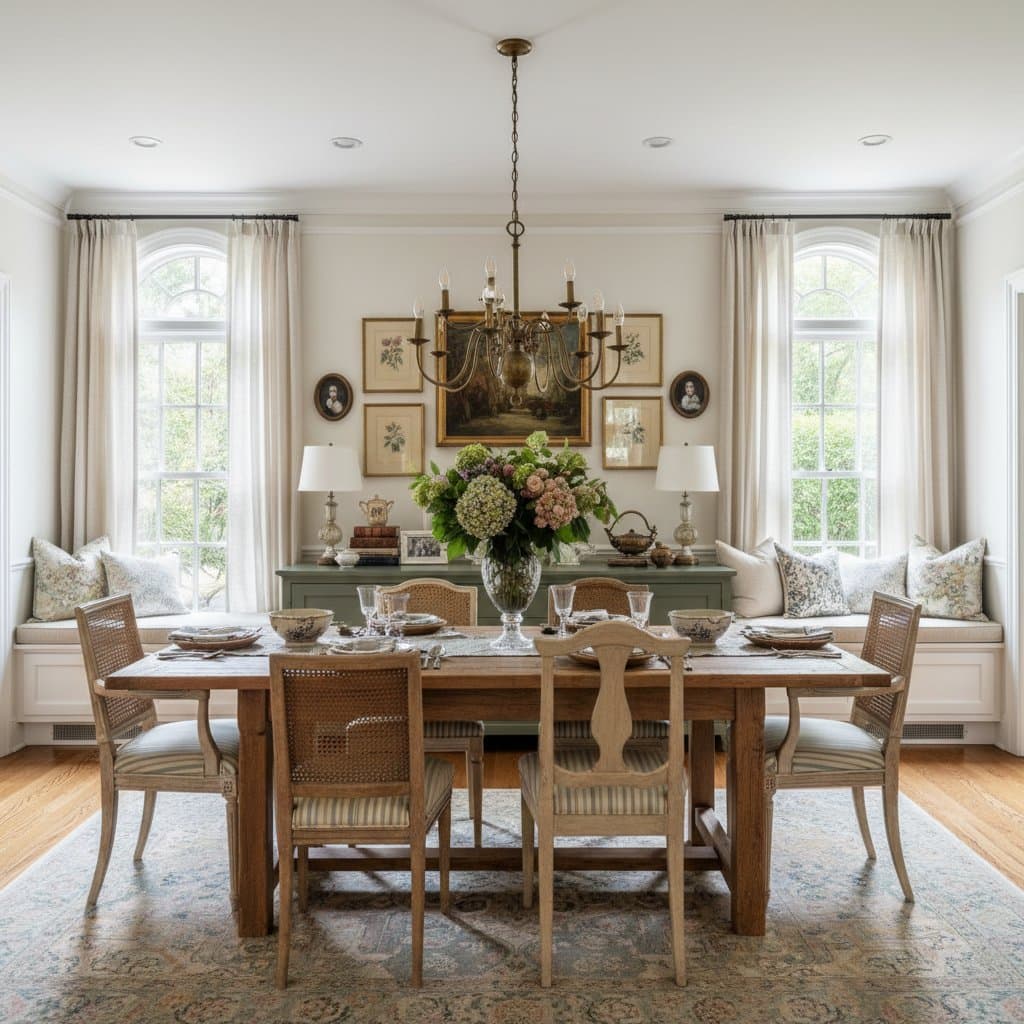
Grandmillennial design honors legacy, skill, and ease. It draws from established motifs without transforming residences into exhibits. Floral motifs, robust timber furnishings, and refined silver utensils reclaim prominence. In dining settings, this translates to heirloom-grade pieces paired with current amenities.
Individuals recognize anew that superior substances and conventional assembly endure beyond fleeting styles. An oak table constructed generations prior surpasses many production-line options in resilience. Grandmillennial principles uphold such durability. They also advocate blending motifs, surfaces, and periods over singular trends.
A grandmillennial vintage dining room avoids precise historical duplication. Instead, it extracts guidance from history while ensuring suitability for present needs. Examples include matching a traditional timber sideboard with contemporary illumination or refreshing antique seating with resilient current textiles.
Project Essentials
Working Time: Varies with restoration and acquisition efforts, often spanning multiple weekends.
Total Time: One to two months for full overhaul.
Skill Level: Intermediate for refinishing tasks, beginner for arrangement and adornment.
Estimated Cost: Ranges from several hundred dollars for secondhand and self-directed projects to thousands for genuine antiques.
Revitalizing a dining area with vintage essence ranges from straightforward painting and re-staining of current items to procuring authentic mid-century or initial farmhouse elements. Balance genuineness with usability throughout.
Deciding Between DIY and Professional Assistance
Self-directed initiatives yield satisfaction and economy, yet not all vintage renewals suit solo handling. Refreshing basic chair cushions or table tops proves accessible for most with diligence and suitable implements.
Structural fixes, veneer renewal, or electrical updates for period lighting demand expert intervention. For an original-wired chandelier, engage a qualified electrician for evaluation and modification. Similarly, water-affected or unstable antique cabinets benefit from a proficient restorer's stabilization.
Recognizing personal boundaries prevents financial loss and irritation. Improper fixes diminish appeal or pose hazards. Artistry emphasizes meticulous attention alongside expertise.
Required Materials and Tools
Core Materials:
- Wood cleanser or mineral spirits to remove aged coatings
- Sandpaper across various grits
- Wood filler for minor mends
- Stain or paint appropriate for dense woods
- Furniture wax or polyurethane for safeguarding
- Upholstery textile and padding for seat renewals
Essential Tools:
- Orbital sander or sanding pad
- Brushes and non-linting fabrics
- Screwdrivers, clamps, and wood adhesive
- Staple applicator for fabric work
- Safety items such as gloves, respirator, and eye protection
Supplementary Options:
- Ornamental edging or paneling for renewal accents
- Period fittings for storage elements
- Auxiliary illumination like renewed chandeliers or wall mounts
Guide to Assembling a Vintage Dining Area
1. Assess Existing Elements
Examine current furnishings and arrangement first. Numerous residences possess solid foundations for enhancement. Durable timber tables, despite imperfections, warrant renewal over discard.
Verify structural soundness prior to aesthetic adjustments. Secure loose connections, substitute absent fasteners, and confirm steadiness. A reliable base underpins superior results.
2. Select Era and Style
Vintage dining can evoke initial farmhouse restraint, graceful mid-century forms, or elaborate Victorian grace. Align choices with home structure and routine activities.
Farmhouse approaches prefer aged surfaces, muted shades, and utilitarian items. Mid-century focuses on streamlined shapes and earthy timber shades. Formal traditional spaces accentuate sculpted timber, deep tones, and superimposed fabrics.
A defined outlook directs selections and maintains unity amid era blends.
3. Acquire Superior Items
Secondhand outlets, estate auctions, and digital platforms yield prime vintage finds. Scrutinize for robust connections and material quality. Steer clear of composite boards or synthetic laminates.
Surface imperfections need not discourage acquisition of finely crafted work. Imperfections like abrasions yield to correction, unlike flawed builds. Seek indicators such as interlocking joints, full timber sections, and firm structures.
4. Renew Existing Pieces
Eliminating prior coatings proves labor-intensive yet rewarding. Employ mild chemical removers or sanding techniques that retain grain patterns. Proceed gradually, section by section, with full protective measures.
Post-removal, cleanse surfaces meticulously before coloration. Select hues matching intended aesthetics, like deep walnut for classic venues or pale shades for rustic ones. Seal with wax or clear coat for endurance.
For seating, strip outdated coverings and install new materials. This straightforward task alters the entire ensemble dramatically.
5. Infuse Personality via Accents
Textures and adornments animate vintage dining. Incorporate cloth runners, aged serveware, or salvaged timber storage. Showcase inherited items beside utilitarian ones.
Illumination contributes significantly. Renew brass pendants or install forged metal fixtures for earthy tones. Opt for warm-toned bulbs to sustain coziness.
Floor coverings, drapery, and artwork harmonize with core pieces without dominance. Equilibrium sustains both heritage and practicality.
6. Integrate Contemporary Ease
Vintage homage to history demands alignment with modern standards of comfort. Select padded seating with firm support, and verify table elevations suit ergonomic needs.
Incorporate discreet aids like silent-closing mechanisms on cabinets or guards beneath legs to shield floors. These enhancements uphold allure while easing use.
7. Preserve and Safeguard Efforts
Superior coatings endure with appropriate maintenance. Shun abrasive cleansers on timber. Employ protective underlays to avert marks from moisture or friction. Renew wax layers yearly for sustained luster.
In climates with fluctuating moisture, observe timber shifts or fissures. Remedy promptly to forestall escalation. Period pieces thrive under steady attention, offering prolonged utility.
Ensuring Excellence in Execution
Success in vintage dining hinges on precise oversight. Review renewed items for even textures, uniform coloration, and secure assemblies. During reassembly, avoid excessive fastener tension to prevent timber fractures.
Prior to final sealing, evaluate under daylight for inconsistencies. This diligence distinguishes amateur efforts from refined outcomes.
With diverse timber shades, trial colors on test samples for palette cohesion. Vintage settings favor accord over sameness, yet discordant tones impair harmony.
Managing Expenses
Vintage dining assembly demands no vast resources. Many develop areas incrementally, initiating with pivotal elements like tables or cabinets.
For limited funds:
- Emphasize renewal over acquisition.
- Acquire varied seating and unify via shared finishes.
- Apply removable wall treatments for era essence at low cost.
For average allocations:
- Combine genuine relics with quality imitations.
- Commission expert fabric renewal for durability.
- Enhance with era-appropriate lighting.
For ample means:
- Procure uncommon or branded items via specialists.
- Engage artisans for bespoke or renewal work.
- Add premium fabrics and custom coverings.
Core tenet persists across scales: acquire select, quality items and tend them diligently.
The Enduring Appeal of This Aesthetic
Vintage dining revival signifies more than reminiscence. It embodies purposeful existence. Individuals seek venues that reflect personal narratives over transient fashions. A crafted table or renewed cabinet imparts stability absent in standardized goods.
This trend bridges eras. Homeowners retrieve stored legacies, deriving fulfillment from renewal. Blending eras yields stratified, genuine surroundings that endure personally.
Essential Advice for Optimal Results
- Trial coatings and colors on spare timber initially.
- Apply preconditioner prior to staining for even absorption.
- Mandate licensed electrical updates for period lights.
- Obtain era fittings from reclamation sources for authenticity.
- Combine illumination types for layered warmth.
- Document disassembly for simplified reconstruction.
Sustaining Long-Term Value
Vintage dining flourishes with routine upkeep. Wipe dust gently, refresh safeguards periodically, and adjust fittings annually. Shift placements seasonally to distribute wear.
Anticipate subtle aging signs over time. These enhance narrative rather than detract. For significant issues, seek restorers over hasty fixes that compromise worth.
As the space matures elegantly, its draw intensifies. Traces of shared meals, softened metal patinas, and subtle sounds weave tales of inhabited warmth.