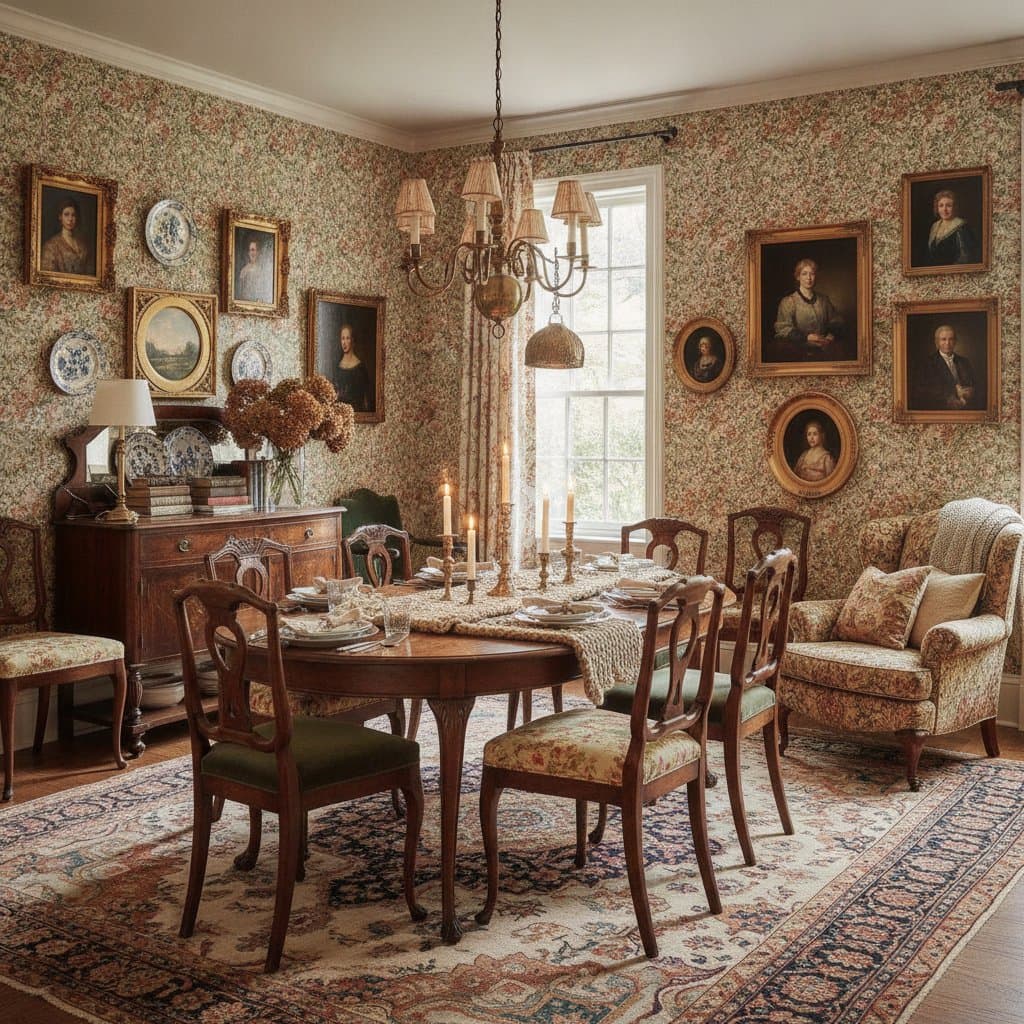
Assessment: Evaluating Your Current Dining Space
Approach your dining zone with the discipline of project oversight prior to acquiring new elements. Compile an inventory of present components:
- Furniture Assessment: Pinpoint items possessing distinctive qualities suitable for retention. Sturdy timber tables, aged seating, or sideboards frequently anchor grandmillennial updates effectively.
- Color Analysis: Record prevailing shades on surfaces, flooring, and coverings. These rooms flourish with equilibrated chromatic pairings, typically soft pastels alongside deeper supplementary tones.
- Lighting Review: Revive classic pendants or wall fixtures rather than discarding them. Assess positioning and intensity to sustain atmosphere without eclipsing finer points.
- Functionality Audit: Examine traffic flow, accommodation limits, and stowage options. Aesthetic merit must align with support for routine repasts and assemblies.
Capture observations via images and annotations, then classify components as retain, restore, or substitute. This methodical process curbs hasty acquisitions and upholds stylistic coherence.
Planning Phase: Tools, Materials, and Design Coordination
Transforming a dining area into grandmillennial elegance parallels a modest building endeavor. Establish precise objectives, financial limits, and schedules at the outset.
Tools and Materials
- Tape measure and ledger for spatial mapping
- Coating implements or wall covering applicators
- Reupholstery textiles and stitching equipment for seating renewal
- Fastening tools, gripping implements, and adhesive for structural fixes
- Gentle brushes for detailing ornate areas
- Fixture mounting kits and electrical verifier for luminary modifications
Design Elements
- Color Palette: Select base shades like ivory neutrals or softened indigos, augmented by floral or verdure motifs.
- Textiles: Employ gathered drapery, stitched placemats, and printed seat pads.
- Furniture: Blend legacy-inspired forms with streamlined contemporary profiles to avert optical density.
- Decorative Accents: Integrate fine china, mounted verdure illustrations, and metallic or earthenware holders.
Safety and Care Considerations
During surface renewal or coloration, operate in well-aired spaces. For adapting aged illuminants, verify compliance with electrical codes. Employ protective pads under substantial pieces or seek assistance to safeguard flooring and avoid harm.
Implementation: Step-by-Step Guide to Achieving the Look
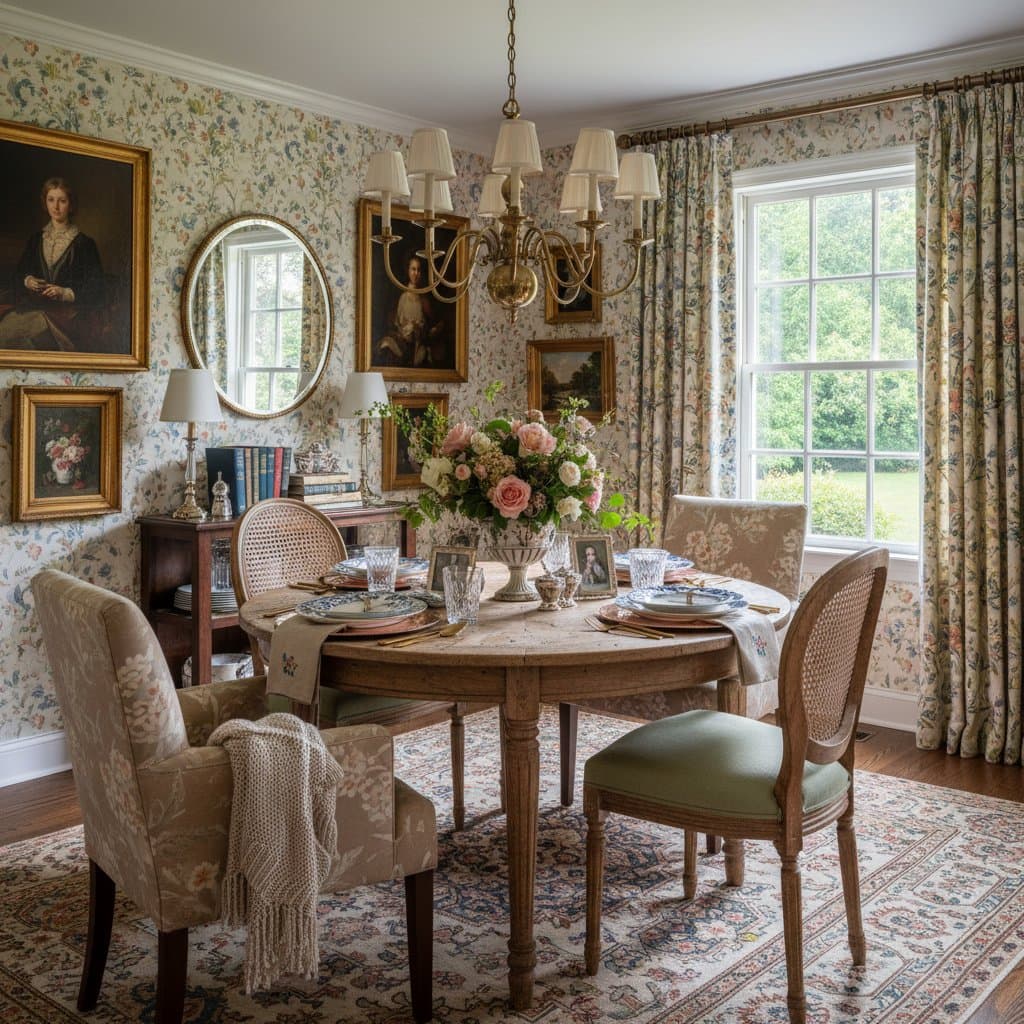
- Start with the Walls: Install coverings or apply color prior to positioning furnishings. Opt for designs imparting subtle motion, like muted brocades or compact blooms, to avoid dominance.
- Refinish or Reupholster Furniture: Abrade timber lightly, then seal with matte finish for understated glow. Swap deteriorated coverings with resilient cotton-linen mixes bearing heritage designs.
- Layer Textiles Thoughtfully: Place a patterned mat under the table to delineate the zone. Choose weaves that correspond with window or seating materials.
- Upgrade Lighting: Revitalize a period pendant or select a facsimile with flame-like sources. Employ temperate glows to cultivate hospitality.
- Curate Tabletop Decor: Pair legacy porcelain with faceted stemware and fabric serviettes. Overlay paths atop spreads for tactile diversity.
- Introduce Greenery: Incorporate containerized botanicals or blooms to infuse vitality and aroma, linking opulence to organic restraint.
- Balance Modern Functionality: Conceal repositories for utensils or add adjustable controls for ambient light. Embed utility without compromising heritage visuals.
Pause for evaluation at each phase. Verify uniformity in finishes, motif synchronization, and illuminant equilibrium. Diligence in oversight minimizes subsequent corrections.
Quality Assurance: Maintaining Cohesion and Comfort
Grandmillennial dining excels through unified contributions from all aspects. Employ a verification list to affirm alignment:
- Pattern Coordination: Confirm shared chromatic or thematic threads among designs.
- Proportion: Offset sizable furnishings with airy adjuncts.
- Texture Distribution: Alternate glossy and plush elements to evade uniformity.
- Lighting Levels: Merge central sources with peripheral lamps or fixtures for graduated brightness.
Withdraw occasionally to view from diverse perspectives. A unified setting appears purposeful yet inhabited. Should attention fixate on a single intense component, temper it with subdued fillers or streamlined ornaments.
Maintenance: Preserving the Look Over Time
Following completion, safeguard the grandmillennial dining setup via routine preservation. Dust sculpted timber weekly to clear recesses. Cycle coverings by season to resist discoloration. Address lifting borders on walls promptly with fresh bonding agents to halt deterioration. Renew timber treatments yearly to sustain sheen and resilience.
Handle fabrics with care. Use attachment brushes for vacuuming seats and treat spots without delay. House fragile tableware in cushioned enclosures or fabric-lined compartments to reduce fractures. Vigilance over minutiae upholds the allure central to this aesthetic.
Pro Tips for Success
- Start Small: Initiate with modest changes like motif-infused window treatments or refreshed seating.
- Mix Eras with Intention: Pair an antique credenza with a sleek central surface to wed reminiscence and utility.
- Use Symmetry for Stability: Duplicate fixtures or artworks to instill serenity amid elaboration.
- Honor Personal History: Showcase familial porcelain or mounted culinary heirlooms for genuine depth beyond commercial items.
- Invest in Quality Basics: Prioritize robust timber surfaces and ergonomic seats as enduring bases.
Living with Your Grandmillennial Dining Room
Grandmillennial aesthetics thrives on flexibility. Modify adjuncts, refresh fabrics, or add fresh motifs over years without eroding core identity. It invites inventive adjustments within established bounds. As legacy acquisitions accumulate, the space matures organically while retaining unity.
A thoughtfully crafted grandmillennial dining area transcends visual pleasure. It cultivates bonds via communal sustenance, narratives, and customs. Every item bears temporal weight, yet the layout serves fluidly for present routines. With precise execution, this method elevates daily nourishment into a soothing observance of recollection and mastery.