Japandi: The Minimalist Dining Trend for 2026
Japandi emerges as a prominent dining design trend for 2026 through the blend of Japanese minimalism and Scandinavian comfort. This approach builds serene environments that balance functionality with warmth. Homeowners increasingly choose these designs to support mindful eating in the midst of busy schedules.
Key Takeaways
- Japandi combines Japanese simplicity with Scandinavian coziness for balanced interiors.
- Natural materials, practical features, and neutral color schemes provide its core elements.
- The style fits compact urban apartments as well as larger family residences.
- Intentional design choices encourage mindful routines.
- It adapts seamlessly to modern city dwellings or rustic countryside homes.
The Calm Within Simplicity
Cluttered dining spaces frequently hinder concentration during meals. Japandi addresses this issue by promoting balance and restraint. It incorporates the Japanese idea of wabi-sabi, which values imperfection, alongside the Scandinavian principle of hygge, focused on cozy contentment.
Setting the Scene
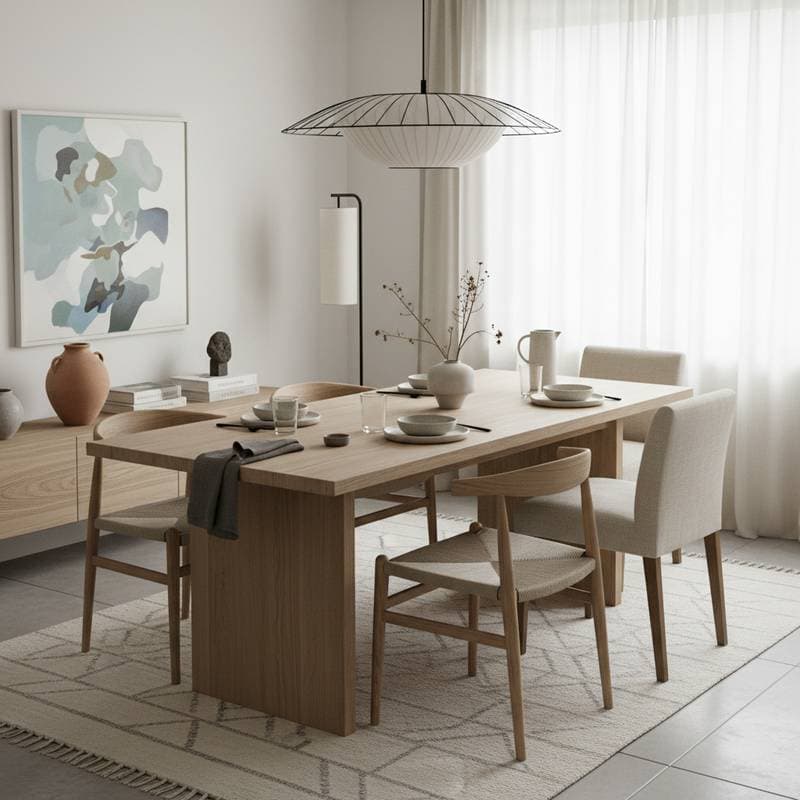
Natural materials form the backbone of Japandi dining areas. Choose a solid oak table for its enduring grain and gentle warmth, or select ash for a lighter touch. Pair it with chairs that have clean lines in pale woods or seats covered in neutral linens like soft gray or cream.
Introduce diverse textures to build subtle interest. Woven seagrass placemats work alongside polished stoneware dishes and smooth linen napkins. Maintain a color range of grounded shades, including warm taupes, muted beiges, and soft grays, to sustain a peaceful vibe.
Lighting sets the overall tone effectively. Japanese styles often use soft light from rice paper screens, while Scandinavian elements add layered coziness. Position pendant fixtures with frosted glass shades or rattan covers to deliver a gentle, surrounding light that invites guests to stay longer.
Interior designer Emma Haines from Copenhagen notes, "Japandi dining focuses on mood as much as structure. It creates spaces calm enough for relaxed meals and meaningful conversations."
Mindful Minimalism at the Table
Japandi shines in table arrangements that highlight restraint and purpose. Select handcrafted ceramics or matte stoneware in colors such as oatmeal or slate gray. Restrict decorations to key pieces that support rather than overshadow the meal.
Place a single branch in a simple vase or a wide bowl of seasonal fruits like figs as a quiet centerpiece. These selections prompt natural conversation without cluttering the surface. Families find that such setups cut down on distractions, letting discussions unfold freely.
Younger family members typically appreciate these subdued displays. The tranquil environment helps manage energy during group meals. Japandi thereby nurtures awareness in the moment while avoiding stark severity.
Organizational expert Talia Rhodes from Tokyo states, "Japandi dining blends efficiency with inviting warmth. Hidden storage keeps things tidy yet accessible." Add benches with built-in drawers underneath or sideboards that hold daily items while displaying a few chosen ceramic pieces.
Space-Saving Grace for Urban Homes
City residents often face constraints in available space. Japandi draws from cultures that emphasize resource efficiency, making it ideal for these situations. Both Japanese and Scandinavian traditions excel at using limited areas productively.
Select furniture that serves multiple purposes to improve movement. Opt for tables that extend to seat extra people without taking up constant room, paired with stools that stack away compactly. Install wall-mounted shelves to keep plates and glasses within reach, preserving open floor areas.
Create built-in seating like banquettes against walls or under windows to turn unused corners into functional spots. These choices foster a feeling of openness. Durable, adaptable items offer greater long-term value than temporary, low-cost alternatives.
Bringing Global Inspiration Home
Japandi moves beyond strict rules by incorporating influences from various cultures. Rustic pottery from French workshops aligns with its respect for handmade quality. Japanese rooms contribute structured grace, and urban lofts in London show how soft palettes mix polish with relaxation.
Individuals can integrate these aspects into their own stories. The approach flexes to suit different environments and routines, whether seaside escapes or bustling apartments. It encourages creative adjustments while staying true to principles of clarity and ease.
Sustaining Your Japandi Space
A Japandi dining setup flourishes through careful upkeep. Update accents with the seasons, like pine branches in winter or lightweight linen runners in warmer weather. Keep surfaces clear right after use to uphold the clean aesthetic.
Practical Tips for Daily Integration
- Limit tabletops to one or two meaningful objects at a time.
- Choose long-lasting, multi-use furniture and tableware.
- Add textures in moderation to create depth without overload.
- Prioritize ergonomic designs that facilitate comfortable, extended gatherings.
This philosophy transforms ordinary meals into meaningful rituals. It shapes spaces where dining feeds both physical needs and emotional bonds, meeting the needs of modern lifestyles.