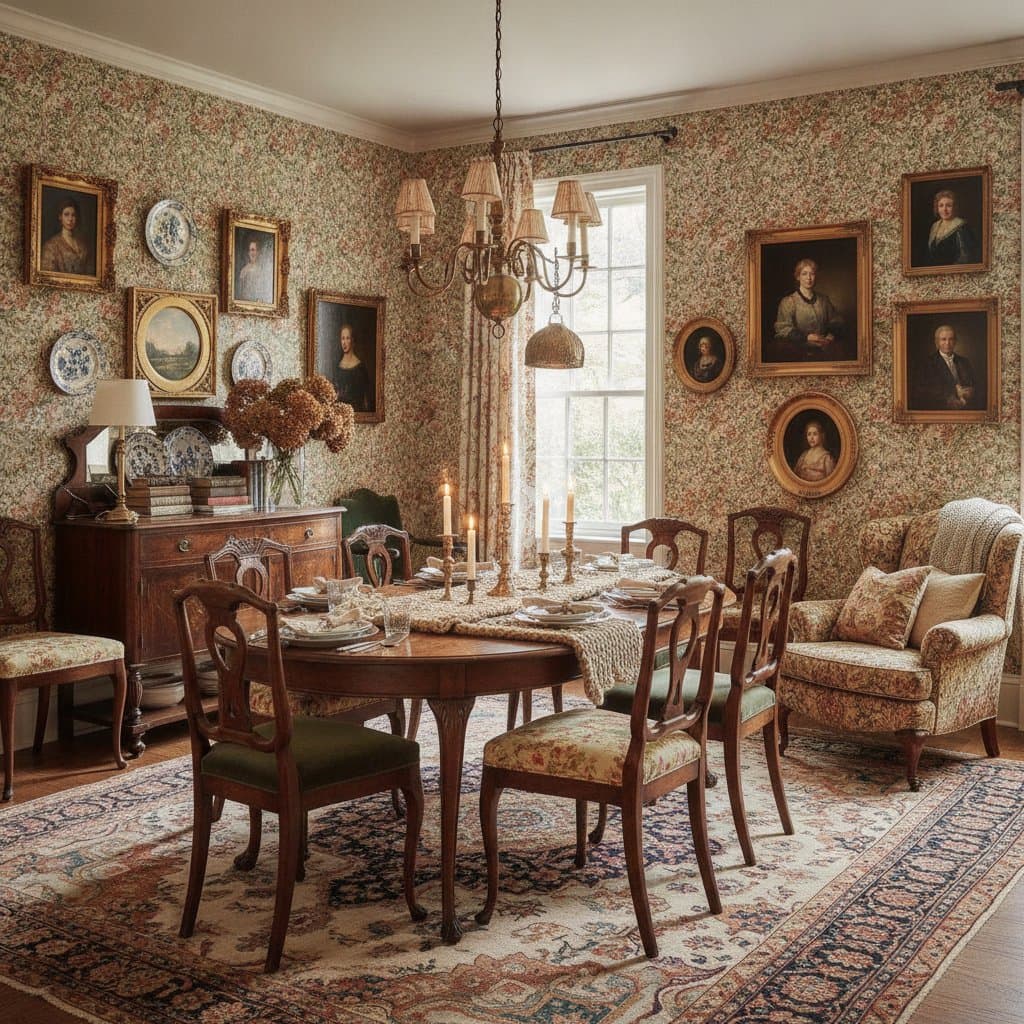
The Bold Comeback of Grandmillennial Dining in 2026
The grandmillennial dining style returns with personality, charm, and a confident blend of vintage and contemporary elements for daily meals. Following an era of minimalism, clean lines, and neutral tones, homeowners now seek comfort through pattern, texture, and tradition. The dining room emerges from obscurity into prominence, adorned with chintz, crystal, and bold assurance.
For dining spaces that appear stark or detached, this resurgence provides an elegant remedy. Grandmillennial design encourages the integration of antique furnishings with current aesthetics, resulting in environments that convey depth, affection, and authentic use.
Why Grandmillennial Dining Resonates in the Current Moment
Following extended periods of simplified interiors, individuals yearn for warmth and reminiscence. Designer Emily Tran of Haven House Interiors observes, “People want spaces with soul again. Grandmillennial dining is about celebrating what already has history rather than hiding it.”
Incorporate Pattern and Texture as Foundational Elements
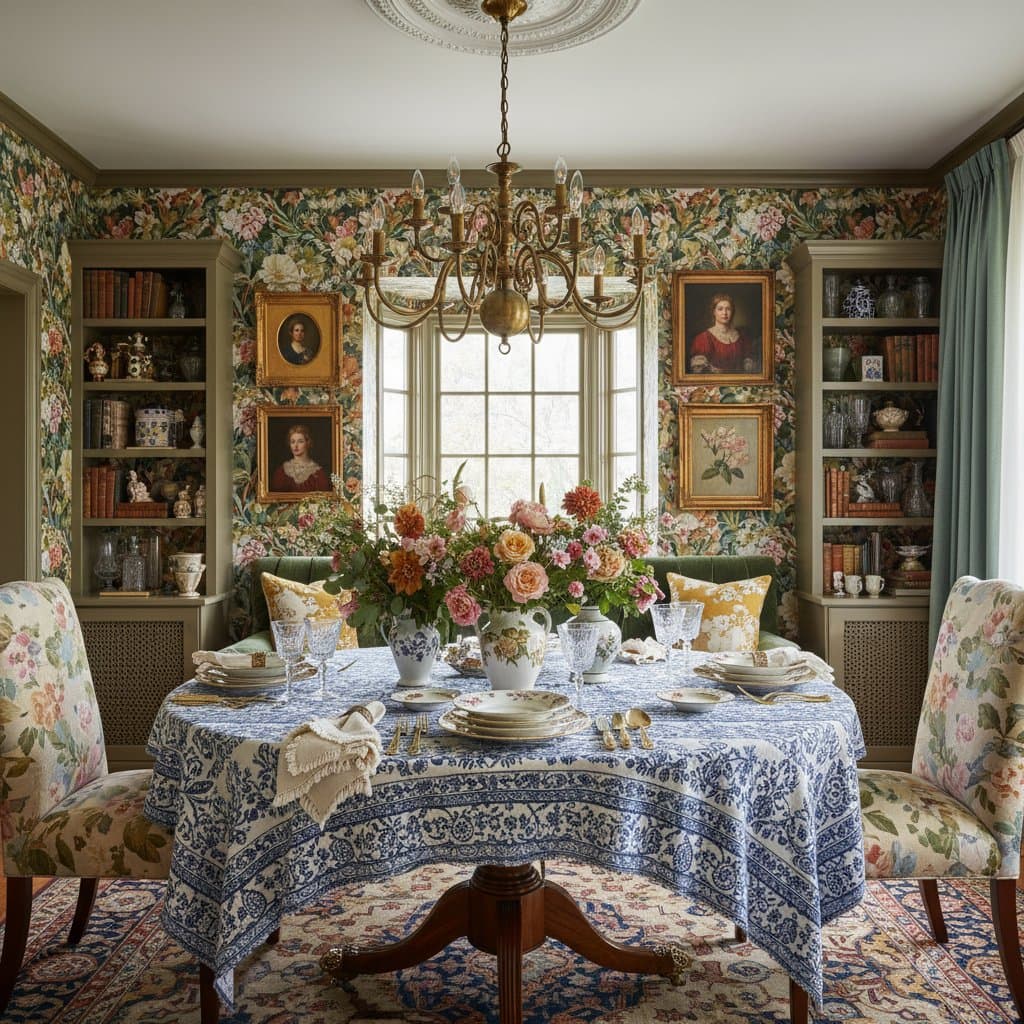
Pattern forms the core of grandmillennial aesthetics. Consider toile motifs, vertical stripes, or intricate florals applied boldly to walls, curtains, or seat coverings. For those approaching this cautiously, begin modestly: a patterned table runner or fabric-upholstered chairs introduces impact without dominating the area.
Designer and stylist Mia Roberts recommends, “Mixing patterns works best when there is a thread that ties them together, like a shared color or motif.” To add texture, incorporate materials such as wicker baskets, velvet cushions, or embroidered tablecloths. These choices temper formality and foster an welcoming atmosphere.
Grandmillennial dining flourishes through accumulation of layers. Position a handwoven rug beneath the table and suspend polished brass fixtures overhead. Pair embroidered serviettes with sleek cutlery. Achieve cohesion amid diversity by selecting elements that harmonize in scale and theme.
- Select a dominant pattern for walls or upholstery to anchor the room.
- Layer secondary patterns in accessories, ensuring color continuity.
- Introduce textures via natural fibers and soft fabrics for tactile appeal.
Elevate the Space with Statement Lighting
Lighting offers a straightforward path to restore grandeur in the dining room. Crystal chandeliers and elaborate brass pendants reemerge, applied judiciously. A singular striking fixture centered over the table establishes the room's ambiance.
For those finding chandeliers overly conventional, explore alternatives like pleated shades or retro-inspired suspensions. Designer Leo Martinez of Studio Marlow notes, “Lighting is where you can take a risk. It draws the eye up and makes even a modest dining room feel intentional.”
Install dimmer controls to produce a gentle, enhancing illumination that flatters guests and the tablescape alike. Combine overhead pieces with table lamps featuring scalloped shades for added drama during evening gatherings.
Blend Vintage and Contemporary Pieces Seamlessly
The essence of grandmillennial dining lies in juxtaposition. Family heirlooms coexist effortlessly with modern artwork or spare dinner services. This interplay maintains vitality and avoids the appearance of a preserved historical exhibit.
Novices to vintage acquisition should commence with accessible items. Silver candelabras, faceted glass vessels, or hand-stitched linens provide economical entry points to antique allure. Explore flea markets, resale boutiques, and auction houses for these discoveries.
Maintain equilibrium when merging eras. Pair an elaborate table with unadorned chairs. Offset vibrant wallpaper with plain curtains. Allow each component space to contribute without rivalry, creating a balanced composition.
- Assess current furnishings: Identify pieces that pair well with antiques.
- Source one or two vintage accents per session to build gradually.
- Test arrangements in the space before final placement.
Select Colors That Nourish Comfort
Grandmillennial dining areas embrace color through subtle layering, evoking enduring serenity. Muted indigos, rose hues, and golden ochres form a soothing foundation for accents such as verdant stemware or deep wood tones.
Designer Claire Jennings of Rosewell Design explains, “Color in these spaces should feel cozy and confident. You want to walk in and instantly relax, but also notice that every detail feels considered.”
Draw from natural motifs for guidance: foliage greens, azure skies, and earthy beiges integrate seamlessly. Apply a botanical mural to elevate a basic setting, or introduce color via painted cabinetry in soft pastels.
Revive the Tradition of Thoughtful Tablescapes
Grandmillennial dining extends beyond aesthetics to functionality. The practice of artful table arrangement reawakens. Stack textiles, combine dishware designs, and incorporate fresh blooms to enrich the ritual, underscoring that meals represent communal bonds.
Acquire durable essentials to simplify preparation: linen serviettes, crystal decanters, and beeswax tapers transform routine dinners. Reserve these for special occasions if preferred, yet their availability streamlines hospitality.
Utilize inherited porcelain alongside current selections for an accessible elegance. Alternate a pristine plate with a heritage-patterned saucer. This mix conveys ease while upholding sophistication.
- Layer placemats under chargers for depth.
- Vary heights with risers for floral or candle displays.
- Rotate seasonal elements to keep settings fresh.
Curate Personal Collections for Narrative Depth
Collections impart history, and grandmillennial dining spaces abound with them. Arrange inherited artifacts alongside gathered treasures to infuse individuality. Present antique teacups along a credenza or mount illustrated herbarium sheets on walls.
Designer Naomi Ellis of Porchlight Interiors states, “When you see a room filled with meaningful objects, it feels instantly warm. That is what grandmillennial design does so well, it celebrates what is already loved.”
Edit ruthlessly for intention: Cluster related objects to avoid disarray. Align eclectic pitchers brimming with foraged branches to appear deliberate and evocative.
Evolve Your Dining Space Over Time
Grandmillennial dining adapts fluidly to life changes. It tolerates evolution, fresh acquisitions, and minor flaws. Gradually, the area mirrors personal journeys and recollections.
To refresh an existing setup, proceed incrementally. Substitute a single contemporary item with an antique counterpart. Reupholster seats in floral motifs or lay a motif-rich carpet. These adjustments cultivate assurance and uniqueness.
This style affirms that interiors need not remain impersonal or transient. They can embody intimacy, complexity, and emotional resonance. Surrounded by elements bridging eras, meals transcend mere sustenance, fostering a profound sense of belonging.