Artistic Acoustic Panels Enhance Dining Room Comfort
Homeowners often prioritize visual appeal in dining spaces, selecting elegant walls, contemporary lighting, and refined tables. However, these hard surfaces cause sound waves to reflect excessively, leading to echoes that hinder clear conversation during meals. This acoustic challenge turns intimate gatherings into strained exchanges, diminishing the enjoyment of shared time.
Artistic acoustic panels address this issue effectively without imposing a clinical studio aesthetic. These solutions absorb excess sound energy, fostering a balanced environment where voices carry naturally. Drawing from extensive experience installing sound management systems in residential and commercial settings, this guide outlines practical strategies to select and integrate panels seamlessly.
Understanding Acoustic Panel Functionality
Selecting Appropriate Acoustic Panels
Dining areas benefit from panels that blend functionality with design. Consider these primary options based on aesthetic preferences and acoustic needs.
-
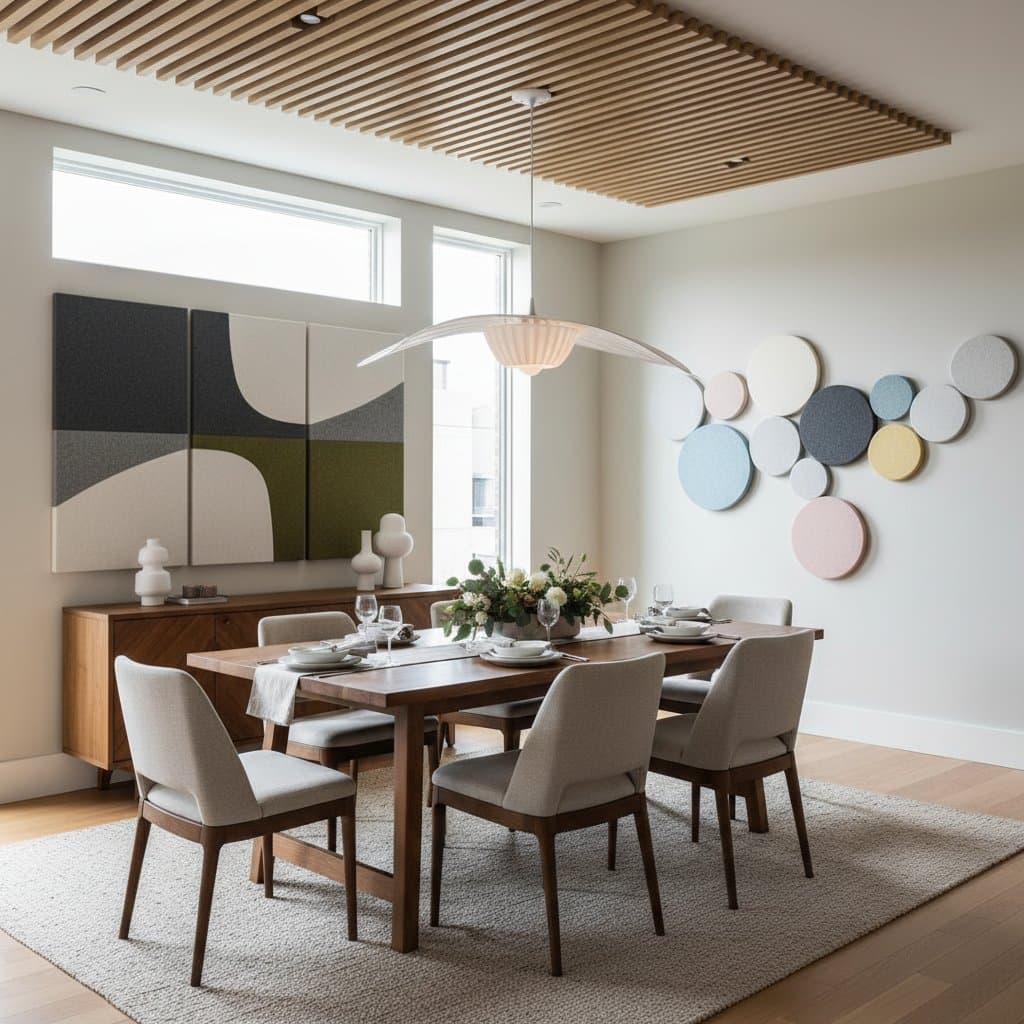
Fabric-Wrapped Panels: Constructed with a sturdy frame enclosing fiberglass or mineral wool cores, these panels feature fabric coverings in custom colors and textures. They mount easily on walls and suit minimalist or traditional interiors.
-
Printed Art Panels: These incorporate digital prints on absorptive fabric, displaying landscapes, abstracts, or family photos. Such panels function as focal art pieces while mitigating sound, ideal for personalizing open-concept spaces.
-
Wood Slat Panels: Featuring acoustic backing beneath wooden veneers or perforations, they deliver a sophisticated, natural finish. This type excels in contemporary or farmhouse styles, offering moderate absorption with visual depth.
Evaluate room size and existing furnishings; larger spaces with high ceilings require broader coverage, typically 20 to 30 percent of wall surface area.
Detailed Installation Guide
Step 1: Design the Placement Strategy
Identify primary reflection points by clapping hands near the table and listening for echoes. Prioritize walls parallel to seating and the ceiling directly above. Sketch a layout using graph paper, aiming for clustered arrangements of two to four panels per wall to optimize both performance and visual harmony.
Step 2: Prepare Mounting Locations
Employ a laser level to draw horizontal guidelines at desired heights, typically 4 to 6 feet from the floor for wall panels. Space units 3 to 5 inches apart to allow air circulation and prevent a cluttered appearance. For ceilings, locate joists with a stud finder to support weight securely.
Step 3: Secure Hardware
Select hardware based on wall type: French cleats for drywall, screws into studs for wood framing, or construction adhesive for masonry. For panels exceeding 20 pounds, install toggle bolts to distribute load evenly. Pre-drill holes to avoid surface damage.
Step 4: Position and Fix Panels
Hoist panels using a partner for safety, aligning them with marked lines. Fasten securely and verify plumb with a level after each installation. In lit dining areas, ensure edges align precisely to maintain a polished look under overhead fixtures.
Step 5: Evaluate Acoustic Performance
Conduct a post-installation assessment by simulating dinner dialogue. If echoes persist, incorporate corner bass traps or additional ceiling elements. Conversely, if the space feels overly subdued, introduce diffusers like bookshelves to redistribute sound gently.
Resolving Installation Challenges
Sagging or Detachment Issues: Improper anchoring often causes this; reinforce with molly bolts for hollow walls or consult load specifications from panel manufacturers.
Visual Imbalances: Straighten alignments using temporary spacers or alignment rods during mounting. Post-installation, minor adjustments with shims can correct tilts without removal.
Inadequate Sound Control: Increase coverage to 25 percent of reflective surfaces or add floor-level absorbers like thick area rugs. Test iteratively to fine-tune.
Excessive Dampening: Balance by retaining some hard surfaces, such as a glass tabletop or metallic accents, to preserve natural liveliness.
Engaging Professional Expertise
DIY approaches suit straightforward wall installations, yet complex projects demand specialists. Professionals use tools like spectrum analyzers to map reverberation precisely, ensuring tailored solutions. They handle integrations with recessed lighting or multi-room acoustics, preventing imbalances in adjacent areas.
Opt for certified acousticians when dealing with vaulted ceilings or custom fabrications, guaranteeing structural integrity and code compliance.
Sustaining Panel Performance
Fabric panels accumulate dust gradually; maintain them with a vacuum's soft brush weekly or a microfiber cloth monthly. For wood variants, wipe with a damp cloth and mild soap, avoiding saturation.
Examine fasteners biannually for loosening, tightening as needed. During renovations, dismantle panels to shield them from debris, then remount upon completion for enduring efficacy.
Realizing the Benefits of Upgraded Acoustics
Installed panels yield instant improvements: conversations flow effortlessly, ambient distractions recede, and gatherings extend naturally. Beyond utility, these elements infuse personality through curated designs, harmonizing form and function.
Transform echo-laden dinners into cherished rituals. With thoughtful selection and placement, your dining room evolves into a sanctuary of clarity and warmth, enhancing every shared moment.