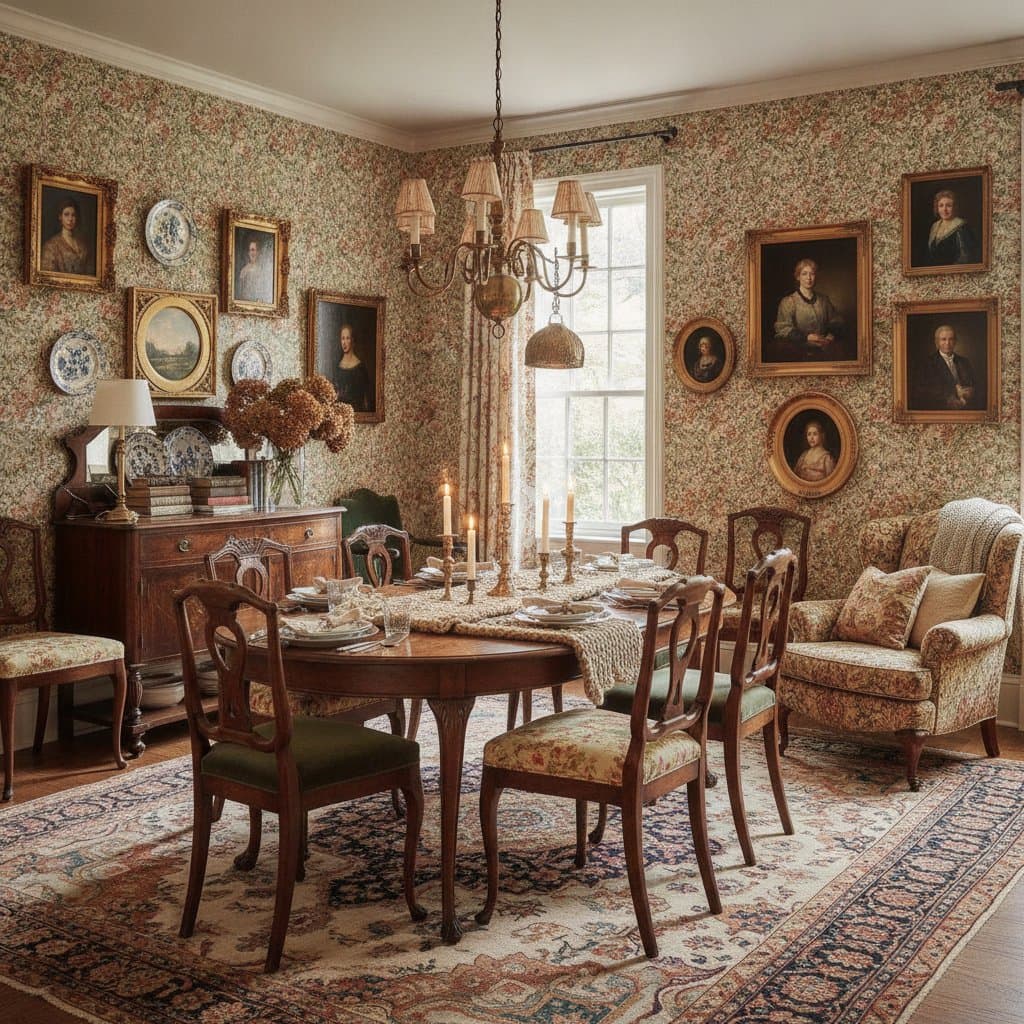
Evaluating Your Dining Space
Homeowners must first examine room size, illumination, and built-in attributes before redesign. Record measurements for length, width, ceiling elevation, and window positions. These factors shape furniture dimensions and hue selections.
Review surface treatments and floor types. Wood or patterned flooring complements antique pieces, whereas plain tiles or rugs might need motif rugs for enhancement. Spot key structural highlights, like alcove windows or integrated storage, to serve as design foundations.
Check storage options. Classic dining zones typically feature credenzas, display cases, or consoles. Without them, incorporate practical alternatives that echo period styles. This review aligns the plan with the area's constraints and opportunities.
Gauge readiness for hands-on restoration. Grandmillennial features often include furniture refinishing, seat recovering, or hardware reinstallation. Identifying ability limits upfront avoids later setbacks.
Planning Tools, Materials, and Framework
Effective grandmillennial dining starts with a defined vision. Select a core motif, such as British rural, seaside retreat, or colonial heritage. These inspire specific motifs and shade ranges.
Materials and Sources
- Furniture: Seek sturdy timber tables, sculpted supports, and cushioned seats. Explore resale shops, auctions, and community sales for affordable, durable finds.
- Textiles: Opt for blossom or scenic patterns, stitched cloths, and stacked weaves to summon ease.
- Lighting: Choose faceted pendants or metal lamps for era-fitting sophistication.
- Wall Coverings: Select papers with plant or eastern designs to build presence.
- Accessories: Incorporate aged cutlery, ceramic sets, and mounted nature illustrations for added layers.
Essential Tools
- Tape measure and notebook for spatial records.
- Rollers and brushes for surface renewal.
- Stapler and cutters for seating fabrics.
- Drivers, fasteners, and mounts for hardware setup.
- Plumb tool and detector for securing displays.
Safety and Budgeting
During furniture renewal or fixture placement, adhere to protection protocols. Ensure airflow for coating applications. Confirm wiring matches for legacy lights. Use barriers when managing old paints to evade hazardous exposure.
Set a spending foundation promptly. Allocate funds across procurement, renewal supplies, illumination, and fabrics. Reserve ten percent for unforeseen fixes or transport fees. This framework curbs excess on ornaments until basics conclude.
Step-by-Step Implementation
Step 1: Set the Anchor
A central element grounds every dining area. In grandmillennial style, select the table or overhead light. Center the table with three feet of clearance from edges or other items. Suspend the light over the table center, thirty inches from the top.
Step 2: Enhance Walls
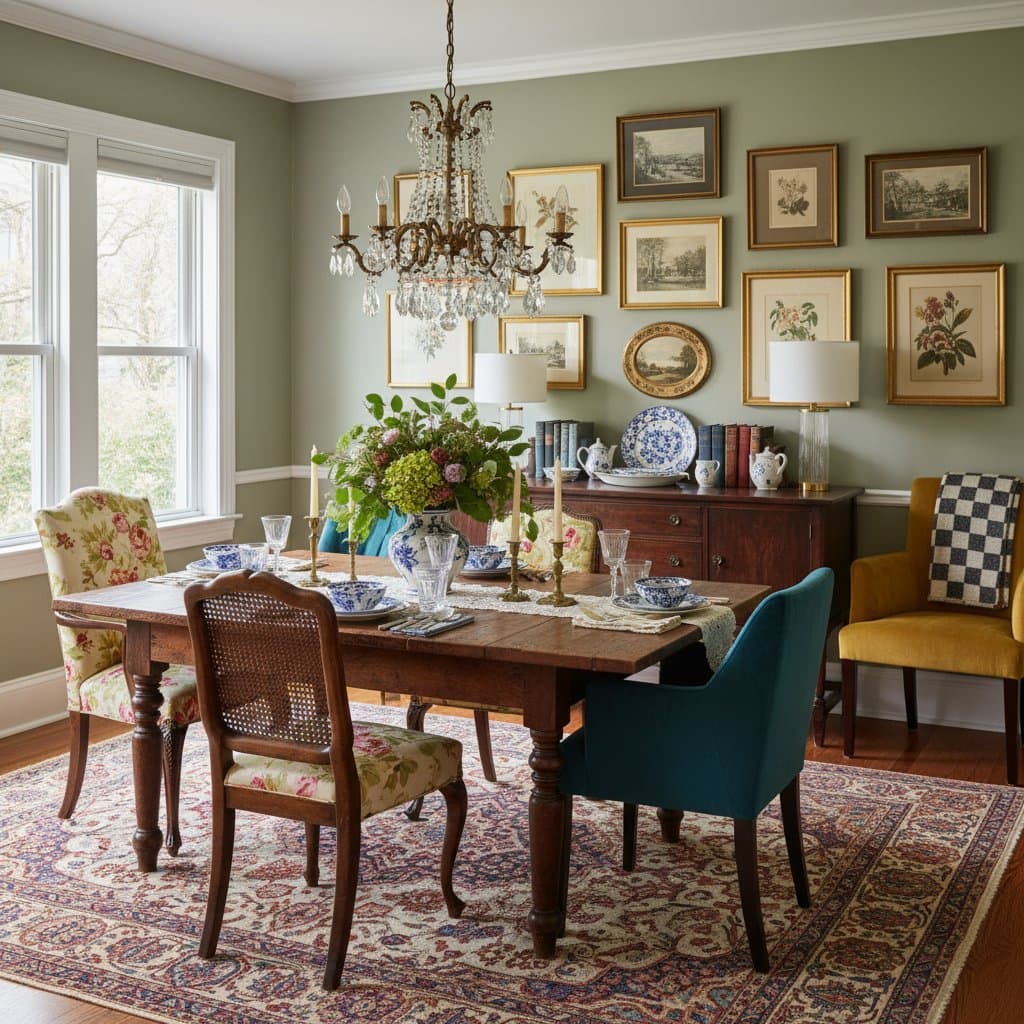
Surfaces shape the room's essence. Cover with patterned paper or heritage shades like muted green, faded azure, or pale yellow. Add railings or paneling for detail. For papers, match designs at joints and smooth to eliminate pockets.
If patterns overwhelm, offset with plain drapes or subtle seats. Maintain tempo by alternating dense and serene features for accord.
Step 3: Renew and Position Furniture
Updating antiques proves fulfilling and economical. Abrade lightly, prime, then seal with matte coating or protectant. Retain native fittings for genuine wear.
Place the table as the hub, align storage along extended walls. Counterbalance mass with opposite displays or reflectors. Deploy rugs to outline areas and mute echoes on rigid floors.
Step 4: Layer Illumination
Lights aid utility and mood. Blend ceiling units, wall mounts, and table lamps. Add controls for adjustable brightness across uses. Metal and glass accents uphold tradition, while fabric diffusers temper light.
For installations, confirm supports handle weight. Fasten wires securely and test operations prior to completion.
Step 5: Add Personal Touches
Ornaments animate the narrative. Showcase legacy serveware in enclosures. Include aged images, stitched covers, or initialed fabrics. Build settings with woven underlays and designed plates.
Blend finishes judiciously. Combine weathered metal with bright silver for variety without conflict. Incorporate foliage via vessels or arrangements to ease stiffness.
Step 6: Final Inspection
Conclude with a thorough check. Test seating for support and ease. Verify storage access and light operations. Confirm mounts hold firm and align.
View from various angles, including linked rooms. Aim for seamless progression over standalone appeal. The outcome connects to the household while showcasing distinction.
Ensuring Unity and Durability
Superior grandmillennial designs balance reminiscence with utility. Motif walls and relic dishware charm, yet the area must accommodate current routines and upkeep.
Validate unity via a three-element check:
- Major items link through shared traits like timber shade, cloth hue, or theme.
- Motifs recur in two spots for flow.
- Light warmth matches across sources to prevent clashes.
Routine care sustains worth. Wipe lights weekly with soft cloths. Treat wood monthly with natural oils. Shift rugs to even wear. These practices preserve look and utility.
Maintaining Vintage Elements
These designs depend on substances that demand attentive handling. For aged cloths, trial gentle cleaners in hidden spots. Skip strong agents that degrade threads. Seats gain from light suction and expert vapor treatment as needed.
Buff metal with soft polishes. For copper, mix citrus and soda, then wipe clean. Rinse fully to clear traces. Store cloths in airy pouches against discoloration.
Manage moisture levels. High dampness risks wood distortion or surface lift. Employ dryers in humid zones and keep steady indoor air.
Gen Z's Connection to This Style
Gen Z draws to grandmillennial dining as a cultural equilibrium. They pursue truth without constraint, ease without excess. Raised digitally, they desire physical interactions beyond screens. An old surface, motif cloth, or metal holder offers real ties to history.
Online networks amplify this, showcasing styled homes and reused goods that honor unique assembly. The detailed, flawed room images well yet radiates true cordiality.
Sustainability aligns too. Selecting antiques cuts production and refuse. Mending over discarding respects skill and ecology. Gen Z's focus on reuse and revival suits the style's principles.
Practical Tips for Execution
- Combine motifs with care: large wall designs with fine ones to sidestep disorder.
- Honor scales: robust tables require matching seats or lights for stability.
- Build light sources: multiple options eliminate dark spots and accent surfaces.
- Record changes: capture images per stage to monitor advances and build assurance.
- Exercise patience: authentic items emerge over time from resale channels.
Embracing the Everyday Space
Completed, the grandmillennial dining area transcends ornament. It recalls persistence and attention daily. Gatherings gain ritual in a setting that values skill and legacy. From shared meals to focused tasks at aged desks, it promotes mindfulness and regard.
Top designs adapt. Swap images, renew seats, or add relics as time passes. The base allows shifts. Each update deepens the tale.
Through organized method and imaginative sense, individuals craft a grandmillennial dining that blends nostalgia with now, rooted in legacy yet attuned to daily rhythms. The space mirrors bonds to custom, artistry, and ease that last past fads.