Key Points
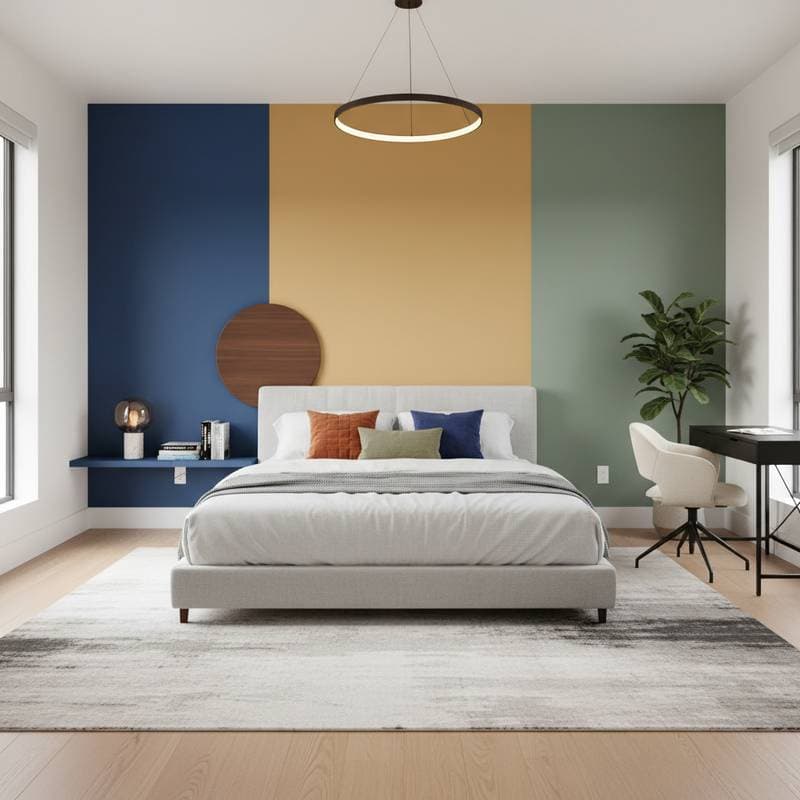
- Color-blocking employs distinct sections of bold, contrasting colors to shape mood, energy levels, and concentration within bedroom spaces.
- This method integrates design psychology and color theory principles to foster tailored emotional atmospheres that support daily well-being.
- Thoughtful placement of colors enhances sleep quality, motivation, and relaxation based on specific hue selections and their interactions.
- Successful implementation demands detailed planning, thorough surface preparation, and maintenance of visual harmony to prevent sensory overload.
- Homeowners secure expert-level finishes by employing precise measurement strategies, selecting appropriate paints, and conducting rigorous quality checks.
Assessment: Evaluating Your Bedroom Before Starting
Begin the process by examining your bedroom's natural light patterns, spatial layout, and current materials. Track sunlight progression across the room throughout the day, identifying walls that capture steady illumination. These surfaces accommodate richer, more intense colors without overwhelming the space, whereas dim areas or smaller zones require pale, light-reflecting shades to promote a sense of openness.
Implementation: Step-by-Step Color-Blocking Guide
1. Define the Composition
Select the orientation for your color blocks, such as horizontal for grounding stability, vertical for elongating perceived height, or diagonal for dynamic flow. Horizontal arrangements suit tranquil settings, vertical ones energize compact rooms, and geometric variants demand exact alignment for visual impact.
Draft the layout on graph paper, scaling it to your room's dimensions. Translate these sketches to the walls using a spirit level and soft pencil markings, anchoring measurements from fixed references like window frames or ceiling junctions to maintain symmetry.
2. Prepare and Prime Surfaces
Thoroughly clean all walls using a mild detergent solution to eliminate residue, oils, and particles. Sand any high-gloss areas lightly to promote paint adhesion. Apply a high-quality primer over dark prior colors or inconsistent textures, then permit full curing as specified by the manufacturer.
This preparation step ensures even coverage and longevity, minimizing issues like bubbling or peeling during application.
3. Tape the Boundaries Securely
Apply high-adhesion painter's tape along each intended division line. Burnish the edges with a lint-free cloth to seal against seepage. For crisp edges, brush a narrow layer of the adjacent base color over the tape before introducing the new shade, effectively bridging tiny imperfections.
Double-check alignment with a level before proceeding, adjusting as needed to preserve geometric accuracy.
4. Apply the First Color
Initiate painting with the palest hue, facilitating easier layering of subsequent darker tones. Utilize a foam roller for broad expanses and a precision brush for perimeters and corners. Proceed with two or three light applications rather than a single thick layer to achieve uniform finish without runs or inconsistencies, allowing ample drying time between each.
Work in sections if the area proves large, ensuring ventilation to accelerate curing.
5. Apply Subsequent Colors
After the initial color dries completely, reposition tape for the next zone and introduce the following shade. Extend the tape marginally over the cured edge to form a seamless transition. In multi-color schemes, allocate a minimum of 24 hours between neighboring applications to safeguard against disturbances.
Maintain consistent technique across sections for cohesive texture and depth.
6. Remove Tape and Perform Final Inspection
Peel away the tape at a 45-degree angle while the last layer remains tacky, avoiding adhesive pull that could damage edges. Examine boundaries under varied lighting conditions to detect imperfections. Correct minor flaws with a fine artist's brush matched to the exact paint formula.
Step back periodically during inspection to confirm the overall harmony aligns with your initial vision.
Maintenance: Preserving Your Color-Blocked Design
Sustain the vibrancy of your color-blocked walls through gentle, routine care. Weekly dusting with a soft microfiber cloth prevents buildup, while spot-cleaning marks requires only a barely damp sponge and neutral soap. Steer clear of abrasive or chemical-laden products that might erode the paint's finish over time.
For repairs, retain leftover paint from the original batch and apply it sparingly with a small brush to match tones precisely. Periodically reassess the scheme's effectiveness on your mood, adjusting by swapping hues or introducing subtle accents within existing blocks.
This approach confines updates to targeted areas, preserving effort and resources while keeping the space fresh.
Extending the Impact: Applying Color-Blocking Beyond the Bedroom
Color-blocking transcends mere decoration, serving as a deliberate tool to influence emotional states via organized color distribution. In bedrooms, it aligns environments with rest, renewal, and clarity, directly supporting sleep patterns and morning routines. Intentional execution turns ordinary spaces into vital extensions of personal identity.
Approach the project with disciplined steps, from initial light analysis to post-completion evaluation, to maximize results. The satisfaction of tailored mood enhancement often inspires broader application: warm, segmented palettes in living areas encourage connection, while cool, zoned divisions in workspaces sharpen concentration.
Ultimately, this technique builds emotional resilience and aesthetic coherence, rewarding investment with enduring functionality and style.