Why Color-Blocking Dominates 2026 Bedroom Design
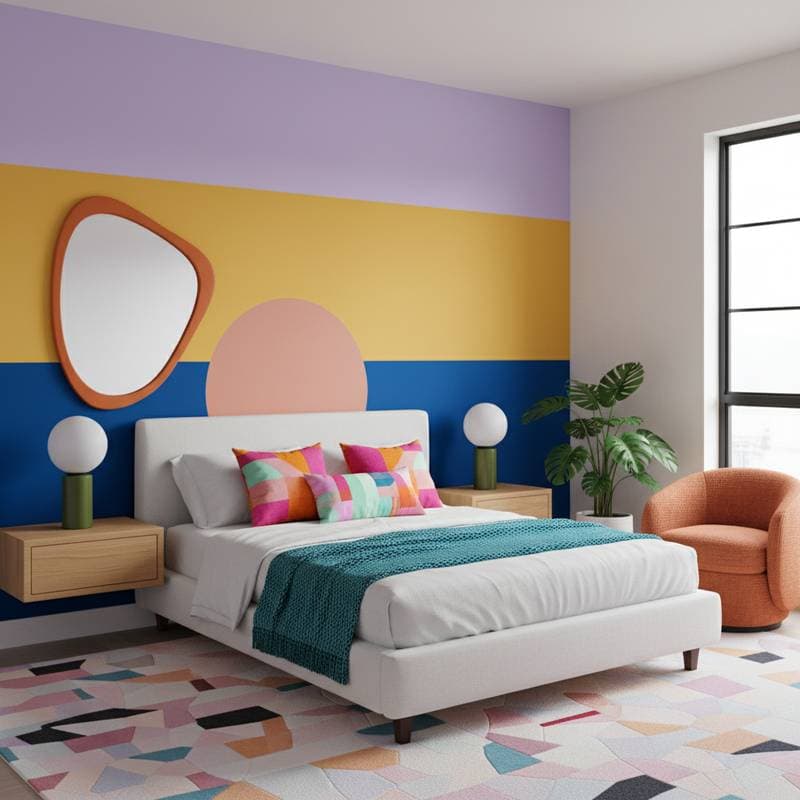
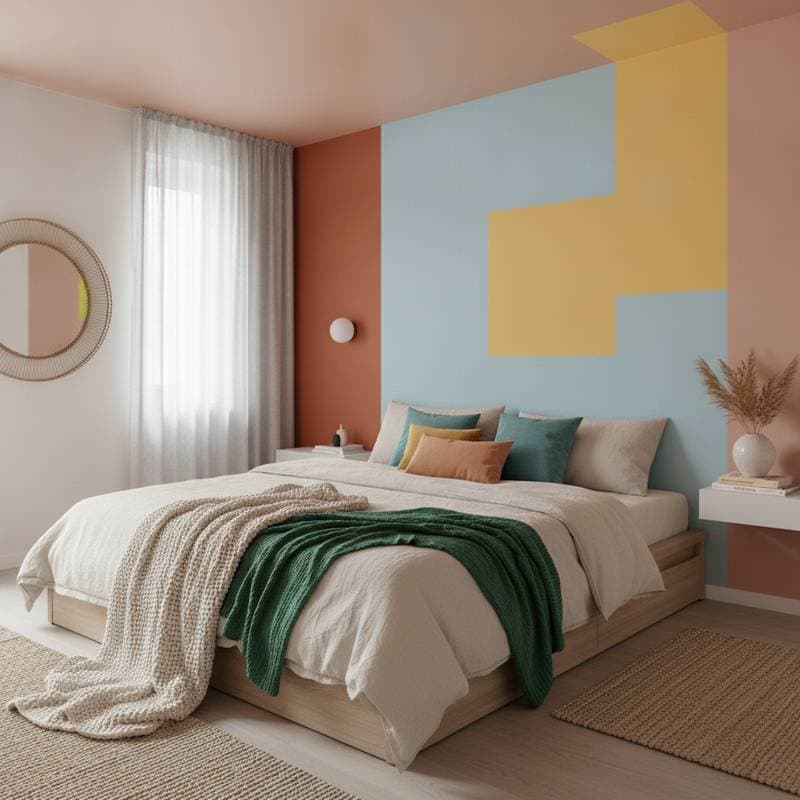
Color-blocking, once confined to fashion runways, now reshapes interior spaces with striking geometric color divisions. This technique divides walls into distinct sections of vibrant or muted hues, producing visual rhythm and emotional depth. In bedrooms, it elevates neutral backdrops into dynamic areas that promote relaxation and vitality.
Designers forecast its prominence through 2026, driven by a shift toward personalized, mood-enhancing interiors. Unlike uniform painting, color-blocking allows precise control over spatial perception and atmosphere. Homeowners discover that such divisions make rooms appear larger, more structured, or intimately scaled, depending on the layout.
Understanding Dopamine Decor's Influence
Dopamine decor prioritizes elements that stimulate positive emotions through vibrant surroundings. Research links color exposure to mood regulation, with strategic contrasts amplifying these effects. Color-blocking aligns seamlessly by enabling tailored palettes that respond to individual needs.
Advantages of Color-Blocking in Bedrooms
Bedrooms suit color-blocking due to their contained scale and focused furnishings. The headboard wall often serves as a natural anchor, where blocked sections draw attention without clutter. This simplicity permits experimentation, as fewer elements compete for visual dominance.
Key benefits include:
- Enhanced focal areas: Position blocks to frame the bed, creating an architectural headboard effect that requires no additional hardware.
- Streamlined palettes: Limit to two or three colors to maintain cohesion, simplifying decisions compared to multi-room applications.
- Mood customization: Choose combinations like soft indigos for serenity or citrus accents for alertness, aligning with personal wellness goals.
- Scalable commitment: Apply to a single accent wall or integrate subtly around furniture, accommodating various budgets and skill levels.
Readers report success with targeted applications, such as navy rectangles above dressers to simulate built-ins. These adaptations add character while preserving functionality, proving the versatility of the approach.
Psychological Impact of Strategic Color Pairings
Color choices in blocking influence perception through contrast and association. Complementary hues, like teal against soft gray, generate energy via opposition, while analogous tones, such as peach and coral, promote unity and calm. This balance mirrors emotional dynamics, supporting overall well-being.
Effective pairings include:
- Sage and terracotta: These earthy shades ground the space, ideal for promoting stability and reflection.
- Indigo and rose: The depth of indigo tempers rose's warmth, suiting compact rooms with a refined edge.
- Golden yellow and ivory: This duo infuses optimism, countering subdued lighting in urban settings.
- Slate and lavender: Subtle tension between them yields sophistication, avoiding overly saccharine results.
Testing reveals how such combinations anchor memories and routines. A sage lower panel might evoke natural landscapes, enhancing a sense of peace during evening wind-downs. This intentionality elevates bedrooms beyond aesthetics into supportive havens.
Step-by-Step Guide to Implementing Color-Blocking
Approach color-blocking methodically to minimize errors and maximize satisfaction. Begin by sketching the layout on paper, considering room dimensions and furniture placement. This planning phase ensures blocks enhance rather than disrupt flow.
Follow these steps:
- Select and sample: Gather two to four hues, applying large swatches to walls. Evaluate under morning, afternoon, and evening light to confirm suitability.
- Prepare surfaces: Clean walls thoroughly and apply primer if switching from dark to light tones. Use a level tool for straight edges.
- Apply tape precisely: Opt for high-quality painter's tape, pressing edges with a putty knife. Coat tape with base color to prevent bleeding.
- Paint in layers: Apply two coats per section, allowing full drying between colors. Remove tape while paint remains slightly tacky for clean lines.
- Integrate furnishings: Coordinate textiles and accessories with dominant hues, using one color as a thread throughout.
For renters, consider adhesive vinyl panels that replicate painted blocks. These install in minutes and remove without residue, offering a low-risk entry point.
Incorporating Texture for Depth
Pure color risks monotony; texture introduces layering and interest. Pair smooth painted surfaces with rougher elements to create tactile variety, enriching the sensory experience.
Techniques involve:
- Fabric integration: Drape linen or velvet duvets against matte walls to soften transitions.
- Finish variations: Alternate eggshell and flat sheens within blocks for understated sheen play.
- Organic accents: Incorporate bamboo frames or seagrass rugs to temper bold geometry with natural warmth.
In practice, a terracotta stripe paired with oak side tables yields a resort-like ambiance. Guests appreciate the balanced sophistication, where color provides structure and texture ensures approachability.
Embracing Imperfection in the Process
Perfection eludes most initial attempts, yet this authenticity enhances appeal. Slight irregularities in lines humanize the design, distinguishing it from sterile commercial spaces. View errors as opportunities for refinement, such as blending edges for an organic feel.
Over time, adjustments refine the outcome. Add metallic accents to uneven areas or extend blocks to unify discrepancies. This iterative process builds confidence and personal investment in the space.
Sustaining Color-Blocking's Relevance
Color-blocking endures due to its blend of innovation and ease. It demands basic supplies, empowering DIY enthusiasts without professional intervention. Evolving interpretations, like curved divisions or ombre integrations, keep it fresh amid shifting tastes.
Post-pandemic preferences for expressive homes amplify its draw. Subtle applications in neutrals satisfy minimalists, while vivid contrasts energize maximalists. Readers note heightened awareness in these rooms, likening the effect to a refreshing visual tonic.
Tailoring Color-Blocking to Your Bedroom's Mood
Assess desired emotions to guide selections: tranquility favors blues and greens, vitality leans toward oranges and yellows, intimacy suits reds and pinks. Map blocks to amplify architecture, such as vertical stripes for height or horizontals for width.
Experiment with scale; a narrow band adds subtle interest, while full divisions command presence. The result fosters spaces that resonate personally, boosting daily well-being through design that feels intuitively right.