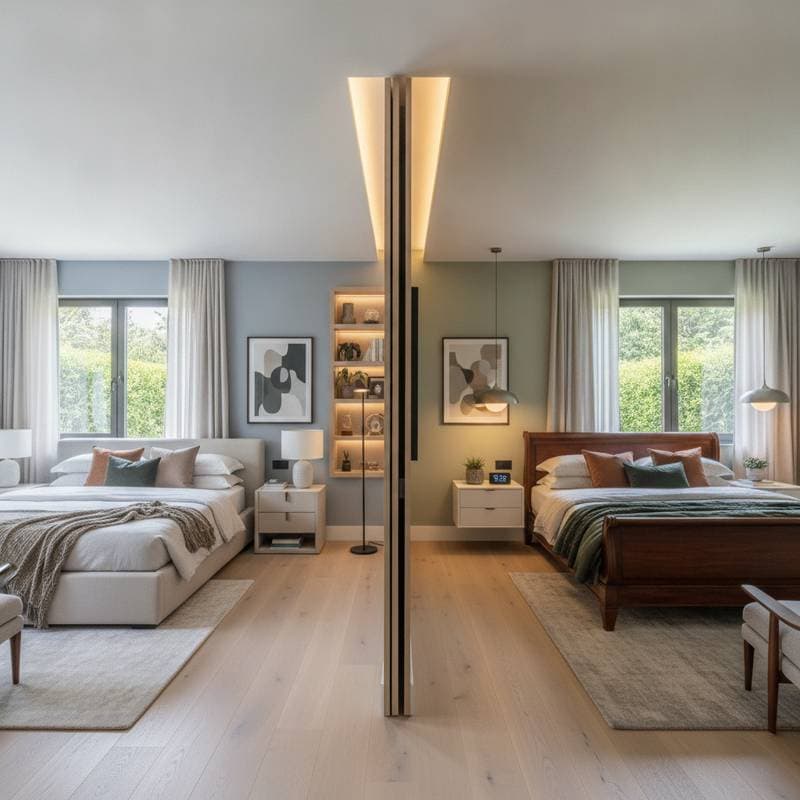
The Sleep Divorce Trend: Dual-Zone Bedrooms as the Future of Rest
Many people have experienced the frustration of tossing and turning while a partner snores, hogs the covers, or prefers a different room temperature. Sleep represents one of the most intimate aspects of daily life, yet it remains profoundly personal. This reality explains the growing discussion around the sleep divorce trend in design communities. However, this trend does not involve ending a relationship. Instead, it focuses on reclaiming quality rest, and interior design responds through dual-zone bedroom concepts that respect both personal needs and emotional closeness.
Understanding Sleep Divorce
The term sleep divorce carries a dramatic connotation, but it does not signify romantic or lifestyle separation. It recognizes that two individuals can share deep affection while possessing distinct sleep preferences. One partner may require a cool environment with complete darkness, whereas the other might prefer subtle illumination and warm bedding. Rather than enduring ongoing compromises that lead to exhaustion, couples now create environments where these preferences harmonize.
Reasons Dual-Zone Designs Succeed
This trend succeeds by honoring biological and lifestyle variations. Quality sleep influences emotional well-being, daily productivity, and overall health, and no one benefits from nightly conflicts over rest. A bedroom that accommodates both partners can fortify their bond rather than strain it.
Several factors contribute to its appeal:
-
Improved Sleep Leads to Stronger Bonds
Well-rested partners awaken refreshed, more empathetic, and less irritable. Dual-zone configurations minimize disputes related to temperature settings, noise levels, and evening habits, allowing focus on positive interactions.
-
Seamless Integration of Style and Utility
Professionals demonstrate that these designs achieve elegance alongside practicality. Subtle zoning through varied textures, hues, and illumination creates defined areas without introducing disorder or sterility.
-
Freedom for Personal Style Without Tension
Each zone can embody the occupant's unique taste. For instance, one side might feature sleek minimalist linens, while the other displays plush, patterned quilts. This separation enables authentic expression in a unified space.
Creating a Cohesive Dual-Zone Bedroom
Success hinges on deliberate planning to avoid a disjointed appearance, such as mismatched hotel rooms. The objective involves unity that embraces individuality.
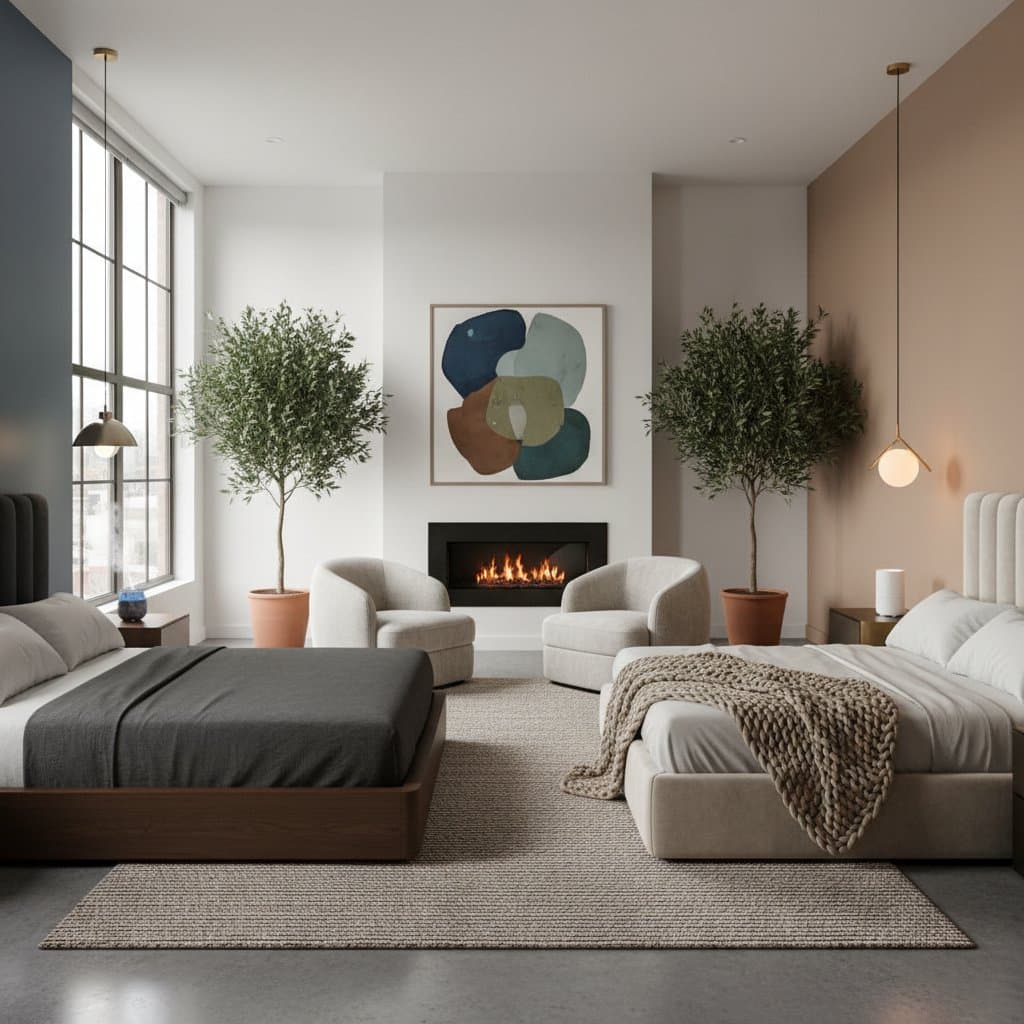
Begin with the layout. In larger rooms, arrange sleeping areas with gentle divisions, like adjacent twin beds sharing a central nightstand or a low-profile bookshelf serving as a partial barrier. For compact spaces, employ color gradients and fabric contrasts to delineate zones without physical obstacles.
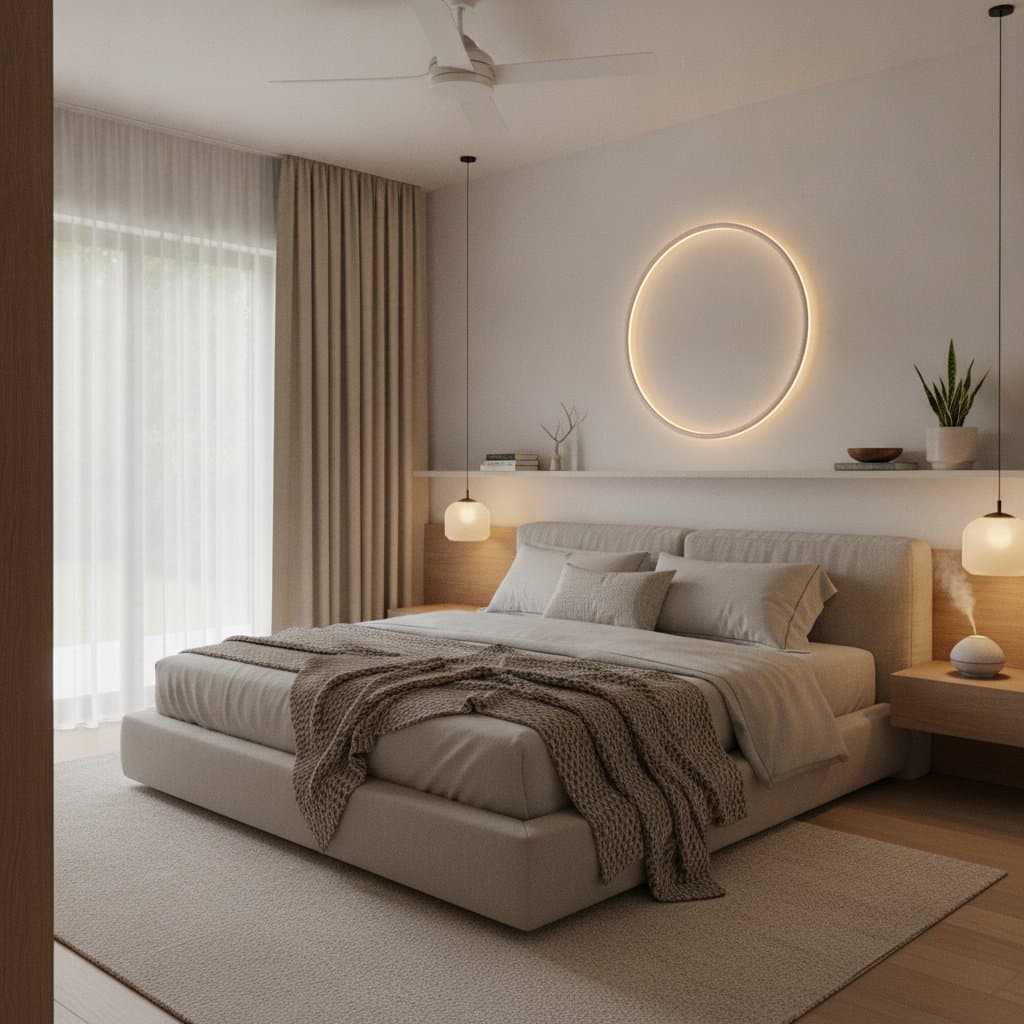
Lighting plays a pivotal role. If one partner reads into the evening while the other seeks pitch blackness, incorporate layered options: adjustable bedside lamps, dimmable fixtures, and side-specific blackout shades. Automated systems, such as voice-activated controls, ensure effortless adjustments and preserve ambient peace.
Independent temperature management proves essential. Install zoned HVAC units or opt for divergent bedding choices, like a thick wool throw on one side paired with a breathable cotton sheet on the other. These selections resolve common thermal disagreements effectively.
Address sound considerations as well. For differing sensitivities to noise, integrate sound-absorbing elements such as wall-mounted acoustic panels, thick area rugs, or padded headboards. These additions not only dampen echoes but also enhance the room's tactile appeal.
Harmonizing Styles for Diverse Tastes
Blending aesthetics in shared areas often presents challenges, yet dual-zone strategies simplify the process. Defined territories allow personalities to flourish without visual rivalry.
Consider these practical approaches:
-
Strategic Color Selection: Establish a neutral palette as the foundation, then introduce accent shades per zone. Sage green textiles on one side could complement terracotta tones on the other, with the common base ensuring overall balance.
-
Coordinated Furnishings: Select pieces with uniform shapes but varied materials. Identical nightstand designs in oak versus walnut finishes create purposeful contrast and symmetry.
-
Curated Decor Elements: Promote personal flair via artwork and accents rather than large furniture. Rotating wall prints or bedside sculptures offers flexibility without overhauling structural components.
Considering Separate Sleeping Areas
For certain couples, complete separation represents the ideal sleep divorce manifestation. This choice carries no stigma. Designers increasingly accommodate requests for adjoining suites, where individual bedrooms connect via a communal lounge or vanity space. Such arrangements emphasize restorative sleep while sustaining closeness through shared rituals like morning coffee or evening discussions.
If total division seems excessive, explore adaptable solutions. Designate a guest room as an occasional retreat, enabling temporary solitude during high-stress periods or differing schedules. Flexibility empowers well-being without rigid commitments.
Affordable Implementation Strategies
Renovations and expansions may not suit every budget, but incremental modifications can introduce dual-zone principles effectively.
-
Adopt Split Sleep Systems: Choose adjustable bed frames or dual mattresses that permit personalized firmness levels and inclines, ideal for addressing back pain or elevation preferences.
-
Implement Dual Bedding Layers: Follow the European tradition of individual duvets to eliminate cover-sharing struggles, selecting weights and fabrics suited to each person's comfort.
-
Incorporate Dividers: A portable screen or sheer curtain provides optical separation and manages light diffusion without permanent alterations.
-
Enhance with Versatile Illumination: Affordable options like adjustable LED lamps or app-controlled bulbs deliver zone-specific control, bypassing the need for electrical overhauls.
These modest investments yield significant gains in daily comfort and relational ease. Design serves practical enhancement over unattainable ideals.
Adapting Designs to Evolving Needs
Dual-zone bedrooms offer adaptability as life circumstances shift. A change in work hours or evolving sleep patterns finds easy accommodation in this framework.
The psychological advantages extend beyond convenience. Viewing differences as design opportunities fosters appreciation rather than resentment.
Reframing the bedroom as a collaborative haven for rest and identity transforms routines. Calmer awakenings and sustained vitality follow naturally. Whether starting with separate blankets or pursuing comprehensive updates, prioritize sleep quality to nurture enduring partnerships.
Sleep demands personalization, and cohabitation requires strategies that respect dual cadences. Reimagining shared spaces through dual-zone innovation invites renewed vitality into daily life.