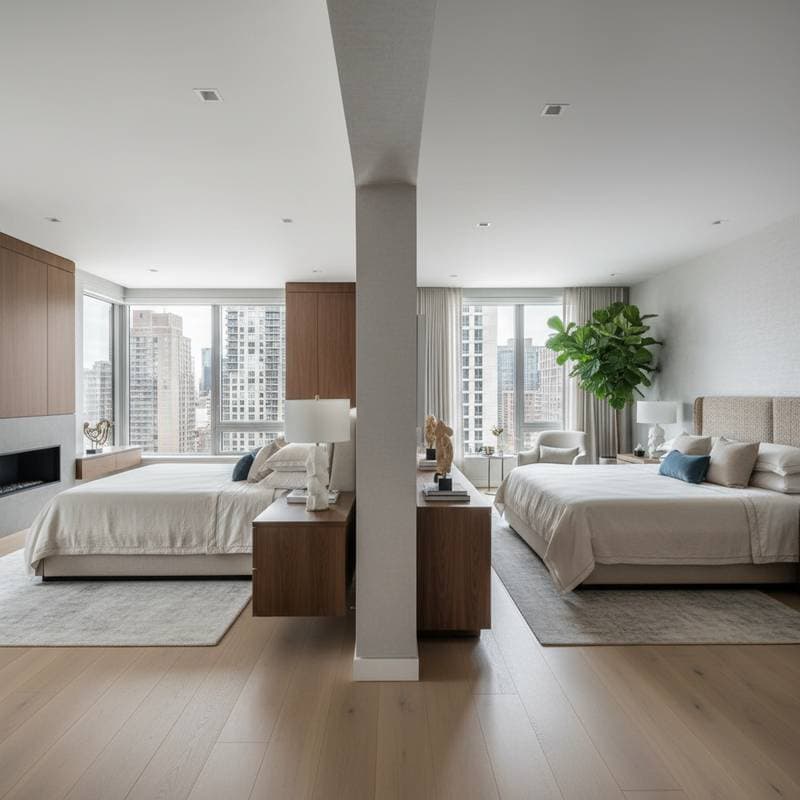
Sleep Divorce: Why Dual Master Bedrooms Are Rising
The concept of couples sleeping in separate bedrooms once carried a stigma of marital discord. However, this practice, now termed a "sleep divorce," has evolved into a practical design solution. Dual master bedrooms provide partners with dedicated spaces for rest, fostering improved well-being and relationship dynamics in contemporary homes.
The term dual master bedroom refers to two primary bedrooms tailored for each partner, emphasizing comfort and independence while maintaining emotional closeness. Real estate professionals note a surge in demand for this feature, as couples prioritize quality sleep amid varying lifestyles and biological needs.
The Reality of Sleep Incompatibility
Shared beds often lead to disruptions that erode rest and strain relationships. Research indicates that couples experience significant weekly sleep loss from disturbances such as snoring, differing temperature preferences, and restless movements. These issues extend beyond the bedroom, contributing to heightened stress, reduced patience, and diminished daily interactions.
Why Dual Master Bedrooms Are No Longer a Taboo
Real estate agents nationwide report that dual master suites rank among the top requested elements in new constructions and renovations. This shift reflects a broader acceptance of flexible living arrangements that accommodate modern demands, including remote work, irregular schedules, and family duties.
Designers emphasize that separate sleeping spaces promote mental health and relational harmony. Couples gain the ability to recharge individually, reducing resentment over sleep interruptions. This approach aligns with evolving views on intimacy, where emotional connection thrives through intentional choices rather than obligatory proximity.
Benefits Observed in Practice
Many couples discover enhanced vitality after adopting separate sleep arrangements. Improved rest leads to clearer thinking, better physical health, and more positive engagements throughout the day. For example, partners report extended morning conversations, increased laughter, and reduced arguments over household matters.
Even when initial separation feels unfamiliar, the overall relationship strengthens. Couples maintain shared rituals, such as evening relaxation or bedtime discussions, before retiring to individual rooms. This balance preserves affection while eliminating nightly battles, resulting in a more sustainable partnership.
What Dual Master Bedrooms Look Like
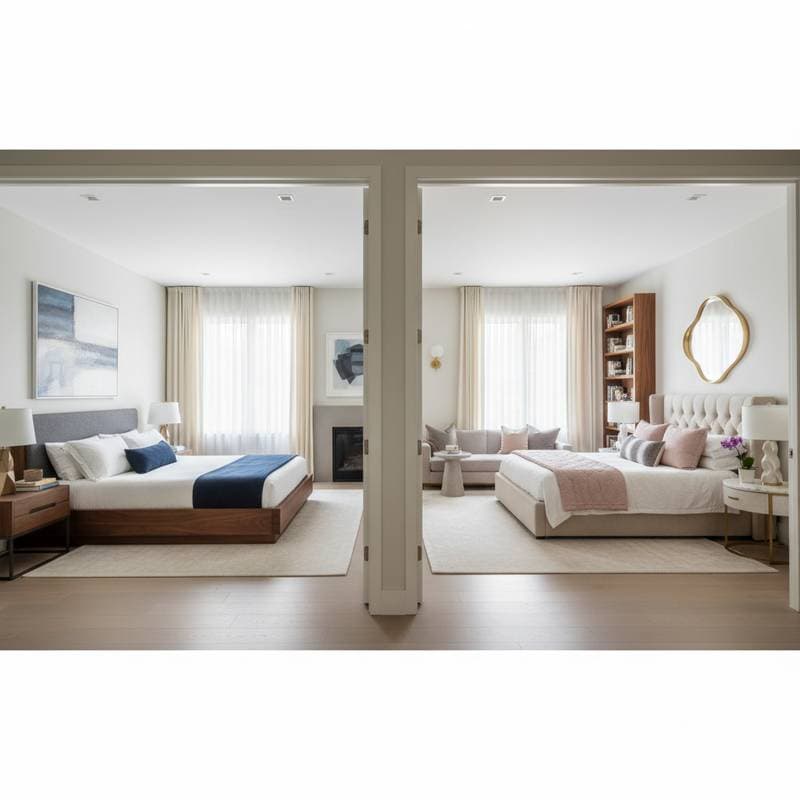
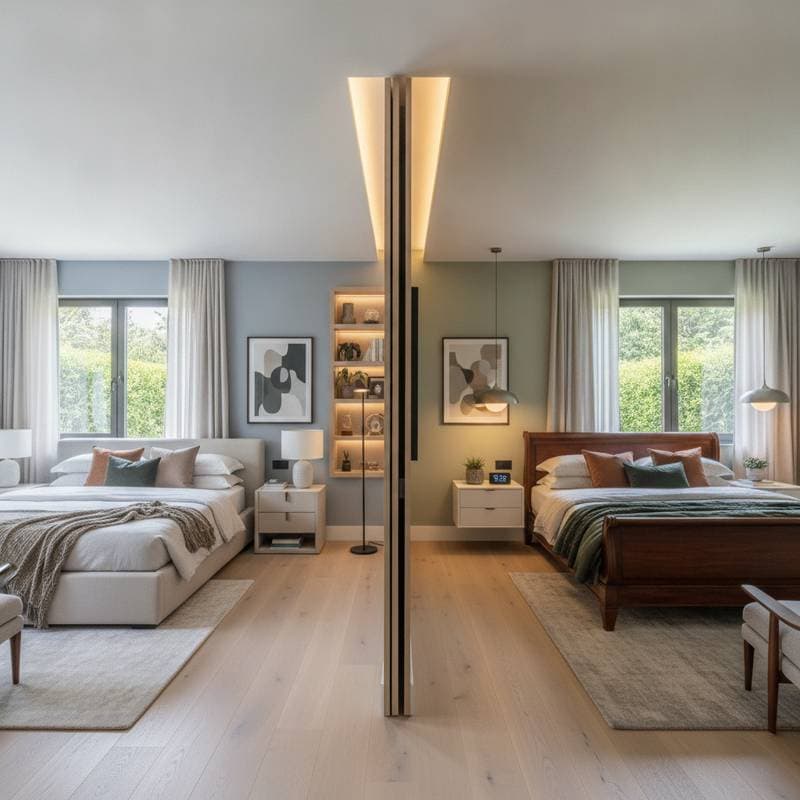
Dual master bedrooms vary widely to suit different home sizes and preferences. Some designs feature adjacent rooms connected by a shared bathroom or hallway, ensuring accessibility without isolation. Others repurpose existing spaces, like guest rooms, with minimal structural changes.
Key elements enhance functionality and personalization:
- Individual climate control systems, allowing precise temperature adjustments for each room.
- Custom mattresses selected for specific support needs, such as orthopedic firmness or plush cushioning.
- Tailored lighting options, including adjustable dimmers, blackout shades, and automated wake-up simulations.
- Dedicated storage solutions, like walk-in closets or built-in dressers, to eliminate territorial disputes.
One couple transformed their layout into a cohesive sleep suite, with rooms linked by a central lounge area. This configuration provided privacy during rest hours yet facilitated easy interaction, ultimately alleviating long-standing tensions from sleep disruptions.
The Psychology of Space and Rest
Home environments profoundly impact emotional states and interpersonal dynamics. Sleep deprivation amplifies sensitivities, turning routine disagreements into major rifts. By granting each partner autonomy over their rest space, dual master bedrooms restore equilibrium and encourage empathetic communication.
Well-rested individuals exhibit greater attentiveness and resilience in relationships. They engage more fully, resolve conflicts with composure, and nurture intimacy through quality daytime connections. This design philosophy underscores that true togetherness arises from supportive structures, not rigid traditions.
Addressing the Critics
Skeptics may view separate bedrooms as indicators of relational weakness. Yet, such perspectives overlook the realities of cohabitation, including incompatible sleep habits like late-night viewing or physical restlessness. Dual setups address these directly, prioritizing health over outdated norms.
In fact, this arrangement bolsters partnerships by enabling deliberate closeness. Partners choose shared moments on their terms, free from enforced overnight proximity. Real estate trends confirm this evolution, with listings prominently featuring dual primaries as premium amenities akin to gourmet kitchens or dedicated workspaces.
Making It Happen in Real Homes
Implementing a dual master bedroom requires thoughtful planning but offers accessible entry points. Begin with low-commitment trials to gauge benefits without major investments.
- Initiate a one-week trial of separate sleeping to assess impacts on energy and mood.
- Enhance a secondary space with comfortable linens, ambient lighting, and personal touches to create an appealing retreat.
- Preserve relational bonds through consistent routines, like joint dinners or pre-bedtime reading.
- Discuss openly to frame the change as a mutual enhancement, focusing on collective well-being.
For lasting adoption, consult professionals for space optimization. Compact homes can incorporate multifunctional areas, such as Murphy beds or partitioned rooms, to achieve separation without sacrificing square footage.
Strengthening Bonds Through Rest
Dual master bedrooms represent a progressive adaptation in home design, attuned to the nuances of modern relationships. Quality sleep underpins emotional resilience, enabling deeper presence and authentic connections. By embracing this trend, couples cultivate homes that nurture both individuality and unity, leading to enduring fulfillment.