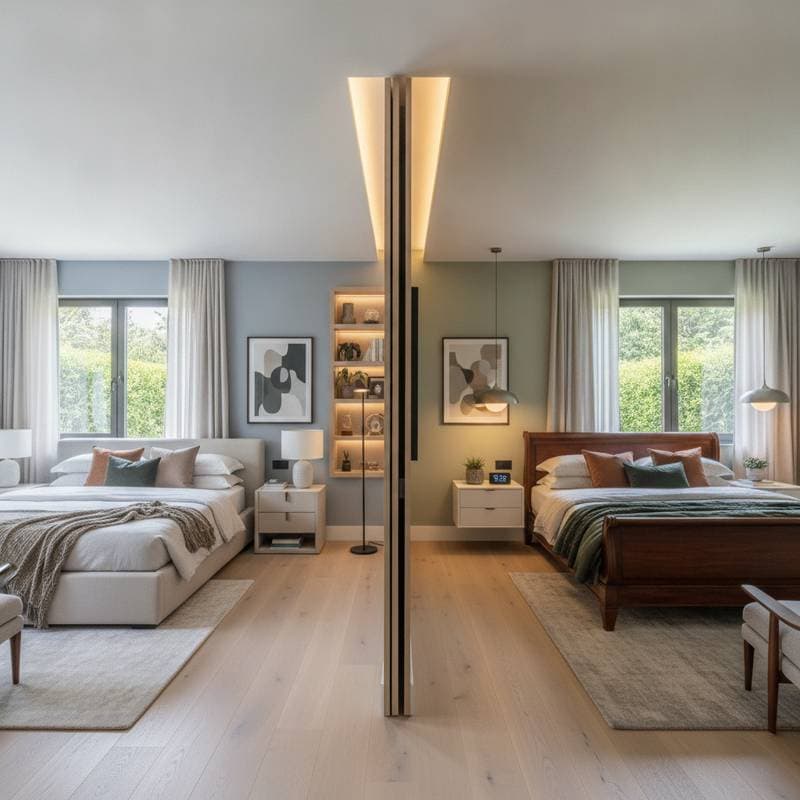
Core Benefits of Dual-Zone Bedrooms
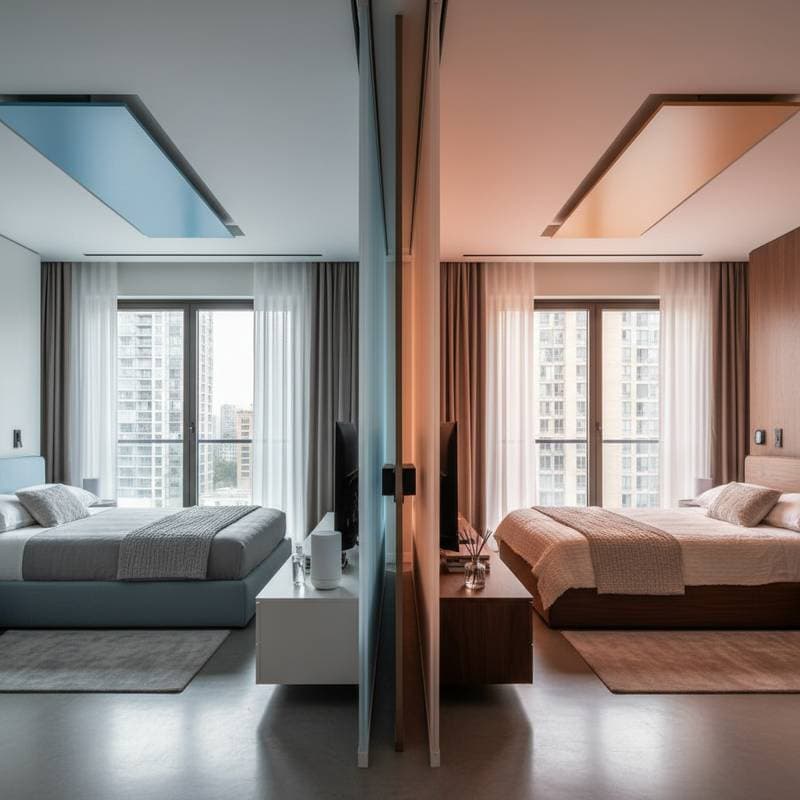
Dual-zone bedrooms allow couples to control separate climates, lighting, and sound environments within one master suite. These setups eliminate common sleep interruptions, such as conflicting temperature preferences or snoring. Smart integrations provide individual adjustments while maintaining the room's unified aesthetic and sense of intimacy. The result supports personal comfort without sacrificing visual harmony or emotional connection. Long-term gains include superior sleep quality, reduced relationship tension, and increased home resale value.
Common Sleep Disruptions for Couples
Couples often encounter sleep interruptions due to differing needs. One partner may thrive in cooler conditions, while the other seeks warmth from heavier bedding. Variations in light preferences arise, with some requiring total darkness and others benefiting from soft glows. Additional factors like snoring, restless movements, or mismatched schedules compound the issue, leading to chronic fatigue and relational strain over time.
Assessing Your Sleep Needs
Before implementing a dual-zone bedroom, couples must identify specific sleep challenges. Look for indicators such as frequent arguments over thermostat adjustments, one partner waking the other due to tossing or light usage, conflicting bedtimes, persistent daytime drowsiness despite adequate sleep duration, or considerations of separate sleeping arrangements.
Collect objective data to guide decisions. Use a digital thermometer to track room temperatures nightly, employ wearable devices to monitor sleep patterns, or utilize smartphone applications to measure noise levels. Document findings across several nights for accurate insights. Evaluate the bedroom's dimensions, existing HVAC setup, and electrical capacity as well. Spacious rooms accommodate physical separations, while smaller ones rely on technological solutions.
Project Planning Essentials
Treat dual-zone implementation as a methodical process: define objectives, assemble resources, establish timelines, and address risks.
Defining Objectives
Specify key goals, including independent temperature zones, effective noise reduction, or tailored lighting profiles. Prioritize the most disruptive issues to focus efforts efficiently.
Required Tools and Materials
Choices depend on the approach, but common items include:
- Programmable thermostats or smart HVAC controllers for zoned climate management
- Individual fans or under-mattress air circulation units
- App-controlled LED lights with per-side dimming capabilities
- Acoustic panels or insulated curtains for soundproofing
- Flexible screens or room dividers for subtle partitioning
- Dual adjustable mattress bases or split firmness options
- Voice-activated hubs for centralized control
Ensuring Compliance and Safety
Any electrical modifications require compliance with local building codes. Hire licensed electricians for wiring additions, outlet installations, or duct alterations. Confirm proper grounding, assess circuit loads, and ensure balanced airflow to prevent operational hazards.
Budget and Timeline Considerations
Retrofitting with smart devices offers a cost-effective entry point compared to major structural changes. Projects involving new walls or ductwork involve higher expenses and longer durations. Proceed in phases: install control systems first, then optimize furniture placements, and conclude with aesthetic refinements.
Implementation Strategies
Customize the upgrade based on room layout and budget using these targeted methods.
Managing Climate Differences
Install a multi-zone thermostat or segmented HVAC system. Each zone receives its own sensor and adjustable vents, with automation responding to occupancy.
- Inspect existing ducts for compatible dampers.
- Install sensors at equal distances from each bed side.
- Connect to a central controller and calibrate settings.
- Test for uniform air distribution across the space.
Customizing Lighting
Use separate circuits for bedside lamps or recessed fixtures to support circadian rhythms. Choose dimmable LED systems operable via apps or voice commands.
- Replace standard switches with smart variants or add split controls.
- Program lighting scenes for reading, relaxation, or winding down.
- Install individualized blackout shades or sheer blinds on each side.
Reducing Noise Interference
Control sound transmission to avoid the need for complete isolation.
- Position white noise machines or fans on the sensitive side.
- Incorporate absorptive panels behind headboards or along walls.
- Add area rugs and upholstered elements to absorb echoes.
Adapting the Bed Setup
Opt for split adjustable bases that allow independent height and firmness adjustments, such as raising one side to counter snoring.
- Choose mattresses of identical dimensions with customizable support.
- Secure them within a single platform frame.
- Integrate remotes for independent or synced operation.
Creating Subtle Spatial Boundaries
Employ lightweight screens or shelving units to define areas while preserving openness.
- Measure for clear pathways and adequate ventilation.
- Select translucent partitions that permit light and visibility.
- Coordinate with consistent colors and textures for unity.
Measuring Success
Evaluate the setup's impact with concrete indicators: stable temperatures held for seven consecutive nights without manual tweaks, effortless lighting transitions, verified noise reduction during tests, and intact room cohesion.
Perform regular maintenance to sustain performance. Inspect sensors monthly, replace HVAC filters quarterly, test device batteries, clean fixtures, and apply software updates promptly.
Daily Maintenance Practices
Keep the system running smoothly through routine checks:
- Calibrate thermostats for precision
- Refresh air filters as recommended
- Verify sensor functionality and battery life
- Dust lighting and window treatments
- Confirm network connectivity and firmware versions
Maintain a shared log of any glitches to enable quick resolutions and minimize downtime.
Boosting Relationship Dynamics and Well-Being
Well-tuned sleep environments foster emotional stability and reduce fatigue-related irritability. Consistent rest lowers conflict frequency and encourages open communication. Research in sleep physiology shows that reliable sleep patterns enhance emotional resilience, empathy, and overall tranquility.
On a physiological level, quality sleep regulates hormones that influence mood, vitality, and immune function. Couples report fewer health issues, greater energy levels, and improved daily performance. These personalized yet shared spaces demonstrate care and commitment, deepening relational ties.
Integrating Aesthetic Harmony
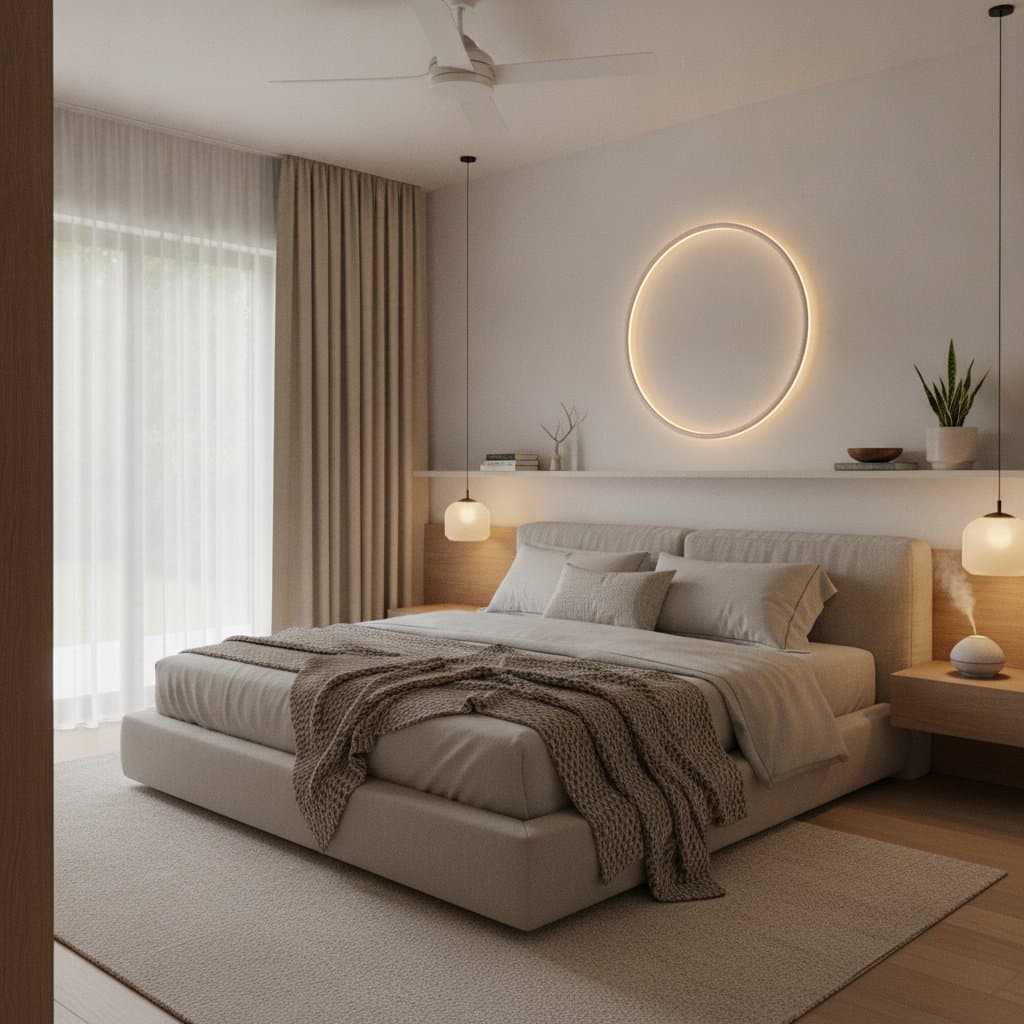
Build a cohesive look starting with neutral walls and flooring that accommodate varied accents. Match headboards and nightstands for symmetry despite functional differences. Tuck controls into built-in storage for a streamlined appearance.
Introduce subtle texture variations, such as quilted versus flat duvets, and select bulb temperatures that complement each other while using uniform fixtures. Collaborate with interior designers and HVAC specialists to seamlessly merge utility with elegance.
Advancing Your Dual-Zone Bedroom
Dual-zone bedrooms represent a strategic investment in health and lasting partnerships. Start by documenting key sleep mismatches, then choose solutions ranging from simple tech additions to comprehensive overhauls.
Integrate these elements during broader home updates, and seek expert advice for optimal system compatibility. Keep a collaborative guide to settings and upkeep for ease of use. In essence, this approach underscores a shared commitment to restful, connected living.